 Ferndale
 Building for an Island Climate
Lummi Island sits apart from the rest of Whatcom County in more than just geography. Reaching it means a ferry crossing, and that separation shapes how homes there need to be built and maintained. The island catches wind and salt spray directly off the water, gets the same long, wet Pacific Northwest rainy season as the rest of the county, and holds shade and moisture in its tree-covered lots longer than a typical inland lot in Ferndale or Bellingham. Add in the practical reality that every contractor, every material delivery, and every service call has to work around a ferry schedule, and you have a place where the exterior of a house has to be both tougher and lower-maintenance than average — because "we'll swing back by next week" is a bigger ask on an island than it is in town.
We're based in Ferndale and work throughout Whatcom County, including Lummi Island. We install one siding product — James Hardie fiber cement — and we think that choice matters more here than almost anywhere else we work.
What Salt Air Actually Does to a House
Homes near saltwater don't fail because of one dramatic event. They fail slowly, from constant low-grade exposure that most inland homes never experience. Salt-laden air carries fine airborne salt that settles on every exterior surface, and it's more aggressive than plain rain in a few specific ways:
- Corrosion acceleration: Salt speeds up corrosion on fasteners, flashing, and any exposed metal trim — steel and lower-grade aluminum rust or pit faster near the water than they would just a few miles inland.
- Finish breakdown: Paint films exposed to salt spray tend to chalk, fade, and lose adhesion faster, especially on the windward side of a structure.
- Moisture retention: Salt is hygroscopic — it pulls and holds moisture from the air, meaning surfaces near the coast stay damp longer than the same surfaces would inland, even after a rain event has passed.
- Cumulative wear on organic materials: Wood-based products and some engineered wood sidings are especially vulnerable to this cycle of moisture retention and salt exposure, which shortens their practical service life in marine settings.
None of this means a house near the water is doomed. It means the materials and details matter more, and the margin for error is smaller than it is on a sheltered inland lot.
Why We Standardized on James Hardie
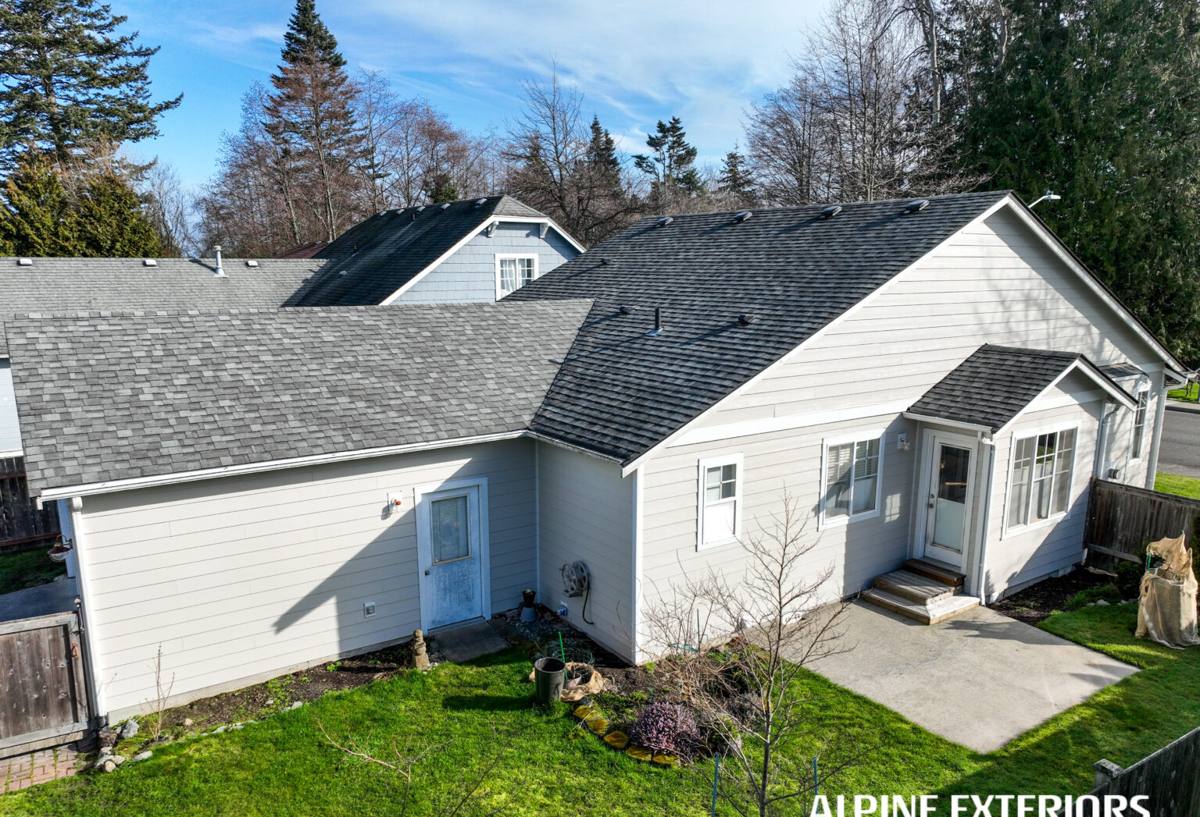
James Hardie fiber cement siding is engineered from cement, sand, and cellulose fiber — there's no wood content to swell, delaminate, or feed the kind of fungal growth that thrives in a damp marine climate. It's also non-combustible, which matters anywhere wildfire smoke and dry-season risk have become a bigger part of Pacific Northwest summers. For an island property where the same siding may need to go 15–20+ years between full repaint cycles because of ferry logistics, that durability isn't a bonus feature — it's the whole point.
Hardie's ColorPlus finish is baked on in a factory-controlled process rather than field-applied, which gives it stronger UV and fade resistance than most site-applied paint jobs, and a warranty that follows the finish, not just the board. For a home exposed to salt spray and near-constant humidity, a factory finish holds up in ways a field-applied coat generally can't match over the same time span.
We also install Hardie's HZ5 product line where wind exposure and moisture load call for it — a version of the product engineered for harsher climate zones. On an exposed island lot, that's often the right call, and it's a conversation we have on-site, not a one-size-fits-all pitch.
What We Don't Install, and Why
We get asked about vinyl, LP SmartSide, primed spruce, and cedar fairly often, and we're upfront about why we don't put any of them on Lummi Island homes:
- Vinyl expands and contracts more than fiber cement in temperature swings, can become brittle in wind-driven debris, and doesn't hold up to direct salt exposure as well as a mineral-based product.
- LP SmartSide is an engineered wood product — well-regarded in the right application, but wood-based products are more sensitive to sustained moisture and require careful edge-sealing and maintenance to perform long-term, which is a harder maintenance schedule to keep up with on an island.
- Primed spruce and cedar are traditional, attractive materials, but they're organic materials that need regular refinishing to keep water out, and that refinishing schedule is exactly the kind of recurring, weather-dependent maintenance that's hardest to manage when every trip requires a ferry crossing.
None of these are bad products in every setting. They're just not what we'd choose for a marine-exposed, ferry-access property, and we'd rather tell a homeowner that honestly than sell something we don't believe will hold up.
Moss, Shade, and the Long Wet Season
Whatcom County's rainy season runs long, and Lummi Island's tree cover and marine humidity extend the window where exterior surfaces stay damp. Moss and algae need three things to establish: moisture, shade, and a surface they can grip. Wood-based sidings and some textured products give moss more to hold onto; a smooth or lightly textured fiber cement surface with a factory finish sheds that grip more effectively and is easier to keep clean.
Moss isn't just cosmetic. Left to establish on a wall, it holds moisture against the surface underneath — which is exactly the kind of sustained dampness that shortens the life of anything that isn't inherently moisture-resistant. Keeping gutters clear, keeping vegetation trimmed back from walls, and choosing a siding material that doesn't feed moss growth are the three most effective things a homeowner on the island can do.
Beyond Siding: The Full Exterior Envelope
Siding is only one piece of how a house handles this climate. We also work on roofing, windows, and decks, and on an island property those systems are just as exposed as the walls:
Roofing
Roofing takes the most direct hit from driving rain and salt-laden wind. Flashing details, underlayment quality, and proper ventilation matter more here than in a sheltered inland lot, because a small leak that would take years to show up elsewhere can move faster in a damp, salt-heavy environment.
Windows
Window flashing and sealant details are one of the most common sources of hidden water intrusion in coastal homes. Proper integration between the window and the surrounding siding is where a lot of long-term problems either get prevented or get built in — it's not something to treat as an afterthought.
Decks
Outdoor living space on Lummi Island means the deck sees the same salt air and moss pressure as the siding. Material choice, fastener selection, and proper drainage under the deck surface all affect how well it holds up over time.
Working on an Island: Logistics That Matter
We plan Lummi Island projects around the ferry schedule from the start — material deliveries, crew scheduling, and site visits are all sequenced so we're not making unnecessary crossings or leaving a homeowner waiting on a piece of trim that didn't make it onto the boat. That kind of planning is routine for us, but it's worth knowing your contractor has actually done it before, rather than figuring it out mid-project.
| Factor | Inland Whatcom County Home | Lummi Island Home |
|---|---|---|
| Primary exposure | Rain, general PNW humidity | Rain plus direct salt air and wind-driven spray |
| Maintenance access | Same-day service typically available | Ferry schedule adds lead time to every visit |
| Moss/algae pressure | Moderate, varies by shade | Often higher due to tree cover and marine humidity |
| Metal fastener/trim corrosion risk | Standard | Elevated — marine-grade fasteners recommended |
| Recommended Hardie product line | Standard HZ5 or HZ10 by local zone | Often HZ5 for wind/moisture exposure |
What a Local Crew Adds
A crew that regularly works Whatcom County's coastal areas already knows to spec marine-grade fasteners, to pay closer attention to flashing details on the windward side of a structure, and to plan a project timeline around ferry logistics rather than getting surprised by them. That's the practical value of hiring locally rather than bringing in a crew that treats an island job like any other stop on the schedule.
What to Ask Before Hiring a Contractor for Island Work
- Have they completed projects on Lummi Island or other ferry-access properties before?
- Do they factor ferry schedules into project timelines, or treat it as an afterthought?
- What fastener and flashing details do they use for marine exposure?
- Are they installing manufacturer-installed products to spec, with proper clearances and sealant details?
- What does their warranty cover, and does it account for the marine environment?
Get an Honest Look at Your Home
Every property on Lummi Island faces this climate a little differently depending on tree cover, wind exposure, and how close it sits to the water. We're glad to come out, take a real look at your siding, roofing, windows, or deck, and give you a straightforward assessment — no pressure, no upsell, just an honest read on what your home needs. Reach out below for a free estimate.