 Ferndale
 Why Lummi Island Asphalt Shingle Roofs Wear Differently Than Roofs on the Mainland
Lummi Island sits out in the water, which means every roof on it deals with conditions a house a few miles inland in Ferndale or Bellingham simply doesn't see as often. Salt-laden wind moves across the island constantly, driving rain comes in sideways off the water during winter storms, and heavy tree cover keeps a lot of roof surfaces shaded and damp for weeks at a time. None of that makes asphalt shingle roofing a bad choice out here — it's still one of the most practical, cost-effective options available — but it does mean the details of how the roof is installed and maintained matter more than they would on a dry, exposed roof somewhere inland.
We work throughout Whatcom County, and the difference between a roof that's built for island conditions and one that's just "installed to code" usually shows up around year eight or ten: granule loss in the gutters, moss creeping under the shingle tabs, or corrosion at the flashing. A roof that's specified correctly for this environment from the start avoids most of that.
Salt Air and Corrosion
Salt in the air accelerates corrosion on any exposed metal — fasteners, drip edge, flashing, vent stacks. Standard electro-galvanized nails and thin flashing can start showing rust streaks well before the shingles themselves are due for replacement. We spec hot-dip galvanized or stainless fasteners and corrosion-resistant flashing on island jobs specifically because of this, even though it costs a bit more up front than the standard hardware used on a typical mainland reroof. It's a small line item that prevents a much bigger problem down the road.
Moss, Shade, and a Long Wet Season
Evergreen cover keeps a lot of Lummi Island roofs shaded, which is nice for the house in summer but bad news for a roof deck that stays damp longer as a result. Moss and lichen take hold fastest on north-facing slopes and anywhere shingles stay wet after a storm has already cleared elsewhere. Left alone, moss holds moisture directly against the shingle mat, lifts tabs at the edges, and lets wind-driven rain work its way underneath. It's rarely the reason a roof fails outright, but it's almost always the reason a roof fails early.
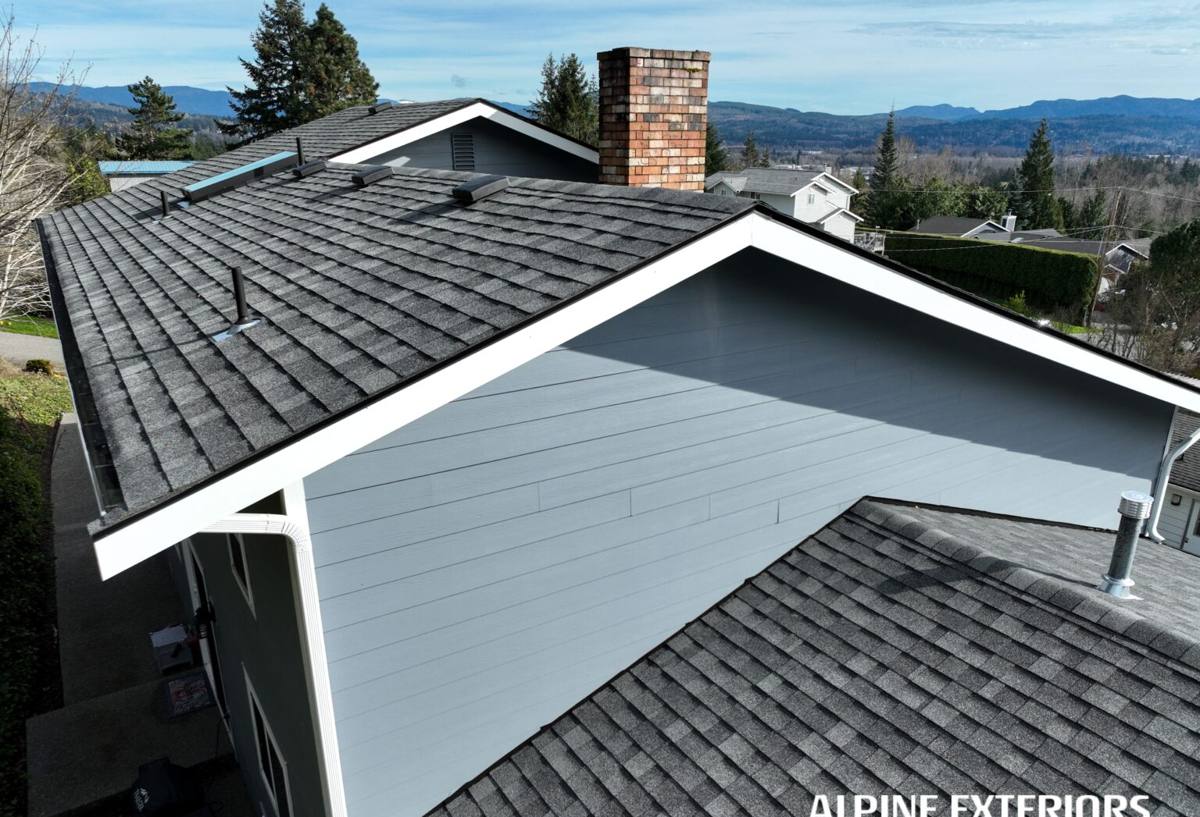
What a Roof Actually Needs to Hold Up Out Here
Shingle Class and Wind Rating
We generally steer island homeowners toward architectural (laminated) shingles over basic three-tab. They're heavier, they lay flatter against wind uplift, and most manufacturers rate them for higher wind speeds — a real consideration on an island with no windbreak in most directions. Algae-resistant (AR) shingles, which use a small amount of copper or zinc in the granules, also help slow moss and algae growth compared to standard granules, though they don't eliminate the need for periodic cleaning in a shaded, wet climate like this one.
Underlayment, Flashing, and Ventilation Details
Driving rain finds its way through gaps that would never be a problem in a calmer climate, so the underlayment and flashing details matter more here than the shingle brand does. On island roofs we install self-adhering ice-and-water shield at eaves, valleys, and around every penetration — not just where code requires it — because wind-driven rain regularly gets pushed uphill under the shingle tabs during winter storms. We also pay close attention to balanced attic ventilation: intake at the eaves, exhaust at the ridge. Without it, humid indoor air condenses against the underside of a cool, damp roof deck and rots the sheathing from below, which is a much more expensive fix than the roof covering itself.
The Ferry Factor: Why Logistics Change How Roofing Work Gets Done
Lummi Island is only reachable by ferry, and that single fact changes how a roofing project has to be planned. Material deliveries, dumpster drop-off and pickup, and crew scheduling all have to work around ferry capacity and departure times — a crew that hasn't done this before often ends up burning a day rescheduling a load of shingles or paying for an extra crossing they didn't budget for. That cost, one way or another, ends up in the homeowner's final bill or in a delayed timeline.
A crew that already works the island plans differently: material orders are consolidated into as few trips as possible, tear-off debris and dump runs are scheduled together rather than piecemeal, and ferry wait time gets built into the quote up front instead of showing up as a surprise later. It's not a glamorous part of the job, but it's often the difference between a project that finishes on schedule and one that drags out for an extra week.
Our Process for a Lummi Island Reroof
- On-site inspection and measurement. We look at moss buildup, flashing condition, and the roof deck itself, not just the shingles' surface wear.
- Written estimate. Materials, labor, and logistics are scoped together so the ferry factor is priced in from the start, not added later.
- Material staging. Shingles, underlayment, and flashing are ordered and staged to arrive in as few trips as the ferry schedule allows.
- Tear-off and deck inspection. Old shingles come off and the decking underneath gets checked for rot, especially in valleys and anywhere moss has been holding moisture.
- Deck repair. Any soft or rotted sheathing is replaced before anything new goes down — roofing over a compromised deck just hides the problem.
- Underlayment and flashing installation. Ice-and-water shield at vulnerable areas, proper step and counter-flashing at walls, chimneys, and skylights.
- Shingle installation. Installed to the manufacturer's nailing pattern for the wind exposure this location actually sees, not just the minimum code pattern.
- Ventilation check. Intake and exhaust venting confirmed or upgraded so moisture isn't trapped in the attic.
- Cleanup and haul-off. Debris removal is coordinated with the same ferry trip whenever possible, so the site isn't left half-cleared waiting on logistics.
Asphalt Shingles vs. Other Roofing Options for a Salt-Air, High-Moss Property
Asphalt shingles aren't the only option, and depending on the house, budget, and how much shade the roof sits under, a different material can make sense. Here's how the common options compare for this specific environment:
| Roofing Type | Salt-Air Durability | Moss Resistance | Typical Lifespan | Maintenance Needs |
|---|---|---|---|---|
| Architectural asphalt shingle | Good, with corrosion-resistant hardware | Fair; benefits from AR granules and cleaning | 25–30 years | Periodic moss removal, gutter clearing |
| Standard 3-tab asphalt shingle | Fair | Fair to poor in heavy shade | 15–20 years | More frequent moss and wear checks |
| Metal roofing | Very good with coated/marine-grade panels | Very good; moss struggles to hold on smooth metal | 40+ years | Low; occasional debris clearing |
| Cedar shake | Fair; needs regular sealing near salt air | Poor without diligent upkeep | 20–30 years with upkeep | High; treatment and moss control ongoing |
For most island homes, a well-detailed architectural asphalt shingle roof hits the right balance of upfront cost, appearance, and manageable long-term maintenance. Metal is worth a conversation for a shaded, moss-prone roof where the homeowner wants to minimize upkeep long term, but it's a different upfront investment and a different look, and we'll walk through that trade-off honestly if it's relevant to your property.
Living With a Long Moss Season: Maintenance That Actually Works
No roof on Lummi Island is maintenance-free, but a little routine attention goes a long way toward getting full life out of the shingles:
- Clear gutters and downspouts at least twice a year — clogged gutters back water up under the shingle edge.
- Trim back overhanging branches where practical to let more sun and airflow reach the roof surface.
- Treat moss with zinc or copper strips, or a manufacturer-approved moss treatment, rather than pressure washing, which can strip protective granules.
- Have the roof looked at after any major fall or winter windstorm, not just on a fixed annual schedule.
- Watch for excessive granule buildup in the gutters — it's usually the first visible sign a shingle roof is aging out.
What Drives Cost on a Lummi Island Roofing Job
| Cost Factor | Why It Matters |
|---|---|
| Roof pitch and accessibility | Steeper or harder-to-access roofs take longer and require more safety setup |
| Number of existing layers to remove | Tear-off of multiple old layers adds labor and disposal volume |
| Deck repair needed | Rotted sheathing found during tear-off has to be replaced before re-roofing |
| Ferry and material logistics | Trip scheduling and load consolidation affect timeline and delivery cost |
| Shingle class selected | Architectural, AR, and higher wind-rated shingles cost more than basic 3-tab |
We give a written estimate before any work starts, and we'll flag anything that could change the price — like hidden deck rot — before we move forward with it, not after.
Why It Matters to Hire a Crew That Already Works the Island
Whatcom County has plenty of capable roofing contractors, but not all of them have worked on Lummi Island itself. That matters more than it might seem. A crew that's done island jobs before already knows how to plan around the ferry, already specs hardware for salt exposure without being asked, and already understands how much moss and shade actually affect a given roof pitch versus a homeowner's general assumption. That experience shows up in fewer surprises, a more accurate first estimate, and a roof that's actually built for where it sits rather than a generic install.
We're based in Ferndale and have worked roofs across Whatcom County, including out on the island, so we're not guessing at what this climate does to a roof over time — we've seen it firsthand and we build for it.
If you're planning a reroof or just want an honest read on how much life is left in your current shingles, we're happy to come take a look. The estimate is free, there's no pressure to move forward, and you'll get a straight answer either way — just fill out the form below.