 Ferndale
 Why Lummi Island Siding Wears Differently Than Mainland Ferndale Siding
Lummi Island sits out in the Salish Sea, surrounded by saltwater on every side, which changes how siding ages compared to a home a few miles inland in Ferndale. Salt-laden air travels further and settles more consistently on an island than it does on the mainland, and it doesn't take a storm to deliver it — a steady onshore breeze does the job every day. Add driving rain that comes in sideways off the water, tree cover that keeps north and west walls damp long after a storm passes, and a moss season that can run most of the year on shaded siding, and you have a climate that finds every weak point in a siding system faster than a typical Whatcom County lot would.
None of that means Lummi Island siding fails faster because it's poorly built. It means small issues — a gapped joint, a soft spot at a butt seam, a corroding fastener — turn into real problems sooner if nobody catches them. That's the case for repair work that's diagnosed properly instead of just patched on the surface.
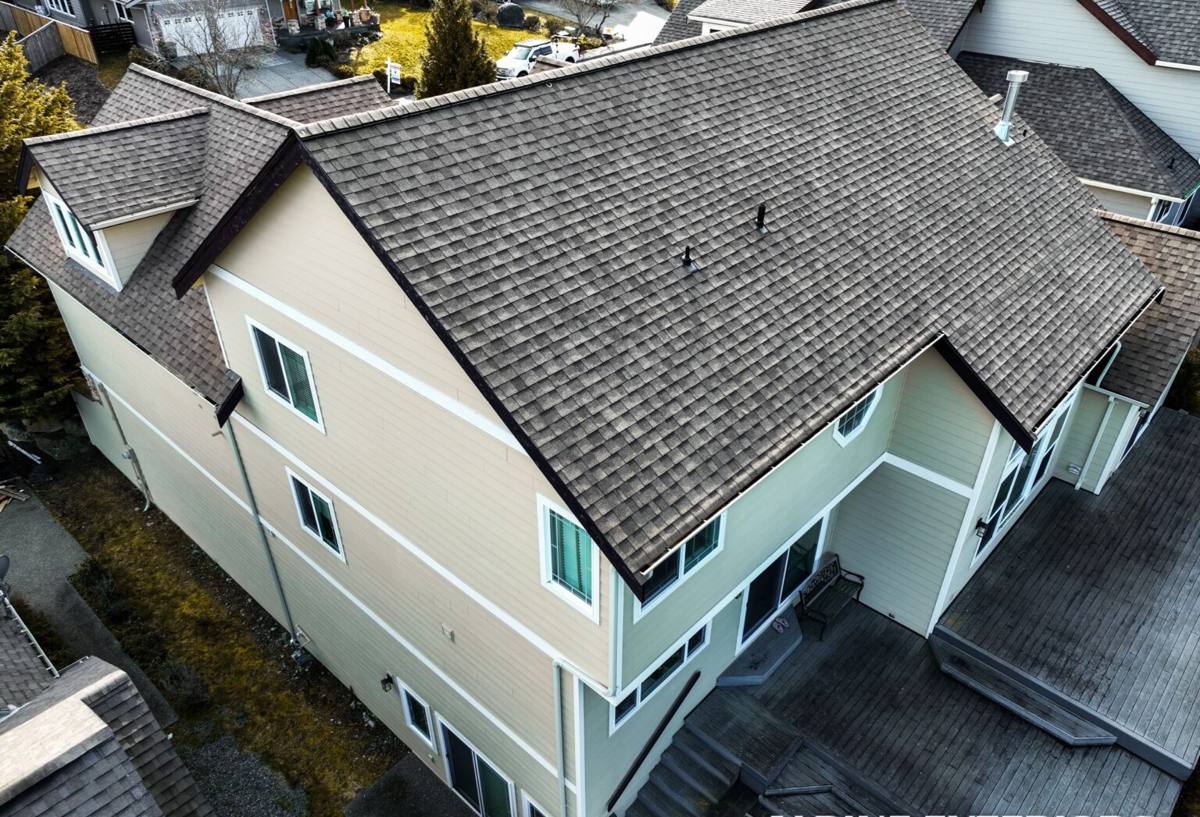
Where the Damage Shows Up First
Water-facing and shaded walls
Walls that face open water usually take the worst of the wind-driven rain, while walls that stay in shade under trees or a neighboring structure hold moisture the longest and grow moss and algae fastest. On most island homes, these are two different walls with two different failure patterns, and a repair plan should treat them differently rather than applying the same fix everywhere.
Fasteners, trim, and penetrations
Salt air corrodes exposed metal — nail heads, trim flashing, hose bib penetrations, vent flanges — faster than it does even fifteen or twenty minutes inland. Corroding fasteners work loose, which opens a path for water behind the siding long before the siding itself looks damaged from the ground.
Joints, caulk lines, and butt seams
Caulk breaks down under constant UV and salt exposure and needs to be checked more often here than a typical Ferndale-area home. A failed joint at a butt seam or around a window is one of the most common starting points for hidden moisture damage on the island's older homes.
What a Correct Siding Repair Actually Involves
A surface patch — cutting out a damaged section and nailing in a new piece — can look fine for a season and still leave the underlying problem untouched. A correct repair starts by figuring out why that section failed in the first place, because on Lummi Island the cause is almost always moisture-related, not just cosmetic wear.
| Surface patch only | Proper diagnosis and repair |
|---|---|
| Replaces the visibly damaged piece | Checks the water-resistive barrier and flashing behind it before closing it up |
| Caulks over the seam and repaints | Confirms the sheathing underneath is dry and sound, not just the siding face |
| Matches material by eye | Matches product line, profile, and finish so the repair doesn't stand out or behave differently over time |
| Ignores nearby fasteners and joints | Inspects and re-seals adjacent joints and fastener points showing early corrosion |
Skipping the diagnosis step is how the same "repair" ends up needing to be redone in a year or two — the new siding piece is fine, but the moisture path behind it was never closed.
Repairing With James Hardie Fiber Cement
We install and repair exclusively with James Hardie fiber cement siding, and that has a real, practical benefit for repair work specifically: Hardie's ColorPlus factory finish and HZ5 product line are engineered for exactly the kind of marine, moisture-heavy exposure Lummi Island deals with, so a well-matched repair section performs the same way the surrounding siding does — not a patch that reacts to weather differently than what's around it.
If your home is already sided in Hardie, a repair usually means sourcing the matching plank profile and ColorPlus color, cutting it in correctly at the joints, and blending the finish so the repair doesn't read as a patch. If your home is currently sided in cedar, LP SmartSide, vinyl, or another fiber cement brand, we'll still assess and repair what's there in kind for an isolated issue. What we won't do is recommend patching a small section indefinitely on a wall that's showing repeated, spreading damage — at that point the honest answer is usually that the underlying material is reaching the end of what it can take in this climate, and a full re-side in Hardie is the more cost-effective path than repeated repairs to a product that keeps failing in the same conditions.
Repair vs. Replacement: How to Decide
Not every damaged section means the whole wall — or the whole house — needs new siding. The decision usually comes down to how contained the damage is and what's happening behind it.
| Situation | Usually calls for |
|---|---|
| One or two isolated damaged boards, sheathing behind is dry | Targeted repair with matched material |
| Recurring damage in the same spot after a prior repair | Investigate the flashing or drainage detail causing repeat failure, not just re-patch |
| Soft or spongy sheathing found during inspection | Repair extends to replacing the sheathing, not just the siding face |
| Moss, cracking, or fastener corrosion spread across multiple walls | Full re-side is usually more cost-effective than repeated repairs |
| Siding material is discontinued or no longer color-matchable | Full wall or full re-side to avoid a visibly mismatched patch |
Signs You Need a Siding Repair Now, Not Next Season
- Soft, spongy, or bubbling spots when you press on the siding, especially near the bottom courses or window trim
- Visible gaps opening up at butt seams or corner boards
- Paint that's peeling or bubbling in one specific area rather than evenly across the wall
- Dark streaking, moss, or algae concentrated on one wall while others stay relatively clean
- Rust staining running down from a fastener head or trim piece
- Caulk that's cracked, shrunk away from the joint, or missing altogether
- Any musty smell or interior wall staining on the room behind a suspect section of siding
Our Process for a Lummi Island Repair Job
Working on the island adds a real logistics layer that a mainland Ferndale repair doesn't have — ferry scheduling. We plan around it rather than treating it as an afterthought: material is measured, matched, and staged ahead of time so a crew isn't making a return trip for something that should have come over the first time, and we build the ferry schedule into the job timeline when we quote it, so the estimate you get reflects what the job actually takes rather than a mainland-only number.
On site, the process is the same regardless of location: inspect the damaged area and its surroundings, check moisture behind the siding where there's any doubt, confirm the extent of the repair before cutting anything out, replace and re-flash correctly, and match the finish so the repair blends in rather than standing out as an obvious patch.
Why Hire a Crew That Already Works Lummi Island
A contractor who's already done work on the island isn't guessing at the logistics — they know that a repair here means planning a trip, not just adding a stop to a mainland route, and that affects how realistic a quote and a timeline actually are. They've also seen how this specific climate behaves on real houses: which walls fail first, how fast moss comes back in the shaded spots, and where salt air tends to attack fasteners and trim before the siding itself shows a problem. That experience shows up in a more accurate diagnosis, not just a faster patch.
Keeping Repaired Siding Protected Going Forward
A good repair buys you time, but the same conditions that caused the original damage are still there. A few habits keep a repaired section — and the rest of the siding — performing well:
- Have shaded, moss-prone walls checked and treated on a regular schedule rather than waiting until growth is heavy
- Rinse accumulated salt spray off exterior walls periodically, especially after long dry stretches followed by rain
- Recheck caulk joints and touch up paint at repair sites during a routine exterior inspection, not just when something looks obviously wrong
- Keep gutters and downspouts clear so runoff isn't dumping extra water onto a wall that's already dealing with driving rain
If you're seeing any of the warning signs above, or you just want an honest read on whether a section of your Lummi Island home needs a repair or something more, we're happy to take a look. Request a free, no-pressure estimate below and we'll tell you straight what we find.