 Ferndale
 Building a Deck That Actually Holds Up on Lummi Island
Lummi Island sits out in Whatcom County's marine weather with nothing between it and the water. That means any deck built here takes a harder beating than one built a few miles inland in Ferndale or Bellingham. Salt-laden air corrodes hardware faster, wind-driven rain gets pushed sideways into places a deck on a sheltered lot would never see it, and the long gray stretch of fall through spring keeps everything damp long enough for moss and algae to take hold. A deck that's framed, fastened, and finished the same way you'd build one in a dry inland climate will show problems within a few seasons — loose railings, soft spots at the ledger, black streaking on the boards, and fasteners bleeding rust through the decking.
We build custom decks for homeowners on Lummi Island and around Ferndale with those specific conditions in mind from the first framing member to the last cap board. This page walks through what that actually means in practice — the material choices, the hardware, the drainage details, and the maintenance habits that separate a deck that lasts fifteen-plus years out here from one that starts falling apart in five.
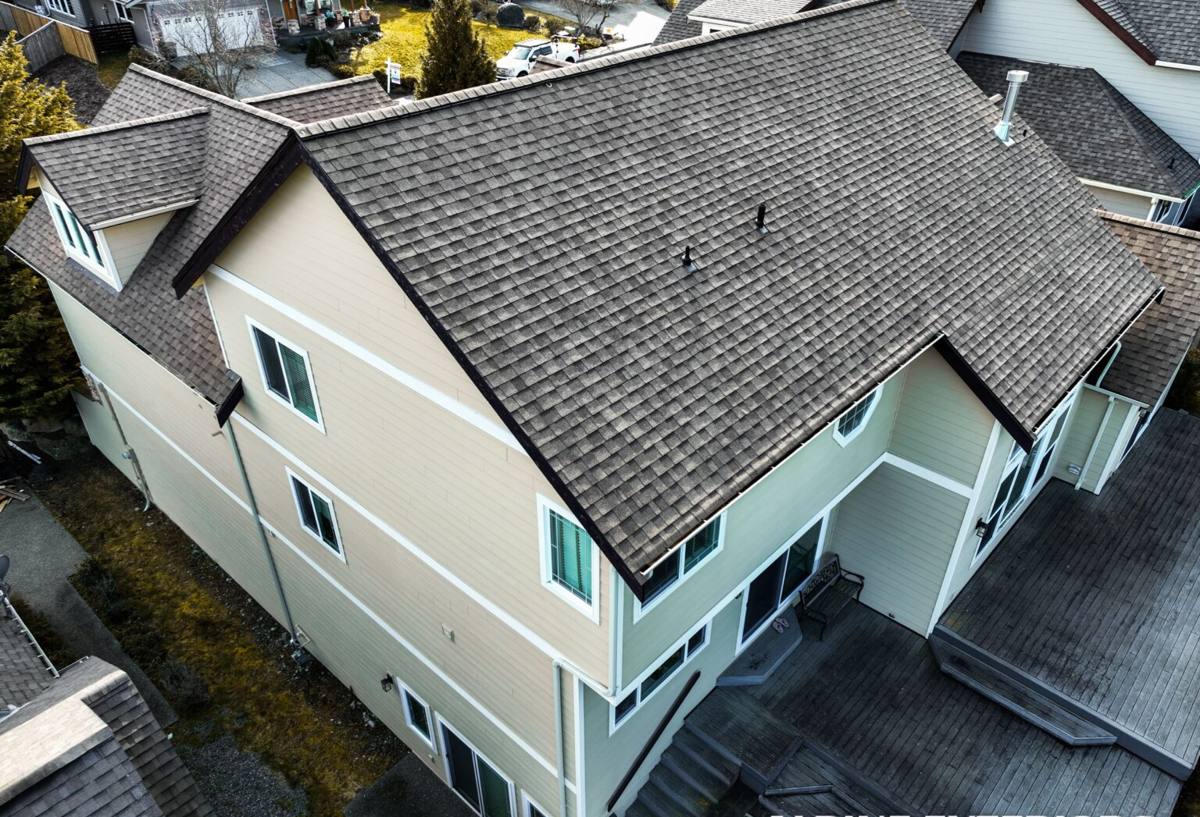
What Salt Air, Driving Rain, and Moss Season Do to a Deck
Three things drive almost every deck failure we see in this part of Whatcom County, and they compound each other:
Salt Air and Corrosion
Airborne salt from the surrounding water accelerates rust on any exposed metal — deck screws, joist hangers, bolts, and railing hardware. Standard electro-galvanized fasteners that would last a decade inland can start showing surface rust within a couple of years right on the island. Once a fastener starts corroding, it weakens, and if it's holding a ledger board or a railing post, that's a structural problem, not just a cosmetic one.
Driving Rain
Storms coming off the water don't just fall straight down — they get pushed horizontally into ledger connections, under railing base plates, and into any gap where flashing or sealant is doing less than it should. A deck built without real attention to water shedding will trap moisture in exactly the spots you can't see: behind the ledger, under post bases, and between decking boards that sit too tight together.
Moss and Algae Season
Whatcom County's long wet season — realistically September through May most years — keeps horizontal surfaces damp for extended stretches. Wood decking, and even the grooved surface of some composite boards, will grow moss and algae if the deck doesn't get sun exposure or airflow underneath. Beyond looking bad, moss holds moisture against the board surface and makes the deck genuinely slick underfoot.
Choosing the Right Decking Material for Island Conditions
There's no single "best" decking material — every option has a trade-off between upfront cost, maintenance, and how it handles this specific climate. Here's how the common choices actually compare for a Lummi Island project:
| Material | Upfront Cost | Maintenance Here | How It Handles Salt Air & Rain |
|---|---|---|---|
| Pressure-treated wood | Lowest | Annual cleaning, refinishing every 1-2 years | Needs consistent sealing or it grays, cups, and holds moss |
| Cedar | Moderate | Refinishing every 1-2 years to keep color and protection | Naturally rot-resistant but still needs sealed end grain and fasteners |
| Capped composite | Higher | Occasional wash, no staining or sealing | Handles moisture well; choose a low-sheen, textured surface to reduce moss visibility and slip |
| PVC decking | Highest | Occasional wash, no staining or sealing | Fully moisture-resistant, doesn't absorb water at cut ends — strong option directly exposed to salt spray |
We don't push homeowners toward the most expensive option by default. A well-maintained cedar or PT deck can look great and last a long time — it just requires an honest commitment to upkeep. If you want a lower-maintenance deck and the budget allows it, composite or PVC earns its higher price out here specifically because it doesn't absorb the rain the way wood does. The wrong call is choosing a budget wood deck and then not maintaining it — that's the combination that fails fastest in this climate.
Framing, Fasteners, and What's Happening Below the Boards
The decking surface is what you see, but the framing underneath is what determines whether the deck is still safe in ten years. For island builds we pay particular attention to:
- Using stainless steel or heavy hot-dip galvanized fasteners and hardware rather than standard coated screws, which corrode faster in salt air
- Selecting joist hangers and structural connectors rated for the same corrosion exposure as the fasteners holding them
- Keeping joist spacing tight enough for the decking material chosen, since composite and PVC often require closer spacing than wood
- Leaving proper airflow gaps beneath the deck so the framing can dry out between rain events instead of sitting damp
Skipping the upgraded hardware to save a little money on materials is the single most common shortcut we see on decks that end up needing early repair. It's hidden once the decking goes down, which is exactly why it's worth getting right the first time.
Railings and Hardware: Where Corrosion Shows Up First
Railing posts, brackets, and any exposed metal balusters take the brunt of salt exposure because they're standing straight up in the weather rather than sheltered under a board. We spec corrosion-resistant hardware for every structural railing connection and pay close attention to how post bases are flashed and sealed where they meet the deck surface — that junction is a common spot for water to sit and start rot or rust from below where it's not visible during a casual look at the deck.
Drainage, Ledger Attachment, and Waterproofing the Connection to Your Home
The single most important structural connection on any attached deck is the ledger board — where the deck ties into your house framing. Done wrong, it's also the most common point of hidden water damage, because a leak there can rot both the deck framing and the wall framing behind your siding before anyone notices.
For every ledger attachment we install proper flashing that directs water away from the house rather than behind the ledger, use through-bolts or lag screws rated for the load and corrosion exposure, and confirm the connection is sealed correctly before decking goes on top. We also grade and slope the decking surface itself so water runs off rather than pooling, which matters more here than in a drier climate simply because it rains more often and more sideways.
Our Process for Lummi Island Deck Projects
Building on the island adds a logistics layer that a mainland Ferndale project doesn't have — access is by ferry, which affects scheduling and material delivery. Because we already work on the island regularly, we plan around ferry schedules and stage materials so a project isn't stalled waiting on a delivery window. Here's how a typical project runs:
- On-site assessment — we look at sun exposure, drainage, existing structure (if replacing a deck), and how exposed the site is to prevailing wind and rain
- Material and design discussion — honest trade-offs on decking material, railing style, and layout based on your budget and how much maintenance you want to take on
- Permitting — Whatcom County requires permits for most deck construction depending on size and height; we handle that process as part of the project
- Framing and structural work — ledger attachment, footings, joists, and all corrosion-rated hardware
- Decking, railing, and finish work — installed to shed water and resist the specific wear this climate causes
- Walkthrough — we go over basic maintenance for whatever material you chose so the deck actually gets the lifespan it's built for
Maintenance Checklist for a Longer-Lasting Deck
Whatever material your deck is built from, a few habits make a real difference in this climate:
- Sweep debris and standing leaves off the deck regularly, especially in fall — trapped organic matter feeds moss and holds moisture
- Rinse off salt residue after storms with heavy onshore wind, particularly on railings and metal hardware
- Check and re-seal wood decking on schedule — don't wait until it's visibly gray and dry
- Inspect fasteners and railing connections once a year for rust bleed or looseness
- Keep gutters and downspouts near the deck clear so roof runoff isn't adding extra water onto or under the deck
- Address any moss growth promptly with an appropriate cleaner rather than letting it establish — it's easier to prevent than remove
Why a Crew That Already Works Lummi Island Matters
A contractor who mostly builds decks in drier, more sheltered parts of Whatcom County can still build a technically sound deck — but they're guessing at how much corrosion resistance, drainage detail, and material selection actually matters until it's already a problem. Working Lummi Island regularly means we've seen which fastener grades hold up, which decking surfaces actually resist moss buildup, and how to plan a project around the island's ferry access without it turning into a scheduling headache. That's the difference between a deck built to a generic spec and one built for the specific conditions it has to survive.
If you're planning a new deck or replacing one that's showing its age, we're happy to come take a look and give you a straightforward, no-pressure estimate — just fill out the form below.