 Ferndale
 Sandy Point's Exterior Challenge: Salt, Rain, and Moss
Sandy Point sits close enough to the water that homes there deal with a different exterior environment than houses a few miles inland in Ferndale or Bellingham. Salt-laden air moves in off the water and settles on siding, trim, gutters, and fasteners. Add Whatcom County's long wet season — steady driving rain from fall through spring, punctuated by wind events that push moisture sideways into wall assemblies — and you get a climate that is genuinely harder on exterior materials than the regional average. Then there's moss. Shade from mature trees, persistent dampness, and mild temperatures give moss and algae a long growing season on roofs, decks, and north-facing siding.
None of this is unique to any one house in Sandy Point — it's the shared condition of living close to the water in the Pacific Northwest. But it does mean the exterior products and installation details that work fine in a drier, more sheltered part of the county can fall short here. We've built our siding, roofing, window, and deck work around that reality.
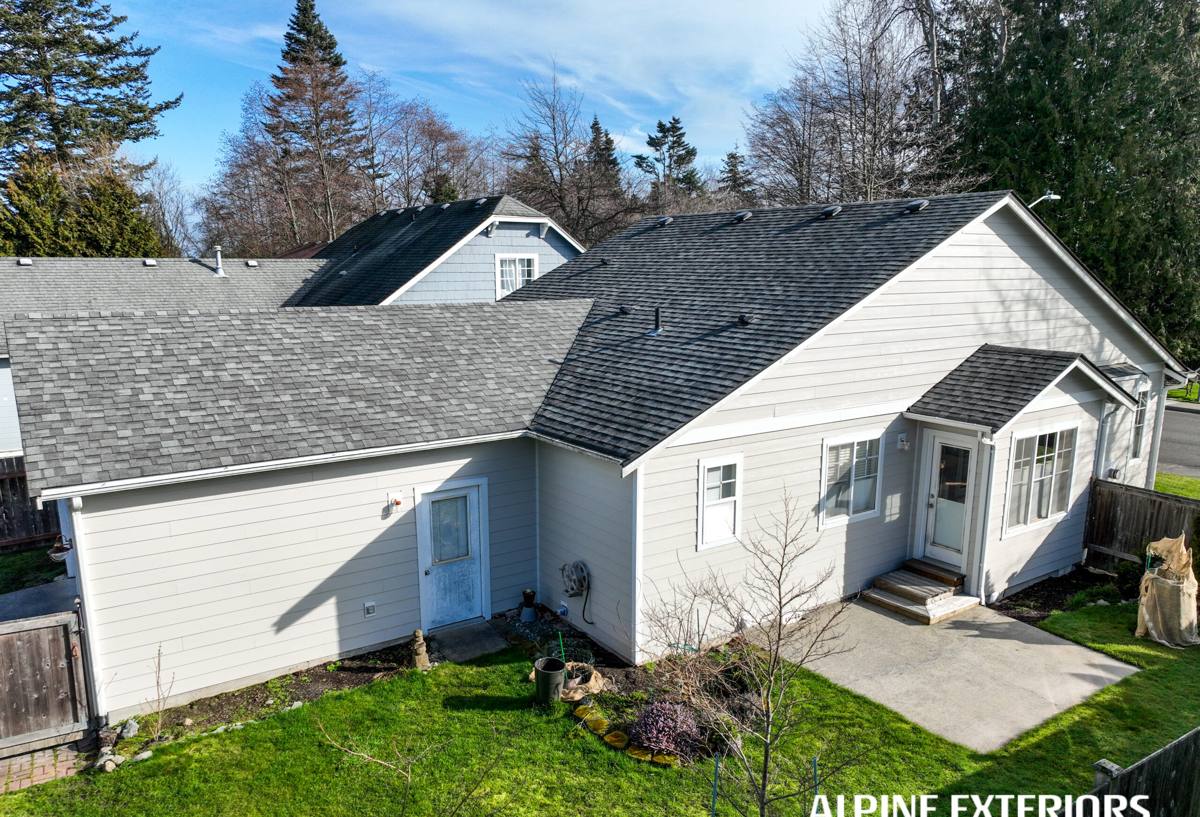
What Salt Air and Moisture Actually Do to a Home
Corrosion and Fastener Failure
Salt air accelerates corrosion on anything metal — nails, screws, flashing, gutter hangers, even some paint pigments break down faster under chloride exposure. When fasteners corrode before the siding material itself fails, you get streaking, loosened boards, and eventually water intrusion at the fastener holes. This is one of the more overlooked failure points in coastal siding jobs, and it's why fastener selection matters as much as the siding product itself.
Moisture Cycling
Wood-based and wood-derived siding products absorb moisture, swell, and then dry out and shrink. Repeated over a wet Whatcom County winter and a drier summer, that cycle stresses joints, paint film, and caulk lines. Over years, it shows up as cracking, edge swelling, and paint that won't hold no matter how often it's redone.
Moss and Organic Growth
Moss doesn't just look bad — it holds moisture against the surface it's growing on, which is a problem for almost every siding material. On horizontal trim, deck boards, and shaded wall sections, sustained dampness under a moss mat is exactly the condition that leads to rot in wood components and premature wear elsewhere.
How Different Siding Materials Hold Up Near the Water
We get asked fairly often why we don't offer vinyl, LP SmartSide, cedar, or primed spruce siding, especially since some of those products are less expensive up front. Here's the honest comparison, based on how these materials actually behave in a salt-air, high-moisture environment like Sandy Point's — not on brand marketing from any side.
| Material | Behavior Near Salt Air & Moisture | Long-Term Consideration |
|---|---|---|
| Vinyl siding | Doesn't rot, but can become brittle and fade faster under UV and salt exposure; seams and panels can loosen in wind | Lower material cost, but limited repair options and a look that many homeowners eventually want to upgrade from |
| Cedar / primed spruce | Natural material that absorbs moisture readily; needs consistent refinishing to resist rot and moss staining | Highest ongoing maintenance burden in this climate; rot risk increases if upkeep lapses even one season |
| LP SmartSide (engineered wood) | Better moisture resistance than raw wood thanks to resin treatment, but still a wood-based substrate that depends on caulking and paint to stay sealed | Edge and cut-end sealing is critical; any breach in the factory treatment invites moisture into the substrate |
| James Hardie fiber cement | Non-combustible, dimensionally stable, does not swell or rot from moisture absorption the way wood-based products can | Factory ColorPlus finish resists fading and holds up to coastal UV and salt exposure with minimal upkeep |
This is why our company installs exclusively James Hardie fiber cement siding. It isn't that the alternatives are junk — vinyl and engineered wood are legitimate products used successfully all over the country. It's that in a specific climate like Sandy Point's, with salt air and a long wet season stacked on top of each other, fiber cement's moisture stability and finish durability hold up better over the life of the product, and that's the standard we've chosen to build our business on.
Why James Hardie Specifically
James Hardie's HZ5 product line is engineered for climates with freeze-thaw cycling and sustained moisture exposure, which describes Whatcom County's coastal areas well. A few specifics worth knowing:
- Non-combustible core — fiber cement doesn't contribute fuel to a fire, which matters for insurance and for peace of mind.
- ColorPlus factory finish — baked-on finish that resists chipping, cracking, and fading better than field-applied paint, which matters when salt air is working against the finish year-round.
- Dimensional stability — fiber cement doesn't swell and shrink with moisture the way wood-based sidings do, so caulk lines and paint hold longer.
- Transferable warranty — a real consideration if you ever sell the home, since a documented warranty on the exterior is a selling point in a market like this.
We're not paid to say any of this — it's the reason we made Hardie the only siding product we install, full stop.
How a Siding Project Works for a Sandy Point Home
Assessment and Moisture Check
Every job starts with a real look at what's happening under the existing siding, not just the surface. In a coastal setting, we're specifically checking for moisture intrusion around window and door openings, deck ledger connections, and any spot where past caulking has failed. Sandy Point homes that haven't had an exterior inspection in a while sometimes have moisture problems that aren't visible from the street.
Weather Barrier and Flashing Detail
The siding itself is only part of the system. Correct installation means a continuous weather-resistive barrier, properly lapped and sealed flashing at every penetration and transition, and drainage gaps where they're called for. In a driving-rain climate, these details are what actually keep water out — the siding is the visible layer, but the barrier behind it is doing the real work.
Fastening for a Salt Environment
Given how corrosive salt air is to standard fasteners, we pay close attention to fastener spec on coastal jobs. This is a small detail that has an outsized effect on how long a siding job actually performs before anything needs attention.
Finish and Trim
ColorPlus prefinished panels and trim reduce the number of field-painted seams, which is where coastal weather typically finds a way in first. Where trim does need to be cut and finished on site, edge sealing is done to manufacturer spec, not skipped for speed.
It's Not Just Siding — Roofing, Windows, and Decks Face the Same Conditions
Salt air and a long moss season don't stop at the walls. We handle roofing, windows, and decks for the same reason we're careful about siding: these systems all fail for related reasons near the water.
Roofing
Moss buildup on a roof holds moisture against shingles and underlayment, and in a shaded, damp property it can shorten roof life if left unmanaged. Roof inspections and, where needed, replacement should account for ventilation and moss-resistant detailing appropriate to a coastal setting.
Windows
Window flashing and seals take the same wind-driven rain exposure as the siding around them. A window replacement is a good opportunity to correct flashing details that may not have been done to current standards originally — this is often where leaks actually originate, not the window unit itself.
Decks
Decks near the water deal with moss, standing water on horizontal surfaces, and corrosion on fasteners and hardware, all at once. Ledger board connections in particular need to be built and flashed correctly, since that's a common point of hidden rot on older decks.
Maintaining Your Exterior in a Moss-Heavy, Salt-Air Climate
Even the best-installed exterior benefits from basic seasonal attention in a climate like Sandy Point's. A simple maintenance routine goes a long way:
- Rinse siding and trim periodically to remove salt residue, especially on sides of the house facing open water or prevailing wind
- Keep gutters clear so water isn't overflowing onto siding or pooling near the foundation
- Trim back vegetation that's shading and dampening wall sections, which slows moss and algae growth
- Inspect caulking around windows, doors, and trim joints annually and re-seal before small gaps become water paths
- Address roof and deck moss before it builds into a thick mat that holds moisture against the surface
- Watch for streaking or discoloration near fasteners, which can be an early sign of corrosion
Cost Factors for a Sandy Point Exterior Project
Every home and project scope is different, but a few factors consistently move the cost of siding, roofing, window, or deck work in a coastal setting like this:
| Factor | Why It Matters Here |
|---|---|
| Home size and wall complexity | More corners, dormers, and trim detail mean more cut edges to seal and more labor |
| Existing moisture damage | Hidden rot found during tear-off, common in older coastal homes, adds repair scope before new siding goes on |
| Access and site conditions | Waterfront lots with limited access or steep grades can affect staging and labor time |
| Product selection | Fiber cement siding, roofing materials, and window lines vary in upfront cost, but should be weighed against expected maintenance and lifespan in this climate |
| Scope bundling | Combining siding with roofing, window, or deck work in one project can reduce redundant setup and staging costs |
We provide a written estimate before any work starts, so you know exactly what's included and why.
Why a Local Crew Matters in Sandy Point
A crew that works regularly in Whatcom County's coastal areas knows the difference between a standard inland installation and what a salt-air, high-moisture property actually needs — the flashing details, the fastener choices, the moss-prone spots to check first. That's not something you get from a general contractor who occasionally works this far out. We're a Ferndale-based crew, and jobs in Sandy Point are part of our regular service area, not a special trip.
If you're weighing a siding, roofing, window, or deck project for a home in Sandy Point, we're happy to take a look and give you a straightforward, no-pressure estimate — fill out the form below to get started.