 Ferndale
 One Product, No Exceptions
Homeowners in Ferndale sometimes ask why we don't carry a catalog of siding options the way a lot of contractors do. The honest answer is that we used to install more than one product, and we stopped. Not because other materials don't have a place somewhere, but because after enough jobs in Whatcom County — enough tear-offs, enough callbacks, enough conversations with homeowners about what failed and why — James Hardie fiber cement was the only product we felt comfortable standing behind on every home, in every direction of exposure, without a disclaimer.
This page isn't a sales pitch. It's an explanation of what fiber cement is, why the specific engineering behind James Hardie matters in this climate, and what separates a correct installation from one that just looks fine on closing day.
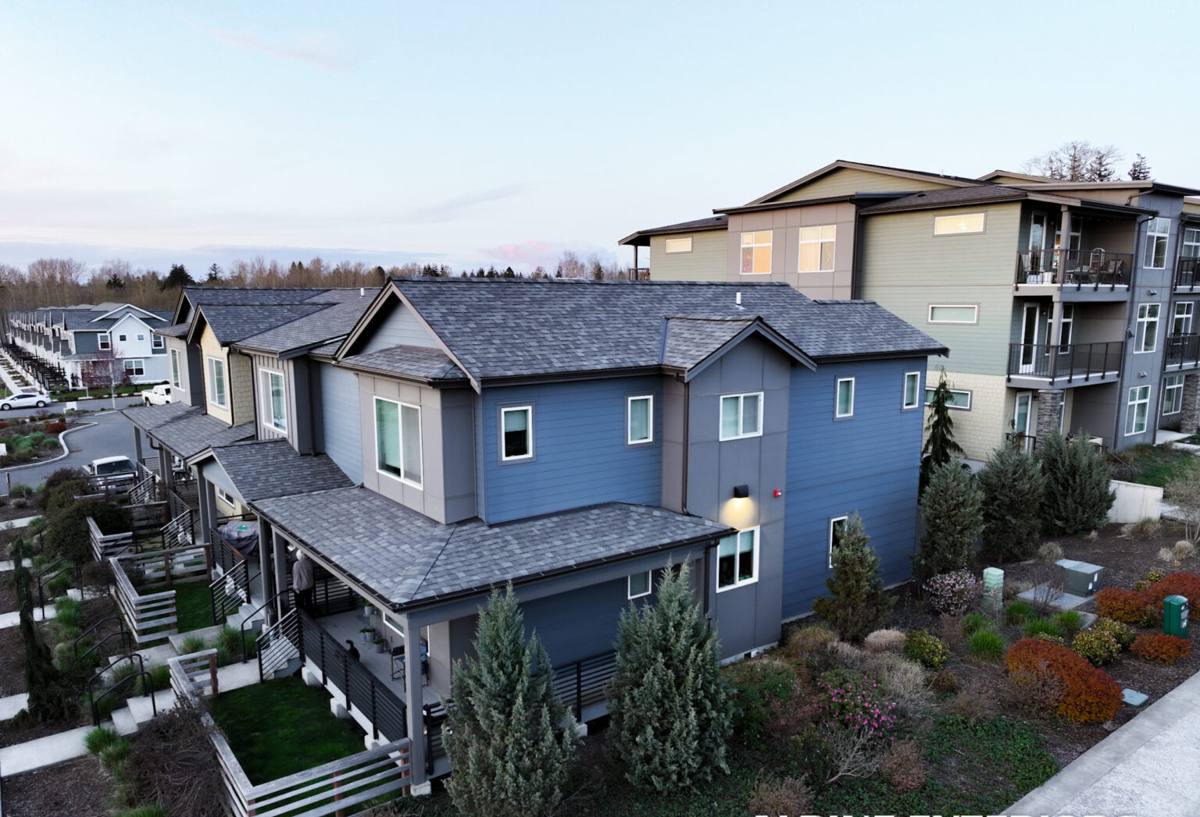
What Fiber Cement Actually Is
James Hardie siding is made from a mix of Portland cement, sand, and cellulose fiber, cured into rigid boards, panels, and shingles. It's not plastic (like vinyl), it's not a wood composite (like LP SmartSide or engineered wood products), and it's not wood itself (like cedar or primed spruce). That distinction matters because it changes how the material behaves against moisture, insects, fire, and sun — the four things that do the most damage to siding on the Washington coast over a 20- to 30-year span.
Fiber cement doesn't absorb water the way wood-based products can, it won't feed insects the way untreated or engineered wood can, and it's non-combustible, which matters more every year as wildfire smoke and ember exposure become a bigger part of the conversation even on the wet side of the state. It's also heavier and more rigid than vinyl, which means it doesn't ripple, sag, or melt under a barbecue or a reflective window the way thin vinyl panels can.
Why Whatcom County Is a Hard Test for Siding
Ferndale sits close enough to Bellingham Bay and the Strait of Georgia that salt-laden air is a real factor on siding, trim, and fasteners — not a coastal-town cliché. Combine that with the driving rain that comes off the water during fall and winter storms, and siding here takes on wind-blown moisture at angles that siding in a drier inland climate never has to deal with. Add a moss and algae season that can run eight or nine months out of the year under the tree cover and cloud ceiling typical of this part of the county, and you've got a product test that a lot of siding simply doesn't pass gracefully over time.
None of that is unique to any one house — it's the baseline condition for exterior materials anywhere between Ferndale and the water. The material we choose has to hold a factory finish against UV and salt, resist water intrusion at horizontal laps and butt joints, and shrug off moss and mildew growth without the homeowner needing to pressure-wash and recaulk every year or two.
What We See Come Off Older Homes
On tear-offs around Ferndale and the surrounding county, the failure patterns are pretty consistent regardless of what brand was on the wall: swollen or delaminating panel edges where moisture worked into an unsealed cut, chalky or peeling field-applied paint that couldn't hold up to the UV and damp cycle, and moss colonization in shaded, north-facing sections that never fully dries out between rain events. Fiber cement engineered for this climate, installed with the right clearances and finished at the factory, resists all three of those failure modes far better than the alternatives.
The HZ5 System: Engineered for This Climate, Not Just Sold Here
James Hardie doesn't make one product for the whole country. Its HZ5 line is engineered specifically for climates like ours — the Pacific Northwest zone that deals with sustained damp conditions, freeze-thaw cycling in winter, and high moisture exposure most of the year. The formulation and finish requirements for HZ5 are different from the HZ10 product sold in the hot, humid Southeast, which is a level of climate-specific engineering that most competing fiber cement and engineered-wood products don't bother with — they sell one national formulation everywhere.
That distinction is a big part of why we settled on this one manufacturer. We're not installing a generic product and hoping it holds up here — we're installing the specific version of the product built for this weather.
ColorPlus Finish: Why Factory-Applied Beats Field-Painted
Most of the siding we install carries Hardie's ColorPlus factory finish rather than being primed and field-painted after installation. The finish is baked on in a controlled environment, in multiple coats, before the boards ever reach a job site. That matters for a few concrete reasons:
- Factory-applied finish cures fully before the material is ever exposed to job-site weather, which produces better adhesion than a coat applied outdoors in variable humidity.
- Color consistency across every board is far tighter than what field spraying or brushing can achieve.
- ColorPlus carries its own extended finish warranty separate from the substrate warranty, covering fading and peeling for a defined term.
- Touch-up is simpler and matched, rather than requiring a full repaint when small areas need attention.
Primed products — including primed spruce and some fiber cement competitors sold only primed — shift that finish work, and the risk that comes with it, onto whatever paint job happens after installation, in whatever weather window is available. In a region with our rain pattern, that window isn't always a good one.
The Product Lines We Install
James Hardie isn't a single board — it's a system of products designed to work together, from the field siding down to the trim and soffit. The right combination depends on the home's architecture and the homeowner's preference for a modern flat look versus a traditional lap profile.
| Product Line | Profile | Typical Use |
|---|---|---|
| HardiePlank Lap Siding | Horizontal lap, several reveal widths | Most common choice — traditional and craftsman-style homes |
| HardiePanel Vertical Siding | Large flat vertical panels | Modern designs, accent walls, gable ends |
| HardieShingle Siding | Staggered or straight-edge shingle profile | Cottage and Craftsman-style homes wanting a shingle look without cedar's maintenance |
| HardieTrim Boards | Smooth or textured trim stock | Corner boards, window and door trim, fascia |
| HardieSoffit Panels | Vented and non-vented panels | Eave and overhang protection, attic ventilation |
Using one manufacturer's full system rather than mixing brands for field siding and trim keeps expansion rates, fastening requirements, and finish warranties consistent across the whole exterior — which is one more variable removed from a wall that already has to deal with plenty of weather.
What the Warranty Actually Covers
James Hardie backs its fiber cement products with a non-prorated limited warranty — meaning it doesn't shrink in value over the years the way some prorated warranties do — and it's transferable to a subsequent homeowner within the coverage period, which matters for resale. The ColorPlus finish carries its own separate finish warranty term. Warranty coverage is tied to installation according to Hardie's published instructions, which is part of why correct installation isn't optional if you want that coverage to mean anything.
We register every job we install so the warranty is on file with the manufacturer, not just implied.
What Correct Installation Actually Requires
Fiber cement is not a forgiving product to install poorly, and a lot of the failures we see on tear-offs trace back to installation shortcuts rather than the material itself. A few things we hold to on every job:
- Proper clearance between the bottom of the siding and grade, decks, roof lines, and other horizontal surfaces, so water has somewhere to go.
- Correct fastener type, spacing, and penetration depth — under- or over-driven nails are a common cause of premature failure.
- Cut-edge sealing on every field cut, since raw cut edges are the most vulnerable point for moisture intrusion.
- Proper lap and joint treatment, including flashing at butt joints and any penetrations.
- A drainage plane and weather-resistive barrier installed correctly behind the siding, not just the visible surface.
- Manufacturer-specified caulking and sealants at trim transitions, compatible with the finish.
Skipping any one of those doesn't usually show up in year one. It shows up in year seven or ten, as swelling, staining, or a warranty claim that gets denied because the installation didn't match the manufacturer's requirements. That gap between "looks right at completion" and "installed to spec" is where most of the bad experiences with fiber cement siding actually come from — and it's a bigger factor in long-term performance than which brand of fiber cement ended up on the wall.
Cost Factors Homeowners Should Understand
Fiber cement generally costs more upfront than vinyl and is often comparable to or somewhat above engineered wood products, depending on the product line and finish chosen. A few things move that number:
| Factor | How It Affects Cost |
|---|---|
| Product line | Lap siding is typically the most economical; shingle profiles and wide panel work run higher due to labor and material use |
| Existing wall condition | Rot, sheathing damage, or inadequate weather barriers found during tear-off add scope before new siding goes up |
| Trim and detail work | Homes with more corners, window trim, and architectural detail take more labor hours per square foot |
| Finish choice | Factory ColorPlus finish costs more than unfinished primed board but removes the future cost and risk of a full field repaint |
We'd rather walk a homeowner through those factors honestly during an estimate than quote a number that doesn't reflect what the wall actually needs once it's opened up.
Where This Leaves Homeowners in Ferndale
We don't install LP SmartSide, vinyl, Cemplank, Allura, primed spruce, or cedar, and we're upfront about why: none of them gave us the same combination of climate-specific engineering, factory finish durability, and warranty structure that James Hardie's HZ5 system does for homes exposed to salt air, driving rain, and a long moss season year after year. That's a professional standard we hold to, not a claim that every other product is unusable everywhere — just that it's not what we're willing to put our name behind on a Whatcom County exterior.
If you're weighing a siding replacement or new build in Ferndale and want to talk through what James Hardie would look like on your home — product line, finish color, and a realistic cost range — we're happy to walk the exterior with you and put together a free, no-pressure estimate.