 Ferndale
 Why Lummi Island Is a Different Kind of Siding Job
Lummi Island sits out in the marine air of the Salish Sea, and that changes what a house needs from its siding compared to a home a few miles inland in Ferndale or Bellingham. The island gets the full package: salt-laden wind coming off the water, driving rain that hits walls sideways instead of falling straight down, and a moss and algae season that runs long because of shade, humidity, and slow-drying exposures. Add in that materials and crews reach the island by ferry, and a siding project here has logistics and durability requirements that a generic siding page just doesn't cover.
We install James Hardie fiber cement exclusively, and on Lummi Island that choice matters more than almost anywhere else in our service area. This page covers what the climate actually does to siding out there, what a correct Hardie installation looks like on the island, and why working with a crew that already understands the logistics makes a real difference in how the project goes and how the finished siding holds up.
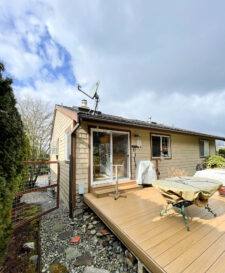
What Salt Air, Rain, and Moss Actually Do to a House
Salt Air
Airborne salt doesn't just sit on the surface — it works into fasteners, flashing, and any exposed metal on a home's exterior, accelerating corrosion. On wood-based or engineered wood siding products, that corrosion often shows up first at the fastener heads, where rust streaks bleed down the face of the board and eventually compromise the seal around the nail. Paint and factory finishes also fade and chalk faster under salt exposure combined with UV, which is why a finish that's engineered for coastal conditions matters more here than in a drier, inland neighborhood.
Driving Rain
Wind off the water pushes rain sideways into wall assemblies, not just down over them. That means laps, seams, butt joints, and trim intersections take on water pressure that a calmer site never sees. If a siding system doesn't have a real drainage path behind it, that wind-driven water finds its way behind the cladding and into the sheathing, where it causes rot and mold long before anyone notices a problem from the street.
Moss and Algae Season
Whatcom County's damp, mild winters already favor moss and algae growth, and shaded or north-facing walls on Lummi Island hold moisture even longer because of the marine humidity. Porous or absorbent siding materials stay wet longer and give organic growth a foothold, which shows up as green or black staining and, over years, contributes to surface breakdown.
Why We Only Install James Hardie Here
We made the decision years ago to install James Hardie fiber cement exclusively and turn down installs of vinyl, LP SmartSide, primed wood, cedar, and other fiber cement brands. That's not a marketing position — it's a standard we hold because of what we've seen these climate conditions do to siding materials that aren't built for it.
James Hardie's HZ product line is engineered by climate zone, and homes in our marine, high-moisture zone are matched to a formulation built to resist moisture absorption, freeze-thaw stress, and the humidity swings that come with living this close to the water. It's non-combustible fiber cement, so it doesn't rot, and it doesn't feed moss and algae the way organic or wood-based products can. Combined with the factory-applied ColorPlus finish — baked on under controlled conditions rather than field-painted — homeowners get a finish that's engineered to resist fading and chalking from UV and salt exposure far longer than a site-applied paint job, backed by a real transferable warranty on both the substrate and the finish.
That doesn't mean Hardie is maintenance-free out of the box. It means it performs the way it's supposed to only when it's installed correctly — and that's where a lot of siding jobs, on the island or anywhere else, go wrong.
What a Correct Installation Requires on Lummi Island
Fasteners and Metal
Every fastener and flashing detail on a coastal home needs to be corrosion-resistant — stainless steel or hot-dip galvanized, per manufacturer spec, not standard fasteners that will streak and fail early under salt exposure. This is one of the most common shortcuts we see on older installs out here, and it's one of the first things that fails visibly.
Drainage Behind the Cladding
Given how much wind-driven rain the island sees, a rainscreen gap or properly detailed weather-resistive barrier behind the siding isn't optional — it's what keeps water that does get past the cladding from sitting against the sheathing. Weep paths at the bottom of the wall assembly need to actually work, not just exist on paper.
Clearance and Flashing
James Hardie's installation instructions call for a minimum clearance from grade, roofing, and decks, along with correct head, sill, and kick-out flashing at every window, door, and roof-to-wall intersection. Skipping or shortcutting these details is exactly how water gets behind a wall that looks fine from the sidewalk.
Joints and Caulking
Butt joints and trim seams need the right sealant, applied correctly, because those are the spots wind-driven rain attacks hardest. A quality sealant that stays flexible through the region's temperature and humidity swings extends the life of every other detail underneath it.
| Climate Stressor | What It Does to Siding | How a Correct Hardie Install Addresses It |
|---|---|---|
| Salt air | Corrodes fasteners and metal trim; accelerates finish fading | Stainless/hot-dip galvanized fasteners; factory ColorPlus finish engineered for UV and salt exposure |
| Wind-driven rain | Forces water sideways into laps, joints, and trim intersections | Rainscreen drainage gap, correct flashing at every penetration, manufacturer-spec clearances |
| Long moss/algae season | Sustained moisture on shaded walls feeds organic growth and surface staining | Non-organic, non-combustible fiber cement substrate that doesn't feed growth the way wood-based products can |
| Humidity swings | Repeated wetting and drying stresses seams and finishes over time | HZ10 formulation engineered for marine/high-moisture climate zones |
Our Process for a Lummi Island Project
Because the island is ferry-accessible only, we plan differently than we would for a job a short drive from our yard. That starts with an accurate on-site assessment and material take-off before a single board or fastener crosses on the ferry — getting quantities, trim details, and color selections right the first time avoids the cost and delay of a second run for a missed piece. We schedule crew days around ferry sailings so the work stays continuous rather than stretched out waiting on materials, and we sequence the job so weather-sensitive steps like flashing and sealant application happen in the right conditions rather than rushed to catch a boat.
On site, the process is the same discipline we apply anywhere: remove and inspect the existing wall assembly for hidden moisture or rot before anything new goes up, correct any sheathing issues we find, install the water-resistive barrier and drainage system, then install the Hardie panels or lap siding to manufacturer spec — correct fastener pattern, correct clearances, correct flashing at every penetration. We finish with trim, caulking, and any ColorPlus touch-up needed at cut edges, then walk the whole exterior with the homeowner before we call it done.
Why Hiring a Crew That Already Works the Island Matters
A siding crew that hasn't worked Lummi Island before is learning the ferry logistics, the exposure differences between wall orientations, and the moisture patterns on your dime. A crew that already works out there has that built into how it plans and prices the job — fewer surprise trips, fewer delays waiting on a missed material, and installation details that already account for the salt air and wind exposure instead of treating the island like any other job site. It also means fewer callbacks: getting the fastener spec, flashing details, and drainage right the first time matters more here than almost anywhere else in Whatcom County, because a mistake sits exposed to tougher conditions for longer before it's caught.
What Affects the Cost of a Lummi Island Siding Project
- Access and logistics: ferry scheduling and material transport add planning time compared to mainland jobs
- Condition of the existing wall: hidden moisture or rot behind old siding adds repair scope once uncovered
- Home size and complexity: stories, rooflines, trim detail, and window/door count all affect labor
- Siding profile and color: lap versus panel, and standard versus custom ColorPlus colors, affect material cost
- Exposure orientation: walls facing prevailing wind and rain may need more flashing and detail work
We give straightforward, itemized estimates rather than vague ranges, because the honest answer depends on what we find once the old siding comes off.
Signs Your Lummi Island Home May Need Attention
- Rust streaks bleeding from fastener heads or trim
- Persistent green or black staining on shaded or north-facing walls
- Soft spots, bubbling, or visible warping near the base of walls or under windows
- Caulking that's cracked, shrunk, or pulled away from joints and trim
- Paint that's chalking, peeling, or fading unevenly across different wall faces
- Any musty smell or interior staining near exterior walls, which can point to moisture already behind the siding
Catching these early keeps a maintenance issue from becoming a full wall assembly repair, especially given how much longer moisture problems can sit unnoticed on a shaded, humid island wall.
Get a Straightforward Estimate
If you're weighing a siding replacement or repair on Lummi Island, we're glad to come take a look, walk the exterior with you, and give you a clear, no-pressure estimate based on what your home actually needs. Use the form below to get started.