 Ferndale
 What Primed Spruce Siding Actually Is
Primed spruce siding is solid wood lap or panel siding, milled from spruce lumber and coated at the factory with a primer coat before it ships. The idea is straightforward: you get the look and feel of real wood, a head start on paint prep, and a lower material cost than fiber cement or engineered wood products. For a long time, primed wood was the default choice for homes across Whatcom County, and plenty of it is still standing.
We get asked about it often enough that it's worth a straight answer. Primed spruce isn't a bad material in the abstract — spruce has been used in construction for generations, and a well-built, well-maintained wood home can look great for decades. Our decision not to install it comes down to what happens to that wood once it's on a wall in this specific climate, and what that means for a homeowner's time and money over the life of the siding.
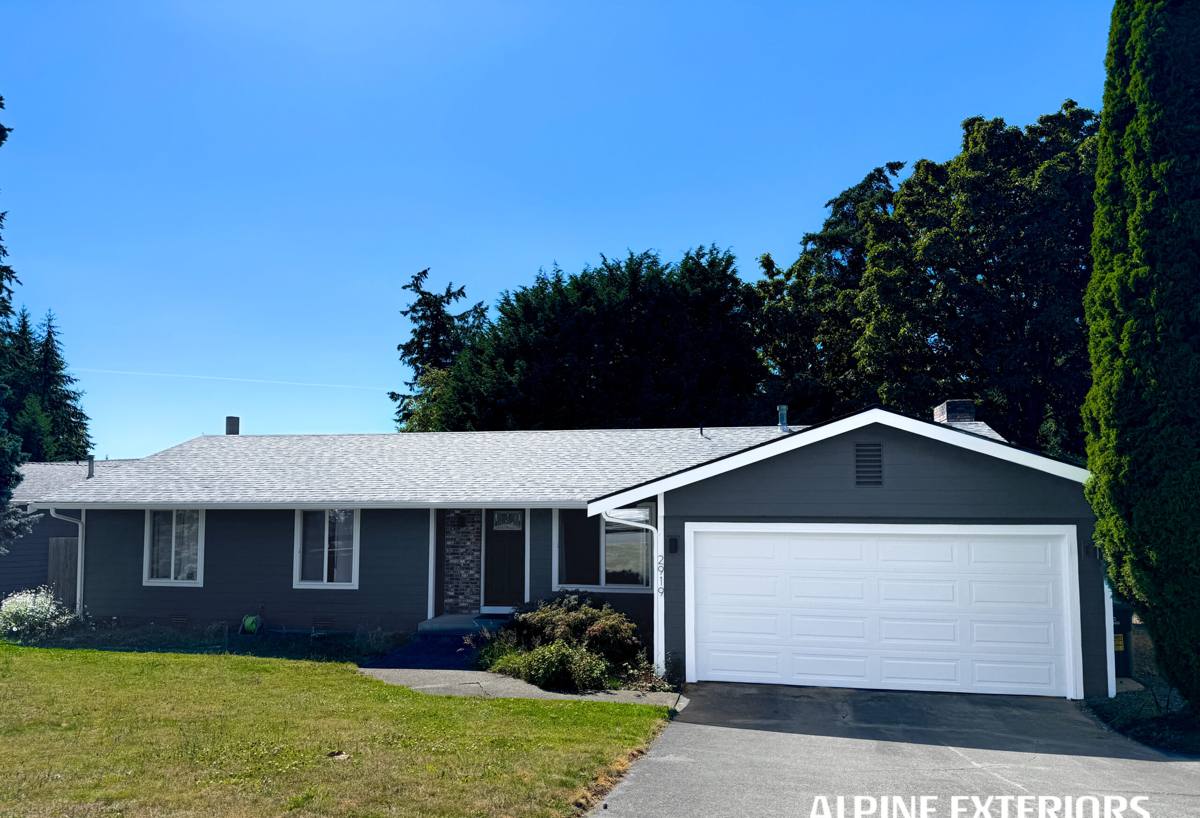
Why Ferndale's Climate Is Hard on Wood
Ferndale sits close enough to the Strait of Georgia and Bellingham Bay that salt air is a real factor here, not a coastal-town cliché. Salt-laden moisture works its way into wood fiber and accelerates the breakdown of paint film and the wood underneath it. Add in Whatcom County's driving rain — wind-driven storms that push water sideways into wall assemblies rather than letting it run straight down — and you've got conditions that test every seam, joint, and end cut in a wood siding installation.
Then there's moss. Western Washington's long, damp shoulder seasons give moss and algae months at a time to establish themselves on north-facing walls and anywhere siding stays shaded and damp. Moss holds moisture against the wood surface long after a rain has passed, which is exactly the condition that lets rot get started. None of this makes primed spruce impossible to use here — plenty of homes in Ferndale still wear it — but it does mean the product needs more attention than it does in a drier climate.
The Coating Is Only as Good as What Comes After It
Factory priming does one job: it seals the wood enough to slow moisture absorption until a finish coat of paint goes on. It is not a finish in itself. Primer left exposed to weather for more than a few weeks starts to break down, and any cut ends, nail holes, or field trim exposed during installation are bare wood unless the crew back-primes and seals every one of them on site. That's a lot of hand-finishing to get right on every single board, and it's easy to skip in the field without anyone noticing until years later.
Where Primed Spruce Falls Short Over Time
The issues we see with primed wood siding aren't really about the day it goes up — they show up three, five, ten years down the road, after repeated wet-dry cycles and repainting.
- Repainting is not optional. Wood siding needs a full repaint roughly every 5-8 years in this climate, sooner on south and west exposures that take direct sun and rain together. Skip a cycle and the paint film starts to fail, which lets moisture in.
- Moisture moves through end grain fast. Cut ends at corners, window and door trim, and butt joints are where wood siding absorbs water quickest. If those cuts weren't sealed properly during installation, rot often starts there first — hidden behind trim where it's not visible until it's advanced.
- Wood moves with humidity. Boards expand and contract with moisture content, which over years can telegraph through paint as hairline cracking, and can loosen fasteners at the point where the board meets the wall.
- Moss and algae need active management. Shaded, damp walls need periodic cleaning to keep growth from taking hold, which is upkeep most homeowners don't plan for when they price out a siding job.
- Woodpeckers and insects. Solid wood siding is a food source and nesting material for woodpeckers and an entry point for carpenter ants and other wood-boring insects, particularly once any soft or damp spot develops.
What Primed Spruce Gets Right
It's worth saying plainly: wood siding has real advantages, and we're not going to pretend otherwise. It has a warmth and grain texture that manufactured products work hard to replicate. It's workable with basic tools, which keeps repair costs down for small, isolated damage. And on a home that gets consistent maintenance — repainting on schedule, caulking checked yearly, moss kept off — wood siding can last a long time. The trade-off is that "consistent maintenance" is doing a lot of work in that sentence, and most homeowners don't sign up for a siding product with that kind of ongoing commitment when they're comparing options.
The Maintenance Math
When homeowners ask us to compare primed wood against fiber cement, the honest answer isn't about which one looks better going up — it's about what happens over a 20-30 year ownership window. Here's how the factors stack up.
| Factor | Primed Spruce | James Hardie Fiber Cement |
|---|---|---|
| Repaint cycle | Every 5-8 years | ColorPlus finish: typically 15+ years before repaint is needed |
| Moisture absorption | Absorbs and swells at cut ends and exposed grain | Engineered to resist moisture-driven swelling and cracking |
| Combustibility | Combustible | Non-combustible material |
| Pest vulnerability | Vulnerable to woodpeckers, carpenter ants, rot-related insects | Not a food or nesting source for pests |
| Warranty | Varies by paint and installer; wood itself typically not warrantied against rot | Manufacturer-backed, transferable warranty on the siding itself |
| Upfront material cost | Generally lower | Higher, offset by lower long-term maintenance cost |
Why We Standardized on James Hardie
We made a decision as a company to install only James Hardie fiber cement siding, and we don't do exceptions for primed spruce, cedar, vinyl, or engineered wood products like LP SmartSide. That's not a marketing position — it's a practical one, built around what holds up in this specific corner of Whatcom County.
Hardie's fiber cement is engineered specifically for climate conditions like ours through its HZ5 product line, which is formulated for cold, wet regions with freeze-thaw cycles and sustained moisture exposure. It doesn't absorb water the way wood does, so it isn't swelling, cracking, or feeding rot at cut ends the way spruce can. It's non-combustible, which matters more every year as wildfire smoke and dry-season risk become a bigger part of Pacific Northwest summers. The factory-applied ColorPlus finish is baked on under controlled conditions and holds color and integrity far longer than field-applied paint on wood, which means homeowners aren't budgeting for a repaint every five to eight years. And it carries a strong, transferable manufacturer warranty on the product itself — something that matters if you sell the home before the siding's functional life is up.
None of that makes wood siding a scam or a bad product on someone else's house. It makes it a different set of trade-offs than what we're willing to put our name behind, in a climate where salt air, driving rain, and a long moss season are working against wood siding every single month of the year, not just during storm season.
What to Ask If You're Considering Wood Siding
If you're set on the look of real wood and you understand the maintenance commitment, that's a legitimate choice — just go in with clear eyes. A few things worth asking any contractor before you commit:
- Will every cut end be back-primed and sealed on site, not just factory-primed faces?
- What's the plan for flashing and drainage behind the siding, especially on walls that face prevailing wind and rain?
- Who is responsible for the finish coat of paint, and on what timeline after installation?
- What does the manufacturer actually warranty — the wood, the primer, or neither?
- How will corners, window trim, and butt joints be detailed to keep water from tracking into end grain?
Making the Right Call for Your Home
Every home and every homeowner's priorities are different. Some people want the lowest possible upfront cost and are willing to trade that for ongoing maintenance. Others want to sider a house once and not think about repainting or rot inspections for the next couple of decades. We install Hardie because it's the product we're comfortable standing behind for Ferndale's specific mix of salt air, wind-driven rain, and moss-friendly damp seasons — but we'd rather explain our reasoning plainly than talk anyone into or out of a decision.
If you're weighing primed wood against fiber cement, or just want an honest look at what your current siding is telling you about its condition, we're happy to take a look. Reach out for a free, no-pressure estimate — we'll walk the exterior with you and tell you what we'd actually recommend for your home.