 Ferndale
 What Board & Batten Actually Is
Board and batten is one of the oldest siding patterns in the Pacific Northwest, and it's having a real moment again — clean vertical lines, deep shadow reveals, a look that reads equally well on a farmhouse in the county or a new build closer to town. The pattern itself is simple: wide flat boards run vertically, with narrower strips (the battens) covering the seams between them. What's not simple is getting the assembly to actually shed water for thirty years instead of five.
That distinction matters more with this style than almost any other siding pattern we install. Horizontal lap siding is designed from the ground up to shed water downward, board over board, by gravity. Board and batten depends entirely on the seams, the fasteners, and the material behind the battens to keep water out — because water runs straight down those vertical joints instead of sliding off an overlap. Get the details wrong and you don't find out for a couple of years, which is exactly when it becomes an expensive problem instead of a five-minute fix.
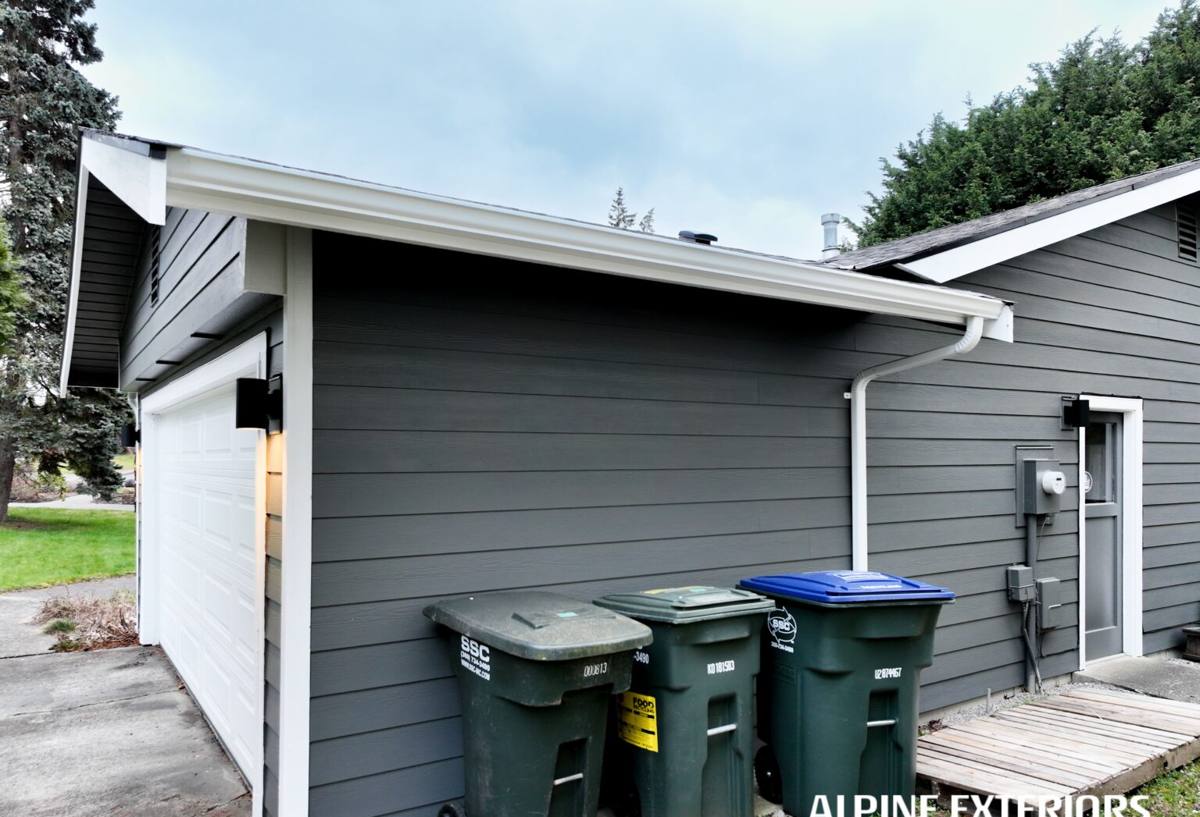
Why the Material Underneath the Pattern Matters So Much
Because board and batten relies on butted or lightly-lapped vertical joints rather than deep overlaps, the board material itself has to stay dimensionally stable. Wood battens and boards move with humidity — they swell, shrink, and cup, and every cycle opens the joint a little wider and lets more water behind the wall. Engineered wood products handle moisture better than raw lumber but are still an organic substrate at the core, which means the failure mode is the same, just slower.
This is the reason we don't offer board and batten in LP SmartSide, primed spruce, or cedar. Those are all fine products used correctly elsewhere, and we're not here to trash them — but board and batten is the pattern that punishes substrate movement hardest, and it's not the style to gamble on. We only install this pattern in James Hardie fiber cement, because it's the one substrate in this category that doesn't expand and contract enough to open those vertical joints over time.
How Fiber Cement Behaves Differently
- Dimensionally stable across wet and dry seasons — the joints you install in July still look right in February
- Won't rot, delaminate, or attract insects the way wood and wood-based products can
- Non-combustible core, which is worth knowing even outside wildfire-prone regions, since it also resists everyday flame and heat exposure
- Holds a factory finish (more on that below) instead of relying on field-applied paint to do all the water-resistance work
James Hardie's Board & Batten Options
Hardie doesn't sell a single "board and batten" product — it's an assembly built from a few different components depending on the look you want:
| Component | What it does |
|---|---|
| HardiePanel vertical siding | The flat field panel underneath the battens; comes pre-primed or in ColorPlus factory finish |
| HardieTrim battens | The vertical strips that cover the panel seams and create the shadow-line reveal |
| Artisan Siding by James Hardie | A premium, thicker-profile option with a more authentic dimensional look for homeowners who want deeper shadow lines |
| HardieWrap weather barrier + furring | Not visible once finished, but does the actual work of keeping bulk water off the wall sheathing |
The panels and battens are what you see. The weather barrier and furring strips underneath are what actually determine whether the wall stays dry — and it's that unglamorous part of the assembly where most of the "done right" in this page title lives.
Installation Details That Separate a Correct Job from a Problem Waiting to Happen
Rainscreen Gap
Board and batten should never be installed flat against the weather barrier. A proper installation furs the panels out from the wall by roughly 3/8" to create a drainage and ventilation gap behind the siding. Any water that does get past the battens has somewhere to go and something to dry against, instead of sitting trapped against wet sheathing.
Panel Joints and Flashing
Where panels meet — horizontally at a second story, or at inside/outside corners — those joints need proper Z-flashing or a shingled lap, not just caulk. Caulk is a maintenance item, not a waterproofing strategy; it degrades, and a joint that depends on unbroken caulk is a joint that will eventually leak.
Batten Spacing and Fastening
Battens need consistent spacing (both for the look and for even load distribution) and correct fastener placement per Hardie's published fastening schedule — the right nail or screw type, spaced correctly, driven flush and not overdriven. Overdriven fasteners crack the fiber cement at the head and create a water entry point that's invisible from the ground.
Bottom Termination and Clearance
The bottom edge of the siding needs proper clearance off grade, decks, and roof lines — typically a minimum of 6" above grade and 2" above roofing — so water and standing moisture never wick straight up into the panel end grain.
Why This Matters More in Ferndale and Whatcom County
Ferndale sits close enough to the Strait of Georgia and Bellingham Bay that salt-laden air is a real factor on fasteners and trim, not a theoretical one. Uncoated or poor-quality fasteners corrode faster here than they would inland, and a corroding fastener head is exactly the kind of small failure that turns into a streak of rot down a batten seam. We use fastener types rated for coastal exposure for that reason.
Whatcom County's driving rain — wind-driven, often sideways off the water — is the second factor. It's precisely the condition that exposes a board and batten wall without a working rainscreen gap and correct flashing, because wind pressure can force water into joints that would stay dry in a calm, straight-down rain. And the long moss and algae season this area is known for is a finish problem as much as a moisture problem: a factory-baked finish resists the greening that raw wood and field-painted products pick up on north-facing and shaded walls within a couple of seasons.
ColorPlus Finish and Color Options
Hardie's ColorPlus technology bakes the color onto the panel in a controlled factory environment, in multiple coats, before it ever reaches the jobsite. That matters for board and batten specifically because the vertical joints and shadow lines show inconsistent color far more obviously than a horizontal lap pattern does — any touch-up paint or field-applied color that doesn't match perfectly is going to be visible every time the light hits those reveals. ColorPlus finishes also carry their own dedicated finish warranty separate from the substrate warranty, covering fading and peeling.
Color palettes are curated to work well with the vertical board and batten look — deeper, more saturated tones tend to read particularly well in this pattern because of the shadow lines the battens create.
What It Costs — and What Drives the Range
| Factor | Effect on cost |
|---|---|
| Panel vs. Artisan profile | Artisan's thicker, more dimensional profile costs more than standard HardiePanel |
| Wall complexity | Corners, dormers, and cut-ins around windows add labor time in a pattern that doesn't forgive sloppy cuts |
| Existing siding removal | Tear-off and disposal of old siding vs. installing over a prepped wall |
| Furring and rainscreen setup | A correct drainage gap adds material and labor most lower-bid installs skip entirely |
| Story height and access | Two-story walls and steep lots require staging or lift access |
We won't quote a number without seeing the house, but board and batten in Hardie generally runs somewhat above standard horizontal lap siding, mostly because of the furring/rainscreen labor and the tighter tolerances the pattern demands — not because the panel material itself costs dramatically more.
Maintenance Checklist
- Rinse the exterior once or twice a year to keep organic growth from establishing, especially on shaded north and east walls
- Inspect caulking at window and door trim annually — it's a maintenance item even on a well-flashed wall
- Watch bottom edges near grade, decks, and walkways for splash-back staining, which signals a clearance or drainage issue worth a look
- Re-caulk and touch-up paint promptly at any fastener that shows rust bleed, rather than waiting for it to spread
Warranty
James Hardie backs its fiber cement products with a 30-year limited transferable warranty on the substrate, and ColorPlus finishes carry their own separate finish warranty. Transferability matters at resale — a documented, transferable warranty on the exterior is a real selling point, and it's one more reason board and batten done in the right material is a long-term investment rather than a look you'll be redoing in a decade.
If you're weighing board and batten for a home in Ferndale or anywhere in Whatcom County, we're happy to walk the exterior with you, talk through where the pattern makes sense on your specific house, and put together a free, no-pressure estimate.