 Ferndale
 Exterior Work in Custer: A Different Climate Than People Expect
Custer sits in the stretch of Whatcom County just north of Ferndale, close enough to the coastline and the Strait of Georgia tidal waters that homes here deal with a combination most inland siding crews never have to think about: salt-laden air moving in off the water, driving rain that comes in sideways during winter storms, and a moss and mildew season that can run nearly nine months out of the year. It's a different exterior environment than Bellingham proper or the valley towns further inland, and it asks more of a home's siding, trim, and roofing than most manufacturers' standard warranty language accounts for.
We've worked on homes throughout this part of Whatcom County long enough to know that what looks like a cosmetic problem in Custer — chalky paint, soft trim corners, a green cast creeping up the north wall — is very often a moisture problem that's been building for years. The climate here doesn't forgive shortcuts.
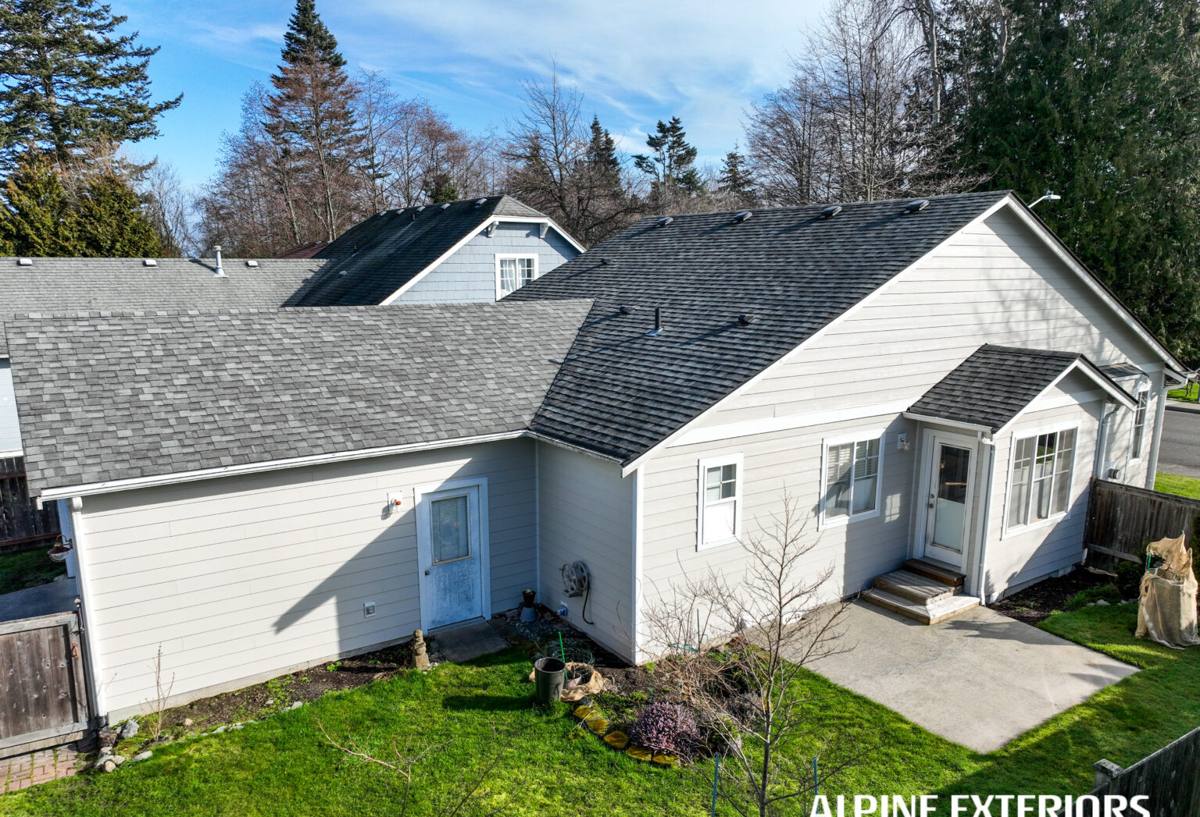
What Salt Air, Driving Rain, and Moss Actually Do to a House
Salt Air
Homes closer to the water pick up airborne salt that settles on siding, trim, and metal flashing. Over time it accelerates the breakdown of cheaper paint films and can corrode fasteners and hardware that aren't rated for coastal exposure. It's slow, and it's easy to ignore until a paint job that should have lasted a decade starts failing at year four or five.
Driving Rain
Whatcom County storms don't always fall straight down. Wind-driven rain gets pushed sideways into wall assemblies, working its way behind poorly lapped siding, undersized trim gaps, and old or missing kick-out flashing at roof-to-wall transitions. Once water gets behind the cladding, the damage is happening where nobody can see it until the sheathing or framing underneath is already compromised.
Moss and Sustained Moisture
Custer's tree cover, cool temperatures, and long wet season are close to ideal conditions for moss, algae, and mildew growth on roofs and on the shaded, north-facing sides of homes. Left alone, moss holds moisture directly against roofing and siding surfaces for months at a time, which is exactly the kind of sustained dampness that wood-based and improperly sealed products struggle with.
Why We Install James Hardie Fiber Cement — and Nothing Else
We made a deliberate decision as a company to install only James Hardie fiber cement siding. Not LP SmartSide, not vinyl, not Cemplank or Allura, not primed spruce or cedar. That's not a marketing position — it's a response to what we've seen play out on real homes in climates like this one.
Fiber cement is non-combustible and doesn't rely on a wood substrate that can absorb and hold moisture the way engineered wood products can. James Hardie's ColorPlus factory-applied finish is baked on under controlled conditions rather than field-painted, which matters directly here: it holds up better against the UV exposure, salt air, and repeated wet-dry cycling that wear down field-applied paint faster than most people expect. Hardie also builds region-specific HZ5 product formulations engineered for the Pacific Northwest's wet climate, and backs installations with a strong transferable warranty — but only when the product goes on correctly, which is the other half of the equation.
We're not going to tell you vinyl or LP SmartSide are junk products — they're not, and they have their place. But for a Custer property exposed to coastal salt air and sustained moisture, we don't think they're the right long-term bet, and we'd rather turn down that installation than put something on your home we don't stand behind ten years out.
Roofing, Windows, and Decks: The Rest of the Envelope
Siding doesn't work in isolation. On a coastal Whatcom County home, the roof, windows, and any exterior decking all interact with the same moisture and salt exposure, and a weak link in any one of them undermines the others.
- Roofing: Roof-to-wall flashing details are where driving rain most often finds its way into a wall assembly. We pay close attention to kick-out flashing, valley work, and moss-prevention details when we're also handling the siding, since the two trades meet at the same critical junctions.
- Windows: Window flashing and sealant integration is one of the most common failure points we find when we open up an older wall in this area. New siding is a natural point to correct undersized or missing window flashing rather than siding around a problem that will keep leaking.
- Decks: Exterior decks in this climate see the same wet-dry cycling and moss growth as siding and roofing, and ledger board attachment to the house is a frequent moisture entry point if it wasn't detailed correctly the first time.
Handling siding, roofing, windows, and decks under one crew means fewer handoffs between trades and fewer gaps where two contractors each assume the other one is handling the flashing detail.
What a Siding Project in Custer Actually Involves
1. Assessment
We start by looking at what's actually happening behind the existing siding where we can — soft spots, staining patterns, condition of the house wrap or building paper, and any signs that moisture has already gotten in around windows, doors, or roof transitions.
2. Removal and Sheathing Check
Old siding comes off and we inspect the sheathing underneath. In a climate like this, we occasionally find sections that need repair before new siding goes on — better to find and fix that now than to cover it up.
3. Weather Barrier and Flashing
A correctly lapped weather-resistive barrier and properly integrated flashing at every window, door, and penetration is what actually keeps driving rain out — the siding itself is the second line of defense, not the first.
4. Hardie Installation to Manufacturer Spec
James Hardie's warranty depends on installation matching their published specifications: proper fastener type and spacing, correct clearances from grade, decks, and roof lines, and correctly sealed joints. We install to that spec, not around it.
5. Final Walkthrough
We walk the finished exterior with you before calling the job done.
Cost Factors for Custer Homes
Every home is different, and we'll give you real numbers after we've seen your house — but these are the factors that most influence the scope and cost of a siding project in this area:
| Factor | Why It Matters Here |
|---|---|
| Home size and story count | Determines material quantity and access/scaffolding needs |
| Condition of existing sheathing | Coastal moisture exposure sometimes means repair work is needed before new siding goes on |
| Trim and detail complexity | Homes with more corners, gables, and window trim take more labor per square foot |
| Existing flashing condition | Correcting undersized or missing flashing at windows and roof lines adds scope but prevents repeat failures |
| Hardie product line and color | Plank profile, panel style, and ColorPlus color selection affect material cost |
| Site access | Tree cover, slope, and driveway access common in this area can affect setup and disposal logistics |
Why a Local Crew Matters More Here Than It Sounds
A lot of siding companies work Whatcom County as one territory without much distinction between a home in downtown Bellingham and one out toward Custer. But the exposure difference between an inland lot with tree cover and a property closer to the water is real, and it should change decisions like fastener selection, flashing detail, and where extra attention goes during installation. A crew that works this specific area regularly — Ferndale, Custer, and the surrounding communities — has actually seen what five, ten, and twenty years of this climate does to different products and different installation choices. That's not something you get from a general regional price sheet.
Being local also means we're not disappearing after the job is done. If something needs a look two years down the road, we're still working in the same area.
A Simple Maintenance Checklist for This Climate
Whatever siding is currently on your Custer home, these are worth checking regularly given the local conditions:
- Look for moss or algae buildup on north-facing walls and roof sections, especially under tree cover
- Check caulking and sealant around windows and doors for cracking or gaps
- Watch for soft spots, bubbling paint, or staining near roof-to-wall transitions
- Keep gutters clear so overflow isn't running down exterior walls
- Trim back vegetation that keeps siding shaded and damp longer than necessary
- Note any fastener corrosion or staining, which can signal hardware not rated for coastal exposure
Get a Straight Answer About Your Home
If you're weighing a siding, roofing, window, or deck project on a Custer property, we'll walk the exterior with you, tell you honestly what we see, and explain what we'd recommend and why — no pressure, no inflated urgency. Reach out for a free estimate and we'll go from there.