 Ferndale
 Roofing on Lummi Island Isn't Like Roofing Inland
Lummi Island sits out in Whatcom County's marine weather, and that changes what a roof has to survive. Homes here take on salt-laden air off the water, wind-driven rain that gets pushed sideways under poorly flashed edges, and a moss season that can run most of the year in the shaded, damp spots under fir and cedar cover. A roof spec'd for a dry inland subdivision doesn't hold up the same way out here — the fasteners, underlayment, and ventilation all need to account for constant moisture exposure, not just occasional storms.
We work Ferndale and the surrounding Whatcom County coastline regularly, including Lummi Island, so this isn't a one-off trip for us. We know what a roof looks like after five or ten years of island exposure, and we build replacements to hold up to that reality rather than to a generic spec sheet.
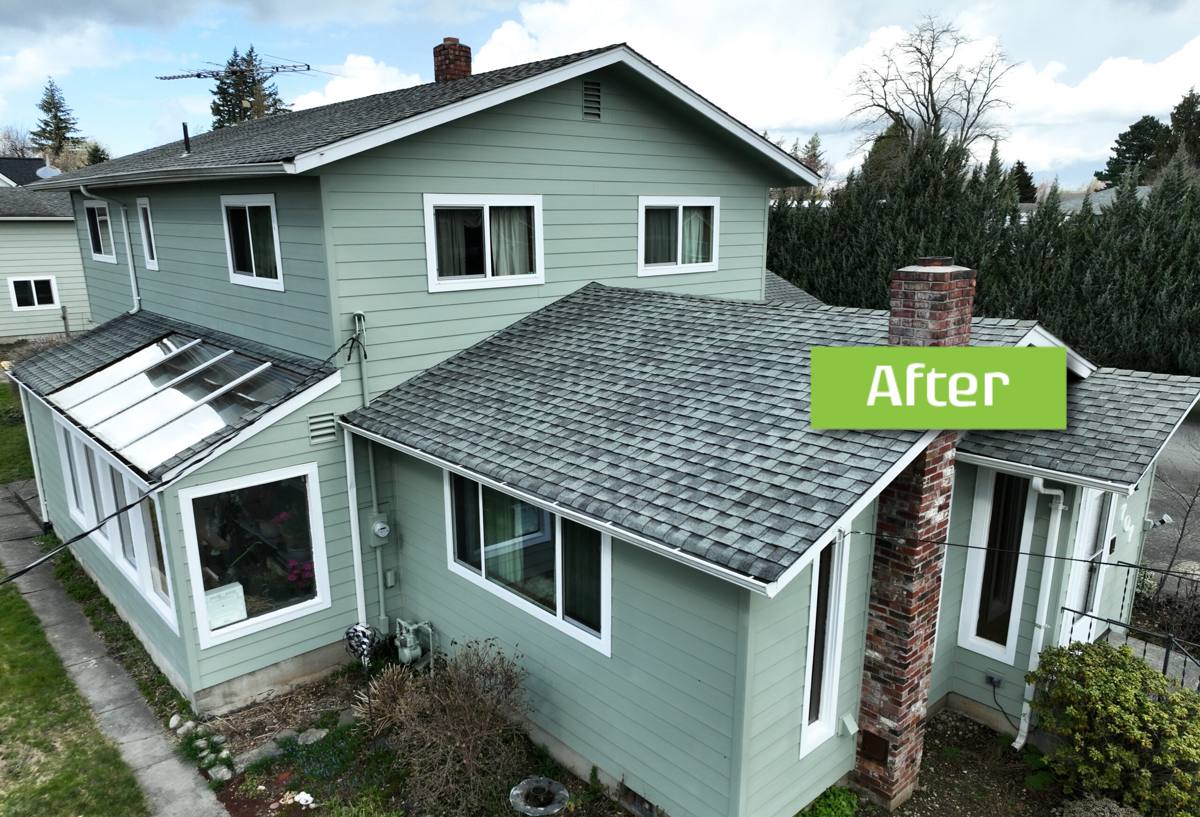
What Salt Air, Rain, and Moss Actually Do to a Roof
Salt Air
Airborne salt accelerates corrosion on any exposed metal — nails, flashing, vent stacks, and gutter hardware. Standard electro-galvanized fasteners can start rusting years before they should in this environment, and once fastener heads corrode, shingles lose their grip and start lifting in wind.
Driving Rain
Wind off the water doesn't just fall straight down — it drives rain sideways and up under shingle tabs, around chimneys, and along valleys. A roof that's fine in a calm inland rain can leak on Lummi Island if the underlayment, flashing laps, and valley details weren't built for wind-driven water.
Moss
Shade, moisture, and mild temperatures are exactly what moss wants. Left alone, moss holds water against the shingle surface, lifts tabs as it grows, and works its way under the shingle edge. Over years, that constant moisture retention shortens the life of an otherwise sound roof by a decade or more.
Signs Your Roof Is Telling You It's Time
- Granules collecting in gutters or at downspout outlets — a sign the shingle surface is wearing thin
- Shingles that are cupping, curling, or cracking, especially on south- and west-facing slopes
- Moss or algae streaking that keeps coming back within a season of cleaning
- Soft spots in the decking when walked, or sagging along the ridge or eaves
- Rusted or lifting flashing around chimneys, skylights, and vent penetrations
- Daylight visible through the roof deck from inside the attic
- Interior water stains on ceilings or in the attic after wind-driven storms
- A roof that's 20+ years old and has never been fully replaced, only patched
Any one of these can usually be repaired. Several together, especially on a roof already past 18–20 years old, usually means replacement is the more cost-effective path than continuing to chase leaks.
What a Correct Replacement Actually Involves
A roof replacement done right is more than swapping old shingles for new ones. For Lummi Island homes, we treat the following as non-negotiable, not upsells:
Full Tear-Off, Not Overlay
Installing new shingles over old ones traps moisture, hides deck damage, and voids most manufacturer warranties. We strip to the deck so we can actually see what's underneath.
Deck Inspection and Repair
Once the old roofing is off, we inspect the plywood or OSB decking for soft spots, delamination, or rot — common where moss or old flashing has let water sit for years. Damaged sections get replaced before anything new goes down.
Ice-and-Water Shield in Vulnerable Areas
Valleys, eaves, and roof-to-wall transitions get a self-adhered waterproof membrane underneath the shingles, not just standard felt. This is the single biggest defense against wind-driven rain finding its way in.
Corrosion-Resistant Fasteners and Flashing
Given the salt air, we use fasteners and flashing rated for coastal exposure rather than the cheapest standard-grade hardware. It costs a little more up front and saves a lot of grief later.
Proper Attic Ventilation
A roof that can't breathe traps moisture underneath the deck, which speeds up rot and encourages the exact conditions moss thrives in. We check intake and exhaust balance as part of every replacement, not as an afterthought.
Material Options for Island Conditions
| Material | How It Handles Salt Air & Moss | Typical Lifespan Here | Trade-Offs |
|---|---|---|---|
| Architectural asphalt shingles | Good, especially with corrosion-resistant fasteners and algae-resistant granules | 20–30 years | Most affordable; still needs periodic moss treatment |
| Standing seam metal | Excellent — sheds moss and water fast if properly coated for coastal exposure | 40–50+ years | Higher upfront cost; installation quality matters a lot near salt air |
| Synthetic/composite shingle | Very good moisture resistance, lightweight | 30–40 years | Higher material cost than asphalt; fewer local installers |
| Cedar shake | Attractive but holds moisture and feeds moss without diligent upkeep | 20–30 years with maintenance | Highest maintenance burden in this climate; we're upfront about that before recommending it |
We don't push one product on every home. What we do is tell you honestly how each option behaves once it's sitting on a roof exposed to island weather for a decade, so you're picking based on real trade-offs, not a glossy brochure.
Our Process for a Lummi Island Roof Replacement
- On-site inspection. We look at the current roof, attic ventilation, decking condition, and any moss or moisture patterns specific to your lot's shade and exposure.
- Honest scope and estimate. You get a written estimate that spells out material choice, tear-off, deck repair allowances, and flashing details — no vague line items.
- Scheduling around the weather. We plan around the drier stretches typical for the area and around ferry logistics for materials and crew, so the job isn't sitting exposed mid-project.
- Tear-off and deck repair. Old roofing comes off, decking gets inspected, and any soft or damaged sections are replaced before anything new goes down.
- Installation. Ice-and-water shield in vulnerable zones, corrosion-resistant fasteners, correct flashing laps at every penetration, and proper ventilation.
- Cleanup and walkthrough. Magnetic nail sweep, full site cleanup, and a walkthrough so you know exactly what was done and what to watch for going forward.
Why Local, Island-Experienced Crews Matter Here
Lummi Island's access by ferry is a real logistical factor that off-island contractors sometimes underestimate — material deliveries, crew scheduling, and dump runs all need to work around the crossing rather than against it. A crew that already routes work through the island builds that into the schedule from day one instead of discovering it mid-project and running into delays or rushed work to make a ferry window.
Beyond logistics, familiarity with how homes on the island actually weather matters. We've seen which roof details tend to fail first out here — usually flashing laps and fastener corrosion before the shingle field itself — and we build replacements to address those specific failure points rather than following a one-size-fits-all install.
What Drives the Cost of a Replacement
| Factor | Why It Matters |
|---|---|
| Roof size and pitch | Steeper, more complex rooflines take more labor and safety setup |
| Material choice | Asphalt, synthetic, and metal carry different material and labor costs |
| Deck condition | Rotted or delaminated decking found during tear-off adds repair cost, but skipping it isn't an option |
| Number of penetrations | Chimneys, skylights, and vents each need proper flashing, which adds labor |
| Ventilation upgrades | Adding or correcting intake/exhaust venting protects the new roof's lifespan |
| Access and logistics | Ferry scheduling and site access can affect delivery and crew timing |
We'd rather walk you through these factors on your specific roof than quote a number that doesn't hold up once we're actually up there. Ballpark ranges are useful for planning, but the honest number comes from seeing your roof in person.
Keeping a New Roof Performing After Install
- Have gutters cleaned at least twice a year — clogged gutters back water up under the roof edge
- Treat moss growth early with a proper roof-safe treatment rather than pressure washing, which can strip granules
- Keep overhanging branches trimmed back to reduce shade and debris buildup
- Schedule a flashing and fastener check every few years, especially around chimneys and vents
- Watch for granule buildup in gutters as an early warning sign, not just a cosmetic issue
A correctly installed roof still needs basic upkeep in this climate. Skipping it doesn't cause immediate failure, but it quietly shortens the lifespan you paid for.
If your roof is showing wear, or you just want an honest read on how many years it has left, we're happy to come out to Lummi Island and take a look. The estimate is free, there's no pressure to commit on the spot, and you'll get a straight answer either way — use the form below to get started.