 Ferndale
 Board & Batten on Lummi Island: A Look That Has to Earn Its Keep
Board and batten has a strong pull for homes near the water. The vertical lines read as clean and a little coastal-modern without looking trendy, and it works on everything from a small cottage to a larger contemporary build. On Lummi Island and the surrounding Ferndale area, though, that look sits in one of the toughest exposures in Whatcom County: salt-laden air off Rosario Strait and Georgia Strait, driving rain that comes in sideways off the water for months at a stretch, and a moss and algae season that runs longer here than it does even a few miles inland. A board and batten wall that looks sharp in a photo but wasn't detailed for that environment will show streaking, soft spots, and open seams well before its time.
This page is about that one job — board and batten siding, done right, for homes on and around Lummi Island — not a general rundown of the style. If you're comparing this look against lap siding or shingle patterns, treat this as the technical and material detail for the vertical option specifically.
Why the Style Fits, and Where It Gets Tested
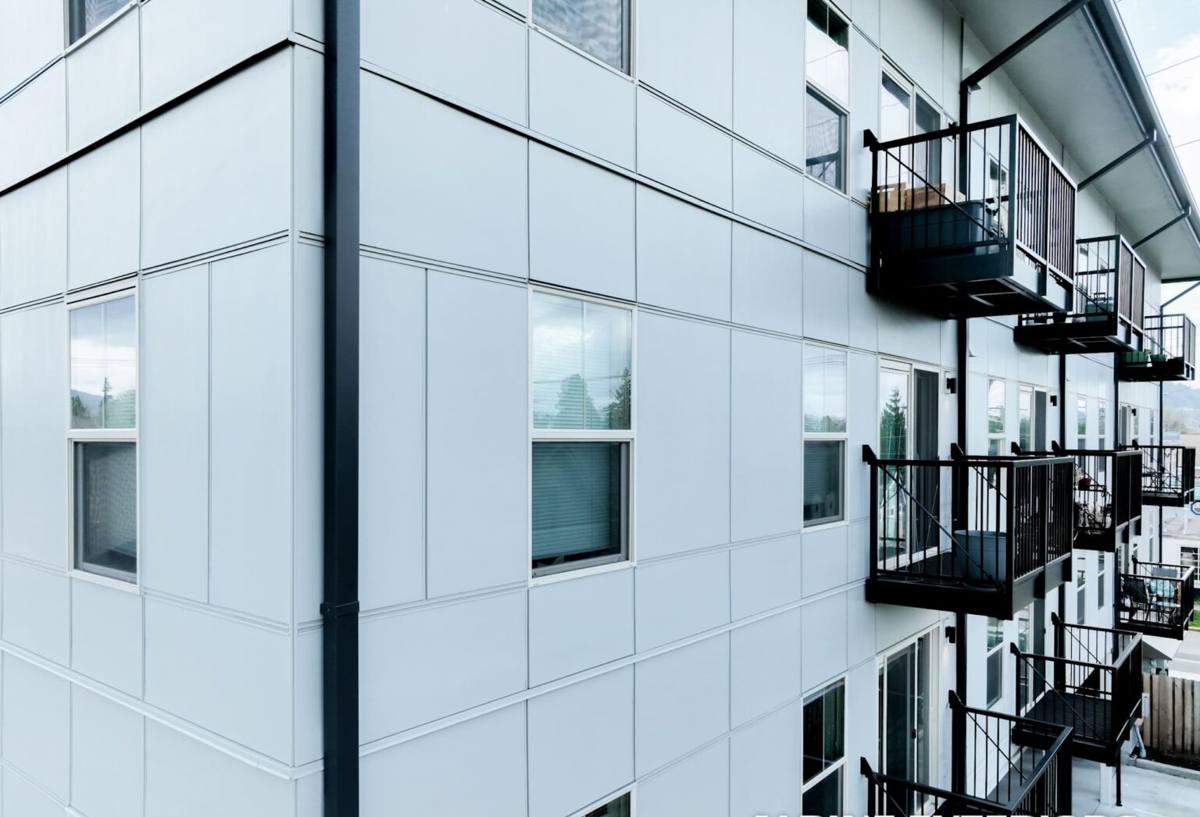
Board and batten reads well on the simpler, boxier forms common on island and waterfront lots — it doesn't compete with a view the way a busier lap pattern can, and the strong vertical lines hold up visually against big window walls and covered porches. That's the upside. The downside is structural: every batten strip creates a vertical seam, and every seam is a place where wind-driven rain wants to get behind the cladding. On a protected inland lot that's a minor detail. On Lummi Island, where wind off open water pushes rain into every south- and west-facing wall, seam and fastening detail is the difference between a wall that sheds water and one that holds it.
Salt air adds a second, slower problem: it accelerates corrosion on fasteners and trim hardware, and it leaves a fine residue that gives algae and moss something to grip. A board and batten wall with the wrong fasteners or no rainscreen gap behind it will show green streaking and rust bleed years ahead of an identical wall built with marine-appropriate hardware and proper ventilation.
What a Correct Board & Batten Installation Actually Involves
The finished look is simple — vertical panels with battens covering the seams — but the assembly behind it is where the job is won or lost. On homes in this exposure, we treat these as non-negotiable:
- A drainage gap (rainscreen) behind the panel so any moisture that gets past the surface has somewhere to go besides the sheathing
- Stainless or hot-dip galvanized fasteners rated for coastal exposure, not the standard-grade fasteners that are fine a few miles inland
- Correct batten spacing and fastening pattern so battens don't trap water at the panel joint instead of shedding it
- Proper flashing at every window, door, and roof intersection — board and batten's strong vertical lines make sloppy flashing more visible, not less
- Factory-finished panels rather than field-primed boards, so the cut edges and face are protected by the same finish system, not two different ones
- Correct fastener spacing and clearance at the bottom of the wall, away from grade and hardscape, to avoid wicking
Skip any one of these and the wall will likely still look right for a season or two. The failures that show up on badly built board and batten — soft spots at the base, streaking below battens, cupped or split boards — almost always trace back to one of these details being shortcut, not to the style itself.
Why We Don't Build This Look in Wood or Vinyl
Traditional board and batten was originally a wood pattern, and it's still sold that way, along with vinyl versions marketed as low-maintenance. We don't install either for homes in this area, and it's worth explaining why rather than just saying so. Solid wood board and batten needs repainting and caulk maintenance on a cycle that's simply shorter here — the combination of moisture and UV exposure on the coast works against painted wood faster than it does inland, and battens in particular trap moisture against end grain if they're not perfectly detailed and maintained. Vinyl board and batten avoids the paint cycle but has its own weak point: the panels are designed to float and expand with temperature, and that flexibility, combined with visible seams and a plastic face that never quite reads as substantial, tends to show its age in ways that are hard to reverse. Neither is a bad product outright — they're just not what we're willing to put our name on for this exposure.
What We Install Instead: James Hardie Fiber Cement
We install James Hardie exclusively, and for board and batten that means HardiePanel vertical siding paired with Hardie fiber cement trim boards as the battens. Fiber cement doesn't expand and contract with moisture the way wood does, it doesn't need repainting on the same cycle, and it's manufactured with the coastal Pacific Northwest specifically in mind through Hardie's HZ5 product engineering, which is built for climates with sustained moisture exposure rather than a general national average.
The panels come with a factory-applied ColorPlus finish rather than field-applied paint. That matters more on board and batten than on most other siding patterns, because the batten strips create dozens of extra edges and seams per wall — every one of those edges is baked-on finish rather than a hand-painted touch-up, which is where field-painted wood siding tends to fail first. Hardie also backs its products with a long transferable limited warranty, which is worth reading in full before you sign anything with any contractor, on any brand.
The Trim Detail Most Homeowners Don't Think to Ask About
A lot of "board and batten" jobs quoted around the region are actually a single panel product with battens that are more decorative than functional — thin strips fastened mostly for looks, with the real waterproofing done entirely by the panel underneath. True board and batten done in Hardie panel and trim uses the battens as part of the water management detail, not just the visual pattern. Ask any contractor quoting this job to walk you through exactly how their batten strips are fastened and flashed — the answer tells you a lot about how the wall will hold up in year eight or ten.
Material Comparison for This Style
| Material | Moisture behavior in this climate | Maintenance cycle | Typical lifespan here |
|---|---|---|---|
| Solid wood board & batten | Absorbs and releases moisture; end grain at battens is vulnerable | Repaint/recaulk every 3-5 years | 15-25 years with diligent upkeep |
| Vinyl board & batten panels | Doesn't rot, but seams and fasteners can allow water behind panels | Low, but limited repair options if damaged | 20-30 years, fades and becomes brittle over time |
| Engineered wood (OSB-based) | Sensitive to sustained moisture at edges and cuts if seal is compromised | Moderate; edge sealing critical | Varies widely with installation quality |
| James Hardie fiber cement | Non-combustible, dimensionally stable, engineered for wet climates (HZ5) | Occasional wash; no repainting cycle with ColorPlus finish | 30+ years when installed to spec |
Cost Factors for a Lummi Island Board & Batten Project
Board and batten typically costs somewhat more per square foot than standard lap siding in Hardie's lineup, mainly because of the added trim material and labor for the battens themselves. Rather than quote a number that won't hold up project to project, here's what actually moves the price on a job like this:
| Factor | Why it matters |
|---|---|
| Wall height and window/door count | More cutting and flashing detail around openings, more labor per square foot |
| Batten spacing chosen | Tighter spacing means more trim material and more fastening labor |
| Existing siding removal and sheathing condition | Rot or moisture damage found underneath adds repair scope before new siding goes on |
| Access and material staging | Waterfront and island lots can have tighter access, which affects crew time |
| Color and finish selection | Standard ColorPlus colors versus custom finishes affects lead time and cost |
Our Process for This Project Type
The steps aren't unique to Lummi Island, but the sequencing and scheduling around them are shaped by working out here regularly:
- On-site assessment of the existing walls, sheathing, and any moisture damage before we ever talk finish colors
- A written scope specifying panel product, batten spacing, fastener spec, and flashing details — not just "board and batten siding" as a line item
- Material ordering and delivery scheduled around ferry logistics where the project is actually on the island, since Lummi Island access runs through the ferry rather than a direct road
- Tear-off and sheathing repair as needed, addressed before any new panel goes up
- Installation with rainscreen gap, corrosion-resistant fasteners, and correctly flashed openings
- Final walkthrough covering care and what to watch for in the first year
Why a Crew That Already Works Lummi Island Matters Here
Two things separate a contractor who occasionally takes a job out here from one who works this area regularly. First is logistics: ferry schedules affect how material deliveries and crew days get planned, and a crew that's used to it builds that into the timeline instead of losing days to it. Second is exposure knowledge: a wall on Lummi Island facing open water takes wind-driven rain and salt exposure that a similarly built wall a few miles inland in Ferndale simply doesn't see to the same degree. Fastener grade, flashing detail, and even batten spacing decisions should reflect that difference, and a crew that's put siding on enough island and waterfront homes in Whatcom County will make those calls without being told.
Signs Existing Board & Batten Needs Attention
- Streaking or dark staining running down from batten strips, especially on south- and west-facing walls
- Soft or spongy spots when pressed near the base of the wall or below window sills
- Visible gaps or separation where battens meet the panel underneath
- Paint failure or peeling concentrated at batten edges rather than across the whole wall
- Persistent moss or algae growth that returns quickly after cleaning
Any of these on a Whatcom County home, especially one exposed to the water, is worth a look before it becomes a sheathing problem.
If you're weighing board and batten for a home on or near Lummi Island, we're happy to take a look and walk through what it would actually take on your specific walls — no pressure, no obligation. Use the form below to request a free estimate.