 Ferndale
 Siding in Sudden Valley, Ferndale
Sudden Valley sits in a part of Whatcom County where the exterior of a house works harder than it does almost anywhere else in Washington. You're dealing with marine air pulling moisture and salt inland off Bellingham Bay and the Strait of Georgia, long stretches of driving rain that comes in sideways more often than straight down, and a wet season that can stretch from October well into April. Add in the tree cover that gives this area its character — and its shade, and its moss — and you've got a climate that's genuinely tough on siding, trim, roofing, and anything else nailed to the outside of a home. We've been doing exterior work in and around Ferndale long enough to know what that combination does to a house over ten, twenty, thirty years, and it shapes almost every recommendation we make.
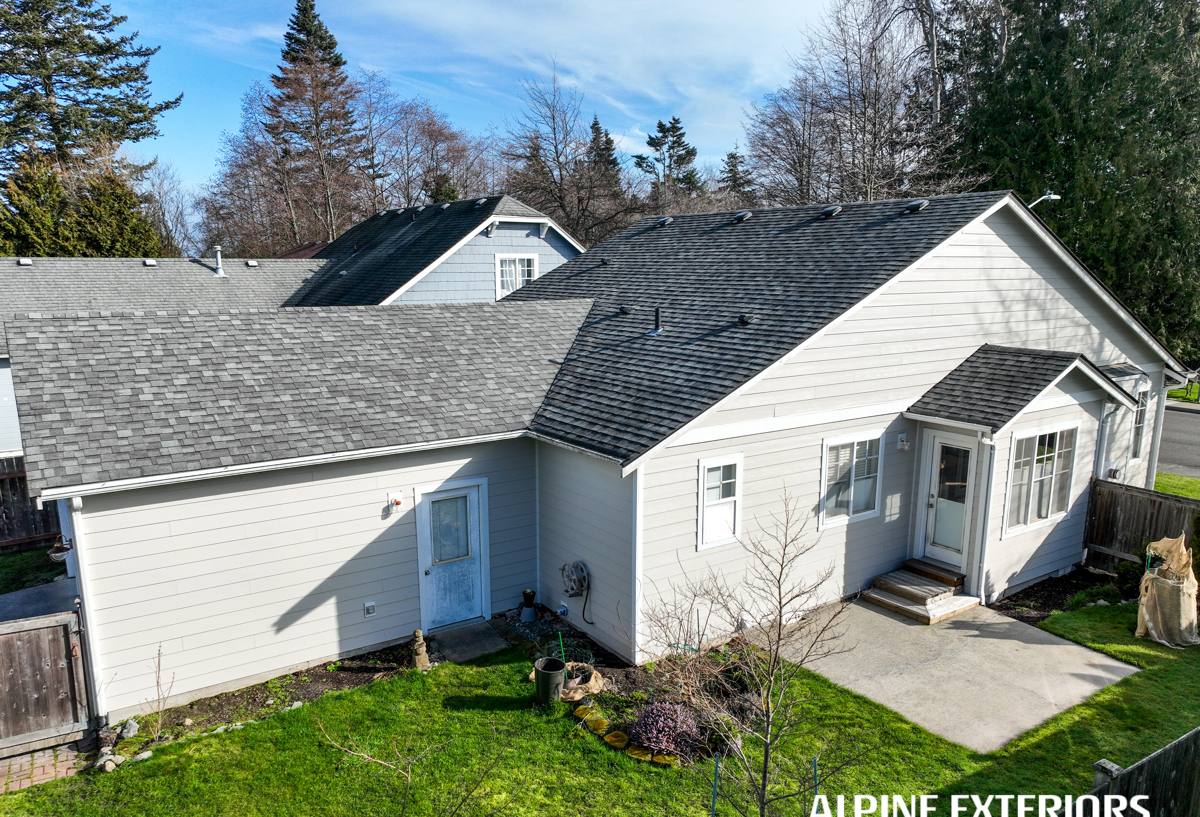
What Sudden Valley's Climate Actually Does to a House
It's worth being specific about this, because "wet climate" undersells what's really happening. Three things are working on your siding at the same time, year-round:
Salt-Laden Marine Air
Proximity to Puget Sound and the Strait means the air carries fine salt particulate, especially on windier days. Salt is hygroscopic — it pulls moisture out of the air and holds it against whatever surface it lands on. On untreated wood, cheap trim, or fasteners that aren't corrosion-resistant, that means slower drying times and accelerated corrosion. It's a big part of why we're picky about which fastener systems and flashing details we use on every job.
Driving, Wind-Driven Rain
A lot of homeowners assume rain is rain. It isn't. Vertical rain mostly runs off a wall. Wind-driven rain — common here thanks to storms coming off the water — gets pushed sideways into laps, seams, butt joints, and anywhere the water-resistive barrier and flashing aren't doing their job. This is where installation quality matters as much as the product itself. A great siding material installed with sloppy flashing will still let water in.
Moss, Mildew, and Extended Shade
Sudden Valley's tree cover is one of the things people love about living there, but it also means large stretches of a home's exterior can stay damp and shaded for days after a storm passes. That's exactly the environment moss, algae, and mildew need to establish themselves on siding, trim, and roofing. Once moss gets a foothold on a porous or textured surface, it holds moisture against that surface even longer, which compounds the problem year over year.
Why We Only Install James Hardie Fiber Cement
We get asked fairly often why we don't offer vinyl, LP SmartSide, or some of the other lower-cost siding options that are still common around Whatcom County. The honest answer is that we looked at what this climate does to those products over time and decided we didn't want to keep coming back to fix or replace them.
Vinyl siding is inexpensive and easy to install, but it's a petroleum-based product that becomes brittle in cold snaps and can warp or buckle when exposed to sustained moisture cycling and temperature swings — exactly what we get here between winter storms and summer sun. It also can't be painted a dark color without risking heat-related warping, which limits design options for homeowners who want a specific look.
Wood-based composite siding, including OSB-based products like LP SmartSide, performs reasonably well when it's installed and maintained perfectly, but any breach in the factory coating or field-cut edge exposes engineered wood strands to moisture. In a climate with this much sustained dampness and shade, that's a real long-term risk — not a hypothetical one.
James Hardie fiber cement is a mix of cement, sand, and cellulose fiber. It doesn't have organic wood content for moisture to break down, it's non-combustible, and it holds paint and factory-applied ColorPlus finishes far longer than wood-based alternatives because it doesn't expand and contract with moisture the way wood products do. That dimensional stability is a big deal in a climate that cycles between soaking wet and dry as often as this one does. It's also resistant to pest damage, which matters in a heavily wooded area like Sudden Valley.
What This Means for Your Siding Choice
| Factor | Vinyl | Wood Composite | James Hardie Fiber Cement |
|---|---|---|---|
| Moisture resistance | Fair (can warp) | Requires intact coating | Strong — cement-based, non-organic |
| Salt air / coastal durability | Moderate | Moderate to poor | Strong |
| Fire resistance | Poor (melts) | Moderate | Non-combustible |
| Paint/finish longevity | Limited color options | Repaint every 5-8 yrs typical | ColorPlus finish, long-lasting |
| Dimensional stability | Expands/contracts with heat | Swells with moisture if breached | Highly stable |
| Typical warranty | Varies widely | Varies by manufacturer | Strong transferable manufacturer warranty |
How We Approach a Sudden Valley Siding Project
Every home in this area is a little different depending on how much tree cover it has, which direction it faces, and how exposed it is to wind off the water. Before we talk product colors or timelines, we look at the house itself.
Assessment
We walk the exterior and look specifically for the signs this climate leaves behind: moss buildup on north- and shade-facing walls, soft or discolored trim near ground contact and roof lines, staining below window and door flashing, and caulk that's failed at seams and penetrations. These tell us where water has been getting in, not just where the siding looks tired.
Moisture and Flashing Details
This is where a lot of siding jobs succeed or fail long-term, and it's not glamorous work. Proper house wrap, correctly lapped flashing at windows and doors, and drainage behind the siding plane (rather than direct contact that traps moisture) all matter more in a climate like this than in drier parts of the state. We install James Hardie's HZ5 product line, which is engineered for climates with sustained moisture exposure like ours.
Installation to Manufacturer Spec
James Hardie's warranty coverage depends on installation following their published specifications — proper fastener spacing, clearances from grade and roofline, and correct caulking at joints. We install to that spec as a baseline, not an upsell, because it's the difference between siding that performs for decades and siding that needs early repair.
Beyond Siding: Roofing, Windows, and Decks
Siding rarely fails in isolation. A lot of the water damage we find on Sudden Valley homes traces back to a roofing issue, a failed window seal, or a deck ledger board that's been trapping moisture against the house. Because we handle roofing, windows, and decks in addition to siding, we can look at a home's full exterior envelope rather than patching one component and leaving a related problem in place.
- Roofing in constant shade and moss exposure needs different maintenance attention than a roof in full sun — we factor that in during inspections
- Window flashing integration with new siding is one of the most common places we find prior water intrusion
- Decks exposed to the same driving rain and shade patterns often need drainage and material choices that match the siding plan, not just the deck itself
What Sudden Valley Homeowners Should Watch For
Some early warning signs are easy to miss if you're not looking for them specifically. A short seasonal check can catch problems while they're still cheap to fix.
- Moss or dark streaking concentrated on shaded or north-facing walls
- Soft spots or discoloration in trim near the ground or roofline
- Paint that's peeling or bubbling rather than just fading
- Cracked or missing caulk at siding seams, window trim, and corner boards
- Staining below window sills or door thresholds after a hard rain
- Gaps or separation where siding meets trim, especially on the weather-facing side of the house
Why a Local Crew Matters Here
Ferndale and the surrounding Whatcom County communities, including Sudden Valley, have a specific climate profile that doesn't match generic siding advice written for the rest of the country — or even for drier parts of Washington east of the mountains. A crew that works in this area regularly knows which walls take the worst of the wind-driven rain, how much shade a given lot typically holds through the wet season, and where moss problems tend to start first. That local pattern recognition shows up in better flashing decisions, better material choices, and fewer callbacks.
It also means someone is close by and accountable after the job is done. Manufacturer warranties are only as good as the installer standing behind the workmanship, and that's easier to trust when the company installing your siding is based in the same county, not passing through.
Getting Started
If your Sudden Valley home has siding showing its age — moss, soft trim, fading paint, or visible seams — or you're planning ahead for a roof, window, or deck project, we're happy to take a look and give you a straightforward assessment. There's no pressure and no obligation. Fill out the form below and we'll set up a free estimate.