 Ferndale
 Roofing on the Water at Sandy Point
Sandy Point sits right up against the Strait of Georgia, and that location changes what a roof has to deal with compared to a house a few miles inland in Ferndale or elsewhere in Whatcom County. Salt-laden air moves off the water and settles on every exposed surface, wind-driven rain finds its way under flashing that would hold up fine in a more sheltered spot, and the long, damp Pacific Northwest winter gives moss months to get a foothold on north-facing slopes and shaded valleys. None of that means a roof at Sandy Point is doomed to fail early. It means the repair work has to account for those conditions, not just patch the symptom in front of you.
This page covers what roof repair looks like specifically for Sandy Point homes: what the local climate does to roofing materials over time, what a repair actually needs to include to hold up out here, and how we approach the job when we're called out to a property in this neighborhood.
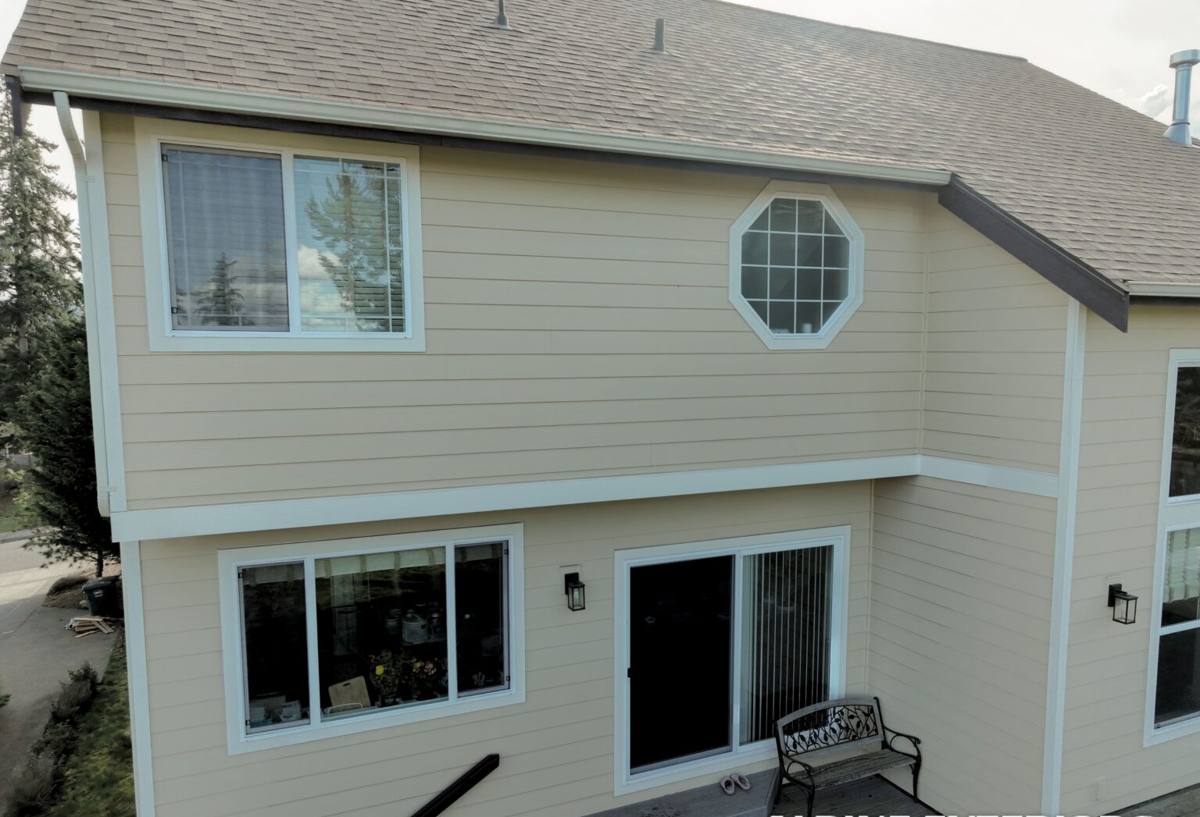
What Salt Air, Rain, and Moss Actually Do to a Roof
Salt Air and Metal Components
Salt in the air accelerates corrosion on anything metal — flashing, fasteners, gutter hardware, vent caps. A nail or screw that would last decades in a drier inland climate can start rusting and weakening years sooner right along the water. Once fasteners lose their grip or flashing starts to pit and thin, that's where leaks begin, usually well before the shingles themselves are worn out.
Driving Rain and Wind
Storms coming off the water don't just fall straight down — wind pushes rain sideways and up under laps, ridge caps, and flashing edges that are designed for water running downhill, not water being forced uphill by wind pressure. A roof that's fine in a light rain can still leak in a Sandy Point windstorm if the details around penetrations and edges weren't built with that in mind.
Moss and Prolonged Moisture
Whatcom County's wet season runs long, and shaded or north-facing roof sections can stay damp for weeks at a stretch. Moss thrives in that environment, and once it establishes itself, it does more than look bad — it holds moisture against the roofing material, lifts shingle edges as it grows, and can work its way under laps over time. Left unaddressed through a few wet seasons, moss growth turns a cosmetic issue into a leak risk.
Signs a Sandy Point Roof Needs Repair
Because coastal wear often starts at flashing and fasteners rather than the shingles themselves, some early warning signs are easy to miss from the ground. Here's what we tell Sandy Point homeowners to watch for:
- Rust streaking below metal flashing, vent caps, or valley metal
- Moss buildup on north-facing slopes, in valleys, or along the eaves
- Granules collecting in gutters or at downspout outlets
- Soft spots or discoloration on ceilings after a windy rainstorm specifically
- Lifted or curling shingle edges, especially near ridges and hips
- Daylight visible through the attic decking near vents or chimneys
- Flashing that looks pitted, thin, or separated from the surface it's sealed to
- Gutters pulling away from the fascia, which can point to rot underneath
Any one of these on its own might be minor. Two or three together, especially near the coast, is worth a closer look before the next wet season.
What a Correct Repair Actually Involves
A roof repair done right isn't just swapping out a few shingles. It starts with figuring out where water is actually getting in, which is often not directly above where the stain shows up inside — water travels along decking and rafters before it drips. A proper repair on a Sandy Point home typically includes:
- Diagnosis first. We trace the leak path, checking flashing, valleys, penetrations, and fastener condition before touching anything.
- Removing damaged material fully. Cutting out compromised shingles, felt, or decking rather than layering a patch over a weak spot.
- Checking the deck underneath. Soft or delaminated decking gets replaced — patching shingles over rotten sheathing just delays the real fix.
- Rebuilding flashing details correctly. Especially at chimneys, valleys, and wall intersections, since these are the spots most exposed to wind-driven rain off the water.
- Matching materials appropriately. Using corrosion-resistant fasteners and flashing suited to a marine-influenced climate, not standard-grade hardware.
- Addressing moss where present. Removing existing growth and, where it makes sense, discussing zinc or copper strip options to slow regrowth.
Skipping any of these steps is how a "repair" ends up needing to be redone in two or three years instead of holding for the long haul.
Repair or Replacement: How We Help You Decide
Not every roof problem at Sandy Point calls for a full replacement, and not every leak is fixable with a simple patch. The honest answer usually comes down to how much of the roof's remaining service life is left versus how localized the damage is.
| Factor | Leans Toward Repair | Leans Toward Replacement |
|---|---|---|
| Roof age | Under 15 years, materials still sound overall | Nearing or past expected lifespan for the material |
| Damage extent | Isolated to one flashing detail or a small shingle area | Widespread wear, multiple leak points, or granule loss across slopes |
| Decking condition | Solid, dry decking under the affected area | Soft or rotted decking found in more than one spot |
| Moss history | Recent growth, roof otherwise in good shape | Years of untreated moss with visible shingle lifting |
| Coastal exposure wear | Fastener/flashing corrosion limited to a few areas | Corrosion widespread across most metal components |
We'll walk you through where your roof actually falls on this before recommending anything — there's no reason to sell a full replacement when a targeted repair will genuinely hold up, and no reason to keep patching a roof that's telling you it's done.
How Our Process Works
Initial Assessment
We come out, get on the roof (weather permitting) or use a ladder and binoculars for a preliminary look, and identify what's actually happening — not just where the interior stain is. For Sandy Point specifically, we pay close attention to flashing condition and fastener corrosion given the salt exposure.
Clear Explanation and Estimate
You get a plain-English explanation of what we found, what caused it, and what fixing it correctly involves — along with a written estimate before any work starts. No pressure to upsell into a replacement if a repair is the honest answer.
The Repair Itself
Most Sandy Point roof repairs are completed in a single day, weather depending. We work around your schedule and clean up thoroughly, including magnetic sweeps for stray nails and screws around the work area.
Follow-Up
We stand behind the work and are reachable if anything comes up after the first heavy storm following the repair — which, on the water, doesn't usually take long to arrive.
Materials and Methods Suited to Coastal Whatcom County
Standard roofing materials and standard installation methods are built for average conditions — they're not wrong, they're just not calibrated for a waterfront property. For Sandy Point work, that generally means:
- Corrosion-resistant fasteners rather than standard-grade galvanized nails or screws
- Step and counter-flashing details sealed and lapped to handle wind-driven rain, not just gravity-fed runoff
- Ice-and-water shield membrane at valleys and eaves, which also helps resist wind-driven moisture intrusion, not just ice damming
- Careful attention to ventilation, since trapped moisture in the attic compounds moss and rot risk in a climate that's already damp much of the year
None of this is exotic — it's standard trade practice applied with the specific stresses of a coastal Whatcom County property in mind, rather than treating every roof the same regardless of where it sits.
Why a Crew That Already Works Sandy Point Matters
A roofer who mostly works inland jobs isn't wrong about roofing in general, but they may not have a feel for how fast corrosion moves out here, which flashing details tend to fail first on waterfront homes, or how aggressive the moss season gets on a shaded, damp lot near the water. A crew that's done repairs in this neighborhood before knows what to check first, what materials hold up, and what shortcuts simply don't survive a winter this close to the Strait.
There's also a practical side to it: being based in and around Ferndale means we can respond faster when a storm rolls through and get you a real inspection instead of a guess over the phone.
Simple Maintenance Between Repairs
A repair holds up longer with a little upkeep in between visits. This isn't a full maintenance contract — just the basics that matter most for a Sandy Point roof:
- Clear moss off north-facing and shaded slopes before it spreads, rather than after
- Keep gutters and downspouts clear so water isn't backing up under the eaves
- Trim back overhanging branches that keep sections of the roof shaded and damp longer than necessary
- After any major windstorm off the water, do a quick visual check for lifted shingles or displaced flashing
- Have flashing and fasteners checked every few years given the accelerated corrosion risk this close to the coast
If you're noticing any of the warning signs above, or just haven't had your roof looked at in a while given how hard this stretch of coastline is on roofing materials, we're happy to come take an honest look. Estimates are free, there's no pressure attached, and you'll get a straight answer about whether you need a repair, a bigger fix, or nothing at all right now — you can request one using the form below.