 Ferndale
 Why Roofs in Sandy Point Take a Different Kind of Beating
Sandy Point sits right up against the water, and that location is exactly why roofs out here age differently than roofs a few miles inland in Ferndale or Bellingham. Salt-laden air corrodes exposed metal faster, wind-driven rain finds every weak seam and nail pop, and the shaded, damp pockets under trees and along north-facing slopes stay wet long enough for moss to take hold and spread. None of this is unusual for Whatcom County, but it's more concentrated right at the water's edge than it is a short drive east.
A roof that would hold up fine in a drier, more sheltered part of the county can start showing real wear in Sandy Point years ahead of schedule. That's not a reason to panic — it's a reason to build the roof correctly the first time, with materials and details chosen for this specific exposure rather than a generic spec sheet.
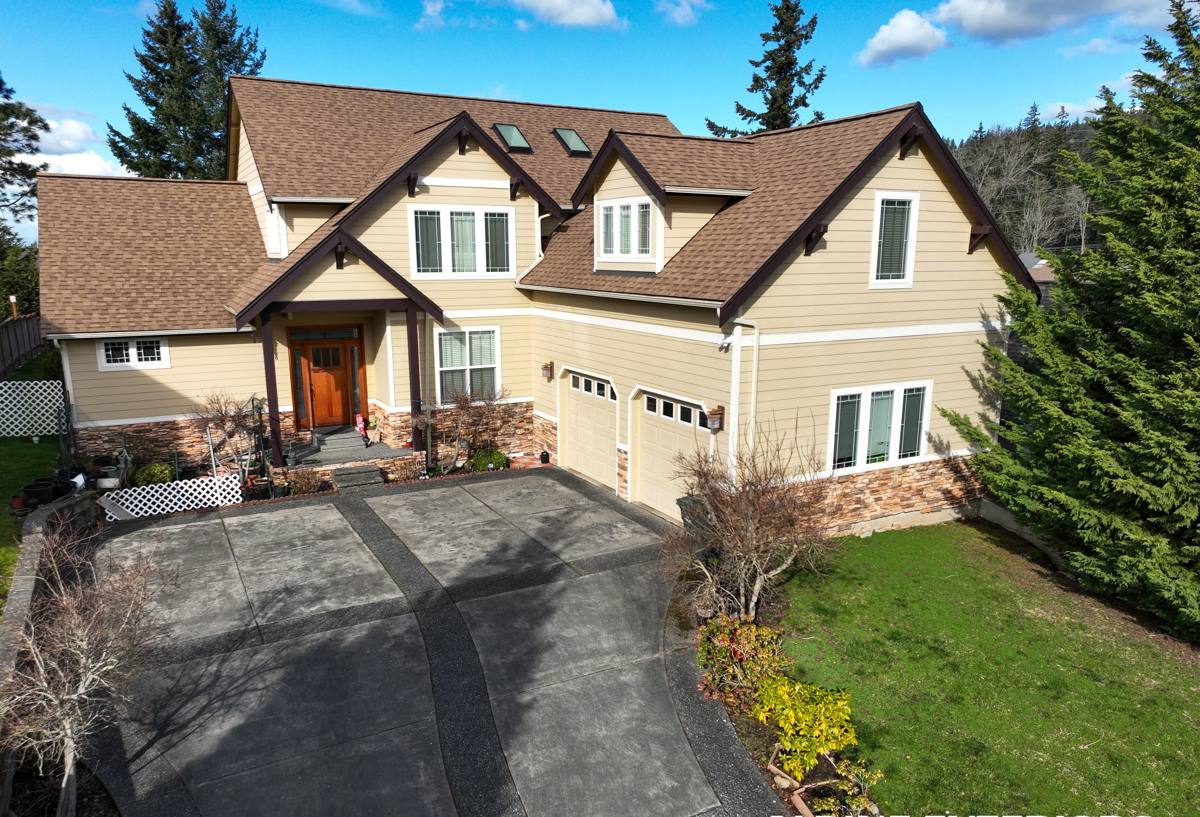
Signs It's Time for a New Roof, Not Another Repair
Repairs make sense when the problem is isolated — a cracked boot, a lifted shingle, a small flashing leak. Replacement becomes the honest recommendation when the damage is spread across the whole roof or when the underlying materials have simply reached the end of their working life. Homeowners in Sandy Point should watch for:
- Granule loss heavy enough that shingles look patchy or bald in sunlight
- Moss or algae covering large sections rather than a corner or two, especially on shaded slopes
- Curling, cracking, or brittle shingles that crumble when handled
- Rust streaking or corrosion around flashing, vents, and metal fasteners
- Soft spots in the decking, or daylight visible through the attic sheathing
- Repeated leaks in different spots after past repairs, rather than one recurring source
- A roof that's already 20+ years old, since most materials are nearing end-of-life by then even without visible damage
If only one or two of these apply, a repair or a targeted section replacement is often still the right call. When several show up together, patchwork stops being cost-effective and a full replacement becomes the more honest answer.
What a Correct New Roof Installation Actually Involves
A roof is only as good as what's underneath the shingles, and this is where a lot of shortcuts happen that homeowners never see until years later. A proper installation in a coastal environment like Sandy Point covers several layers, not just the visible surface:
Full Tear-Off, Not a Layover
We remove the old roofing down to the decking rather than installing a new layer over the existing one. Layovers trap moisture, hide rot, and shorten the life of the new material — a bad trade-off anywhere, and a worse one in a wet marine climate.
Decking Inspection and Repair
Once the old material is off, we check every sheet of decking for soft spots, delamination, or water staining and replace anything compromised. Salt-air moisture works its way into weak decking quietly, so this step matters even when the surface looked fine from below.
Underlayment and Water Barriers
Given the amount of driving rain Sandy Point sees, we pay close attention to underlayment quality and ice-and-water shield placement at eaves, valleys, and any low-slope transitions — the spots where wind-blown rain is most likely to get pushed backward under the shingles.
Flashing at Every Penetration
Chimneys, vents, skylights, and wall intersections are where most roof leaks actually start, not in the open field of shingles. Correct flashing detail here is non-negotiable in a climate this wet.
Ventilation
Intake and exhaust venting are sized and balanced for the roof, not just added as an afterthought. More on why this matters below.
Picking the Right Roofing Material for a Salt-Air, High-Moss Climate
There's no single "best" roofing material for every home — it depends on budget, roof pitch, architectural style, and how much long-term maintenance the homeowner wants to take on. What we do recommend is choosing with the local climate in mind rather than picking based on price alone.
| Material | How It Handles Salt Air & Moisture | Moss Resistance | Maintenance Level |
|---|---|---|---|
| Architectural asphalt shingles | Good, especially with quality fasteners and flashing; standard fasteners can corrode faster near the water | Moderate — benefits from algae-resistant granules | Low to moderate |
| Standing seam metal | Very good when specified with a coastal-rated finish and stainless or coated fasteners | High — sheds moss and debris well due to smooth, steep surfaces | Low |
| Cedar shake | Handles moisture well when properly ventilated, but demands more upkeep near salt air | Low — needs regular treatment and cleaning | High |
| Composite/synthetic shingle | Good; resists moisture absorption better than natural materials | Moderate to good, depending on product | Low to moderate |
We steer most Sandy Point homeowners toward architectural asphalt with algae-resistant granules or standing seam metal, simply because both hold up well against the combination of salt exposure and prolonged dampness without requiring constant attention. Cedar can still be the right choice for the right home, but it's fair to be upfront that it asks more of the homeowner in this particular environment.
Ventilation and Moisture: The Part Homeowners Don't See
Attic ventilation doesn't get much attention because it's invisible once the roof is finished, but it has a direct effect on how long that roof lasts. In a humid, marine environment, warm moist air trapped in an attic condenses against the underside of the decking, and that trapped moisture is one of the most common causes of premature rot and mold — problems that show up as damage to the decking and framing long before the shingles themselves fail.
Balanced intake (usually at the eaves) and exhaust (ridge or roof vents) keep air moving through the attic space, which controls both moisture and temperature. Undersized or blocked venting is a quiet contributor to moss growth too, since a warmer, damper roof surface gives moss spores an easier place to establish.
Our Process From Estimate to Cleanup
- On-site inspection. We walk the roof and attic, check decking condition where accessible, and note flashing, ventilation, and any drainage issues specific to the property.
- Written estimate. A clear scope of work and material options, explained in plain terms — no pressure to decide on the spot.
- Scheduling around weather. Roofing in Ferndale means working around rain windows; we plan tear-off and dry-in days to minimize the roof's exposure time.
- Tear-off and decking repair. Old material removed, decking inspected and repaired as needed.
- Underlayment, flashing, and ventilation installed. The parts that determine whether the roof actually performs long term.
- New roofing material installed to manufacturer specifications, including fastener patterns and exposure rated for wind and coastal conditions.
- Site cleanup. Magnetic sweep for nails, debris hauled off, gutters checked for shingle grit and debris from the job.
- Final walk-through so you can see the finished work and ask questions before we consider the job done.
What Drives the Cost of a New Roof
We won't quote a number here that doesn't apply to your specific roof, but these are the factors that actually move the price, in roughly the order they matter:
| Factor | Why It Matters |
|---|---|
| Roof size and complexity | More squares, more valleys, dormers, and penetrations all add labor and material |
| Material choice | Standing seam metal and cedar cost more upfront than architectural asphalt |
| Decking condition | Rotted or soft decking found during tear-off adds repair cost, and coastal moisture makes this more common |
| Roof pitch and access | Steep or hard-to-access roofs take longer and require more safety setup |
| Ventilation upgrades | Adding or correcting intake/exhaust venting where the existing setup is inadequate |
| Tear-off layers | Removing multiple old layers of roofing costs more than a single-layer tear-off |
An accurate number only comes from seeing the actual roof, which is exactly what a free estimate is for.
Choosing a Roofing Crew That Actually Knows Sandy Point
Plenty of contractors will quote a roof from a satellite photo. Fewer have actually worked the specific conditions of a waterfront community in Whatcom County — the wind exposure, the salt corrosion on fasteners and flashing, the moss patterns that build up on shaded, north-facing slopes near the trees. Before hiring anyone for a project this size, it's worth checking:
- Current Washington state contractor license and liability insurance, verifiable through the state's public lookup
- Local references or completed work in Ferndale or the surrounding Whatcom County coastal area
- A written estimate that itemizes tear-off, decking repair contingency, underlayment, flashing, ventilation, and material — not just a lump sum
- A clear warranty explanation covering both materials and workmanship, and who to call if either fails
- A plan for weather delays, since coastal Whatcom County rain doesn't follow a predictable schedule
- Willingness to walk you through material options rather than pushing one product regardless of the roof
A crew that already understands this stretch of coastline isn't guessing at flashing details or fastener specs — they're applying what's already worked on roofs facing the same wind and salt exposure yours does.
Keeping Your New Roof Performing for Years
A correctly installed roof still benefits from basic upkeep, especially given how persistent moss season is in this part of Washington. Keep gutters clear so water isn't backing up under the shingle edge, trim back overhanging branches that keep sections of the roof shaded and damp, and have the roof looked at every couple of years for early moss growth or lifted flashing rather than waiting for a leak to show up inside the house. Catching small issues early is far cheaper than dealing with decking damage later.
If your roof in Sandy Point is showing its age or you just want a straight answer about whether repair or replacement makes sense, we're happy to come take a look. Reach out below for a free, no-pressure estimate — we'll walk the roof, explain what we find, and give you the honest options for your home.