 Ferndale
 Storm Damage Roofing for Sandy Point Homes
Sandy Point sits right where Whatcom County's weather has nowhere to go but at the houses. It's a low-lying beachfront community exposed to the Strait of Georgia, which means wind gusts hit roofs here with less to slow them down than a home tucked back in town. When a system rolls through with driving rain and sustained wind, Sandy Point roofs take the brunt of it before the storm even reaches Ferndale proper.
We're a Ferndale-based crew, and Sandy Point is a neighborhood we already know — the wind exposure, the salt air rolling off the water, and the way moss and moisture behave differently on a waterfront roof than on one a few miles inland. This page covers what storm damage repair actually involves out here, what to expect from a correct repair, and why local experience matters more on this stretch of coastline than almost anywhere else in the county.
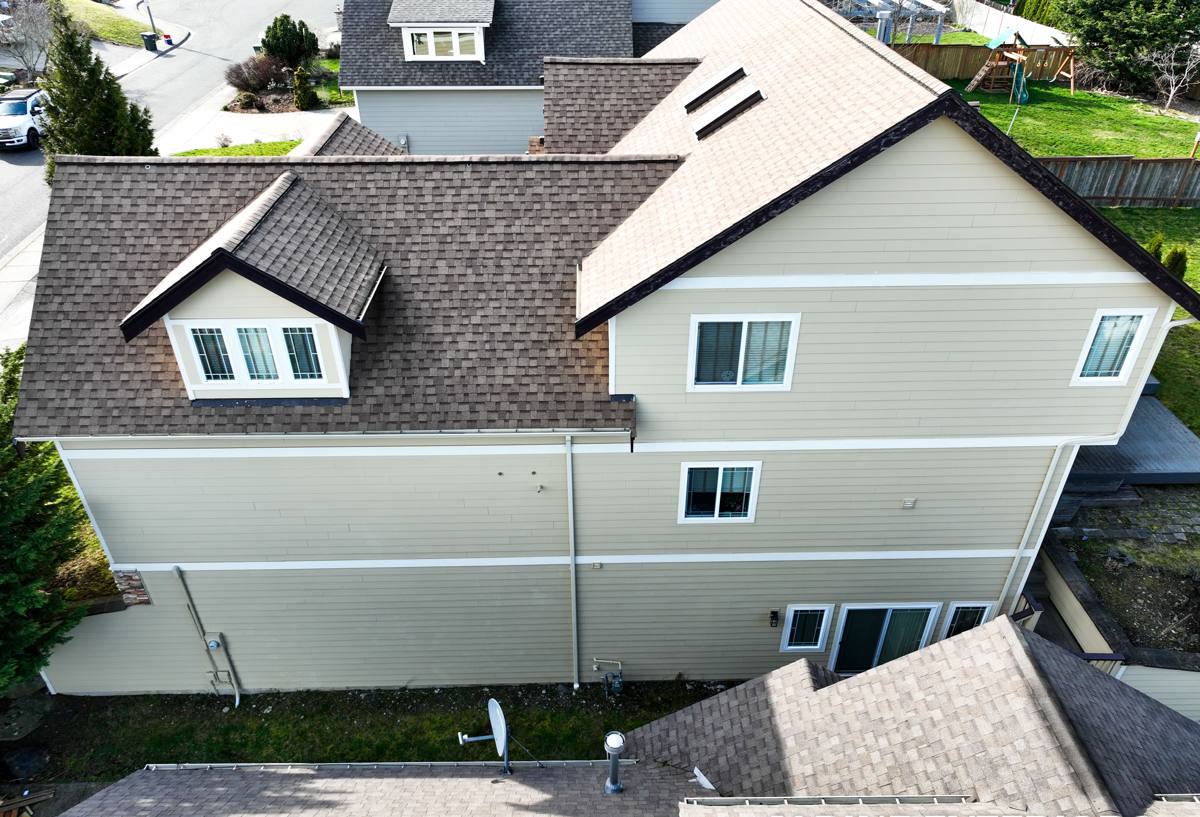
Why Sandy Point Roofs Take More Punishment
Wind Exposure
Waterfront lots lose the natural windbreak that inland homes get from trees and terrain. Gusts that would just rustle leaves in town can lift shingle tabs, work loose fasteners, and peel back ridge caps on a Sandy Point roof. Wind damage is often progressive — a few lifted shingles this winter become a bigger leak next winter if nobody catches it early.
Salt Air
Airborne salt accelerates corrosion on anything metal: flashing, fasteners, vent caps, gutter hardware. A fastener that would last decades a few miles inland can start rusting and losing grip years sooner on a beachfront roof. This is one of the biggest differences between repairing a Sandy Point roof and repairing one elsewhere in Ferndale — the fasteners and flashing often need closer inspection even when the shingles themselves look fine.
Driving Rain
Wind-driven rain doesn't just fall on a roof — it gets pushed sideways and up under laps, flashing edges, and any spot where a shingle has lifted even slightly. A roof that would shed a normal rain fine can leak in a wind-driven storm if the underlying details aren't tight. This is why storm damage repair on the water isn't just about replacing what's visibly missing — it's about checking every seam the wind could have worked on.
Long Moss Season
Whatcom County's wet season runs long, and moisture-holding moss and organic debris on a roof do real damage over time — they hold water against the roofing material and can lift shingle edges, which then gives wind and rain a place to get started. A storm repair on a roof that already has moss buildup should include addressing that buildup, not just patching the storm damage and leaving the underlying moisture problem in place.
What a Correct Storm Damage Repair Actually Involves
Storm damage repair isn't one task — it's a sequence, and skipping steps is how a "fixed" roof leaks again in the next storm.
- Full roof inspection, not just the obvious damage. We check the whole roof plane, not just the spot you can see missing shingles from the ground. Wind damage is often worse on the leeward or upper edges than where it's visible from the yard.
- Flashing and fastener check. Given the salt air here, we look closely at flashing around chimneys, vents, and valleys, and at fastener condition, not just the field shingles.
- Decking assessment. If water got under the roofing material, the decking underneath may be wet or soft. Repairing over damaged decking just hides a bigger problem.
- Matching materials. Repairs should match the existing roof's material, color, and exposure as closely as possible — a patch that stands out is also a patch that may not shed water the same way as the surrounding roof.
- Sealing and re-securing. Loose but intact shingles often just need to be re-secured and re-sealed rather than replaced — a good repair doesn't replace more than necessary.
- Debris and moss cleanup where relevant. If moss or organic buildup contributed to the damage, that gets addressed as part of the repair, not left for a separate visit.
Our Process for Sandy Point Calls
1. Assessment
We come out, walk the roof (weather permitting) or use a safe vantage point if conditions are too rough, and document what we find. We'll tell you plainly what's storm damage versus what's pre-existing wear — that distinction matters if you're filing an insurance claim.
2. Straight Talk on Scope
Some storm damage is a targeted repair. Some reveals the roof was already near the end of its useful life and the storm just exposed it. We'll tell you which situation you're in rather than upselling a repair into a full replacement, or downplaying a replacement need to make the invoice look smaller.
3. Repair
We use materials matched to your existing roof where possible, and we pay particular attention to flashing and fastener condition given the salt air exposure out here.
4. Follow-Up Check
After a significant storm repair, especially on a waterfront home, we're glad to do a follow-up look after the next heavy rain to confirm the fix is holding before we consider the job done.
Emergency vs. Scheduled Repair
Not every storm-damaged roof needs same-day attention, but some do. Here's how we'd generally sort it out with you on the phone:
| Situation | Urgency | What we do |
|---|---|---|
| Active leak into living space | Same-day / emergency | Temporary tarp or seal to stop water intrusion, then schedule full repair |
| Visible missing shingles, no active leak yet | High priority, days not weeks | Inspect and repair before the next wind event |
| Lifted or loose shingles, roof otherwise dry | Moderate — schedule soon | Re-secure and reseal before wind gets underneath further |
| Cosmetic granule loss, minor debris | Low — can be scheduled normally | Inspect at next available appointment, note for future monitoring |
What Storm Damage Repair Costs Depend On
We don't quote a number without seeing the roof, but the honest cost drivers are the same on every job:
- Extent of damage — a few shingles versus a whole section of roof plane
- Roof access and pitch — steeper or harder-to-access roofs take longer and cost more to work safely
- Decking condition — whether water reached the deck underneath and needs any of it replaced
- Material match — matching an older or discontinued roofing product can take longer to source
- Flashing and fastener work — more common on Sandy Point roofs than inland ones due to salt-air corrosion
- Whether insurance is involved — documentation for a claim adds a step but shouldn't add much time
Insurance Documentation
If your storm damage is significant enough to involve your homeowner's insurance, we'll provide clear photos and a written description of what we found and what we repaired. We're not a public adjuster and we won't promise a claim outcome, but we'll give you documentation that accurately reflects the damage and the work performed.
What Homeowners Can Check Before Calling
- Look for shingles or debris in the yard after a storm — that's often the first sign something came loose on the roof
- Check ceilings and attic spaces for new water stains, especially after wind-driven rain
- Note which direction the storm wind was coming from — it helps us know where to look first
- Avoid getting on the roof yourself after a storm, especially a wet or windy one — it's not worth the fall risk
- If you see a tarp or temporary covering has shifted, that's worth a follow-up call before the next rain
Why a Crew That Already Works Sandy Point Matters
Storm damage repair on a waterfront roof isn't the same job as storm damage repair three miles inland, even though it looks similar from the ground. A crew that hasn't worked this stretch of coastline may treat it like any other Ferndale roof — replace what's visibly damaged and move on — without checking the flashing and fasteners that salt air quietly works on year after year. We've done enough roofs out here to know that's where the next leak usually starts.
Being based in Ferndale also means we're not driving in from out of the area when weather turns bad. If a storm damages roofs across Sandy Point and the surrounding Whatcom County coastline at the same time, being local means shorter response times and a crew that isn't spread thin across a service area that stretches far beyond the county.
Get a Free, No-Pressure Estimate
If your Sandy Point roof took damage in a recent storm, or you just want a straightforward opinion on what you're looking at, reach out for a free estimate. No pressure, no upsell — just an honest look at what your roof needs and what it doesn't. Use the form below to get started.