 Ferndale
 Why Sandy Point Windows Wear Differently Than Windows Inland
Sandy Point sits close enough to the water that its homes take a different kind of beating than a house a few miles inland in Ferndale. Salt-laden air corrodes hardware and dulls finishes faster. Driving rain, pushed sideways by wind off the water, finds its way into gaps that would stay dry on a more sheltered lot. And the long, damp moss season that settles over Whatcom County every fall and winter keeps trim, sills, and siding wet for weeks at a time instead of drying out between storms. None of this means Sandy Point homes need exotic products. It means the window and the installation around it have to be matched to those specific conditions, not just picked off a shelf because it fits the rough opening.
We've worked enough jobs in this stretch of the county to know that a window that performs fine in a subdivision outside Bellingham can fail early on a waterfront-adjacent lot if it's installed the same way. This page is about what "custom windows" actually means for a Sandy Point home, what a correct installation involves here, and what to expect if you call us.
What "Custom Windows" Actually Means for This Neighborhood
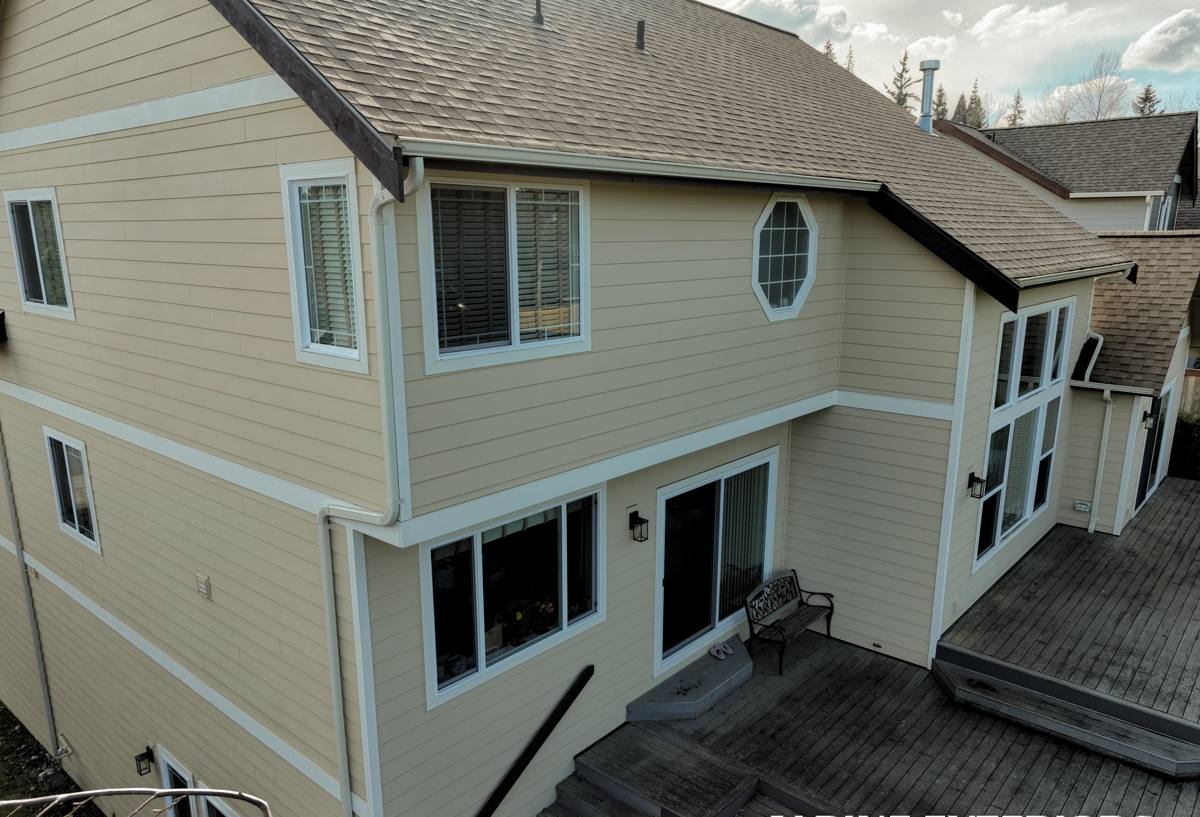
"Custom" doesn't have to mean architecturally unusual or expensive. In practice, most custom window work in Sandy Point falls into one of a few categories:
- Non-standard openings. Older homes and additions in this area often have rough openings that don't match current standard window sizes, so a stock unit either won't fit or will leave gaps that are hard to seal properly.
- Replacing a failing window with something better suited to the exposure. A window that's original to the house may be undersized on insulation, have failed seals, or use hardware that's already showing corrosion from salt air.
- Matching shape or sightline on a visible elevation. Bay windows, picture windows with flanking casements, or oddly proportioned openings from a remodel all require custom sizing rather than an off-the-shelf unit.
- New construction or additions where the window has to be ordered to spec before framing is finished.
In every case, the goal is the same: a window built to the actual opening, installed with flashing and sealant details appropriate to a wet, salty climate, not a generic install that assumes a dry inland lot.
Why Standard Sizes Often Don't Work Here
A lot of Sandy Point housing stock includes older cabins, additions built over the years, and homes that have been updated piecemeal. When we measure an opening and it's an inch or two off from anything a manufacturer stocks, forcing a standard-size window in usually means either cutting into the framing (which introduces new places for water to get in) or packing the gap with extra shim and sealant, which is exactly the kind of installation that fails first in a marine climate. Custom sizing costs more up front, but it removes that failure point entirely.
Materials and Frame Options for a Salt-Air, High-Rain Climate
Every frame material has trade-offs. None of them are "bad" — they're better or worse fits depending on exposure, budget, and how much maintenance a homeowner wants to take on. Here's how the common options compare for a property like the ones near Sandy Point:
| Frame Material | Salt Air / Moisture Behavior | Maintenance | Typical Fit for Sandy Point |
|---|---|---|---|
| Vinyl | Won't corrode or rot; some lower-grade vinyl can become brittle after years of UV and salt exposure | Low — occasional cleaning | Good value option; we recommend a heavier-gauge, welded-corner vinyl over the thinnest grades |
| Fiberglass | Very stable in moisture and temperature swings; resists pitting from salt exposure | Low | Strong fit for direct water exposure or homes right along the shoreline |
| Aluminum | Conducts cold and can condense/corrode over time unless thermally broken | Moderate | Only recommended with a thermally broken frame; otherwise a poor match for this climate |
| Wood / wood-clad | Handsome, but exposed wood needs consistent upkeep in a damp, salty environment | High — regular painting/sealing | Workable if cladded on the exterior face and the homeowner is committed to maintenance |
For most Sandy Point homes, we steer people toward vinyl or fiberglass because they hold up with the least ongoing attention. Wood-clad windows can still be the right call on a home where the look matters more than minimizing upkeep — that's a conversation we have honestly, not a one-size answer.
The Real Culprit: Moisture, Not Just Wind
People assume wind and driving rain are the main threat to windows near the water. Wind matters, but moisture management is what actually determines whether a window installation lasts. Whatcom County's long moss season means the wall assembly around a window can stay damp for extended stretches every year. If water gets behind the window flange — through a missed flashing detail, a gap in the weather-resistive barrier, or sealant that was never meant to be the primary water barrier — it doesn't dry out quickly. That trapped moisture is what leads to soft sheathing, stained interior trim, and eventually rot you can't see until it's significant.
This is why we treat the installation, not just the window unit, as the actual project. A premium window installed with sloppy flashing will fail before a mid-range window installed correctly.
How We Approach a Custom Window Job in Sandy Point
Our process doesn't change dramatically from house to house, but every step gets extra attention on a lot exposed to salt air and driving rain:
- On-site assessment. We look at the existing window, the condition of the framing and sheathing around it, and how exposed that elevation is to prevailing wind and rain.
- Precise measurement. Custom units are ordered to the actual opening, not a nominal size, which avoids the gap-filling problems described above.
- Removal and inspection. Once the old window is out, we check the framing for water damage before anything new goes in. If we find soft wood or evidence of past leaks, we address it before the new window is installed — not after.
- Flashing and weather barrier integration. This is the step that matters most in this climate. The window has to be integrated into the wall's water-resistive barrier in the correct shingle-lap order so water is always directed outward, never trapped behind the frame.
- Installation and shimming. The unit is set plumb, level, and square, then secured and shimmed so it operates correctly for years, not just on install day.
- Sealing and finish work. Interior and exterior trim and sealant are finished to match the home, with sealant used as a secondary defense — never the only thing keeping water out.
- Walkthrough. We check operation, look at the finished exterior detail, and go over anything the homeowner should know about care going forward.
Getting the Installation Detail Right
Because this is the part of the job that actually determines how a window holds up in a wet, salty climate, here's the checklist we hold ourselves to on every custom window install:
- Sill pan flashing installed to shed water outward, not just sealant across the sill
- Head flashing lapped correctly over the weather-resistive barrier above the window
- Side flashing tied into the barrier in proper shingle-lap order so nothing channels water behind the frame
- Backer rod and quality exterior sealant used as a secondary barrier, not the primary defense against water
- Fasteners and hardware rated for corrosion resistance, given the salt air
- Unit checked for plumb, level, and square before final fastening
- Interior sill and jamb finished so condensation doesn't sit against wood trim
Energy Performance and Condensation in a Marine Climate
Window shopping usually centers on U-factor and energy ratings, and those numbers matter — a lower U-factor means less heat loss through the glass, which is worth it in a climate with a long heating season. But in a marine environment like this, condensation resistance deserves just as much attention. Cold, poorly insulated frames or single-pane glazing invite condensation on the interior side during our cool, humid winters, and that moisture ends up sitting on sills and trim. Dual-pane units with a warm-edge spacer and a frame material that doesn't conduct cold (fiberglass or good-quality vinyl rather than non-thermally-broken aluminum) cut down on that problem significantly. We size and spec glass packages based on the specific elevation and exposure, not a blanket recommendation for the whole house.
Maintenance After Installation
A correctly installed custom window is close to maintenance-free, but "close to" isn't "zero" in a salt-air environment. A few habits go a long way:
| Task | Frequency | Why It Matters Here |
|---|---|---|
| Rinse frames and hardware with fresh water | A few times a year | Reduces salt buildup that accelerates hardware corrosion and dulls finishes |
| Inspect exterior sealant lines | Annually, before winter | Sealant is a secondary barrier and does wear out; catching gaps early prevents moisture intrusion |
| Clear moss and debris from sills and nearby trim | Through fall/winter moss season | Keeps moisture from sitting against wood trim and siding around the window |
| Check weep holes on vinyl/fiberglass frames | Once or twice a year | Blocked weep holes trap water inside the frame instead of draining it out |
Why Hiring a Crew That Already Works Sandy Point Matters
Window installation isn't exotic work, but the details that make it hold up near the water are easy to skip if a crew doesn't normally deal with this kind of exposure. A contractor who mostly installs windows on dry, sheltered lots inland may not default to corrosion-resistant fasteners, may treat sealant as the primary water barrier instead of a backup, or may not think twice about a moss-prone north elevation that stays damp most of the winter. None of that shows up as a problem on installation day — it shows up two or three wet seasons later as a soft sill or a stained interior wall.
We're a Ferndale-based crew that works throughout Whatcom County, including the shoreline communities where salt air and standing moisture are simply part of the job. That means the flashing sequence, material choices, and maintenance advice we give aren't generic — they're based on what actually holds up on homes exposed the way Sandy Point homes are exposed.
What to Expect When You Call Us
We start with a straightforward look at your current windows and the framing around them, talk through what's actually causing any problems you're seeing (drafts, condensation, difficulty operating, visible wear), and give you honest options rather than a single upsell. If a window can be repaired instead of replaced, we'll say so. If custom sizing is genuinely needed, we'll explain why rather than assume it. Pricing depends heavily on frame material, glass package, number of openings, and how much of the surrounding trim or siding needs attention, so we'd rather walk your specific property than quote a number that doesn't mean anything without seeing the job.
If you're dealing with drafty, foggy, or hard-to-operate windows on a Sandy Point property, or you're planning a remodel that needs custom-sized units, we're happy to take a look and give you a straight answer — no pressure, no obligation. Reach out using the form below to set up a free estimate.