 Ferndale
 Roofing in Sandy Point Comes With Its Own Rules
Sandy Point sits close enough to the water that homes here take a different kind of beating than roofs a few miles inland in Ferndale proper. Salt-laden air off the Strait works on fasteners and metal flashing year-round, wind-driven rain finds every gap in a poorly lapped shingle course, and the shade from mature trees plus our long wet season means moss and moisture sit on these roofs far longer than they do in drier parts of Whatcom County. An asphalt shingle roof built for a subdivision in Bellingham's dry side or a house out past Lynden isn't automatically built for Sandy Point. The details that matter here are the ones that keep salt, wind, and moss from winning over ten, fifteen, twenty years.
We're not saying asphalt shingles are a bad fit for this neighborhood — they're not. It's still the most practical, cost-effective roofing material for the vast majority of homes out here. What matters is how the roof is detailed and installed, and that's where a lot of roofs in this area fall short.
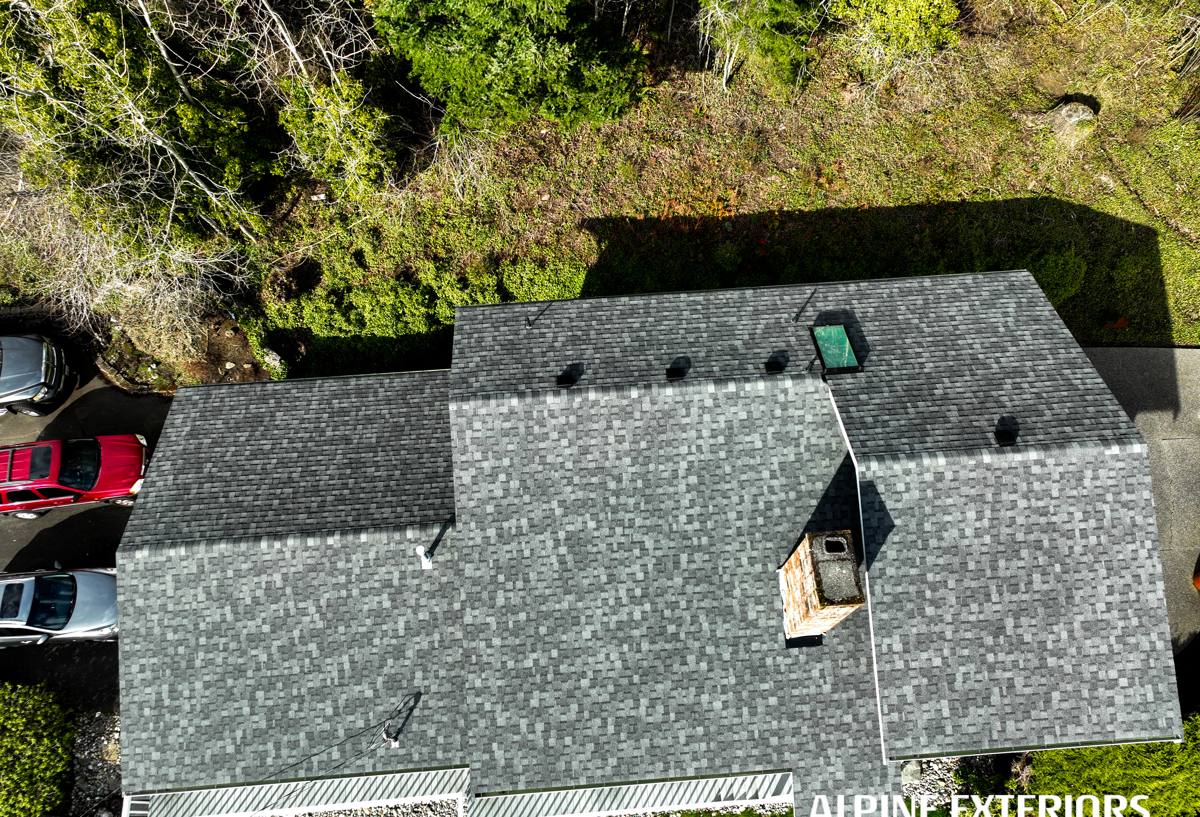
What Salt Air and Driving Rain Actually Do to a Roof
Salt Air
Airborne salt doesn't just sit on the surface — it works into any exposed metal on the roof: nail heads, flashing edges, vent boots, and drip edge seams. Over years, that accelerates corrosion in lower-grade fasteners and thin metal flashing. It's a slow process, but it's constant, and it's part of why the fastener and flashing spec matters more here than it does twenty minutes inland.
Driving Rain
Storms coming off the water at Sandy Point tend to arrive sideways rather than straight down. Wind-driven rain gets pushed up under shingle tabs and into any valley, sidewall, or penetration that wasn't lapped and sealed correctly. A roof that would hold up fine in calmer conditions can leak here if the underlayment, valley metal, and step flashing weren't installed with that wind direction in mind.
Moss and Moisture
Western Washington's long wet season is hard on every roof, but shaded, north-facing slopes near the water stay damp longer than roofs with more sun exposure. Moss doesn't just look bad — its root structure lifts shingle edges and holds moisture against the mat, which shortens the life of the shingle underneath it. A roof in this neighborhood that never gets cleaned or treated will show granule loss and moss damage well before its rated lifespan is up.
What a Correctly Built Asphalt Shingle Roof Looks Like Out Here
A shingle roof is a system, not a single product. The shingle itself gets most of the attention, but the layers underneath and around it are what actually determine whether the roof performs in Sandy Point conditions.
- Underlayment: A synthetic underlayment with good wind and water resistance, not just the cheapest felt available, especially on roofs with any wind exposure toward the water.
- Ice and water shield: Self-adhering membrane at eaves, valleys, and around penetrations — the spots where wind-driven rain is most likely to get pushed backward under the shingle course.
- Starter strip: A proper factory starter course along eaves and rakes, not just flipped shingles, so the first course is sealed and wind-resistant from day one.
- Nailing pattern: Correct nail count and placement per the manufacturer's high-wind spec, since under-nailing is one of the most common causes of blow-off and leaks in coastal wind.
- Flashing: Corrosion-resistant step and counter-flashing at walls, chimneys, and skylights, plus properly lapped valley metal — this is where salt-air corrosion and rain intrusion both show up first if it's done wrong.
- Ventilation: Balanced intake and exhaust airflow so moisture from inside the home doesn't condense in the attic and add to what the roof is already dealing with from outside.
Choosing the Right Shingle for This Environment
Not every asphalt shingle product is built the same way, and for a Sandy Point home the differences that matter are algae resistance, wind rating, and how the shingle handles repeated wet-dry cycles.
| Shingle Type | Typical Lifespan | Best Fit for Sandy Point |
|---|---|---|
| 3-tab | 15–20 years | Budget projects; less wind and impact resistance than architectural styles |
| Architectural (laminated) | 25–30 years | Our standard recommendation — better wind rating and a thicker mat that holds up to moss and moisture |
| Premium/designer | 30–50 years | Best moss and algae resistance options; worth considering on shaded, north-facing roofs |
We generally steer homeowners here toward architectural shingles with algae-resistant granules (usually copper- or zinc-infused) built into the product. It's a small upcharge that directly addresses the moss issue this neighborhood deals with, rather than relying on homeowners to treat the roof every year or two after the fact.
A Note on Wind Rating
Manufacturers publish wind ratings for their shingles, but that rating only holds up if the shingle is installed with the specified nailing pattern and adhesive strip activation. A high-wind-rated shingle installed with a standard nail count doesn't actually give you the rated performance — this is one of the more common gaps we find on re-roofs where the original install cut corners.
Our Process for a Sandy Point Re-Roof
- On-site inspection: We walk the roof (or use a drone where pitch or access makes that safer) and check decking condition, existing ventilation, flashing condition, and how much moss or granule loss is already present.
- Honest scope: We tell you what's actually needed — full tear-off versus repair, decking replacement if we find soft spots, and which shingle tier makes sense for your roof's exposure and shade.
- Written estimate: Materials, labor, disposal, and any decking allowance spelled out, so there are no surprise change orders mid-project.
- Tear-off and deck check: Old roofing removed down to the deck, with every sheet of decking checked for rot or soft spots before anything new goes down.
- Underlayment and flashing first: Ice and water shield at eaves and valleys, synthetic underlayment across the field, and new flashing at every wall, chimney, and penetration — this is the part of the job that determines whether the roof leaks in driving rain.
- Shingle installation: Manufacturer-spec nailing pattern, proper starter course, and correct exposure and offset on every course.
- Ventilation check: Intake and exhaust venting confirmed or corrected so the attic isn't trapping moisture against the new roof from underneath.
- Cleanup and walk-through: Magnetic sweep for stray nails, full site cleanup, and a walk-through so you can see the finished work before we consider the job done.
Repair, Maintenance, or Full Replacement?
Not every roof problem in Sandy Point means a full tear-off. We look at three things before recommending replacement: the age of the roof relative to its rated lifespan, the extent of granule loss or moss damage, and whether the decking underneath is still sound. A roof with isolated flashing leaks or a handful of damaged shingles is often a repair. A roof with widespread moss undermining shingle edges, or decking that's gone soft from long-term moisture, is usually past the point where repair makes financial sense.
Regular moss removal and gentle roof cleaning (never pressure washing, which strips granules) extends the life of any asphalt roof in this climate. If your roof is in the 12–18 year range and hasn't had any moss control, that's usually the point where a professional inspection is worth scheduling before small issues turn into decking damage.
Signs a Sandy Point Roof Needs Attention
- Moss visible on north-facing slopes or in shaded valleys
- Granules collecting in gutters or at downspout outlets
- Curling, cupping, or cracked shingle tabs
- Rust staining below metal flashing or vent boots
- Daylight visible through the attic roof deck
- Water stains on interior ceilings after wind-driven storms
- Missing or lifted shingles after a windstorm
Why Local Experience on This Coastline Matters
A crew that's worked roofs in Sandy Point knows which slopes hold moss longest, which wall-and-roof intersections tend to leak first in a wind-driven storm, and which flashing details actually hold up against salt air over time. That's not something you get from a manufacturer install manual alone — it comes from seeing how roofs in this specific stretch of Whatcom County actually age. It also means we're not guessing at ventilation needs or nailing patterns; we're applying what we've already seen work, and not work, on homes near this same shoreline.
Being local also means straightforward scheduling and follow-up. If a flashing detail needs a second look after the first hard windstorm of the season, we're not driving in from across the county to take care of it.
What Affects the Cost of a Sandy Point Roof
| Factor | Why It Matters Here |
|---|---|
| Roof size and pitch | Steeper pitches and larger roof areas mean more material and labor time |
| Tear-off layers | Removing multiple old layers costs more than a single-layer tear-off |
| Decking condition | Moisture-damaged decking found during tear-off adds material and labor |
| Shingle tier chosen | Architectural and algae-resistant shingles cost more than 3-tab but last longer in this climate |
| Flashing and ventilation work | Additional flashing detail or venting corrections add labor but reduce future leak risk |
| Access and site conditions | Tree cover, steep lots, or limited staging area near the water can affect labor time |
We give exact numbers only after seeing the roof in person — anyone quoting a full price over the phone for a coastal Whatcom County roof is skipping the inspection step that actually determines cost.
Ready for a Straight Answer on Your Roof?
If you're dealing with moss buildup, a roof that's getting close to the end of its expected life, or you just want an honest read on what your Sandy Point home actually needs, we're glad to come take a look. Reach out for a free, no-pressure estimate using the form below.