 Ferndale
 Sandy Point's Waterfront Setting Is Hard on Decks
Sandy Point sits right up against the water, and that location cuts both ways. It's a great spot to have a deck — and a hard place to keep one looking and working right. Homes here take a steady dose of salt-laden air, wind-driven rain that gets pushed sideways under railings and into seams, and a moss and algae season that runs longer than it does even a few miles inland in Ferndale. Add in the humidity that sits over the water most mornings, and you've got conditions that will find every weak point in a deck within a few years if the materials and details weren't chosen with this specific environment in mind.
A deck built the same way you'd build one in a dry inland neighborhood usually doesn't hold up the same way out here. That's not a knock on any particular product — it's just physics. Salt accelerates corrosion in metal hardware, constant moisture feeds mold and moss growth on any surface that stays damp, and UV plus salt spray together break down lower-grade composite and plastic faster than either would alone. Building for Sandy Point means building for all three at once.
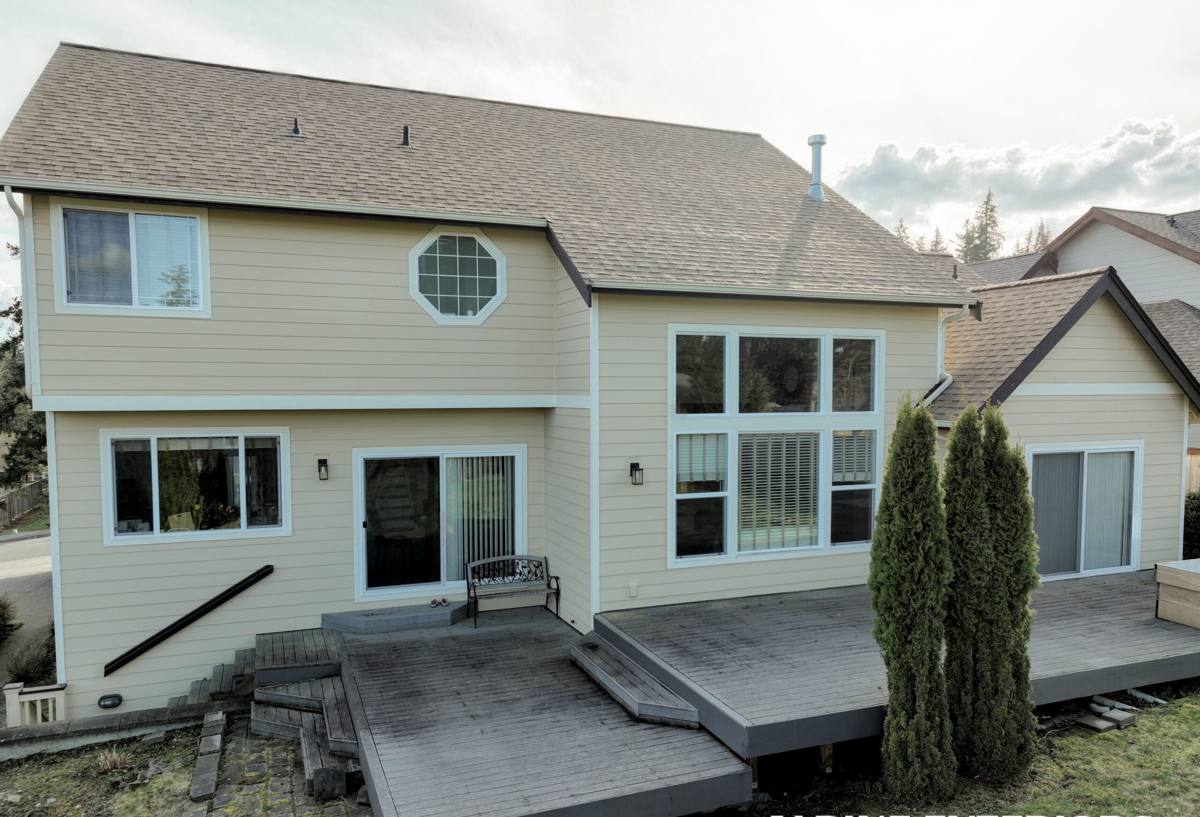
What a Correctly Built Composite Deck Needs Out Here
Framing and Ledger Details
The structure underneath the boards matters as much as the decking itself, arguably more. In a marine climate, the ledger board connection to the house, the joists, and any structural hardware need real moisture protection — not an afterthought. That means proper flashing at the ledger, joist tape or a comparable barrier on top of framing members before boards go down, and enough airflow underneath the deck so moisture doesn't just sit and cook the substructure from below.
Fasteners and Hardware
This is where a lot of decks near the water fail early, and it's rarely the composite boards themselves — it's the screws, joist hangers, and post hardware. Standard galvanized fasteners can start showing rust and pitting within a few seasons this close to salt air. We spec stainless steel or heavy-duty coated fasteners rated for coastal exposure, and we pay attention to hardware compatibility with whatever composite board is going down, since some manufacturers void warranties if the wrong fastener system is used.
Choosing a Composite Board That Actually Fits This Environment
Not all composite decking behaves the same way in salt air and constant damp. The core differences come down to whether the board is fully capped (a protective polymer shell on all sides) or only capped on the top and edges, and how the manufacturer engineers it to resist moisture absorption and mold growth on the surface.
| Board Type | How It Handles Salt Air & Moisture | Maintenance Load |
|---|---|---|
| Fully capped composite | Best resistance to moisture absorption and salt exposure on all sides, including cut ends when properly sealed | Low — periodic washing |
| Partially capped composite | Good on top surface; more vulnerable at the uncapped underside if airflow is poor | Low to moderate |
| Uncapped wood-plastic composite | Absorbs more moisture over time, more prone to surface mold in a shaded, damp yard | Moderate — regular cleaning needed |
| PVC decking | Excellent moisture resistance, no wood fiber to feed mold, handles salt spray well | Low |
We don't push one brand over another — the right pick depends on your budget, how shaded the site is, and how the deck sits relative to prevailing wind and rain. What we do insist on is a fully capped or PVC-based product for anything low-lying, heavily shaded, or getting direct salt spray, because the maintenance difference over ten years is significant and it's not something you can fix after installation.
Our Process for a Sandy Point Composite Deck
The steps aren't exotic, but skipping or rushing any one of them is exactly how decks in this area end up with problems in year three or four instead of year fifteen.
- On-site assessment of the existing structure (if replacing a deck) or the ledger/foundation area for new builds, checking for hidden moisture damage before we quote anything.
- Confirming permit requirements with Whatcom County or the applicable local jurisdiction, since deck permitting depends on size, height, and attachment to the home.
- Framing or reframing with treated lumber sized for the span, proper ledger flashing, and coastal-rated fasteners throughout.
- Installing hidden fastener systems or manufacturer-specified screws for the chosen composite board, with attention to expansion gaps — composite moves more with temperature than people expect.
- Railing and post installation, matched to the board system and built to current code for height and baluster spacing.
- Final walkthrough covering cleaning recommendations and what to watch for as the deck settles into its first wet season.
Why Drainage Gets Extra Attention Here
Driving rain off the water doesn't just fall straight down — it comes in at an angle and finds its way under railings, around post bases, and into any gap that isn't properly detailed. We grade and flash accordingly, and we make sure the deck surface and substructure can shed water fast rather than holding it against the house or pooling near post bases where rot and corrosion start.
Moss, Algae, and the Long Wet Season
Whatcom County's moss season runs long, and a shaded, damp deck near the water grows it faster than almost anywhere else in the area. Moss and algae aren't just cosmetic — a slick, moss-covered composite surface is a real slip hazard, especially on stairs, and left unaddressed it holds moisture against the board surface longer than it should.
The good news is that composite decking, especially a capped or PVC product, is far easier to keep clean than wood — there's no sanding or re-staining, and you're not fighting rot. But it isn't zero-maintenance in this climate. A simple seasonal routine keeps most problems from ever starting:
- Sweep off debris and standing organic matter regularly, especially under furniture and planters where moisture collects
- Wash the deck surface with a mild soap and soft-bristle brush a couple of times a year — pressure washing on the lowest setting only, never aimed directly at board seams
- Check and clear gaps between boards so water and debris aren't trapped against the substructure
- Inspect railing posts and fastener heads once a year for early signs of corrosion or loosening
- Keep gutters and downspouts near the deck clear so runoff isn't dumping directly onto the deck surface
Where We See Existing Decks Fail Early
On repair and replacement calls in this area, the pattern is consistent: rusted or failing fasteners before the decking itself gives out, rot at the ledger connection where flashing was missing or failed, and moss buildup left long enough that boards stay damp underneath even after the surface dries. Almost all of it traces back to a substructure or hardware decision made at install, not a flaw in the composite material.
What Affects the Cost of a Composite Deck Here
Every deck is different, so we won't quote a number without seeing the site, but these are the factors that move the price up or down on most Sandy Point projects:
| Factor | Why It Matters |
|---|---|
| Deck size and shape | More linear footage of board and framing, plus more cuts on complex layouts |
| Substructure condition | Replacing rotted framing or a failed ledger connection adds labor and material before decking even starts |
| Board tier (capped vs. PVC vs. entry-level composite) | Higher-performing boards for salt exposure cost more up front but reduce long-term maintenance |
| Railing type | Composite, aluminum, or cable railing systems vary widely in material and install time |
| Site access | Waterfront and canal-front lots sometimes have tighter access for equipment and material staging |
| Height and permitting scope | Elevated decks need engineered footings and stairs, which adds to both permit review and build time |
Why It Matters That We Already Work in Sandy Point
A crew that's only built decks a few miles inland doesn't always think about salt-rated hardware, capped board selection, or ledger flashing detail the same way — because in a drier, less exposed location, cutting those corners doesn't show up as a problem for years. Out here, it shows up fast. Having done deck work in this specific waterfront setting means we already know which fastener systems have held up, which board types are worth the extra cost for a canal-front or shoreline lot, and how the local permitting process works for Ferndale and unincorporated Whatcom County properties near the water.
It also means fewer surprises during the build. We know what to expect from site access on these lots, how the wind and rain typically hit a deck depending on its orientation to the water, and what maintenance routine actually holds up here versus what looks good on paper. That local track record is worth something when you're investing in a structure meant to last fifteen-plus years in a tough environment.
Get a Straight Answer on Your Deck
If you're planning a new composite deck or looking at replacing one that's showing its age, we're happy to come take a look and give you an honest read on what your home actually needs — no pressure, no upsell on materials you don't need. Fill out the form below for a free estimate, and we'll walk the site with you and talk through the options that make sense for your budget and your spot in Sandy Point.