 Ferndale
 Building New on Sandy Point: What the Site Asks of Your Windows
Sandy Point sits close enough to the water that every window on a new build has to earn its place. Homes here take a steady diet of salt-laden air, wind-driven rain that comes in sideways more often than straight down, and a long stretch of the year where moss, algae, and general dampness sit on every north-facing surface that doesn't get sun or airflow. None of that is exotic — it's just the normal cost of building close to Whatcom County's saltwater shoreline. But it does mean the window package and the installation details that a builder in a drier inland town might treat as optional aren't optional here.
On a new build, windows get exactly one installation. There's no siding to pull back later and quietly fix a flashing mistake without opening up finished walls. Whatever water-management decisions get made during framing and window-in stay behind the wall for the life of the house. That's the real argument for getting a local crew involved at the framing stage rather than after the fact.
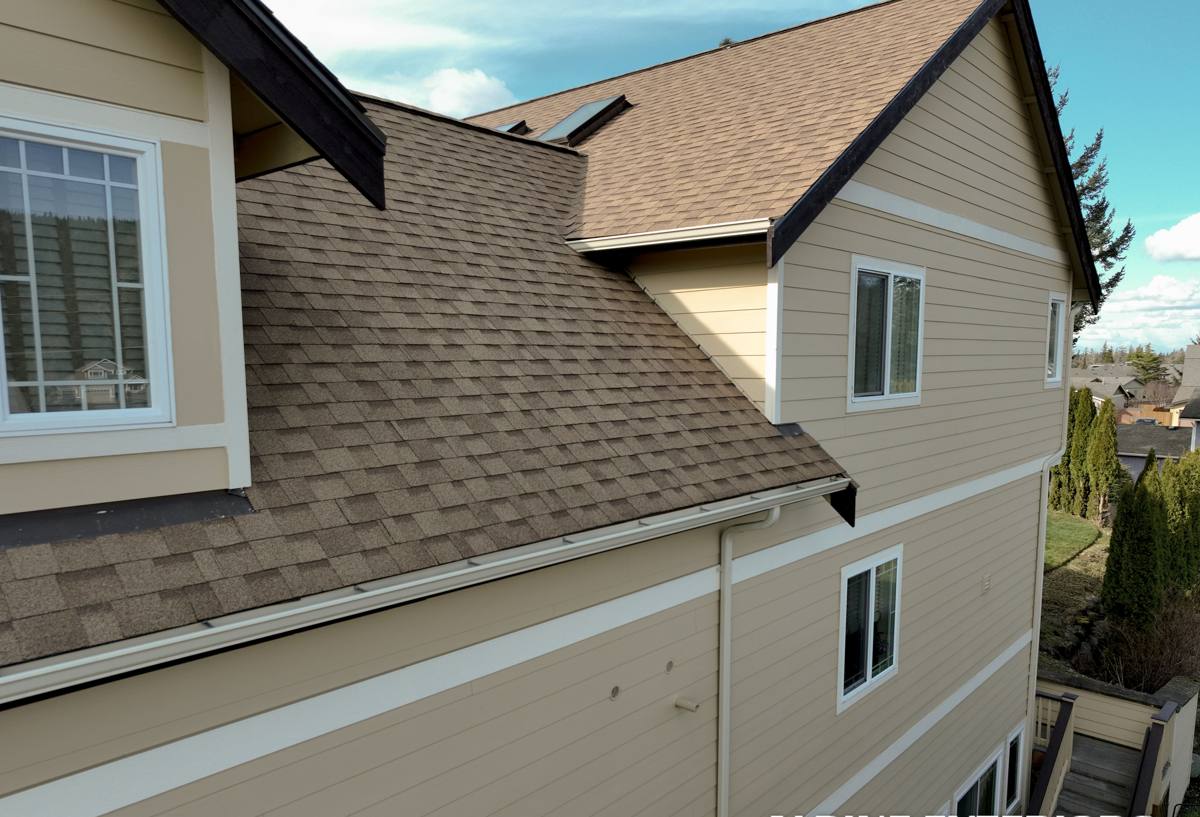
New-Construction vs. Replacement: Why the Job Is Different
"New-construction" windows aren't a different product line so much as a different installation method. They come with a nailing fin (sometimes called a flange) around the perimeter of the frame, which gets fastened directly to the sheathing before the weather-resistive barrier (WRB) and siding go on. Replacement or "pocket" windows, by contrast, get inserted into an existing frame with the old exterior trim left in place — a completely different set of trade-offs that don't apply here.
One Shot to Get the Envelope Right
Because the nailing fin becomes part of the wall's water-shedding system, the window isn't really a standalone component — it's one layer in a stack that includes the sheathing, the WRB, the flashing tapes or membranes, and eventually the siding. Get the sequencing wrong at this stage and you've built a leak path into the wall that won't show up as a stain on the drywall for years.
Nailing-Fin Installation
Fin windows have to be set plumb, level, and square in the rough opening, shimmed correctly so the frame doesn't bow under fastener pressure, and fastened per the manufacturer's pattern — skipping fasteners or over-driving them is a common way to void a warranty without anyone noticing until a claim gets denied.
Water Management: The Part That Actually Determines Window Lifespan
Given how much driving rain this area sees off the water, the flashing details matter more here than the window brand does. A mid-grade window installed with correct flashing will outlast a premium window installed carelessly, every time.
Sill Pan Flashing
Every rough opening should get a sloped or dammed sill pan before the window goes in, so any water that gets past the window — and some always does, eventually — has somewhere to drain instead of soaking into the framing. This is a five-minute step that's easy to skip and expensive to have skipped once the wall is closed up.
Integrating the Weather-Resistive Barrier
The WRB has to lap over the top flange and under the side and bottom flanges, following a shingle-style sequence so water is always directed outward and downward, never trapped against the framing. On a wind-driven-rain site like this one, gaps or reversed laps in that sequence are where moisture problems start.
Head Flashing and Sequencing
A head flashing above the window, integrated with the WRB and later the siding, is what keeps water from tracking down behind the window in a hard blow. We sequence this before the siding crew starts, not as an afterthought once the walls are already closed in.
Frame Material Choices for Salt Air and Moisture
Every frame material sold today can perform well on a waterfront-adjacent build — the differences are in maintenance burden, corrosion resistance of the hardware, and how forgiving the material is of installation error. We walk homeowners through the honest trade-offs rather than pushing one option.
| Frame Material | Salt-Air Behavior | Maintenance | Typical Fit for Sandy Point |
|---|---|---|---|
| Vinyl | Won't corrode; UV-stable formulations hold color | Low — rinse off salt film periodically | Strong value pick for most new builds |
| Fiberglass | Excellent — very stable, minimal expansion/contraction | Low | Good for larger openings or higher-end packages |
| Aluminum-clad wood | Clad exterior resists weather; wood interior needs a dry envelope | Moderate — depends on finish and exposure | Works well when detailing is done right |
| Bare aluminum | Prone to corrosion and pitting near salt air over time | Higher — hardware and finish need attention | We steer most Sandy Point clients away from this for exposed elevations |
Hardware matters as much as the frame — look for corrosion-resistant fasteners and hinge/lock hardware, since that's usually where salt exposure shows up first, long before the frame itself is affected.
Glass and Performance Ratings for This Climate
Whatcom County's marine climate is mild but heating-dominated — cool, wet winters matter more here than summer heat gain. That shifts the priority list compared to a hot, dry climate.
- U-factor is the number to focus on first — it measures how well the window resists heat loss, which is what drives comfort and heating cost through a long, damp Whatcom County winter.
- SHGC (solar heat gain coefficient) matters less here than in sunnier climates, though south- and west-facing glass still benefits from a moderate rating to avoid overheating on the occasional clear summer day.
- Low-E coatings help on both fronts and are standard on most quality window packages today.
- Condensation resistance is worth asking about specifically — a well-built, well-sealed home traps more indoor humidity, and a window with poor condensation performance will fog and sweat on cold mornings regardless of brand.
Our Process When We're the Window Crew on Your Build
We work new-construction jobs the same way whether we're brought in by the homeowner or coordinating directly with the builder or GC.
Before We Show Up
We confirm rough opening sizes against the approved window schedule, check that the openings are square and framed to spec, and flag anything that needs correction before we're on-site with product in hand.
Installation Day
Sill pans go in first, windows get set and shimmed, fastened to the manufacturer's pattern, and then flashed and integrated with the WRB in the correct shingle-lap sequence. We photograph flashing details before they get covered by siding, so there's a record of what's behind the wall.
Coordination with the Build Schedule
New-construction windows sit on the critical path — siding, trim, and interior finish work all wait on us. We schedule around the framer and the siding crew so the job doesn't stall, which matters on tight build timelines.
Mistakes We Watch For on New Builds
Most window callbacks on new construction trace back to a small number of repeat issues. Before we sign off on a job, we run through the same checklist every time:
- Rough opening out of square or oversized, requiring excessive shimming
- Missing or improperly sloped sill pan flashing
- WRB laps installed in the wrong order (trapping water instead of shedding it)
- Fastener pattern skipped or fasteners over-driven, distorting the frame
- Head flashing left out or not tied into the WRB above the window
- Sealant used to bridge gaps that should have been closed with proper flashing instead
- Low-clearance or below-grade openings glazed with standard glass instead of tempered or laminated where code requires it
Cost Factors for New-Construction Window Packages
Pricing on a new build depends on the whole package, not just the window count. Broad factors that move the number:
| Factor | Why It Matters |
|---|---|
| Frame material | Vinyl is generally the most budget-friendly; fiberglass and clad-wood run higher |
| Glass package (U-factor, low-E, tempered/laminated) | Code-required safety glazing and higher-performance glass both add cost |
| Window size and count | Larger openings and more glass area increase both material and labor cost |
| Flashing and sill pan detailing | Doing it correctly the first time costs less than a callback after siding is installed |
| Site access and logistics | Waterfront and near-water lots can add staging and delivery time |
We give straightforward numbers based on the actual window schedule and site conditions — not a blended average that doesn't reflect what your build actually needs.
Why Hire a Crew That Already Works Sandy Point
Salt air, driving rain, and moss season aren't unique to any one lot in Sandy Point — they're the baseline conditions for building anywhere along this stretch of the Whatcom County shoreline. A crew that's already installed windows on builds out here knows which elevations take the worst of the weather, understands why the flashing details matter more than they would on an inland Ferndale lot, and isn't learning the site conditions on your dime. That familiarity shows up in fewer callbacks and a build that holds up to the specific weather this location sees every winter, not just the weather a generic installation spec was written for.
If you're framing up a new home in Sandy Point or planning one, we're happy to walk the site, review the window schedule, and give you a straightforward, no-pressure estimate — just fill out the form below.