 Ferndale
 Why Sudden Valley Siding Wears Differently Than a Typical Whatcom County Home
Sudden Valley sits in one of the more heavily wooded, tree-shaded pockets of the Ferndale service area, and that changes how siding ages there compared to an open lot in town. Shade from mature trees keeps siding damp longer after every rain, and Whatcom County gets a lot of rain to keep it damp with. Add the region's driving, wind-pushed storms and the salt-tinged air that moves inland off the coast, and you have a combination that's tough on any exterior material. The result on tree-covered lots is usually a longer moss season — moss and algae get a head start in spring, hang on later into fall, and never fully dry out between weather systems.
None of that is a reason to panic about your siding. It's a reason to make sure the siding on your home, and the way it was installed, was actually built for this kind of exposure. A lot of siding failure we see in shaded, moisture-heavy neighborhoods isn't the material's fault at all — it's a flashing detail, a caulked joint that should have been left open, or a paint film that couldn't handle sitting wet for days at a time.
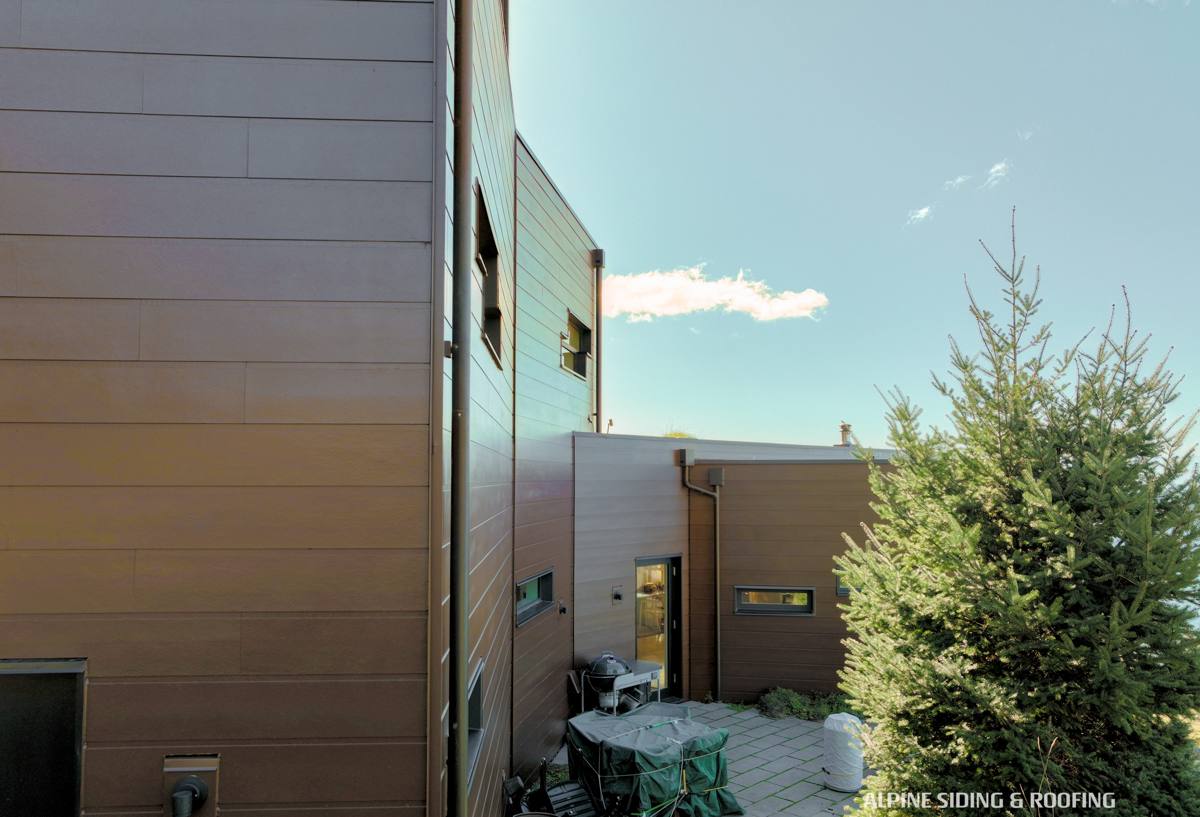
Signs a Sudden Valley Home Needs Replacement, Not a Patch
Repair makes sense when damage is isolated and the rest of the siding system is sound. Replacement becomes the honest recommendation when the damage points to a system-wide problem. On shaded, moisture-prone lots, watch for:
- Persistent moss or dark staining that comes back within weeks of cleaning, especially on north- and west-facing walls
- Soft, spongy spots when you press on the siding, which usually means water has reached the substrate underneath
- Cracking, cupping, or warping boards, common on wood-based products that have taken on repeated moisture cycles
- Paint that's peeling or chalking heavily rather than just fading evenly
- Visible gaps at seams, corners, or trim where caulking has failed or shrunk away
- A musty smell or interior wall staining near exterior walls, which can indicate moisture has already gotten past the siding
If you're only seeing one or two of these in a limited area, a repair or partial re-side may be reasonable. If several are showing up across the house, that's usually a sign the underlying weather barrier or installation details have failed more broadly, and patching one spot won't fix the next one six months from now.
What a Correct Siding Replacement Actually Involves
Full Tear-Off and Substrate Inspection
We don't install new siding over old. A proper replacement starts with removing the existing siding down to the sheathing so we can see what's actually happening underneath — rot, soft sheathing, compromised framing, or a weather-resistive barrier that's degraded or was never installed correctly in the first place. On a shaded, moisture-heavy lot like Sudden Valley, this step matters more than most; hidden damage tends to be worse than what shows on the surface, because moisture has been working on the substrate longer before it becomes visible.
Weather-Resistive Barrier and Flashing
The house wrap and flashing details behind the siding do most of the real work of keeping water out — the siding itself is the first line of defense, not the only one. Every window, door, and penetration gets flashed so water sheds outward and down, never into the wall cavity. This is the step that's easiest to rush and hardest to inspect after the fact, which is exactly why it needs to be done right the first time.
Installation to Manufacturer Spec
Fiber cement siding has specific clearance, fastening, and gapping requirements — clearance off the ground, off roof lines, and off decks; correct fastener type and placement; and joints that are supposed to stay open or be caulked with the right product, not painted shut. Skipping these details doesn't usually cause a problem in year one. It causes one in year five or seven, which is often past the point where anyone remembers how the job was actually installed.
Why We Install Only James Hardie Fiber Cement
We install one siding system on every job: James Hardie fiber cement. We don't offer vinyl, LP SmartSide, primed wood, or cedar, and that's a deliberate standard, not a lack of options. Vinyl expands and contracts with temperature swings and can crack in cold snaps; wood-based products, even engineered ones, are more sensitive to sustained moisture exposure than fiber cement; and cedar looks great but demands a maintenance schedule most homeowners don't keep up with, especially on shaded lots where it never fully dries out. Fiber cement is non-combustible, holds up to sustained damp exposure far better than wood-based siding, and comes with a factory-applied finish (ColorPlus) that's baked on rather than field-painted, which matters a lot in a climate where paint is fighting moss and moisture most of the year.
Hardie also builds region-specific product lines engineered for different climate zones (HZ5 for the Pacific Northwest, for example), which is a level of climate-matching most competing products don't offer. That's a meaningful factor on a lot with heavy shade and long wet stretches.
How Common Siding Materials Compare in This Climate
| Material | Moisture Behavior | Maintenance | Typical Lifespan |
|---|---|---|---|
| James Hardie fiber cement | Resists moisture damage; won't rot | Occasional wash; factory finish holds up well | 30+ years to manufacturer spec |
| Vinyl | Doesn't rot, but can warp/crack with temperature swings | Low, but color fades over time | 20-30 years |
| Engineered wood (LP-type) | Vulnerable to sustained moisture if seals fail | Regular inspection of seams and finish | 20-30 years with upkeep |
| Cedar | Absorbs moisture; needs to dry out fully between rains | High — refinishing every few years | Varies widely with maintenance |
Our Process for Sudden Valley Replacement Projects
Assessment and Estimate
We walk the exterior with you, look at drainage patterns, shade exposure, and any existing damage, and give you a straight read on whether you're looking at repair or full replacement — and why.
Material and Color Selection
We help you pick the right Hardie profile and ColorPlus finish for your home, factoring in how the lot's shade and moisture exposure affect how a color and texture will actually look and wear over time.
Tear-Off, Barrier, and Flashing
Old siding comes off, the substrate gets inspected and repaired where needed, and a new weather-resistive barrier with proper flashing goes on before a single new board is hung.
Installation and Finish Details
Siding goes up to Hardie's clearance and fastening specifications, with joints and trim finished the way the manufacturer's warranty actually requires — not the way that's fastest.
Walkthrough and Warranty Registration
We walk the finished job with you, and we register the manufacturer warranty in your name so it's on file if you ever need it.
What Drives Cost on a Sudden Valley Job
We're not going to throw out a number that doesn't mean anything without seeing your home, but here's what actually moves the price on a project like this:
- Extent of substrate repair — hidden rot or soft sheathing found during tear-off adds labor and materials
- House size and complexity — corners, gables, and dormers all add cutting and trim time
- Access and site conditions — heavily treed or sloped lots can slow staging and material handling
- Siding profile and finish — lap width, texture, and color selection affect material cost
- Trim and accessory work — window and door trim, corner boards, and fascia often get replaced alongside siding
A written estimate will break these out so you know exactly what you're paying for and why, not just a lump sum.
Why Local Experience in Sudden Valley Matters
A crew that's already worked shaded, tree-covered lots in this area knows to expect softer sheathing behind old siding before they even pull the first board, and they plan the schedule around the fact that a wall that just got rained on needs time to dry before new material goes over it. Communities like Sudden Valley often have their own design guidelines or architectural expectations for exterior changes, so it's worth confirming those before work begins — a contractor who's worked in the area before is used to building that check into the process rather than treating it as an afterthought.
Keeping New Siding Looking Right on a Shaded Lot
Fiber cement with a factory finish needs far less upkeep than wood siding, but a shaded, moisture-heavy lot still benefits from a little attention:
- Rinse siding once or twice a year, especially on north-facing walls, to keep moss and algae from taking hold
- Keep gutters clear so water isn't sheeting down the siding face
- Trim back branches and foliage that are keeping walls in constant shade and blocking airflow
- Check caulking at trim and penetrations every year or two and have it redone if it's cracking or pulling away
If you're weighing repair versus replacement, or just want an honest look at what your current siding can and can't handle on a lot like this, we're happy to walk it with you. Reach out for a free, no-pressure estimate using the form below.