 Ferndale
 Windows in Sudden Valley Work Harder Than Most
Sudden Valley homes sit in a part of Whatcom County where the weather doesn't let up for long. Salt-laden air drifts in off the water, driving rain comes sideways more often than straight down, and a long, damp moss season settles into anything that holds moisture. Windows are one of the first things on a house to show the wear from that combination — failed seals, fogged glass, swollen sashes, and trim that never quite dries out between storms. A window that's built and installed correctly for this specific climate holds up. One that isn't will show problems within a few winters, no matter how good it looked going in.
This page covers what custom window work actually means for a Sudden Valley home, what a correct installation involves, and what to expect from a crew that already knows this area.
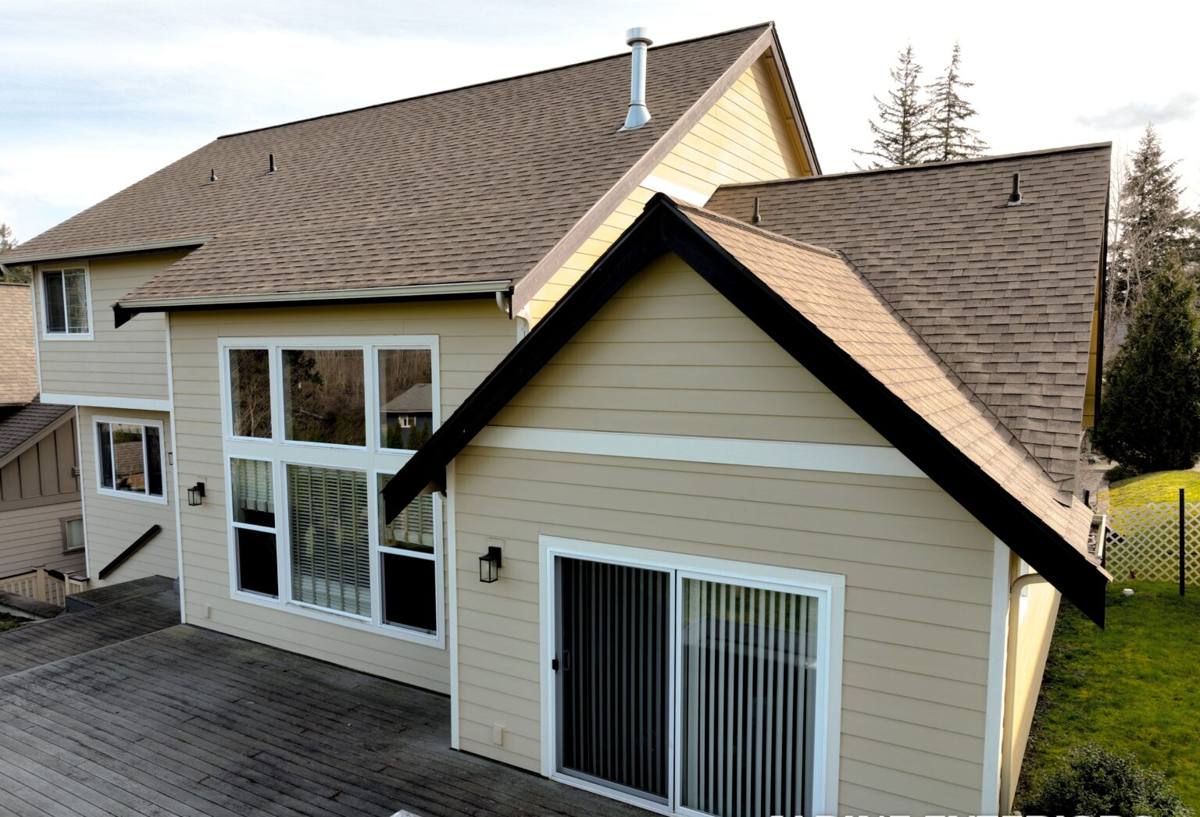
What the Local Climate Actually Does to a Window
Salt Air
Airborne salt is corrosive to metal window hardware — hinges, locks, balance mechanisms, and especially aluminum-clad exteriors if the cladding or finish isn't rated for coastal exposure. Over time it can pit finishes and seize moving parts, which is why hardware quality and finish rating matter more here than they would inland.
Driving Rain
Wind-driven rain doesn't just hit a window head-on — it gets pushed sideways and upward under trim and siding edges. This is where most window leaks actually start, not in the glass itself but in the flashing and sealant details around the rough opening. A window can be a great product and still leak if the flashing behind it was done wrong.
Moss and Sustained Moisture
Long stretches of damp, shaded weather let moss and mildew take hold on sills, trim, and anywhere water sits instead of shedding. Wood components that aren't properly primed, sealed, and detailed for drainage will hold moisture longer than they should, which accelerates rot at the sill and jamb — often before it's visible from inside.
What a Correct Custom Window Job Involves
"Custom" windows means the unit is built to the actual opening and the home's specific needs — not a stock size trimmed to fit. That matters in Sudden Valley because older homes and additions in the area often have openings that are slightly out of square or don't match current standard sizes. A correct job includes:
- Accurate field measurement of each opening, accounting for out-of-square or settled framing
- Frame material and glass package matched to orientation — a window facing prevailing wind and rain needs a tighter seal and more robust flashing detail than a sheltered one
- Proper flashing sequence: sill pan, jamb flashing, and head flashing installed so water is directed out and down, never trapped behind the trim
- Compatible sealants and backer rod at the perimeter, not just caulk smeared over the gap
- Correct shimming and fastening so the sash operates smoothly and the seal isn't stressed out of shape
- Interior and exterior trim work finished to shed water, not collect it
Skipping any one of these steps is usually invisible on install day and shows up as a leak, a drafty room, or rot two to five years later.
Frame Material: What Actually Holds Up Here
There's no single "best" window frame material for every situation — it depends on budget, the home's style, and how exposed the opening is to wind and rain. Here's how the common options generally perform in this climate:
| Frame Material | Moisture/Salt Air Behavior | Maintenance | Typical Fit |
|---|---|---|---|
| Vinyl | Doesn't corrode or rot; performs well in salt air; can flex slightly in temperature swings | Low — occasional cleaning | Most homes, best value |
| Fiberglass | Very stable dimensionally, strong resistance to moisture and corrosion | Low | Higher-exposure walls, larger units |
| Aluminum-clad wood | Good if the cladding and finish are coastal-rated; exposed fasteners or scratched finish invite corrosion over time | Moderate — finish should be inspected periodically | Homes wanting a wood interior look |
| All-wood | Most sensitive to sustained moisture and moss growth; needs consistent maintenance | High — regular painting/sealing required | Historic or period-specific homes where wood is the priority |
Our standard is to steer toward materials that shed water and resist salt corrosion on exposed elevations, and reserve all-wood units for situations where the homeowner specifically wants that look and understands the upkeep it requires. This isn't a knock on any one product — it's about matching the material's maintenance demands to how exposed a given wall actually is in Sudden Valley.
Signs Your Current Windows Are Losing the Fight
Before assuming a window needs full replacement, it's worth knowing what to actually look for:
- Fogging or condensation between panes (a failed seal on double- or triple-glazed units)
- Soft or discolored trim and sill wood, especially on the side that faces prevailing wind
- Sashes that stick, won't stay open, or don't latch tightly anymore
- Visible daylight or a noticeable draft along the frame edge
- Moss or dark staining collecting on the sill or exterior trim
- Paint or finish that's bubbling, peeling, or chalking prematurely
- A musty smell or soft drywall near the interior window frame
One or two of these can sometimes be addressed with re-sealing or trim repair. Several together, especially soft wood or interior drywall damage, usually mean the window and its surrounding flashing need to come out and be redone correctly.
Our Process for a Sudden Valley Window Job
1. On-Site Assessment
We look at each opening individually — not just the window itself but the flashing, sill condition, and framing behind it. This tells us whether it's a straightforward swap or if there's hidden water damage to address first.
2. Measuring and Ordering
Custom units are measured to the actual opening, not a catalog size. We account for the home's exposure — a window on the weather side gets the same attention to detail as one that's sheltered, since wind-driven rain doesn't always respect the "protected" side of a house.
3. Removal and Opening Prep
Old units come out carefully so we can inspect the sill and framing underneath. Any soft wood or compromised sheathing gets repaired before a new window ever goes in — installing a new window over a bad opening just hides the problem.
4. Flashing and Weatherproofing
This is the step that determines whether the window will still be dry in five years. Sill pan, jamb, and head flashing go in following a shingle-lap sequence so water is always directed outward, never sideways into the wall.
5. Setting, Sealing, and Trimming
The unit is shimmed level and square, fastened per manufacturer spec, sealed at the perimeter, and trimmed out — exterior and interior — to shed water and match the home.
6. Final Check
Every sash gets operated, every lock tested, and the perimeter checked for gaps before we call the job finished.
Cost Factors Worth Understanding
Window project costs vary a lot based on scope, and we won't quote a number without seeing the openings. But these are the main factors that move the price:
| Factor | Why It Matters |
|---|---|
| Frame material | Vinyl is typically the most budget-friendly; fiberglass and clad-wood cost more upfront but often need less upkeep |
| Opening condition | Rotted framing or sheathing found during removal adds repair scope beyond the window itself |
| Glass package | Higher-performance glazing (better insulation, tinting, or impact resistance) adds cost but pays back in comfort and energy use |
| Exposure level | Windows on the weather-facing side may warrant more robust flashing detail and hardware |
| Number of units and access | Multiple windows, upper stories, or tight access affect labor time |
Why a Crew That Already Works Sudden Valley Matters
Window installation done to code and to spec sheet is one thing. Window installation done for this specific stretch of Whatcom County weather is another. A crew that's already worked in Sudden Valley has seen which elevations take the worst of the wind-driven rain, which older homes tend to have out-of-square openings, and where moss and moisture problems typically start. That's the difference between a window that's technically installed correctly and one that's actually built to last through another wet season here.
We also stand behind the flashing and sealing work, not just the window unit itself — because in this climate, that's usually where problems actually start.
Ready to Talk About Your Windows?
If your windows are fogging, drafting, sticking, or showing soft trim, or you're planning a custom window upgrade for a Sudden Valley home, we're happy to take a look and give you a straight assessment — no pressure, no sales pitch. Use the form below to request a free estimate.