 Ferndale
 Building a Deck That Actually Holds Up in Sudden Valley
Sudden Valley sits in one of the wetter, shadier pockets of Whatcom County, and that combination changes what a deck needs to survive here versus a deck built somewhere drier and more open. Between the driving rain that blows through in fall and winter, the salt-tinged marine air that moves inland off the Salish Sea, and a moss season that can stretch six months or longer under heavy tree cover, an outdoor structure in this area takes a beating that a lot of national "deck building" articles never account for. We build decks for this exact set of conditions, not for a generic Pacific Northwest climate — there's a real difference between the two.
A deck that looks great for the first year and starts showing rot, cupping, or slick green growth by year three usually failed for one of a handful of predictable reasons: the wrong material for the site, fasteners that couldn't handle the moisture, or framing details that trapped water instead of shedding it. Getting those details right up front costs very little compared to what it costs to fix them later.
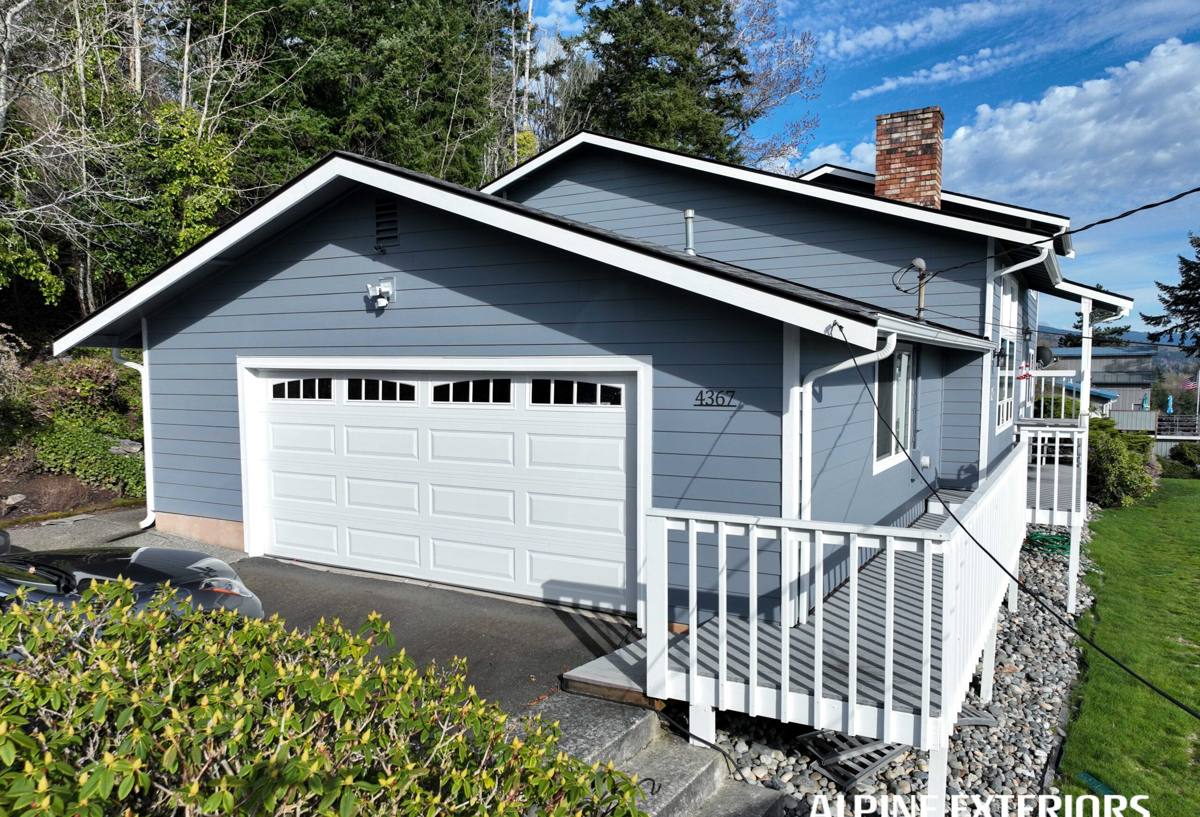
What Makes Sudden Valley Lots Different
Many homes around Sudden Valley sit on sloped, wooded lots near Lake Whatcom, with mature conifer cover that keeps large areas of yard in shade for most of the day. That shade is part of what makes the neighborhood attractive, but it's also exactly the environment moss, algae, and mildew prefer. A deck tucked under fir or cedar trees dries out slower after every rain than one in full sun, which means water sits longer on the boards, in the joints, and against the framing underneath.
Slope and Drainage
Sloped lots also change how a deck's substructure needs to be built. Footings often have to be set deeper or stepped to follow the grade, and drainage away from posts and beams matters more than it would on a flat, well-drained site. We look at how water actually moves across a lot before we ever set a footing — not just where the deck will sit, but where the runoff goes once the deck is there.
Tree Cover and Debris
Needles, cones, and leaf litter collect in deck gaps and against ledger boards faster under a tree canopy than in the open. Left alone, that debris holds moisture against the wood and accelerates rot in exactly the spots that are hardest to inspect from the surface — under the first few boards near the house, and in the corners where debris naturally piles up.
Choosing the Right Decking Material
There's no single "best" decking material — there's the right material for your budget, your maintenance tolerance, and how much sun and moss exposure the deck will actually get. We walk every homeowner through the real trade-offs instead of pushing whatever has the best margin.
| Material | Upfront Cost | Maintenance | How It Handles Moss & Moisture |
|---|---|---|---|
| Pressure-treated fir/pine | Lowest | Re-seal or stain every 1-2 years | Needs consistent sealing to resist rot; moss grows readily if neglected |
| Western red cedar | Mid-range | Oil or stain every 2-3 years | Naturally rot- and insect-resistant, but still needs surface care in shaded, damp spots |
| Composite decking | Highest | Occasional washing, no sealing | Won't rot, but can still develop surface moss/mildew in deep shade and needs periodic cleaning |
A common misconception is that composite decking is "maintenance-free." In a shaded, moisture-heavy spot like Sudden Valley, composite boards can still grow a thin film of algae or moss on the surface, especially in areas that never see direct sun. It won't rot the way wood can, but it still needs to be washed down periodically or it gets slick and dark. We're upfront about that with every homeowner considering composite for a shaded lot.
Framing Lumber
Regardless of what decking material sits on top, the framing underneath should always be pressure-treated lumber rated for ground contact where it's near soil, with proper flashing tape over the joists to keep moisture from soaking into fastener holes. This is one of the most commonly skipped steps on lower-bid deck jobs, and it's usually the reason a deck's frame fails years before the surface boards do.
Framing, Fasteners, and Waterproofing Done Right
Most deck failures we get called out to inspect aren't decking problems — they're framing and waterproofing problems that eventually show up as decking problems. In a climate with as much sustained rain as Whatcom County gets, a handful of details separate a deck that lasts fifteen-plus years from one that needs major repair in five.
- Ledger board flashing: where the deck attaches to the house, water intrusion here can rot both the deck framing and the house's rim joist. Proper flashing and a small air gap behind the ledger are non-negotiable.
- Corrosion-resistant fasteners: hot-dip galvanized or stainless steel hardware rated for treated lumber, not standard fasteners that corrode and stain the wood in a damp climate.
- Joist tape: a waterproof membrane over the top of every joist keeps rainwater from wicking into fastener holes, which is where hidden rot usually starts.
- Board spacing: gaps sized to let water drain through and air circulate underneath, rather than tight joints that trap moisture and encourage moss between boards.
- Footing depth and drainage: footings set below frost depth and away from standing water, with gravel or drainage rock where the soil doesn't drain well on its own.
Railings, Stairs, and Code Requirements
Any deck more than 30 inches above grade needs a compliant guardrail under Washington building code — generally 36 inches minimum for residential guards, with baluster spacing that won't allow a 4-inch sphere to pass through. Stair railings and handrail graspability have their own separate requirements. These aren't optional style choices; they're inspected, and getting them wrong means a failed inspection and rework.
Material Matching for Railings
Railings take the most direct weather exposure of any part of the deck, since there's nothing shading or shielding the top rail and balusters from rain. We generally recommend matching or upgrading the railing material relative to the decking — for example, a composite or metal railing system on a wood deck holds up better long-term in a wet climate than an all-wood railing that needs the same maintenance cycle as the deck boards but takes more weather.
Permits and Inspections in Whatcom County
Most new decks and significant deck replacements in and around Ferndale require a building permit, and elevated decks or those tied into the house structurally may need an engineered plan depending on span and height. Permit requirements and setback rules can vary depending on whether a property falls under City of Ferndale jurisdiction or unincorporated Whatcom County, which is common for Sudden Valley addresses. We handle the permit submission and coordinate the required inspections as part of the job, so homeowners aren't left figuring out which jurisdiction their lot falls under or what documentation an inspector will want to see.
Our Deck Building Process
- On-site assessment: we look at the lot's slope, sun exposure, tree cover, and how water moves across the site before recommending a design or material.
- Design and material selection: we walk through decking, framing, and railing options with honest cost and maintenance trade-offs for your specific spot on the property.
- Permitting: we prepare and submit the permit package and schedule the required inspections with the correct jurisdiction.
- Site prep and footings: footings are set to proper depth for the soil and slope conditions, with drainage addressed before any framing goes up.
- Framing: ledger flashing, joist tape, and corrosion-resistant fasteners go in as standard practice, not upgrades.
- Decking and railings: boards and railing systems are installed per the design, with spacing and fastening set for drainage and long-term stability.
- Final walkthrough and inspection: we review the finished deck with you and make sure it passes final inspection before we consider the job complete.
Signs Your Existing Deck Needs Attention
Not every deck problem means a full rebuild. Some issues are cosmetic surface maintenance, while others point to structural rot that needs to be addressed before someone gets hurt. A few things worth checking, especially on an older deck that's spent years under tree cover:
- Soft or spongy spots when you walk across the boards, particularly near the house or in shaded corners
- Persistent green or black staining that comes back quickly after cleaning
- Rust streaks around fasteners, which often signal the hardware is failing
- Gaps or separation where the ledger board meets the house
- Wobble in the railing posts or handrail
- Standing water that doesn't drain through the board gaps after rain
If any of those sound familiar, it's worth having someone look underneath the deck, not just at the surface — most of the serious problems are in the framing, where they're easy to miss until they're advanced.
Why a Crew That Already Works Sudden Valley Matters
A deck contractor who hasn't worked the sloped, tree-covered lots around Lake Whatcom before is learning on your project. We already know that footings on these hillside lots often need to be stepped or set deeper than a flat-lot job, that permit review can fall under either the City of Ferndale or Whatcom County depending on the exact address, and that a deck tucked under conifer cover needs different spacing and material choices than one in an open, sunny yard. That local experience shows up in fewer surprises during the build and a deck that's actually built for the site it's sitting on, not a generic template.
If you're planning a new deck or need an honest look at one that's showing its age, we're glad to come out, walk the site, and give you a straightforward, no-pressure estimate — just fill out the form below.