 Ferndale
 New-Construction Windows Are a Different Job Than Replacement Windows
New-construction windows are installed into open framing before the siding goes on, using a nailing fin that gets integrated directly into the wall's weather-resistant barrier (WRB) and flashing system. That's a different job than a replacement window, which gets set into an existing, already-clad opening. On a new build, the window installer isn't just setting glass — they're building one link in the whole water-management chain that runs from the roof, down the walls, and out at the foundation. Get that link wrong and the mistake gets buried behind siding for years before it shows up as rot or a stained interior wall.
For a home going up in Sudden Valley, that chain matters more than average. This is a wet part of Whatcom County, and a window opening that isn't flashed correctly is exactly the kind of thing that looks fine at final inspection and causes real damage three or five winters later.
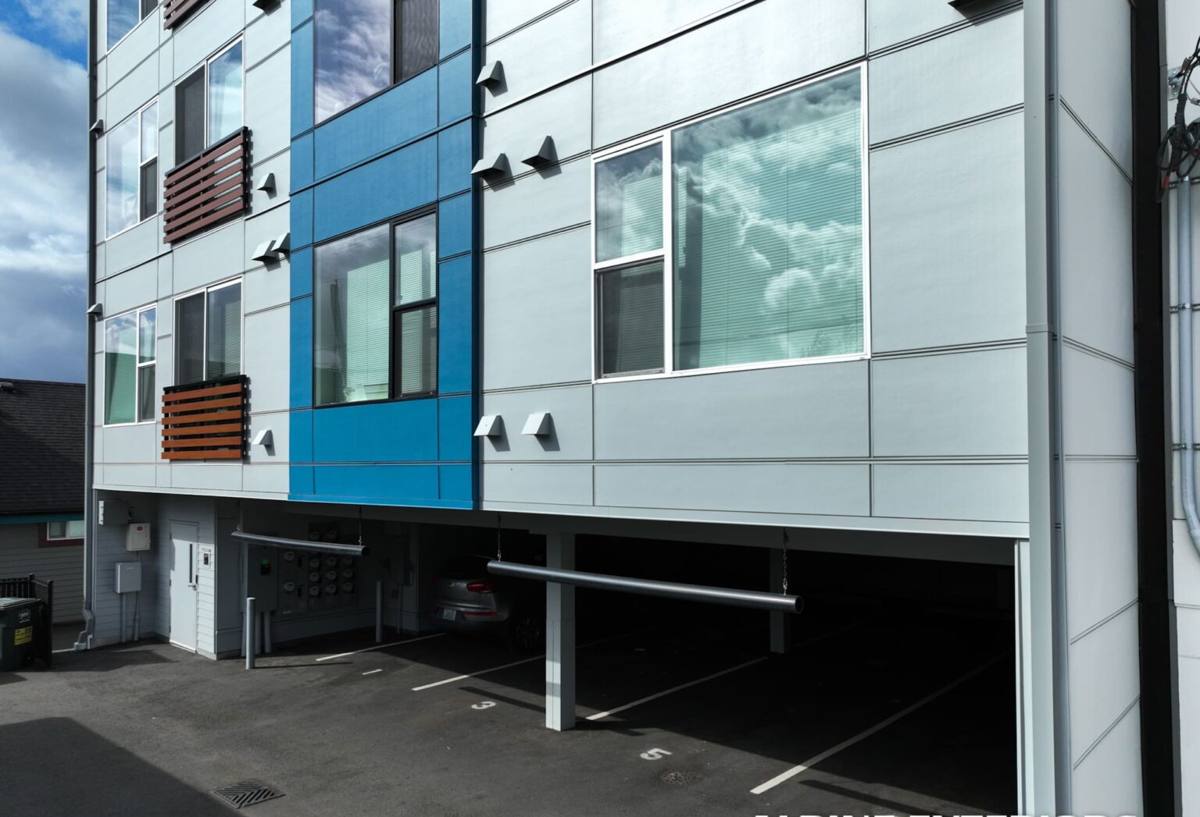
What Sudden Valley's Climate Asks of a Window Installation
We treat window flashing differently here than we would on a dry-side build, for a few reasons specific to this part of Washington:
- Salt air: Proximity to Puget Sound air carries moisture and salt content that accelerates corrosion on exposed fasteners, hinges, and lower-grade hardware over time.
- Driving rain: Whatcom County storms regularly come in sideways, not straight down. A window flashing detail that only sheds water falling vertically isn't enough here — the sill pan and head flashing both need to handle wind-driven water pushed up and under.
- A long moss season: Extended cool, damp stretches keep moss and algae active on trim, sills, and siding surfaces for much of the year. Anything that traps standing moisture near a window opening gives moss and mildew a head start.
None of this means anything exotic is required. It means the ordinary steps — sill pan flashing, proper WRB lap sequence, correct sealant placement — can't be skipped or shortcut, because this climate finds every gap.
What a Correct New-Construction Window Install Actually Involves
Done right, a new-construction window opening goes together in a specific order. Skipping or reversing any of these steps is where most future leaks start.
- Sill pan flashing first. A sloped, sealed pan under the rough opening gives any water that gets past the window a way out, instead of a place to pool.
- WRB integrated in shingle-lap order. The housewrap or weather barrier around the opening has to lap correctly with the flashing so water is always directed outward and down, never trapped behind a seam.
- Window set square, plumb, and level in the opening, with shims placed at load points per the manufacturer's instructions — not just wherever is convenient.
- Nailing fin fastened per the manufacturer's schedule, not "close enough" spacing, since fastener spacing affects both structural performance and the manufacturer's warranty coverage.
- Head flashing installed last, lapped over the side flashing and WRB above the window so it sheds water down and around, not into the wall cavity.
- Interior air-sealing and insulation around the frame, done without over-compressing low-expansion foam, which can bow vinyl frames.
- Exterior sealant at the trim/siding interface only — sealing the wrong joint can trap moisture instead of keeping it out.
Where This Ties Into Your Siding
Because window flashing and siding water management are one continuous system, having the same crew handle both means there's no handoff gap between "who flashed the window" and "who installed the siding around it." That coordination is one of the main reasons builders bring us in on new construction rather than treating windows and siding as two separate trades working from two separate plans.
Choosing Windows for This Part of Whatcom County
Frame material and glass package both affect how a window holds up to salt air, condensation, and years of grey, wet weather. There's no single "best" answer — it depends on budget, the home's design, and how much upkeep an owner wants to take on.
| Frame Type | How It Holds Up Here | Maintenance | Typical Trade-Off |
|---|---|---|---|
| Vinyl | Good moisture resistance, won't rot or corrode | Low — occasional cleaning | Can flex on larger sizes; frame color choices are limited |
| Fiberglass | Very stable in temperature swings, strong moisture resistance | Low | Higher upfront cost than vinyl |
| Wood-clad | Good performance if the cladding and flashing are correct | Higher — exposed wood elements need monitoring | More installation-sensitive; a flashing mistake shows up faster |
| Aluminum | Poor thermal performance, prone to condensation in this climate | Moderate | We generally don't recommend it for residential builds here |
For glass, dual-pane with a low-E coating and argon fill is the practical standard for new construction in this climate — it manages both heat loss and condensation risk on cold, damp mornings. Washington's state energy code also sets minimum U-factor requirements for new-construction windows, which your window schedule needs to meet regardless of style preference.
Our Process on a New-Construction Job
We work new-construction windows as part of the broader building sequence, coordinating with the general contractor rather than showing up on our own timeline:
- Plan review: we check the window schedule against the wall assembly and flashing details before framing is even closed in.
- Product selection support: we'll walk through frame material and glass package trade-offs so the choice fits the home and the budget, not just the brochure.
- Flashing and set: sill pan, WRB integration, and window installation, done to the manufacturer's instructions so the warranty stays intact.
- Siding tie-in: trim and siding installed around the finished opening as one continuous water-management system.
- Final check: every opening gets walked and checked before we call it done — not just visually, but for sealant placement and flashing lap direction.
Common Mistakes We Watch For
Most window-related water damage we're called to fix later traces back to a handful of repeatable mistakes. On new construction, we check for these at every opening:
- No sill pan, or a pan that isn't sloped to drain
- WRB lapped backward at the flashing so water runs behind it instead of over it
- Sealant applied at the wrong joint, trapping moisture instead of shedding it
- Shims placed only at the corners, letting the frame bow under fastener pressure
- Head flashing skipped or installed under the WRB instead of over it
- Over-packed spray foam bowing the frame out of square
Any one of these can pass a rough visual check and still fail years later. That's why the sequence matters more than the individual materials.
Timing on a Sudden Valley Build
Window installation happens at a specific point in the build sequence — after the WRB is on and rough openings are framed, before siding starts. Because Whatcom County's wet stretches can extend for weeks at a time, we try to schedule window sets during drier windows where possible and use temporary protection on open flashing if weather moves in before siding closes things up. On an active job site, we stay in contact with the general contractor so window installation doesn't become the bottleneck holding up the rest of the exterior schedule.
Why Hire a Crew That Already Works This Area
New-construction window flashing isn't a specialty product — it's a specialty of attention. A crew that installs windows across many different climates might do the work by a generic checklist. A crew based in Ferndale that regularly works sites throughout Whatcom County, including communities like Sudden Valley, has already seen how the local combination of driving rain, salt-laden air, and a long stretch of damp, mossy weather finds the shortcuts other installers get away with elsewhere. That's not a marketing point — it's the reason we flash every sill pan the same careful way whether the home is our first job of the year or our fiftieth.
Warranty and Long-Term Performance
Manufacturer warranties on new-construction windows generally cover the glass unit and hardware, but installation defects — a missing sill pan, incorrect fastening — are typically excluded and fall back on the installer, not the manufacturer. That's part of why correct installation sequence matters as much as the window brand itself: a good window installed wrong can fail the same way a cheap window would.
If you're planning a new build in Sudden Valley or elsewhere in our Whatcom County service area, we're happy to walk your window schedule and flashing details with you before framing closes in. Reach out for a free, no-pressure estimate using the form below.