 Ferndale
 Custer's Exposure Is Different From Inland Whatcom County
Custer sits close enough to the water that homes here take a harder hit than siding thirty minutes inland. Salt-laden air off the strait works into fasteners, trim, and any gap in a weather barrier. Add Whatcom County's long stretch of wet months, and you get siding that stays damp for weeks at a time, plus wind-driven rain that finds every seam a lesser installation left open. This isn't a climate that punishes bad siding work occasionally — it punishes it constantly, season after season.
We install James Hardie fiber cement exclusively, and on Custer homes specifically, that choice comes down to how the material behaves when it's wet more often than it's dry. Hardie board is engineered cement, sand, and cellulose fiber — it doesn't absorb water the way wood-based products do, and it doesn't corrode the way some trim and fastener systems do when salt air is a daily factor.
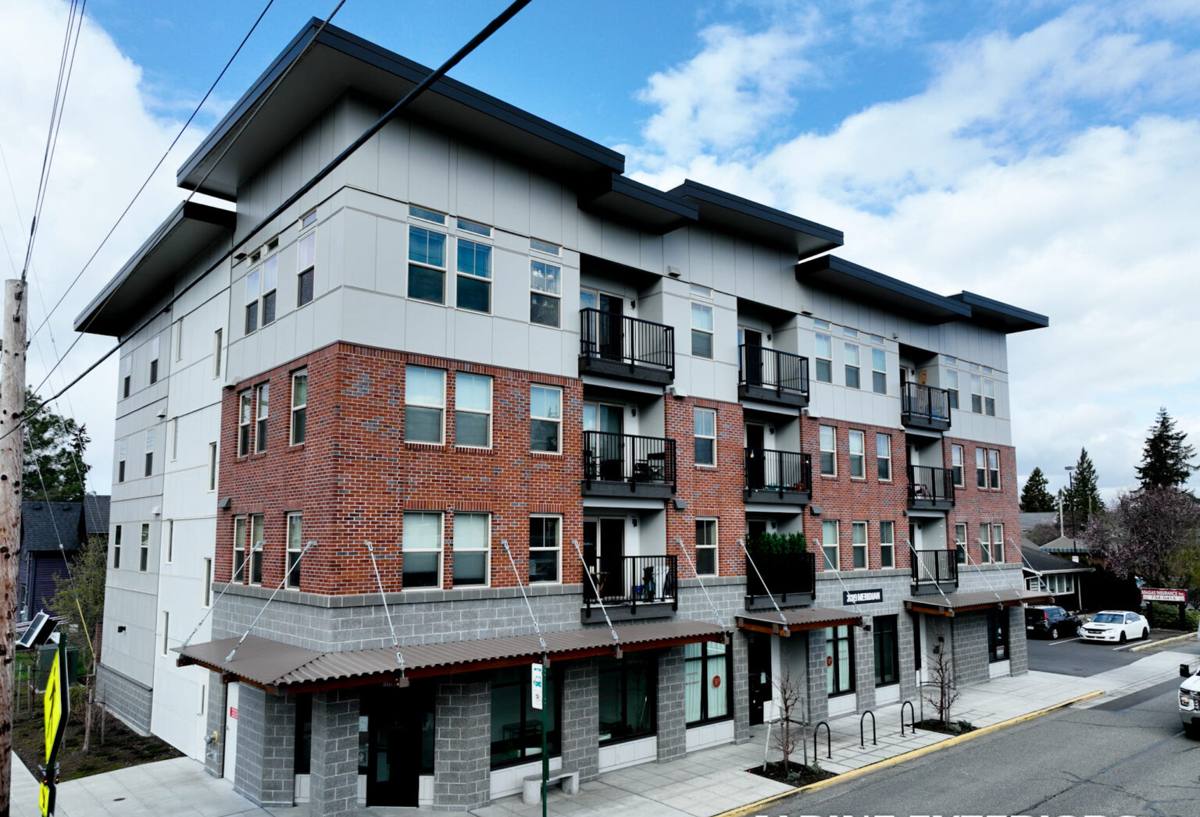
What "Correct" Installation Actually Means Here
James Hardie siding performs the way it's supposed to only when it's installed to the manufacturer's specifications — and in a coastal-influenced, high-rain area like Custer, the margin for error is smaller than it is in drier climates. Correct installation on a home like this includes:
- Proper water-resistive barrier and flashing at every window, door, and penetration — this is where most siding failures actually start, not in the siding material itself
- Correct fastener spacing, type, and depth — over-driven or under-driven nails are one of the most common defects we find on re-sides
- Minimum clearance between siding and grade, decks, and roofing to keep the bottom edge from sitting in standing moisture
- Proper caulking and sealant at joints, sized and placed per Hardie's published details, not just "wherever looks right"
- Rain-screen or drainage plane detailing where the wall assembly calls for it, so moisture that does get behind the cladding has somewhere to go
None of this is exotic. It's documented in James Hardie's own installation guides. The problem in this region isn't a lack of instructions — it's crews rushing through flashing and fastening details because they're used to easier climates or unfamiliar with fiber cement specifically.
Why We Bring Up Failure Points Before Talking Product Colors
Homeowners calling about siding usually start with color and style questions, which are fair — but on a Custer home, the wall assembly behind the siding decides whether that new siding lasts fifteen years or fifty. We walk every job through the water-management details first, because that's the part that's invisible once the siding is up.
The HZ5 Product Line and Why It Fits This Area
James Hardie engineers its siding by climate zone. HZ5 is the formulation built for regions with significant moisture exposure and freeze-thaw cycling — which describes most of western Washington, and describes Custer specifically given the added salt-air factor. It's not a marketing tier; it's a different formulation designed to hold up under sustained wet conditions without the swelling, cracking, or delamination that lesser fiber cement or wood-based products can develop over time.
We spec HZ5 products on Whatcom County jobs as standard practice, not as an upsell. On a Custer property this close to the water, using a formulation engineered for a milder or drier climate zone would be cutting a corner that shows up in ten years, not in the first inspection.
Where Older Custer Siding Jobs Tend to Fail
| Symptom | Likely Cause | Why It's Common Here |
|---|---|---|
| Soft or crumbling siding at the bottom courses | Insufficient clearance from grade or decking; poor drainage | Wet ground and heavy rain keep the lowest courses saturated far longer than in drier regions |
| Streaking or dark growth on north-facing walls | Persistent shade plus moisture, minimal airflow | Long overcast, wet season gives moss and algae months to establish |
| Rust bleed at fastener heads | Wrong fastener material or coating for a salt-influenced environment | Salt air accelerates corrosion on fasteners not rated for coastal exposure |
| Cracked caulk lines and gapping trim | Wrong sealant type or joints not detailed to Hardie spec | Constant wet/dry cycling stresses sealants faster than in stable climates |
| Paint failure or fading years ahead of schedule | Field-applied paint instead of factory-cured finish | UV and moisture cycling break down field paint faster than a factory finish |
ColorPlus Factory Finish vs. Painting on Site
James Hardie's ColorPlus finish is baked on at the factory in multiple coats, under controlled conditions, and it's backed by its own finish warranty separate from the product warranty. For a Custer home, that matters because the finish is the first line of defense against UV, salt exposure, and constant moisture — and a factory-cured finish holds color and adhesion longer than something rolled or sprayed on site after installation.
- Factory finish is cured before the boards ever reach the job site, so there's no weather-dependent drying window that can trap moisture under fresh paint
- Color consistency is controlled at the factory, not dependent on job-site conditions or how many coats got applied that day
- The finish warranty covers fading and peeling separately from the substrate warranty, which gives you two layers of coverage instead of one
- Touch-up paint matched to ColorPlus colors is available for the rare ding or scratch, so you're not repainting whole walls for minor damage
We default to ColorPlus on essentially every job in this area. Field-applied paint has its place for touch-ups, but as a primary finish strategy in a climate this wet, it's asking a site-applied coating to do a factory coating's job.
Moss, Algae, and Realistic Maintenance Expectations
No siding product is moss-proof — anything with a textured or lapped surface in western Washington will pick up organic growth eventually, especially on shaded or north-facing walls. What changes with Hardie is that the substrate underneath isn't feeding on that moisture the way wood or wood-composite products can. Moss and algae on Hardie siding is a surface condition you can wash off; on a moisture-absorbent substrate, the same growth can be a sign of deeper damage happening underneath.
Realistic upkeep on a Custer home with James Hardie siding:
- An occasional gentle rinse (not high-pressure blasting directly at seams) on shaded sides where growth accumulates faster
- Periodic visual check of caulking and trim joints, since sealant is the maintenance item that ages fastest regardless of siding material
- Keeping gutters and downspouts clear so roof runoff isn't dumping extra water directly onto wall sections
- Trimming back vegetation that keeps a wall section shaded and damp longer than the rest of the house
Our Process From First Look to Finished Wall
We start with an on-site walk of the home, not a phone estimate — in a climate-sensitive area like this, you can't accurately scope water management, trim condition, or substrate damage without seeing it in person. From there:
- Full exterior assessment, including any existing moisture damage behind current siding where accessible
- Written scope covering tear-off, water-resistive barrier and flashing details, fastener specification, and the specific Hardie products and HZ5 formulations recommended for the exposure on each wall
- Installation following James Hardie's published details, with particular attention to penetrations, corners, and any wall facing prevailing wind and rain
- Final walkthrough covering warranty documentation and what maintenance to expect given the site's specific sun and shade exposure
We don't install LP SmartSide, vinyl, Cemplank, Allura, or wood siding — not because those products have no legitimate use anywhere, but because we've standardized on one system we can install, warranty, and stand behind consistently, and James Hardie's climate-engineered lines are the ones we trust in this specific environment.
Why Local Experience on This Specific Area Matters
A crew that primarily works drier inland regions or a different siding material altogether doesn't have the same working knowledge of how Whatcom County's coastal moisture and salt exposure actually behave against a wall over years, not weeks. Knowing which walls in this area typically take the worst weather, how long the moss season really runs, and which flashing details fail first on homes near the water isn't something you get from a general installation manual — it's something you get from doing this work in this area repeatedly.
What Drives Cost on a Custer Siding Job
| Factor | Why It Matters |
|---|---|
| Existing wall condition | Water damage or rot found during tear-off requires repair before new siding goes on |
| Home size and wall complexity | More corners, penetrations, and trim details mean more labor and material |
| Product line and profile chosen | Lap, shingle, and panel profiles vary in material cost and install time |
| Trim and accessory scope | Fascia, soffit, and trim replacement alongside siding affects total project size |
| Access and site conditions | Difficult access, height, or landscaping can add labor time |
We don't quote a job without seeing it, because guessing at wall condition on a home in this climate does homeowners a disservice — either underselling what's actually needed or overselling scope that isn't.
If you're weighing a siding replacement or repair in Custer, we're glad to walk the property and give you a straight, no-pressure estimate — no obligation, just an honest look at what your home actually needs. Use the form below to get started.