 Ferndale
 Custer Sits Right Where Weather Meets Wood
Custer isn't a downtown — it's the stretch of rural and semi-rural homes north of Ferndale, close enough to the water that salt air is part of daily life and far enough from town that a lot of houses sit on larger lots with room for a real outdoor living space. That combination is exactly what makes deck-building here different from a typical suburban job. You've got open exposure to wind and salt-laden air coming off the water, long stretches of Whatcom County rain, and a moss season that can run from fall clear through spring in shaded, north-facing yards. A deck built without those three factors in mind will show problems within a few years — not from bad luck, but from materials and details that were never suited to this specific environment in the first place.
We treat every deck we build in Custer as a coastal Pacific Northwest build first and a general carpentry project second. That changes what fasteners we spec, how we frame for drainage, and which decking materials we're willing to put our name behind out here.
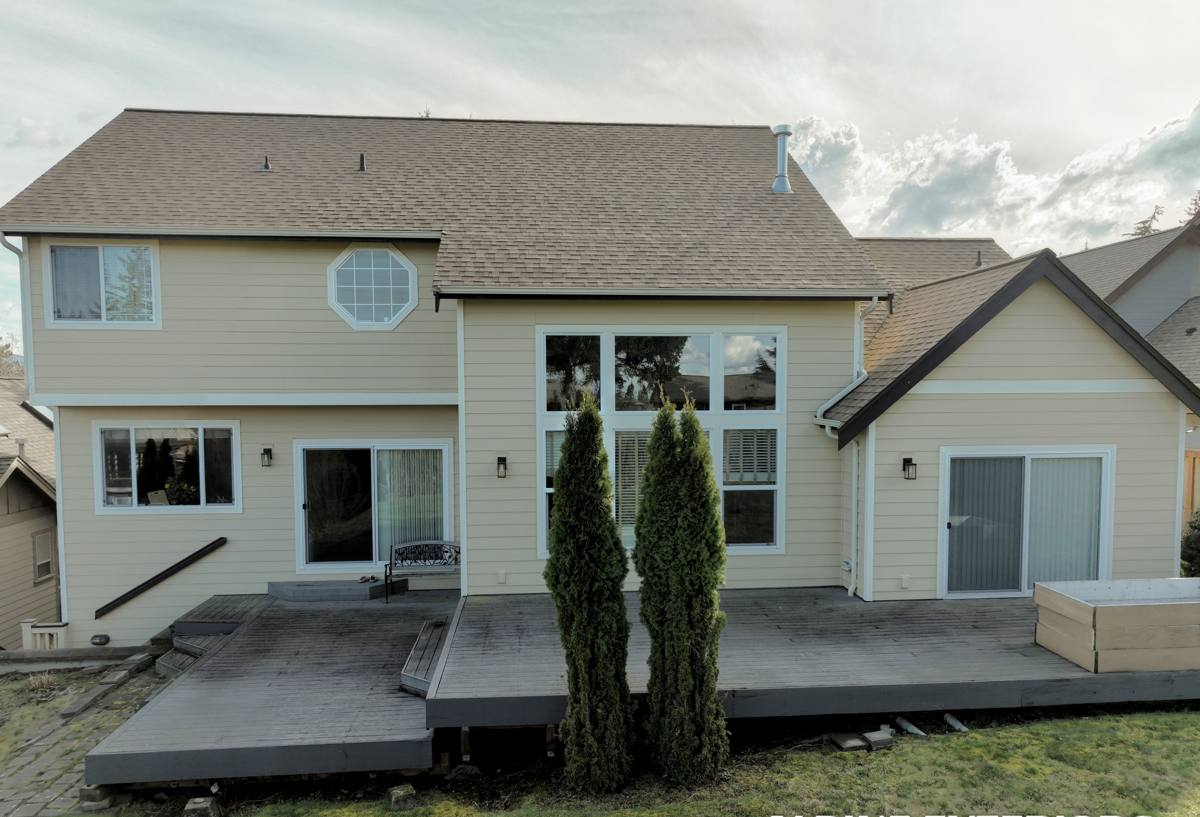
What Salt Air, Driving Rain, and Moss Actually Do to a Deck
Each of these three conditions attacks a deck differently, and understanding the failure mode is what lets us build around it.
Salt Air
Airborne salt accelerates corrosion on anything metal — fasteners, joist hangers, railing hardware, even the coating on some post bases. A screw or hanger that's rated for interior or general exterior use can start rusting from the inside out within a few seasons this close to the water, long before the wood around it shows any wear. Once a fastener corrodes, it loses holding strength quietly — you often don't see it until a board is loose or a railing has play in it.
Driving Rain
Whatcom County rain doesn't just fall straight down — wind-driven rain gets pushed sideways into ledger connections, under railing posts, and into any gap where end grain is exposed. Wood absorbs water fastest through end grain and fastener holes, not through a flat face. A deck that traps water in these spots, rather than shedding it, is a deck that rots from the inside before it ever looks bad on the surface.
Moss and Standing Moisture
Shaded yards, tree cover, and our extended wet season give moss and algae plenty of time to take hold on any deck surface that doesn't drain and dry between rains. Beyond being slippery underfoot, moss holds moisture directly against the decking, which keeps boards wet far longer than the surrounding air would on its own — that's what turns a cosmetic issue into a structural one over time.
Framing and Structure: The Part You Don't See Is the Part That Matters Most
A deck's finish material gets all the attention, but the framing underneath determines whether that finish lasts. For Custer builds, we pay particular attention to:
- Ledger board flashing — where the deck attaches to the house is the single most common failure point on decks in wet climates; correct flashing keeps water from running behind the siding and into the wall framing.
- Joist tape or cap protection — a protective barrier over the top of each joist keeps fastener holes from becoming entry points for water, which extends the life of the structural lumber underneath the decking.
- Post base standoffs — setting posts on hardware that lifts the wood off the concrete footing, rather than embedding it, keeps end grain out of standing water.
- Proper slope — a slight, intentional pitch away from the house so water sheds instead of pooling against the ledger or under railing posts.
None of this is visible once the deck is finished, which is exactly why it's worth asking about before construction starts. It's also where corners get cut on lower-bid jobs.
Choosing Decking Material for This Environment
There's no single "best" decking material — there's the right material for a given budget, maintenance appetite, and exposure. In Custer's salt air and wet-shade conditions, the trade-offs shift compared to a drier, more sheltered lot.
| Material | How it handles salt air & moisture | Moss/algae resistance | Maintenance |
|---|---|---|---|
| Pressure-treated wood | Good with quality hardware; needs sealing on a regular schedule | Moderate — needs cleaning to stay ahead of it | Annual cleaning, periodic sealing |
| Cedar | Naturally rot-resistant but still needs finish upkeep near salt air | Moderate | Regular cleaning and refinishing |
| Composite decking | Very good — doesn't absorb moisture the way wood does | Good, though shaded boards still need periodic washing | Low — occasional washing |
| PVC/capped composite | Excellent — fully sealed surface resists moisture and salt exposure | Good | Lowest — washing only |
We're upfront that composite and capped composite products cost more up front than wood. For a shaded, moss-prone Custer lot near the water, that added cost is often paid back in years of maintenance you don't have to do — but for homeowners who like the look and feel of real wood and are willing to stay on top of cleaning and sealing, a well-framed cedar or treated-wood deck can still be the right call. Our job is to lay out the real trade-offs, not push whatever's most profitable for us.
A Note on Fasteners and Hardware
Whatever decking material you choose, the hardware holding it together matters just as much. In a salt-air environment we use stainless steel or high-grade coated fasteners and connectors rated for coastal exposure — not the standard exterior-grade hardware that's fine further inland. It costs a little more per box, but it's the difference between hardware that's still solid in fifteen years and hardware that's rusting through in five.
Railings and Guards Built for Wind and Wet Hands
Custer's open, wind-exposed lots put more lateral load on railings than a sheltered in-town yard would. We build railing posts with proper blocking and through-bolted connections rather than relying on fasteners driven into the rim joist alone, since that connection takes the brunt of both wind load and everyday use. On the material side, the same salt-air and moisture logic from decking applies to railing components — composite and metal railing systems generally outlast painted or unsealed wood railings in this environment with far less upkeep.
Our Process for a Custer Deck Build
- On-site walkthrough. We look at sun and shade exposure, existing drainage, proximity to the water, and how the space will actually be used before recommending materials.
- Honest material recommendation. Based on your budget and how much maintenance you want to take on, we'll lay out real options — not a single upsell pitch.
- Permitting. Whatcom County deck projects above certain heights or attached to the home typically require a permit; we handle that process so you don't have to chase it down.
- Framing built for drainage first. Ledger flashing, joist protection, and correct slope go in before a single decking board is placed.
- Decking, railing, and finish work. Installed with coastal-rated fasteners and attention to the gaps and end-grain exposure that cause premature rot.
- Final walkthrough. We go over basic maintenance — what to clean, how often, and what to watch for — so the deck holds up the way it's built to.
Keeping a Deck Ahead of Moss Season
Even a correctly built deck needs some seasonal attention in this climate. A short annual routine goes a long way:
- Sweep leaves and debris off the deck surface regularly through fall — trapped organic matter is what feeds moss growth.
- Wash the deck at least once a year, more often on shaded sections, using a cleaner appropriate to your decking material.
- Check railing post connections annually for movement, especially after a windy winter.
- Inspect fasteners and hardware for early rust or corrosion, particularly near the water-facing side of the home.
- Clear gaps between boards so water and debris don't build up and hold moisture against the framing below.
- Reseal wood decking on the schedule recommended for the specific product — don't wait until it looks dry and gray.
Why a Crew That Already Works Custer Matters
A deck built in Custer isn't a generic exterior project — it's a structure that has to hold up to a specific combination of salt air, wind exposure, driving rain, and a long wet season, on top of whatever soil and drainage conditions exist on your particular lot. A crew that already builds in this area knows which hardware grade actually holds up here, which decking products handle the shade and moisture well, and how to frame for drainage in a way that's suited to this stretch of Whatcom County rather than a one-size-fits-all approach pulled from a manual written for a drier climate. That local familiarity shows up in the details — the flashing, the fastener choice, the slope — long before it ever shows up as a problem.
If you're planning a new deck or replacing one that's showing its age, we're happy to come take a look and talk through what makes sense for your property. There's no cost and no pressure to get an estimate — just a straight assessment of what your Custer home needs and what it would take to build it right.