 Ferndale
 Custer's Climate Is Harder on Siding Than It Looks
Custer sits in the stretch of Whatcom County between Ferndale and Blaine, close enough to Birch Bay and the Strait of Georgia that salt-laden air is a fact of life, not an occasional nuisance. Add the long, wet Pacific Northwest winters and the moss and algae growth that comes with months of low sun and standing moisture, and you have a climate that quietly wears down exterior materials faster than most homeowners expect. Siding here doesn't fail because of one dramatic storm. It fails gradually — swelling at the seams, holding moisture behind the surface, feeding moss at the shaded north wall — until a homeowner notices soft spots or peeling paint and realizes the damage has been building for years.
That combination of salt air, driving rain, and a moss season that can stretch from October through April is the reason siding installation in Custer needs to be treated differently than the same job in a drier inland climate. The material matters, the detailing matters, and the crew's familiarity with this specific stretch of coastline matters.
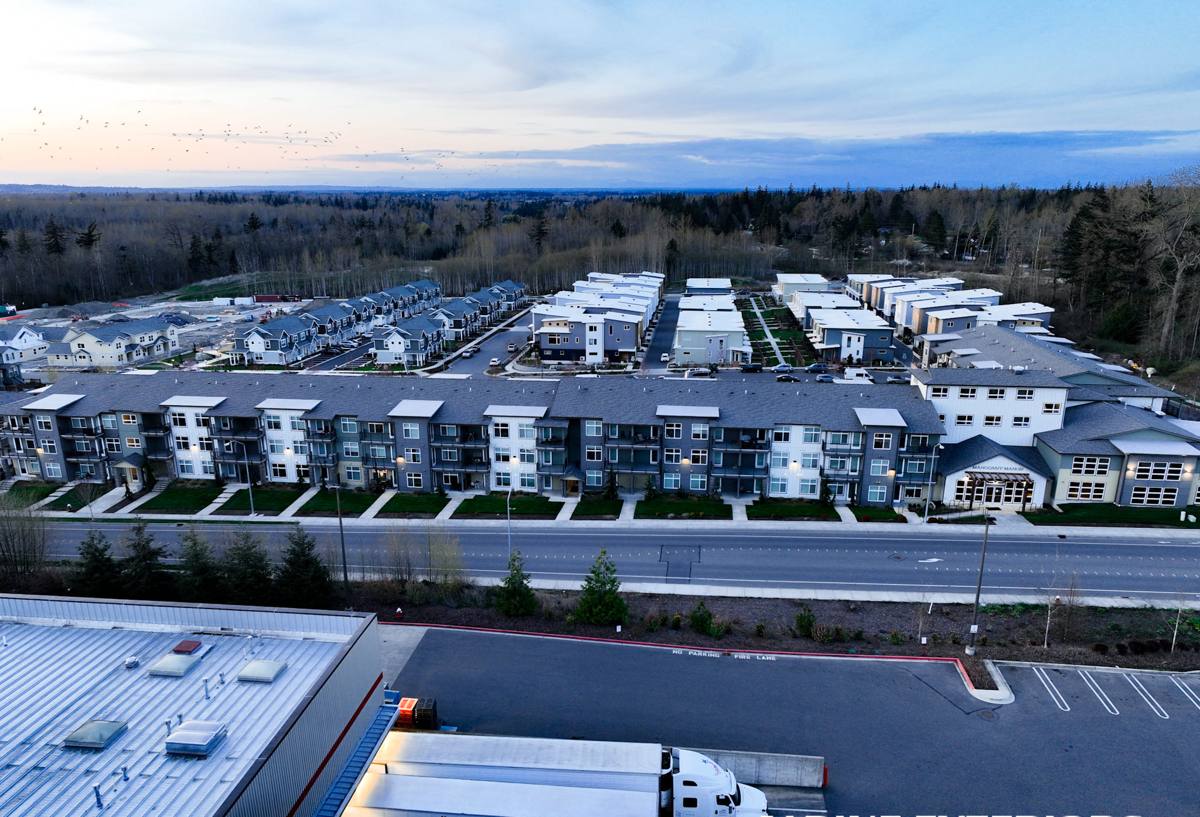
What Salt Air, Rain, and Moss Actually Do to a Wall System
Salt Air
Airborne salt accelerates corrosion on fasteners, flashing, and any exposed metal trim. It also settles into porous or lightly sealed surfaces, which is part of why coatings and finishes matter as much as the base material. A siding product that isn't engineered to resist this kind of exposure will show fading, chalking, or fastener staining well before its expected lifespan is up.
Driving Rain
Wind-driven rain off the Strait doesn't just hit a wall — it gets pushed sideways and upward into laps, seams, and penetrations that would stay dry in a calmer climate. This is where installation detail (not the siding material alone) decides whether a home stays dry. Weather-resistive barriers, proper lap overlap, and correctly flashed windows and doors matter more here than in a low-wind, low-rain region.
Moss and Algae
Shaded, north-facing, and tree-adjacent walls in Custer stay damp for extended stretches during the wet season. Moss and algae take hold on surfaces that hold moisture or have textured, absorbent finishes. Once established, they trap water against the substrate, which is a slow but real threat to wood-based and improperly sealed siding products.
What Correct Installation Involves in This Climate
A siding job that looks right from the curb can still be wrong underneath. In a climate like Custer's, the parts that matter most are the parts you can't see once the job is finished:
- A continuous, properly lapped weather-resistive barrier behind the siding, with no gaps at seams or penetrations
- Correct nailing pattern and fastener spacing per the manufacturer's engineering specs — not just "close enough"
- Proper minimum clearance between the siding's bottom edge and grade, decks, patios, and roof lines, so splash-back and standing water don't sit against the material
- Flashing at every window, door, and horizontal trim intersection, installed to shed water outward and downward
- Caulking only where the manufacturer specifies it — over-caulking traps moisture instead of keeping it out
- Factory-finished panels and trim wherever possible, so the protective coating isn't compromised by field-cutting without sealing the exposed edge
Skip any one of these steps and the siding may look fine for a season or two before problems start showing at the seams, corners, or bottom courses — exactly the areas driving rain and splash-back target first.
Why We Install Only James Hardie Fiber Cement
We made a decision to install one siding system — James Hardie fiber cement — and not offer vinyl, LP SmartSide, primed spruce, cedar, or other fiber cement brands. That's not a marketing position; it's a practical one, built around what actually holds up in this climate.
Fiber cement is non-combustible and dimensionally stable, meaning it doesn't expand and contract with humidity swings the way wood-based products can — a real advantage through Custer's wet-to-dry seasonal cycle. James Hardie's ColorPlus factory finish is baked on and warrantied against fading and peeling, which matters directly for salt-air exposure and long gray winters where a homeowner isn't eager to repaint. Hardie's HZ5 product line is engineered specifically for climates that see freeze-thaw cycling and sustained moisture, which describes Whatcom County well.
We're not going to tell you vinyl or engineered wood siding are bad products in every application — they have real advantages in the right climate and budget. But we've seen what wind-driven coastal rain and prolonged damp seasons do to products that aren't built for it, and we'd rather install one system correctly and stand behind it than offer several and hope each one performs.
Comparing Siding Options for a Custer Home
| Factor | James Hardie Fiber Cement | Vinyl | Wood / Engineered Wood |
|---|---|---|---|
| Salt air resistance | Strong — factory finish resists fading and chalking | Moderate — can become brittle and discolor over time | Weak to moderate — finish maintenance-dependent |
| Moisture/moss resistance | Strong when installed to spec — non-combustible, dimensionally stable | Moderate — doesn't rot but can trap moisture behind panels | Weak — prone to swelling and moss without diligent upkeep |
| Wind-driven rain performance | Strong with correct flashing/WRB detailing | Moderate — seams and panel flex can allow intrusion | Depends heavily on maintenance and coating condition |
| Repainting needed | Rare — ColorPlus finish is warrantied for years | Never fades to bare material but can chalk/discolor | Every few years |
| Fire resistance | Non-combustible | Melts/deforms under heat | Combustible |
Signs a Custer Home Needs New Siding
Homeowners in this area often notice one of these before calling for an estimate:
- Soft or spongy spots when pressing on the siding near the bottom courses or corners
- Persistent moss or algae staining that returns within a season of cleaning
- Visible gaps, warping, or buckling at seams and panel joints
- Paint that's peeling or bubbling rather than just fading
- Rising heating bills that suggest the wall assembly is no longer insulating or sealing as it should
- Visible fastener corrosion or staining running down from nail heads
Any one of these can be isolated and repairable. Several together usually mean the wall assembly — not just the surface — needs attention, which is when a full siding replacement makes more sense than patching.
Our Process for a Custer Installation
Assessment
We start by looking at the whole wall system, not just the visible siding: current material condition, existing water damage, window and door flashing, and how exposed the home is to prevailing wind and rain direction given its position and surroundings.
Prep and Water Management
Any compromised sheathing or trim gets addressed before new siding goes on — installing over hidden rot or moisture just locks the problem in. We install a continuous weather-resistive barrier and flash every penetration before the first course of siding goes up.
Installation to Manufacturer Spec
James Hardie panels and trim go on following the manufacturer's engineering guidelines for fastener type, spacing, and clearance — not a generalized "how we always do it" approach. This is what actually determines whether the product performs the way it's rated to.
Final Detailing
Caulking, touch-up finishing on any field-cut edges, and a final walk-through so the homeowner understands what was done and what (if anything) needs periodic attention going forward.
What Affects Timeline and Cost
| Factor | Why It Matters |
|---|---|
| Home size and wall complexity | More corners, gables, and trim details mean more labor and material cuts |
| Existing siding removal | Tear-off and disposal add time versus installing over a prepared surface |
| Substrate condition | Rot or moisture damage found during prep needs repair before siding goes on |
| Siding profile and trim selection | Lap width, shingle-style panels, and trim detail affect material cost and install time |
| Access and site conditions | Tight lots, landscaping, or multi-story walls affect scaffolding and staging time |
We don't quote a job without seeing the home, but broad ranges are reasonable to expect for a full siding replacement, and we'll walk through exactly what's driving the number for your specific house before any work starts.
Why a Crew That Already Works Custer Matters
A contractor who regularly works this part of Whatcom County already understands how a north-facing wall behaves through a wet winter, how far salt air travels inland from the water, and which flashing details actually hold up against sideways rain versus which ones just look right on installation day. That local pattern recognition shows up in fewer callbacks and a wall system that performs the way it's supposed to for decades, not just for the first dry season.
If you're weighing a siding replacement or repair for a home in Custer, we're glad to take a look and give you a straightforward, no-pressure estimate — including an honest read on whether your situation calls for a full replacement or targeted repair. There's a form below to get started.