 Ferndale
 Storm Damage Roof Repair for Marietta Homes
Marietta sits low and close to the water, right where Bellingham Bay meets the mouth of the Nooksack River. That location is part of what makes it a great place to live, and part of what makes roofs here work harder than roofs almost anywhere else in Whatcom County. Salt-laden air off the bay, wind that funnels down the river valley during winter storms, and a moss season that can run eight months or more all put steady pressure on shingles, flashing, and fasteners. When a storm rolls through and does visible damage, homeowners in Marietta need a roofer who understands that this isn't a one-time event to patch and forget — it's the latest round in an ongoing exposure that the roof has been dealing with all along.
This page covers what storm damage roof repair actually involves for homes in and around Marietta: how to tell what's really wrong, what a correct repair looks like, and why local experience matters more here than in drier, more sheltered parts of the county.
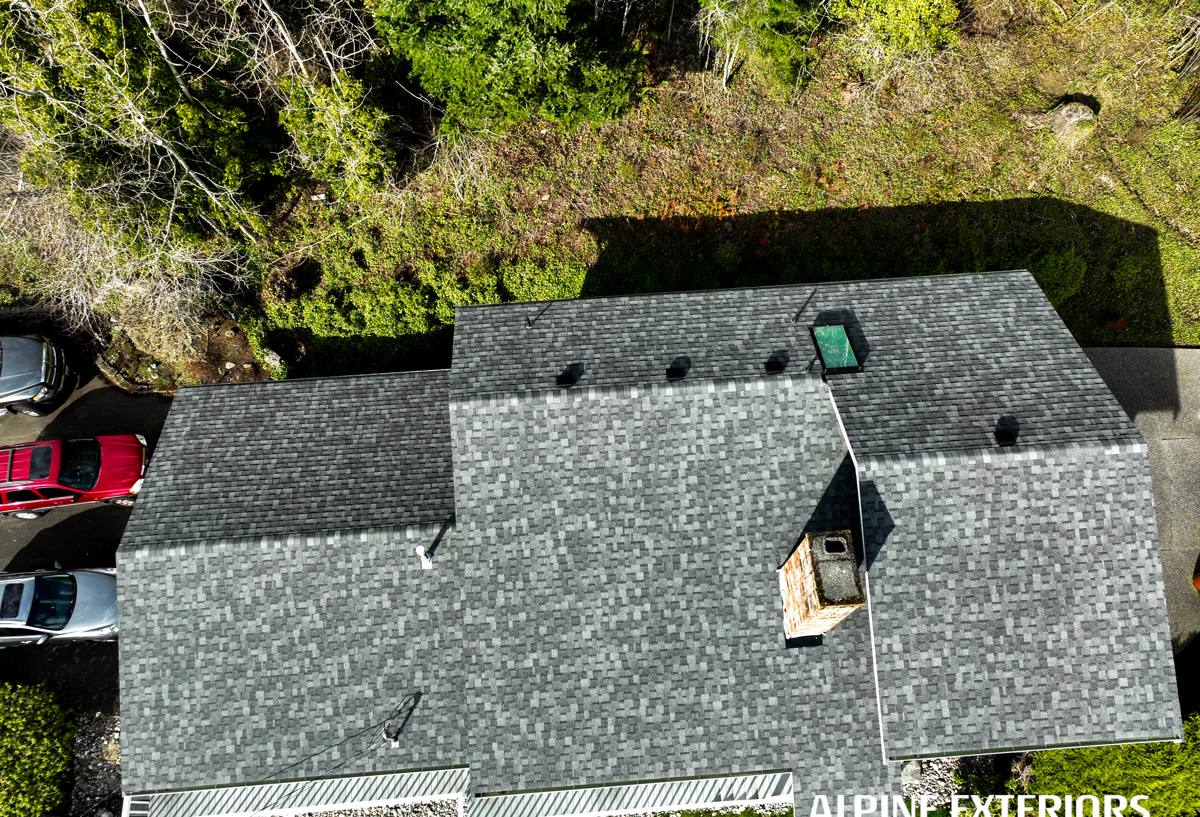
Why Marietta's Climate Is Tougher on Roofs Than It Looks
Salt Air and Metal Fatigue
Homes within a mile or two of Bellingham Bay get a steady dose of salt-carrying moisture in the air, even on days without rain. Over years, that salt exposure accelerates corrosion on exposed metal — flashing, nail heads, gutter hardware, and vent stacks. A roof that looks fine from the ground can have flashing that's thinned out or fasteners that have started to back out or corrode at the head, and a storm is often what finally exposes the weak point.
Driving Rain, Not Just Rain
Whatcom County gets plenty of straight-down rain, but the storms that do damage here usually bring wind-driven rain — water pushed sideways and upward under shingle edges, around chimney flashing, and into any gap that a calm-weather rain would never reach. This is the mechanism behind most of the "mystery leaks" that show up days after a storm rather than during it.
Moss Season
Marietta's tree cover and marine-layer humidity mean moss and moisture-loving growth can take hold on north-facing and shaded roof slopes for most of the year. Moss holds water against the roof surface, lifts shingle edges, and works its way under flashing over time. A storm that wouldn't damage a clean, dry roof can do real harm to one that's already been compromised by months of moss growth.
What Storm Damage Actually Looks Like
Not all storm damage is obvious. Some of it is, and some of it takes a trained eye to catch before it turns into a bigger problem.
- Missing, cracked, or curled shingles — usually visible from the ground with binoculars or from a ladder
- Lifted or bent flashing around chimneys, vents, and roof-to-wall transitions
- Granule loss showing up in gutters or at downspout outlets after a storm
- Dents or bruising on shingles or metal roofing from wind-driven debris
- Soft spots or sagging in the roof deck, felt only when walked (a sign of trapped moisture)
- Water stains on interior ceilings or in the attic that appear after — not during — a storm
- Debris punctures from branches or blown material
- Gutter and downspout separation from wind load or ice
The interior signs matter as much as the roof-level ones. A stain that shows up two or three days after a windstorm is often water that traveled along the roof deck or rafters before finding a path inside, which means the entry point can be several feet from where the stain appears.
What a Correct Storm Repair Involves
Full Assessment Before Any Repair
A storm repair that only patches the obvious damage and skips the inspection is a repair that's likely to come back. Before any work starts, the roof should be checked slope by slope — not just the area where damage was reported — because wind damage on one side of a roof often means stress on the whole system, even where it isn't visible yet.
Matching the Repair to the Roof's Age and Material
Repairing a 6-year-old roof and repairing an 18-year-old roof are different jobs, even if the storm damage looks the same. On an older roof, a patch repair may only buy a limited amount of time before the surrounding material starts failing on its own. Part of an honest assessment is telling a homeowner when a targeted repair makes sense and when the smarter long-term move is a larger repair or eventual replacement — not pushing straight to replacement, but not pretending a patch will hold indefinitely either.
Flashing and Fastener Attention
Given how much of Marietta's roof wear comes from salt air corrosion, a storm repair here should always include a close look at exposed metal near the repair area — flashing, fasteners, and vent boots — not just the shingles or panels that were visibly damaged. Replacing a shingle over corroded flashing solves the visible problem and leaves the actual weak point in place.
Moisture Check Before Closing Up the Roof
If a leak has been active for any length of time, the roof deck underneath needs to be checked for saturation before new material goes down. Sealing a damaged shingle over a wet deck traps moisture that will eventually cause rot, regardless of how good the surface repair looks.
Our Process for Storm Damage Calls in Marietta
- Initial contact and priority triage. Active leaks and structural concerns get scheduled ahead of cosmetic damage.
- On-site inspection. Full roof walk when conditions are safe, including flashing, penetrations, and gutter lines — not just the damaged section.
- Written findings and options. A clear explanation of what's damaged, what's simply worn, and what the repair options are, including honest cost ranges.
- Temporary protection if needed. For active leaks, we can address urgent exposure before the full repair is scheduled, so the interior of the home isn't at further risk while parts or scheduling are sorted out.
- Repair execution. Matching materials as closely as possible, proper flashing and fastener work, and a final check of the surrounding roof area.
- Post-repair walkthrough. Showing the homeowner what was found and what was done, in plain terms.
Repair vs. Replacement: How We Help You Decide
| Factor | Favors Repair | Favors Replacement |
|---|---|---|
| Roof age | Under 10-12 years | Past 15-20 years or original manufacturer lifespan |
| Damage extent | Isolated to one area or slope | Spread across multiple slopes or recurring in different spots |
| Underlying deck condition | Dry, solid decking found on inspection | Soft spots, rot, or repeated moisture intrusion |
| Moss/algae history | Minimal or well-maintained | Heavy, long-term growth affecting large areas |
| Insurance involvement | Covers targeted repair scope | Adjuster scope indicates full slope or full roof |
These are general factors, not a formula — the right call always depends on what we actually find on your roof. We'll walk through the reasoning with you rather than just handing over a recommendation.
Insurance and Documentation
Storm damage claims move faster and more smoothly when the documentation is thorough from the first visit. We photograph damage before and during repair, note the likely cause (wind, debris impact, or age-related failure exposed by the storm), and provide a written scope that homeowners can share directly with their insurance adjuster. We're happy to be on-site during an adjuster visit if that's helpful, and to explain findings in terms that match how insurers typically categorize storm versus wear-and-tear damage.
Preventing the Next Storm From Doing the Same Damage
Part of an honest storm repair is talking about what made the roof vulnerable in the first place. For a lot of Marietta homes, that comes down to a short list:
- Moss and debris buildup that traps moisture against the roof surface
- Aging or under-sized flashing that was marginal even before the storm
- Gutters that were already clogged or pulling away, so storm water had nowhere to go
- Tree limbs overhanging the roof that turn wind into a debris hazard
None of these guarantee damage in the next storm, but they raise the odds. Addressing them alongside the repair — even in small, low-cost ways — is often the most cost-effective thing a homeowner can do after a storm event.
Why a Marietta-Familiar Crew Matters
A roof in Marietta isn't dealing with the same conditions as a roof twenty miles inland. The combination of bay-driven salt air, wind exposure off the water, and heavy moss pressure is specific to this stretch of Whatcom County, and it changes what a repair crew should be looking for. A roofer who's worked mostly on drier, more sheltered roofs may fix the visible damage and miss the corroded flashing or moisture-softened decking underneath — problems that are second nature to catch when you've worked on roofs in this exact microclimate before. We've done storm repairs on homes throughout the Ferndale area, including Marietta, and we bring that specific experience to every inspection.
If your roof has storm damage — or you're not sure whether what you're seeing is storm damage or just age catching up with it — we're glad to take a look. The estimate is free, there's no pressure to move forward, and you'll get a straight answer about what we find. Use the form below to get in touch.