 Ferndale
 Building New in Sumas? The Windows Have to Be Right the First Time
New construction gives you one real shot at getting window installation right. Once the siding, trim, and interior finish are closed up around a window, fixing a bad flashing job means tearing back into finished work. For a home going up in Sumas, out near the Whatcom County line, that first shot matters more than it might in a drier climate. This corner of Washington sees long stretches of driving rain, a moss season that runs most of the year on shaded elevations, and enough sustained moisture that any gap in a window's water management shows up eventually — sometimes years later, as rot hidden behind drywall.
We install new-construction windows as part of new builds and additions across the Ferndale and greater Whatcom County area, including Sumas. This page is about that specific job: what a correct new-construction window install actually requires here, how it differs from a replacement window job, and what to expect if you're working with us on a new build.
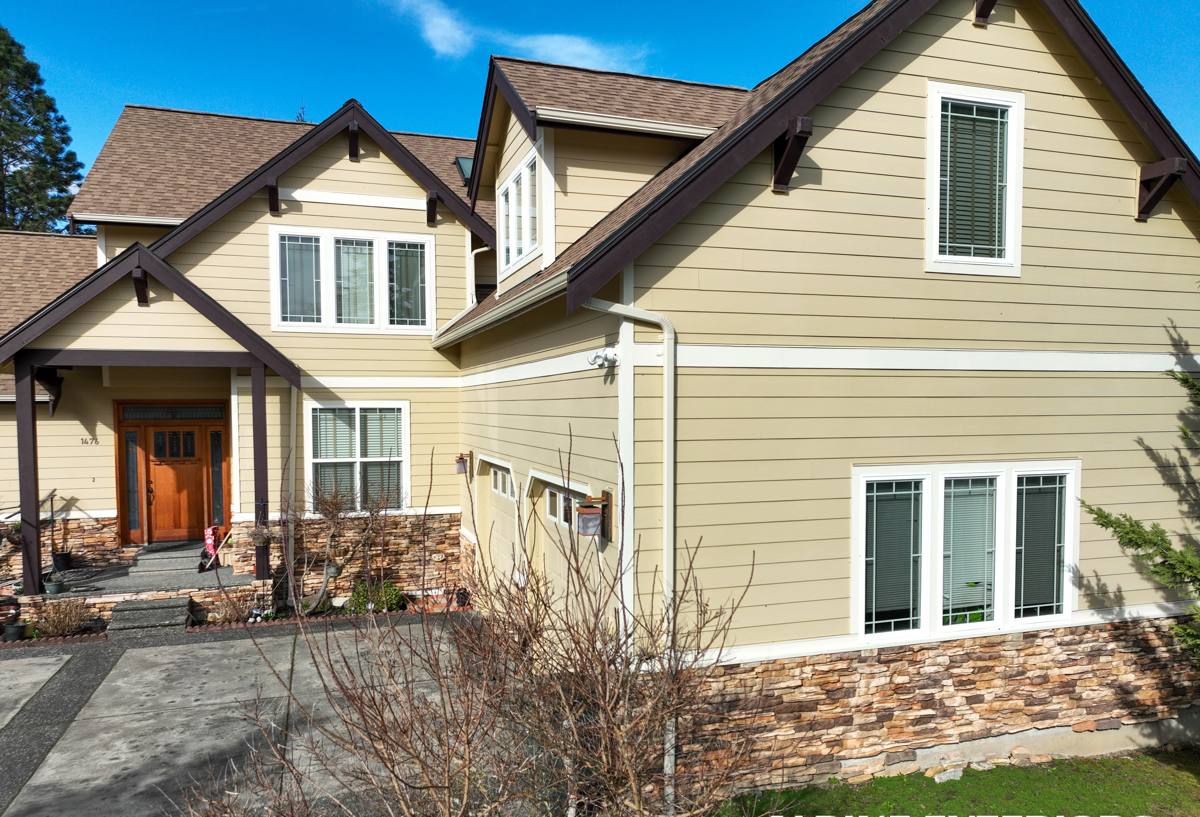
New Construction vs. Replacement: Not the Same Job
A lot of homeowners and even some builders use "window installation" as one catch-all term, but new-construction and replacement windows are different products installed in different ways.
- New-construction windows have a nailing fin (also called a nail flange) around the perimeter of the frame. They install before the exterior finish goes on, tied directly into the house wrap and flashing system.
- Replacement (retrofit) windows have no nailing fin. They install into an existing opening, over the old frame or into a prepped pocket, without disturbing the exterior siding.
- New-construction installs give better long-term water management because the flashing integrates with the building's weather-resistive barrier in the correct shingle-lap order. Replacement installs are a compromise made necessary by not wanting to tear off finished siding.
On a Sumas new build, you have the better option available: do it right the first time, in the correct order, before anything gets covered up.
Why This Distinction Matters Locally
Whatcom County's wet season isn't a few storms a year — it's months of low-intensity, wind-driven rain that finds every shortcut in a building envelope. A nailing-fin window installed with correct flashing sheds that water outward, layer over layer, the way the whole wall assembly is designed to. A window installed out of sequence, or with tape used as a substitute for proper flashing laps, becomes the one spot in an otherwise sound wall where water gets behind the cladding. On a new build, there's no excuse for that mistake — the sequence is entirely in the builder's control.
What a Correct Installation Sequence Looks Like
There's a specific order of operations for a new-construction window install, and skipping or reversing steps is where most failures start. Ours follows this sequence on every opening:
- Rough opening check. Confirm the opening is square, plumb, and sized correctly for the window unit before it ever gets set. A slightly out-of-square opening now means a window that won't operate smoothly for the life of the house.
- Sill pan flashing. A sloped or back-dammed sill pan goes in first, so any water that ever does get past the window has a path back out rather than a place to pool.
- Weather-resistive barrier prep. The house wrap around the opening is cut and folded in a way that will accept the window's flashing tape in the correct shingle-lap order — bottom, sides, then top, never the reverse.
- Window set and fastening. The unit is set into the opening, checked for level, plumb, and square, then fastened through the nailing fin per the manufacturer's schedule. Shimming happens where needed so the frame doesn't rack.
- Flashing tape at the fin. Self-adhered flashing tape seals the nailing fin to the WRB — sides first, then the head flashing last, lapping over the side tape so water is always directed outward and down.
- Head flashing. A separate head flashing or drip cap sheds water away from the top of the window, integrated under the WRB above and over the window flange below.
- Interior air seal and insulation. Low-expansion foam or backer rod and sealant closes the gap between the frame and rough opening on the inside, controlling both air leakage and condensation risk without bowing the frame.
- Final check. Every sash operates properly, weep holes are clear, and the exterior flashing is visually verified before siding closes over it.
Every one of those steps is inspectable before the wall gets closed up — which is exactly why new construction is the right time to get it right.
Climate Factors That Shape the Install in This Area
Sustained Rain, Not Just Storms
Whatcom County's weather pattern leans toward long stretches of steady, wind-pushed rain rather than short, hard downpours. That kind of weather tests a window's flashing over time, not just in a single event — water finds the one lapped-wrong seam eventually. It's why we treat flashing sequence as non-negotiable rather than something to speed through.
Moss and Organic Growth
Shaded north- and west-facing walls in this region grow moss and algae readily, especially where trim or siding stays damp longer than it should. Moss holding moisture against a window's trim or flange accelerates any existing weakness in the seal. Correct flashing and a small, consistent drainage gap at the sill reduce how much moisture ever sits against the frame in the first place.
Regional Coastal Influence
This part of Washington sits close enough to Puget Sound and the Strait of Georgia that salt-laden air and humidity are part of the picture for exterior materials generally, alongside the rain. It's a reason we favor corrosion-resistant fasteners and flashing components on builds throughout our Ferndale-area service territory, Sumas included.
Choosing Window Products for a Sumas New Build
We install a range of vinyl and fiberglass new-construction window lines from manufacturers with solid regional track records and warranty support. Material choice affects long-term performance more than most homeowners expect.
| Factor | Vinyl New-Construction | Fiberglass New-Construction |
|---|---|---|
| Upfront cost | Lower | Higher |
| Expansion/contraction | More movement with temperature swings | Closer match to wood-frame wall movement |
| Frame strength | Good for standard openings | Better for larger or custom openings |
| Moisture tolerance | Very good, won't rot | Very good, won't rot |
| Paintable | Limited color range, factory-finished | Can typically be repainted |
| Typical use case | Most residential new construction | Higher-end builds, larger glass areas |
We're happy to walk through specific product lines once we know the home's design, window sizes, and your budget — this table is a starting point for the conversation, not a recommendation to install one over the other blindly.
Working Around a Sumas Build Schedule
New-construction window work has to slot into the framing-to-siding sequence correctly, which means coordinating with the builder or general contractor rather than working in isolation. On projects we're brought onto in Sumas and the surrounding area, that typically means:
- Confirming rough opening sizes against ordered window units before framing is closed up, so nothing gets discovered too late.
- Scheduling the install after the WRB is on but before siding starts, so flashing integrates correctly rather than getting patched around finished cladding.
- Communicating directly with the general contractor or builder on timing, since window install sits on the critical path for siding to begin.
- Doing a walkthrough with the builder or homeowner before closing the wall, so everyone sees the flashing before it's covered.
Why a Crew That Already Works Sumas Is Worth It
Sumas is a smaller community, and it doesn't always get the same attention from larger regional contractors that bigger jobs in Bellingham or elsewhere in Whatcom County do. We're based out of Ferndale and treat Sumas as part of our regular service area, not a special trip. That matters in a few practical ways:
- We already understand the local rain and moisture patterns that drive flashing decisions here, rather than applying a generic install method built for a drier region.
- We can schedule around a build timeline without the logistics of a long-distance crew, which matters when window install needs to happen on a specific day in the framing sequence.
- We're a known, findable local business if a warranty question or follow-up comes up after the build is done — not a crew that was in town for one job and gone.
Simple Checklist Before You Hire Anyone for New-Construction Windows
- Ask what flashing method they use, and whether they can walk you through the shingle-lap sequence in plain terms.
- Confirm they'll coordinate directly with your builder or GC on scheduling, not just show up and hope the opening is ready.
- Get a written estimate that lists window quantities, sizes, and brand/line by name, not a vague lump sum.
- Ask about sill pan flashing specifically — it's a step that's easy to skip and hard to inspect once covered.
- Check that fasteners and flashing components are rated for this region's moisture and corrosion exposure.
What This Doesn't Include
To be clear about scope: this page covers new-construction window installation as part of new-build or addition framing. If you have an existing home in Sumas with old windows you want to replace, that's a retrofit job with a different scope, different products, and a different process — worth a separate conversation so we can quote it correctly rather than lumping it in with new-construction pricing.
Get a Straightforward Estimate
If you're building new in Sumas and want window installation handled by a crew that already knows Whatcom County's rain, moss, and moisture demands, we'd be glad to take a look at your plans. Fill out the form below for a free, no-pressure estimate — no obligation, just a straight answer on scope and cost.