 Ferndale
 Metal Roofing for Marietta Homes
Marietta sits close to the water on the edge of Ferndale, and that low-lying, near-shore position means homes here take a heavier, more constant version of the weather that the rest of Whatcom County only deals with occasionally. Salt-laden air moves in off the bay, driving rain gets pushed sideways by wind instead of falling straight down, and a damp, shaded climate keeps moss active for most of the year. Metal roofing, installed correctly, handles that combination better than most other roof coverings — but "installed correctly" is doing a lot of work in that sentence, and the details matter more here than they do on a drier, more sheltered inland lot.
This page focuses specifically on metal roofing for Marietta properties: what the local climate actually demands from a metal roof, what a correct installation involves, how we approach the job, and why local, hands-on experience in this exact area changes the outcome.
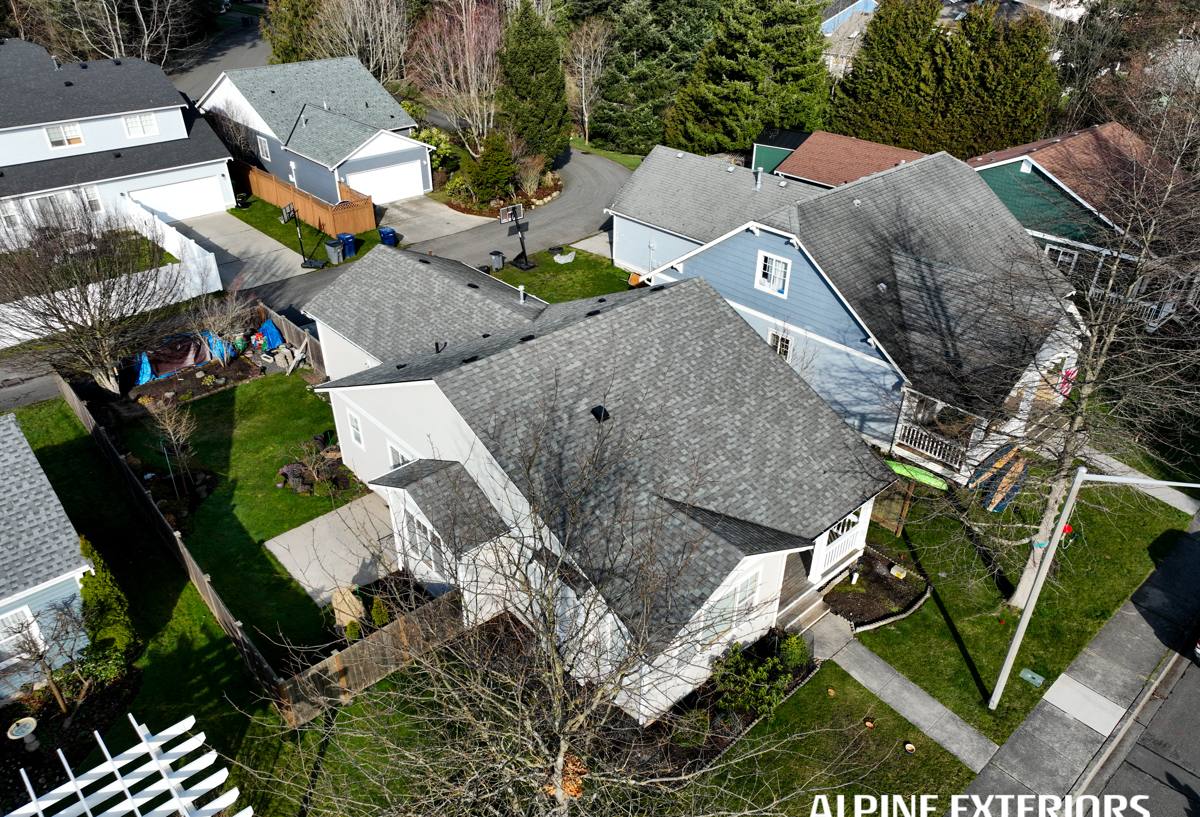
What Salt Air, Driving Rain, and a Long Moss Season Do to a Metal Roof
Salt Air and Corrosion
Metal roofing has a real advantage over asphalt shingles when it comes to salt exposure, but it isn't immune to it. Lower-grade fasteners, unprotected cut edges, and mismatched flashing metals can corrode well ahead of schedule when they're exposed to salt-laden marine air day after day. The panel itself usually isn't the weak point — it's the fasteners, the flashing, and the small connection details that get overlooked. On a Marietta property, that means specifying corrosion-resistant fasteners and compatible flashing metals from the start, not patching the cheapest option in and hoping it holds.
Wind-Driven Rain at Seams and Penetrations
A metal roof sheds bulk water better than almost any other roofing material, but water intrusion on a metal roof rarely happens in the open field of a panel. It happens at seams, laps, and penetrations — chimneys, vents, skylights, and wall transitions — where wind-driven rain gets pushed up and under a detail that wasn't sealed or lapped correctly. Marietta's exposure to wind coming off the water makes this a bigger factor here than it is on a more sheltered inland roof, which is exactly why seam type and flashing detail matter as much as the panel itself.
Moss and Organic Growth
Metal roofing resists moss far better than asphalt shingles, since there's no granulated surface for spores to root into. That said, a metal roof isn't moss-proof, especially in valleys, around penetrations, or anywhere debris collects and holds moisture against the panel. In a climate where the moss season runs long, keeping valleys and low-slope transitions clear and correctly flashed does more for a metal roof's long-term appearance and performance than any coating claim on a spec sheet.
Panel Systems and Materials We Install
Standing Seam vs. Exposed Fastener
These are the two main metal roofing systems, and the difference matters more on a home with Marietta's level of wind and rain exposure than it does further inland.
- Standing seam: Panels are joined with raised, interlocking seams and hidden fasteners, so there are no exposed screw penetrations through the panel face for water or wind to work against over time. It costs more upfront but performs better under sustained wind-driven rain.
- Exposed fastener: Panels are screwed directly through the face with gasketed fasteners. It's a lower upfront cost and a legitimate option for many roofs, but those exposed fasteners are the first thing to wear, loosen, or corrode over the life of the roof, and they typically need to be checked and occasionally replaced.
For a Marietta property taking direct wind off the water, we generally steer homeowners toward standing seam when the budget allows, precisely because it removes the exposed-fastener maintenance item from a roof that's already dealing with more wind and salt than average.
Steel, Aluminum, and Coating Finishes
Galvanized and Galvalume steel panels are the most common choice and hold up well with a proper factory finish. Aluminum costs more but has a natural resistance to corrosion that makes it worth considering on properties with heavier salt exposure. Coating finish matters as much as the base metal: a PVDF (Kynar-type) finish holds its color and chalk resistance far longer under UV and salt exposure than a standard polyester coating, which tends to fade and chalk noticeably faster in a marine climate. We'll walk through these trade-offs against your budget rather than defaulting to whatever carries the best margin.
What Correct Installation Looks Like
Underlayment and Water Protection
A metal panel is only the outer layer. Underneath it, a high-temperature synthetic or self-adhered underlayment is what actually protects the deck if wind-driven rain ever works its way past a seam or fastener. On a Marietta roof, we treat this layer as essential rather than optional, particularly at eaves, valleys, and anywhere wind-blown water is most likely to test the assembly.
Fastening and Flashing Detail
Correct fastening patterns, proper panel overlap, and flashing that's genuinely integrated into the system — not just caulked over gaps — are what separate a roof that performs for decades from one that develops a slow leak within a few years. Every valley, chimney, vent pipe, and wall intersection is a place where a rushed detail shows up later as a water stain inside the house.
Ventilation
Metal roofs perform best with proper attic or roof-deck ventilation behind them. Without it, condensation can form on the underside of the panel in a damp climate like this one, which creates its own moisture problem even if the roof surface itself is shedding rain perfectly. We check ventilation as part of every metal roofing job rather than treating it as a separate upsell.
Metal Roofing Trade-Offs Worth Knowing Honestly
Metal roofing has real strengths for a property like this, but we'd rather tell you the honest trade-offs upfront than oversell it.
- Higher upfront cost: Metal roofing generally costs more per square than asphalt shingles, though it typically outlasts shingles by decades, which changes the lifetime cost picture.
- Noise perception: With proper solid decking and underlayment, a metal roof isn't noticeably louder in rain than any other roof — the "loud in the rain" reputation mostly comes from older, poorly insulated installations over open framing.
- Denting from impact: Falling branches or foot traffic can dent lower-gauge panels, so panel gauge and site tree cover are worth discussing before you choose a product.
- Color and panel matching: If a section is ever damaged, matching an aged panel's exact color years later can be harder than matching a shingle, which is worth knowing going in.
None of these are reasons to avoid metal roofing on a Marietta home — they're just the real considerations we'd want to know about if it were our own roof.
Our Process for a Marietta Metal Roof Project
We start with an in-person inspection of the existing roof and deck, not a drive-by estimate. That includes checking deck condition, ventilation, and how the current roof has handled water at valleys and penetrations, since those findings shape both the scope and the price. From there:
- We discuss panel system, material, and finish options against your budget and the home's specific wind and salt exposure
- We give you a written estimate that spells out tear-off scope, underlayment, fastening system, and flashing detail — not just a single total number
- We schedule around weather, since a metal roofing tear-off needs a reasonable dry window to protect the deck once it's exposed
- We do a final walkthrough with you before calling the job complete
Cost Factors for Marietta Metal Roofing
| Factor | What It Affects | Why It Matters in Marietta |
|---|---|---|
| Standing seam vs. exposed fastener | Material and labor cost, long-term maintenance | Standing seam removes exposed fasteners that wear fastest under sustained wind and salt exposure |
| Steel vs. aluminum panels | Material cost and corrosion resistance | Aluminum's natural corrosion resistance can be worth the added cost on homes closest to the water |
| Coating finish (PVDF vs. standard) | Color retention and fade resistance | A PVDF finish holds up to UV and salt air significantly longer than a standard polyester coating |
| Tear-off vs. deck reuse | Labor scope and ability to inspect the deck | Older roofs here often hide moisture damage that only shows up once the old covering is removed |
| Roof complexity | Number of valleys, penetrations, and flashing details | Every valley and penetration is a place wind-driven rain can test the installation |
| Site access and pitch | Labor time and equipment needs | Some Marietta lots have tighter staging areas or steeper pitches that add labor time |
Exact pricing depends on the specific roof, which is why we walk the property in person before giving a real number instead of quoting off a generic price sheet.
Signs Your Roof Needs a Closer Look
- Rusting or loosening exposed fasteners on an existing metal roof
- Moss or dark staining building up in valleys or shaded areas
- Visible gaps, lifting, or corrosion at flashing around chimneys, vents, or skylights
- Water stains on interior ceilings, especially after a windy, rainy storm
- Chalky, faded finish on an older metal or painted roof surface
- Denting or damage after a storm with falling branches or debris
- Rising energy bills that may point to a roof assembly no longer sealing or ventilating properly
Why a Crew That Already Works Marietta Matters
A contractor who works this specific stretch of Whatcom County regularly knows how salt air corrodes cheap fasteners, how wind off the water pushes rain into places a calmer inland roof never has to defend against, and which valleys and slopes hold moss longest through a wet Ferndale winter. That experience shows up in practical decisions on install day — which fastener grade is actually worth the extra cost, where to add flashing detail beyond the manufacturer's minimum spec, and how to sequence a tear-off around weather so the deck isn't sitting exposed longer than it needs to be. Marietta's proximity to the water means it sees a heavier version of the same conditions the rest of Ferndale deals with, and treating that seriously, rather than applying a generic roofing approach built for a drier site, is what keeps a metal roof performing the way it's supposed to for decades.
If you're considering a metal roof for your Marietta home, or want an honest second opinion on whether it's the right fit for your budget and property, we're glad to take a look. Reach out using the form below to schedule a free, no-pressure estimate.