 Ferndale
 Why Roofs Near Semiahmoo Wear Out Faster
Homes in and around Semiahmoo sit close enough to the water that the roof over your head is doing a different job than a roof ten miles inland in Whatcom County. Salt-laden air corrodes exposed metal faster, onshore wind drives rain sideways under loose flashing and lifted shingle tabs, and the shade and moisture that collect around mature trees and low winter sun angles keep moss growing for most of the year. None of this is dramatic on its own. What it does is quietly shorten the useful life of a roofing system that would otherwise last two or three decades, which is why we see roofs in this area needing replacement sooner than the "20-year shingle" on the wrapper would suggest.
A roof replacement done right for this stretch of the coast isn't just "install shingles again." It's choosing materials and details that specifically resist salt exposure, wind-driven rain, and constant dampness — and installing them by a crew that has already worked through those conditions on homes near yours.
What Salt Air, Rain, and Moss Actually Do to a Roof
Salt Air and Metal Components
Every roof depends on metal in places most people never look: flashing around chimneys and skylights, valley metal, drip edge, and the fasteners holding everything down. Salt air accelerates corrosion on lower-grade or unprotected metal, and once flashing starts to pit or thin, it stops shedding water the way it's supposed to. A leak at a corroded valley or a rusted-through pipe boot almost never shows up as an obvious hole — it shows up as a stain on a ceiling months after the metal actually failed.
Driving Rain
Wind off the water doesn't just bring rain straight down — it pushes it sideways and upward under shingle tabs, at ridge caps, and around any penetration that wasn't sealed with that wind direction in mind. Underlayment and flashing details that would be adequate on a sheltered inland roof can be marginal on an exposed coastal one.
Moss and Sustained Moisture
Shade, cooler temperatures, and a long damp season give moss plenty of time to establish on north-facing slopes and anywhere debris collects. Moss holds water against the roofing material long after the rest of the roof has dried, which softens shingle mat, works into fastener holes, and rots the wood decking underneath if it goes unaddressed for years. Moss also physically lifts shingle edges as it grows, breaking the seal that keeps wind-driven rain out.
Signs a Semiahmoo-Area Roof Is Ready for Replacement
Most homeowners don't get a dramatic warning sign — they get a collection of smaller ones. If several of these apply to your roof, it's worth having it looked at rather than waiting for a leak:
- Granules collecting in gutters or at downspout outlets, showing the shingle surface is wearing away
- Moss or dark streaking covering more than a small patch, especially on shaded slopes
- Curling, cupping, or cracked shingle tabs, particularly on the side facing prevailing wind and water
- Rust staining or visible corrosion at flashing, valleys, or exposed fasteners
- Soft or spongy spots underfoot when walking the roof (a sign decking has taken on moisture)
- Daylight visible through the roof deck from inside the attic
- A roof already past 18-20 years old, even if it looks fine from the ground
Any one of these alone might just mean a repair. Several together usually mean the roofing system as a whole has reached the point where patching stops being cost-effective.
Choosing the Right Roofing System for This Location
There's no single "best" roofing material — there's the right material for your home's exposure, roof pitch, and budget. For homes taking direct salt air and wind-driven rain, we weigh a few factors more heavily than we would on a sheltered inland roof.
| Material | Coastal Performance | Maintenance Burden | Typical Lifespan Here |
|---|---|---|---|
| Architectural asphalt shingle (algae-resistant) | Good with proper flashing and ventilation; algae-resistant granules slow moss/algae growth | Periodic moss treatment and gutter clearing | 18-25 years |
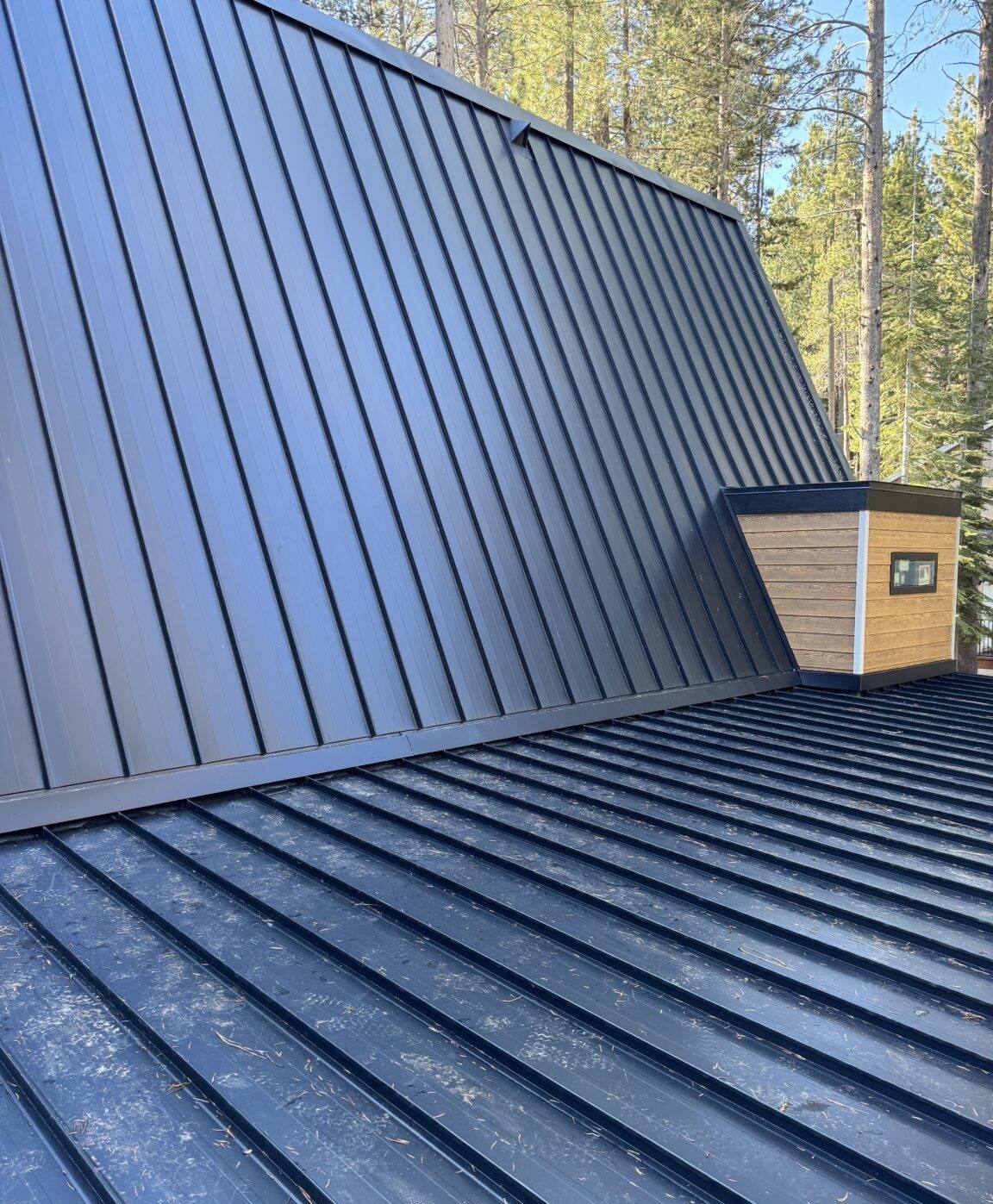
| Standing seam metal | Very good; sheds wind-driven rain well and resists moss buildup on steeper pitches | Low; occasional fastener/seam check | 40-50+ years |
| Basic 3-tab asphalt shingle | Weakest option for this exposure; thinner mat wears faster under salt and moisture | Higher — earlier granule loss and curling | 12-18 years |
| Composite/synthetic shake | Good moisture resistance, holds up well to damp and shade | Low to moderate | 30-40 years |
We don't push one product on every home. A steep, shaded roof that stays damp most of the year is a different conversation than a simple gable catching full sun. We'll walk your roof, look at pitch, shade, and exposure, and give you a straight recommendation with the trade-offs explained — not just the option with the best margin for us.
What a Correct Roof Replacement Actually Involves
A roof is a system, not a single product, and skipping any layer undermines the rest. Here's what we consider non-negotiable on every full replacement, especially in this climate:
Full Tear-Off and Deck Inspection
We remove the old roofing down to the deck rather than layering over it. This is the only way to actually find rot, soft spots, or hidden moisture damage from moss or old leaks — and to replace any damaged sheathing before it's covered up again.
Ice-and-Water or Self-Adhering Membrane at Vulnerable Areas
Eaves, valleys, and penetrations get a self-adhering waterproof membrane underneath the main underlayment. These are the spots where wind-driven rain and standing moisture cause the most damage, so they get the most protection.
Corrosion-Resistant Flashing and Fasteners
Given the salt exposure here, we use flashing and fastener grades chosen to resist corrosion rather than the minimum spec — cutting corners on metal is exactly what leads to the pitted valleys and rusted pipe boots we replace most often.
Balanced Attic Ventilation
Proper intake and exhaust ventilation keeps the underside of the deck dry and reduces the moisture that feeds moss and rot from below. A roof can be installed perfectly on top and still fail early if the attic underneath is trapping humid air.
Moss-Resistant Details
Where appropriate, we install zinc or copper strips near ridges, which release trace metal ions that discourage moss regrowth on lower slopes as rain washes over them — a small addition that meaningfully extends the years between moss treatments.
Our Process for Semiahmoo-Area Projects
We keep the process straightforward because most homeowners just want to know what's happening and when:
- On-site inspection: we walk the roof and attic, check for moss, corrosion, soft decking, and ventilation issues, and take photos to show you what we find.
- Written estimate: a clear scope covering materials, flashing details, ventilation, and cleanup — no vague allowances.
- Material selection: we go over the options for your specific roof and exposure, including trade-offs in cost, maintenance, and lifespan.
- Scheduling around weather: we plan tear-off days around dry-weather windows and keep the deck protected if conditions shift mid-project.
- Installation: full tear-off, deck repair as needed, underlayment, flashing, roofing material, and ventilation work, done in sequence with no shortcuts.
- Final walkthrough and cleanup: magnetic sweep for stray fasteners, debris haul-away, and a final inspection with you before we call it done.
Why Local Experience in This Specific Area Matters
A crew that mostly works dry, sheltered, inland roofs will size up a Semiahmoo-area roof the same way they size up any other — and that's how you end up with flashing and fastener choices that look fine for a year or two and then fail early to salt and wind-driven rain. A crew that already works this part of Whatcom County knows which slopes hold moss longest, which flashing details actually stand up to onshore wind, and how much attic ventilation this climate really calls for, because they've gone back to fix roofs that didn't have it. That experience shows up less in what gets said during the estimate and more in the details you never have to think about again — the valley that doesn't rust through in year six, the ridge that doesn't grow moss back in two seasons.
Cost Factors for a Roof Replacement Here
Every roof is different, so we don't quote a price without seeing it, but these are the factors that typically move the number:
| Factor | Why It Matters |
|---|---|
| Roof size and pitch | Steeper roofs take longer and require more safety setup |
| Layers of existing roofing | Extra tear-off labor if the roof was layered previously |
| Deck condition | Rot or soft sheathing found at tear-off adds material and labor |
| Material choice | Asphalt, metal, and composite carry different upfront and lifetime costs |
| Flashing and ventilation scope | Coastal-grade metal and added ventilation add cost but reduce future repairs |
| Access and roof complexity | Multiple valleys, dormers, or skylights add time and detail work |
We'd rather explain these upfront than surprise you with them mid-project. If tear-off reveals something we didn't expect — a soft section of decking, for example — we'll show you before doing the work and price it separately, not bury it in the original number.
After the Install: Keeping a Semiahmoo Roof Healthy
A correctly installed roof still benefits from a bit of upkeep in this climate. Keeping gutters clear so water doesn't back up under the lower courses, having moss treated before it spreads rather than after, and trimming back branches that keep a slope shaded all add years to a roof's life. None of this requires much time or money — it's just easy to forget until moss has already taken hold. We're happy to point out what to watch for on your specific roof after the work is done.
If your roof is showing wear, or you just want an honest read on how many years it has left, we'll come out, walk it, and give you a straight answer — no pressure, no obligation. Use the form below to request a free estimate.