 Ferndale
 Siding Replacement Built for Lynden's Weather
Lynden sits inland from Bellingham Bay, but it shares the same Whatcom County weather pattern that shapes every siding decision we make on this side of the state: long stretches of low-intensity rain from fall through spring, high ambient humidity most of the year, and short, cool summers that never fully dry things out before the next wet season starts. Add in the region's driving rain events, where wind pushes moisture sideways into wall assemblies instead of letting it run straight down, and you have a climate that is genuinely hard on exterior materials — especially wood-based ones.
We're based in Ferndale and work Lynden regularly, which matters more than it might sound. Siding that performs fine in a drier climate can fail here in a fraction of the time, and a crew that only occasionally works this corner of the state doesn't always catch it. This page covers what Lynden homes specifically need from a siding replacement, what a correct installation looks like, and how we approach the job from first estimate to final walk-through.
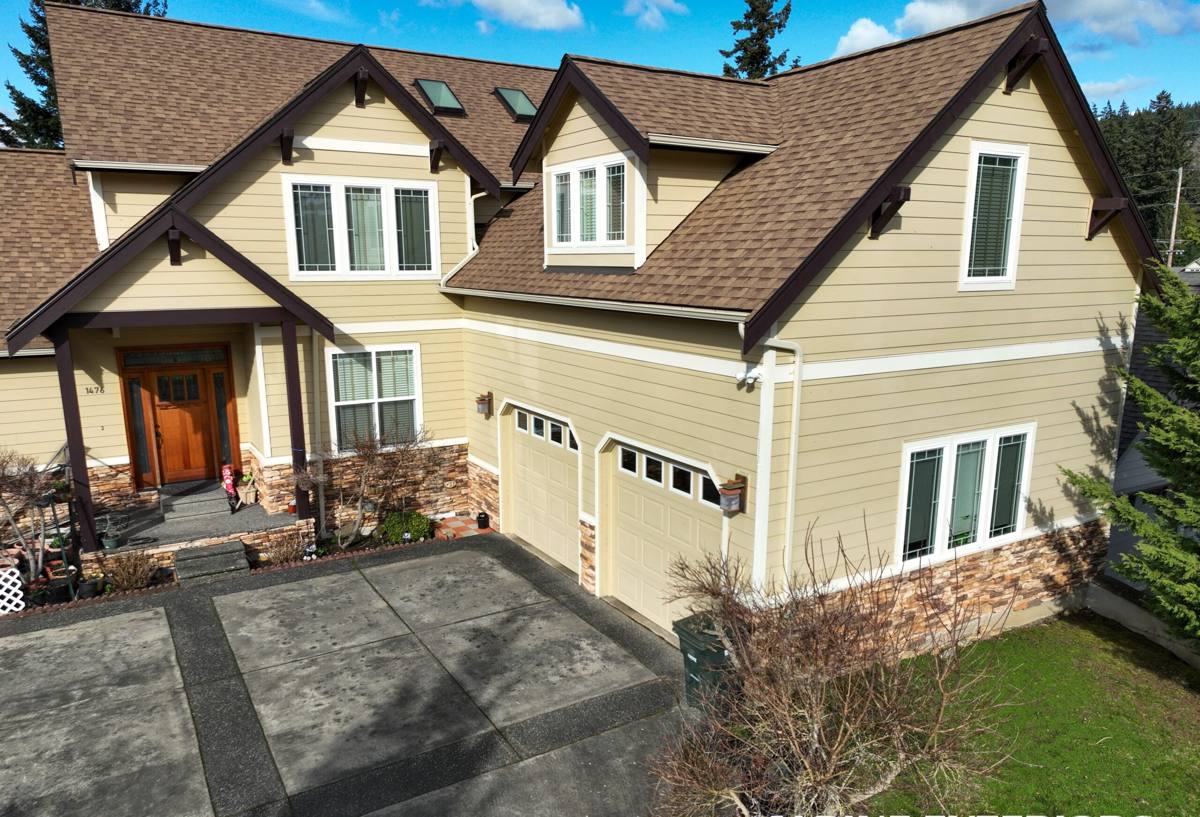
What Whatcom County's Climate Does to Siding Over Time
Three conditions drive most of the siding failures we see in this area, and they compound each other.
Persistent moisture and slow drying
It's not any single storm that damages siding here — it's the cumulative effect of siding rarely getting a full dry-out window. Wood-based products (cedar, primed spruce, and even engineered wood siding) absorb moisture at the edges and behind poorly sealed joints. When that moisture doesn't fully evaporate between rain events, it starts breaking down the substrate from the inside, well before it's visible on the surface.
Moss and algae growth
Whatcom County's long moss season is one of the most visible effects of the local climate. North-facing walls, areas shaded by trees or roof overhangs, and anywhere siding stays damp longer than it should will develop moss, algae, or mildew growth over time. This isn't just cosmetic — moss holds moisture against the siding surface, extends drying time even further, and can work into seams and fastener penetrations.
Wind-driven rain and marine air influence
Storms coming off the water push rain at an angle rather than straight down, which stresses lap joints, corner trim, and butt seams — the places where water intrusion actually starts. Homes closer to the water deal with a salt-air component on top of that, which accelerates corrosion of exposed fasteners and metal trim; even inland homes in the broader Ferndale-Lynden service area see some of that marine-air effect during onshore weather patterns.
Signs a Lynden Home Needs Siding Replacement, Not Just Repair
Not every siding problem calls for a full replacement. But there's a point where patching stops making sense and a full replacement becomes the more honest recommendation. Watch for:
- Soft or spongy spots when you press on the siding, especially near the bottom courses or below windows
- Visible swelling, delamination, or bubbling on wood-based or engineered wood siding
- Persistent moss or algae staining that comes back within weeks of cleaning
- Paint that's failing repeatedly in the same spots, even after repainting
- Gaps opening up at seams, corners, or where siding meets trim, window, and door casings
- Visible fastener corrosion or streaking below nail or screw heads
- Musty smells or unexplained interior moisture near exterior walls
- Siding that's original to a home built more than 20-25 years ago, particularly if it's cedar or an older engineered wood product
If you're seeing two or more of these at once, it's usually a sign the underlying moisture barrier or the siding material itself has been compromised, not just the paint layer.
Why We Only Install James Hardie Fiber Cement
We install James Hardie fiber cement siding exclusively — we don't install vinyl, LP SmartSide, Cemplank, Allura, primed spruce, or cedar. That's a standard we've settled on, not a sales pitch, and it's worth explaining given everything above.
Fiber cement is non-combustible and dimensionally stable in ways wood-based products aren't. It doesn't absorb and swell with moisture the way engineered wood siding can, which matters directly in a climate where siding rarely gets a long dry window. James Hardie's HZ5 product line is engineered for climate zones like ours, and their ColorPlus factory finish is baked on under controlled conditions rather than field-painted, which gives it far better resistance to the fading, peeling, and moss-holding texture breakdown that plagues field-finished siding in wet climates. It also carries a strong transferable warranty, which matters if you ever sell the home.
None of this means other products are without merit — vinyl is inexpensive and low-maintenance in mild climates, and cedar has real aesthetic appeal. But given what Lynden and Ferndale weather does to a home's exterior year after year, we'd rather install one product correctly and stand behind it than offer several options with different long-term risk profiles.
What a Correct Siding Replacement Job Actually Involves
A siding replacement is only as good as what's underneath it. The visible siding is the last layer installed, not the first thing that determines performance.
Full tear-off and inspection
We remove the existing siding down to the sheathing rather than siding over it. This lets us actually see the wall — sheathing condition, any hidden rot around windows or at the base of walls, and whether the existing moisture barrier is intact or compromised. Covering over existing damage is the single most common shortcut that causes problems years later.
Moisture barrier and flashing
A correctly installed weather-resistant barrier, properly lapped and taped, is what actually keeps wind-driven rain out of the wall assembly — the siding itself is a second line of defense, not the only one. Flashing at windows, doors, and any wall penetrations gets installed to shed water outward, not trap it. This step matters more in Whatcom County's driving rain than almost anywhere in the drier parts of the state.
Fastening to manufacturer spec
James Hardie siding has specific fastening requirements — nail type, spacing, and penetration depth — that are engineered for the HZ5 climate zone. Skipping these specs to save time is a common source of early failure: fasteners that back out, siding that cracks at nail points, or seams that don't perform as designed.
Joints, corners, and caulking done right
Butt joints and corners are where wind-driven rain finds its way in. Correct installation uses proper joint treatment and manufacturer-approved sealants at the right locations — not caulk used as a substitute for correct flashing and lapping.
Fiber Cement vs. Other Siding Materials in This Climate
| Material | Moisture Behavior in Wet Climates | Moss/Algae Resistance | Typical Maintenance |
|---|---|---|---|
| James Hardie Fiber Cement | Dimensionally stable, does not swell or rot | Factory finish resists moss-holding texture breakdown | Periodic washing; repainting not required for finish life |
| Cedar | Absorbs moisture, prone to swelling and rot without diligent upkeep | Susceptible without regular treatment | Regular staining/sealing and inspection |
| Primed Spruce / Engineered Wood | Can swell, delaminate, or fail at edges if moisture gets in | Moderate to low, depends on coating condition | Repainting and edge sealing over time |
| Vinyl | Does not absorb moisture, but can trap it behind the panel | Can develop surface algae, especially in shaded areas | Low, but can crack or warp with age |
What Drives the Cost of a Lynden Siding Replacement
Every home is different, so we won't quote a number without seeing the house, but the main cost factors are consistent from project to project.
| Factor | Why It Affects Cost |
|---|---|
| Home size and wall complexity | More square footage, more corners, dormers, and roof lines mean more cutting, flashing, and labor |
| Condition of existing sheathing | Hidden rot found during tear-off requires repair before new siding can go on |
| Siding profile and Hardie product line chosen | Lap, shingle, and panel styles vary in material and labor cost |
| Trim and accessory work | Fascia, soffit, and trim replacement alongside siding adds scope but improves the finished result |
| Site access | Tight lots, fencing, or landscaping close to the home can slow the tear-off and install process |
Our Process, Start to Finish
- Free on-site estimate — we walk the exterior with you, look at problem areas, and talk through what we're seeing before recommending anything.
- Written scope and quote — clear about what's included: tear-off, any sheathing repair, moisture barrier, flashing, siding, and trim.
- Scheduling — we plan around Whatcom County's wetter months where possible, since exposed sheathing needs dry working windows.
- Tear-off and inspection — full removal of old siding, with any hidden damage flagged and discussed with you before we cover it back up.
- Barrier, flashing, and siding installation — installed to James Hardie's specifications for our climate zone.
- Final walk-through — we review the finished job with you before calling it done.
Why a Crew That Already Works in Lynden and Ferndale Matters
Siding installation isn't a one-size-fits-all trade. A crew that regularly works Whatcom County homes has already seen how local moisture, moss, and wind-driven rain patterns show up on real houses — where rot tends to hide, which wall orientations need extra attention to flashing, and how to sequence a job around the region's weather rather than against it. That local pattern recognition is hard to replace with a crew that's unfamiliar with the area, no matter how skilled they are elsewhere.
Working locally also means we're accountable locally. If something needs a follow-up after the job is done, we're not far away and not hard to reach.
If you're seeing signs of siding failure on a Lynden or Ferndale home, we're happy to take a look and give you an honest read on what's going on — no pressure, no obligation. Reach out for a free estimate using the form below.