 Ferndale
 Siding Installation in Blaine, Washington
Blaine sits about as close to salt water and the Canadian border as a Whatcom County home can get, and that location shapes what a house's exterior has to deal with year-round. Between the marine air coming off the water, wind-driven rain off the Strait, and the long gray stretch of fall through spring when moss and algae get a foothold on anything that stays damp, siding here works harder than siding in a drier inland climate. When a home in Blaine needs new siding, the installation itself matters as much as the material choice — maybe more.
We're a Ferndale-based crew that works Blaine regularly, and this page is about one thing specifically: what a correct siding installation looks like for a Blaine home, why the details matter more here than they would somewhere inland, and how we approach the job from first measurement to final caulk line.
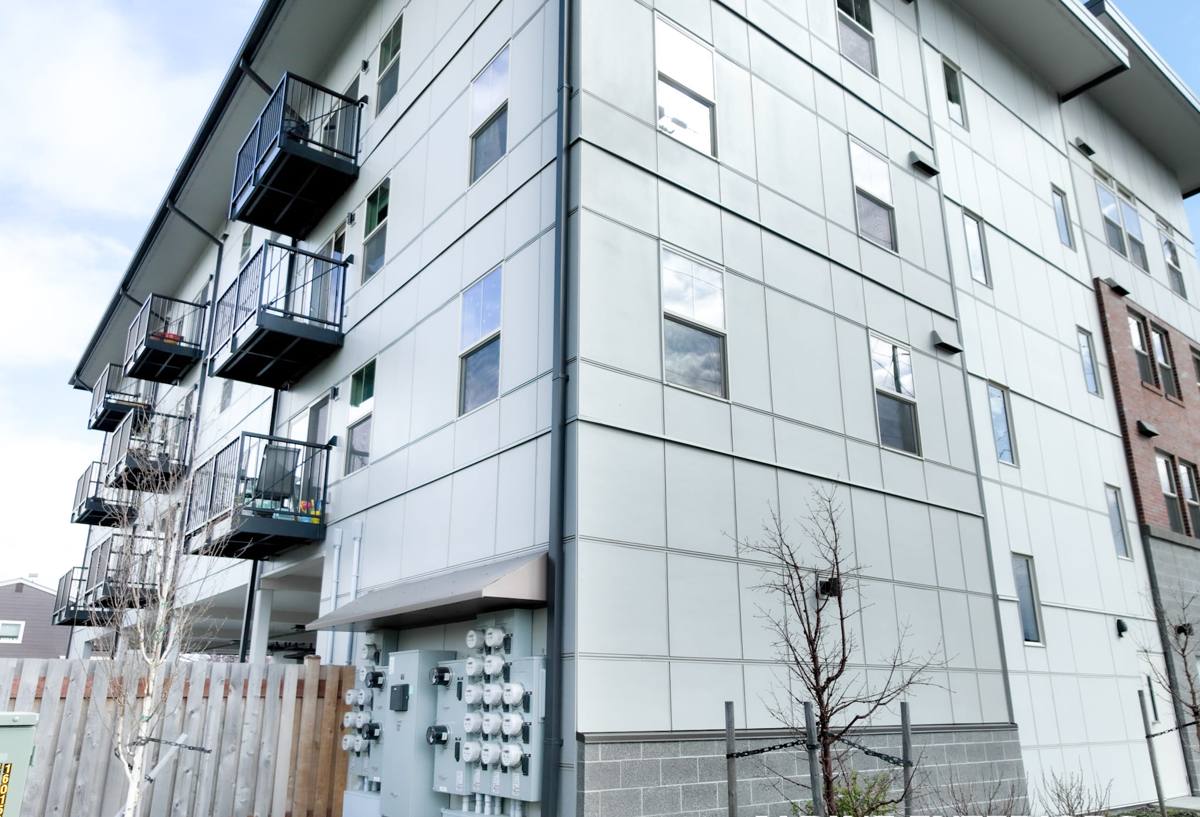
What Blaine's Climate Does to Siding
A few conditions come up over and over on Blaine homes, and any siding installation plan needs to account for all of them:
Salt Air and Coastal Moisture
Proximity to Semiahmoo Bay and the Strait of Georgia means airborne salt is a real factor on Blaine exteriors, not just a coastal cliché. Salt-laden moisture accelerates corrosion on fasteners, flashing, and trim if those components aren't chosen and installed with that exposure in mind. It also means siding has to shed water fast and dry out fast — anything that traps moisture against the wall assembly is a slower-motion problem in Blaine than it would be twenty miles inland.
Driving, Wind-Driven Rain
Storms coming off the water don't just fall straight down — they come in sideways, which pushes water into laps, seams, and penetrations that a calm-weather installation might get away with. Blaine homes need siding installed with real attention to lap overlap, flashing at every horizontal transition, and sealed penetrations at hose bibs, vents, and light fixtures. This is where a rushed or corner-cutting install shows up first, usually two or three winters later as a stain or soft spot nobody can see from the ground.
Moss and Algae Season
Whatcom County's wet season runs long, and north-facing and shaded walls in Blaine — especially anything tucked under mature trees or facing away from afternoon sun — stay damp for extended stretches. That's exactly the environment moss and algae need. Siding color, texture, and factory finish all affect how much organic growth actually takes hold, and it's a real consideration when we're helping a homeowner pick a product and color for a Blaine property.
Why We Install James Hardie Fiber Cement — and Only That
We standardized on James Hardie fiber cement siding for every home we side, including every job we do in Blaine, and we don't install vinyl, LP SmartSide, Cemplank, Allura, primed spruce, or cedar. That's a deliberate professional standard, not a sales pitch, and it matters most in exactly the conditions Blaine deals with:
- Non-combustible core — fiber cement doesn't feed a fire the way wood-based or vinyl products can, which matters for insurance and for peace of mind.
- Engineered for Pacific Northwest moisture — Hardie's HZ10 product line is formulated specifically for climates like ours, with moisture and freeze-thaw performance that generic fiber cement or wood-based alternatives aren't built around.
- ColorPlus factory finish — a baked-on finish that resists fading and holds up to UV and salt air far better than field-applied paint, which means fewer repaint cycles over the life of the siding.
- Dimensionally stable — it doesn't swell, cup, or rot the way wood-based siding can when it stays damp for weeks at a time, which is a real risk on shaded Blaine walls.
- Strong transferable warranty — when it's installed to Hardie's spec, the warranty backs the product in a way that matters if a future owner buys the home.
We're not going to tell you vinyl or wood siding is junk — plenty of it is installed and holds up fine in the right setting. But we've made a professional call that fiber cement is the right material for the conditions we work in, and we'd rather install one product exceptionally well than stretch across several and do all of them adequately.
What a Correct Installation Actually Involves
The material is only half the equation. A James Hardie installation done to spec in a coastal wind-and-rain environment like Blaine involves a specific set of steps, and skipping any one of them is where problems start:
Water Management Behind the Siding
Before a single piece of siding goes up, the wall needs a correctly lapped weather-resistive barrier and, in most cases, a rainscreen or drainage gap behind the cladding. This gives any moisture that does get past the siding a path to drain and dry instead of sitting against the sheathing — critical in a climate where walls rarely get a long stretch to fully dry out.
Flashing at Every Transition
Windows, doors, decks, roof-to-wall intersections, and any place two materials meet all need proper flashing integrated with the water-resistive barrier, not just caulk smeared over a gap. Caulk is a backup, not a strategy, and driving rain off the Strait will find any spot where flashing was skipped.
Fastening and Fastener Selection
Given the salt air exposure in Blaine, fastener material matters — corrosion-resistant fasteners installed at the correct spacing and depth, per Hardie's fastening schedule, not just "close enough." Overdriven or underdriven nails are a common installation shortcut that shows up as cracking or loosening years down the line.
Clearances and Gaps
Hardie specifies minimum clearances from grade, roofing, decks, and other surfaces, along with expansion gaps at butt joints and trim. These aren't arbitrary — they keep the siding out of standing water and give the material room to move without cracking its factory finish.
Caulking and Sealant
The right sealant, applied at the right joints (and not applied where it shouldn't be, like some manufacturer-specified gaps that need to stay open), finishes the water management system. Wrong sealant or sealant used to compensate for a bad flashing detail is a short-term fix that fails first in a climate like ours.
Our Process for a Blaine Siding Installation
| Step | What Happens |
|---|---|
| Site visit and assessment | We look at wall orientation, shade exposure, existing moisture damage, and how exposed the home is to wind off the water. |
| Product and color selection | We walk through Hardie's HZ10 lines, textures, and ColorPlus colors, including which finishes hold up best against moss and algae on shaded elevations. |
| Written estimate | Scope, product, and price laid out plainly — no vague allowances. |
| Tear-off and sheathing check | Old siding comes off and we inspect sheathing for hidden rot or moisture damage before anything new goes up. |
| Water-resistive barrier and drainage plane | Correctly lapped barrier and rainscreen installed per current best practice for our climate. |
| Flashing integration | Every window, door, and penetration flashed and tied into the barrier system. |
| Siding installation | Installed to Hardie's fastening schedule, clearances, and joint spec. |
| Trim, caulk, and final detailing | Trim installed, correct sealant applied at the right joints, site cleaned up. |
| Final walkthrough | We go over the finished job with the homeowner before calling it done. |
Signs a Blaine Home May Need New Siding
- Persistent moss or algae staining that comes back shortly after cleaning
- Soft, spongy, or bubbling spots, especially on north-facing or shaded walls
- Visible cracking, warping, or cupping in existing boards
- Paint that won't hold — repeated peeling or blistering within a few years of repainting
- Gaps opening up at trim, corners, or butt joints
- Rust streaking from fasteners, a common sign of corrosion in salt-air exposure
- Rising energy bills that suggest the wall assembly isn't performing the way it should
Cost Factors for a Blaine Siding Project
Every home is different, but the same handful of factors drive the price on most Blaine siding jobs:
| Factor | Why It Matters |
|---|---|
| Home size and wall complexity | More corners, dormers, and cutouts mean more labor and material waste. |
| Tear-off scope | Removing old siding down to the sheathing adds time versus a simpler re-side. |
| Sheathing repair | Hidden rot found during tear-off needs to be repaired before new siding goes up — this is often the biggest wildcard. |
| Product line and texture | HZ10 lines, plank widths, and textures vary in material cost. |
| Trim and detail work | Extensive trim, corner boards, and window casing add labor. |
| Access and site conditions | Steep lots, limited access, or scaffolding needs can affect labor time. |
We won't quote a number without seeing the home, but we'll always give a written estimate that spells out what's included so there aren't surprises mid-project.
Why Hire a Crew That Already Works Blaine
Siding installation isn't a one-size-fits-all trade skill — the right approach in a dry inland climate isn't automatically the right approach twenty minutes from the water. A crew that already works Blaine and the surrounding Whatcom County coastline knows which walls take the worst of the wind, where moss tends to establish first, and how much margin to build into flashing and drainage details for a climate that doesn't give siding much of a break. That local familiarity shows up in fewer callbacks and a longer service life for the siding, not in anything a homeowner can see on day one.
If your Blaine home needs new siding, or you're just trying to figure out whether what you have is holding up the way it should, we're happy to take a look. Reach out for a free, no-pressure estimate — the form below gets you started.