 Ferndale
 Bellingham's Climate Is Rougher on Siding Than It Looks
Bellingham sits right on the water, tucked against Whatcom County's forested hills, and that combination is exactly what makes exterior siding fail early here. Homes close to Bellingham Bay deal with a steady drift of salt-laden air that corrodes fasteners and works its way into any seam that isn't detailed correctly. Move a few blocks inland and the salt exposure eases, but the rain does not — this part of Washington sees long stretches of driving, wind-blown rain that hits siding sideways instead of running straight down it. Add a tree canopy that keeps north- and east-facing walls shaded for months at a time, and you get a moss and algae season that can run from October through April.
None of that is unusual for this corner of the state. What matters is that siding decisions made for a drier climate, or installed by a crew unfamiliar with how water actually moves on a wall in a marine environment, tend to show problems within a handful of years: swelling at butt joints, staining and moss buildup at corners, and finish failure on the sides of the house that never fully dry out between storms.
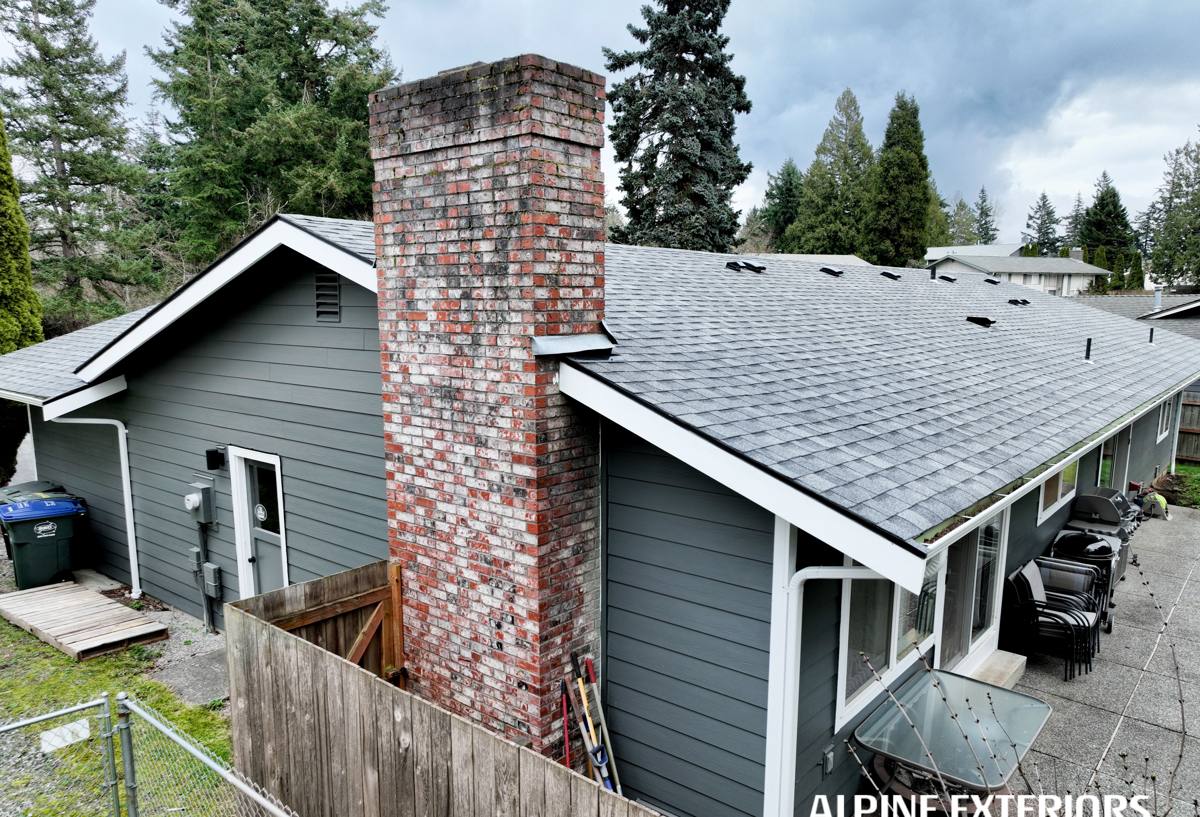
What "Correct" Fiber Cement Installation Actually Involves
Fiber cement siding is only as good as the wall assembly behind it. In a climate like Bellingham's, the details that separate a siding job that lasts thirty years from one that needs repair in eight are almost all hidden once the project is done:
- A drainage plane and weather-resistive barrier installed so water that gets behind the siding has somewhere to go — not trapped against the sheathing.
- A rain screen gap (furring strips or a purpose-built drainage mat) that lets the wall breathe and dry between storms, which matters far more here than in a dry-summer climate.
- Fasteners and flashing rated for coastal exposure, since standard hardware corrodes faster this close to salt water.
- Correct clearance from grade, decks, and roof lines so siding never sits in standing water or constant splash-back.
- Factory-primed or factory-finished cut edges sealed on-site, since a bare cut edge is where moisture intrusion starts.
- Caulking and sealant used only where the manufacturer specifies it — over-caulking traps moisture just as badly as leaving a real gap unsealed.
Every one of these steps is boring to describe and easy to skip on a fast install. They're also the difference between siding that shrugs off a Whatcom County winter and siding that needs board replacement before the warranty is even relevant.
Why We Only Install James Hardie Fiber Cement
We standardized on James Hardie siding and don't install LP SmartSide, vinyl, Cemplank, Allura, or bare wood siding, and it's worth explaining why rather than just stating it. Vinyl is inexpensive and low-maintenance in a dry climate, but it expands and contracts more than fiber cement, and in driving coastal rain it's more prone to water finding its way behind panels at seams and corners. Engineered wood products like LP SmartSide perform reasonably well when kept dry, but they rely on an intact wood-strand core and a factory treatment staying undamaged for the life of the product — a tough standard to hold in a climate this wet, especially once a panel gets nicked during install or years of weather exposure.
James Hardie fiber cement is a cement-and-cellulose composite, not a wood product, so it doesn't rot, doesn't attract insects, and doesn't swell the way wood-based siding can when it stays damp for extended periods — which is a real advantage on the shaded, slow-drying walls common on wooded Bellingham lots. It's also non-combustible, which matters for wildfire-adjacent risk even on the wet side of the Cascades. We put it on homes because we've seen how it holds up here specifically, not because it's the only product on the market.
ColorPlus Finish and Why It Matters in This Climate
Most of what we install carries James Hardie's ColorPlus factory finish rather than field-applied paint. That distinction matters more in Bellingham than in a drier climate, because factory-applied finish is baked on under controlled conditions and backed by its own finish warranty — it isn't relying on a painter getting good adhesion on a damp job site during a narrow weather window. Field-painted siding depends heavily on the moisture content of the substrate and the weather the day it's painted; in a region where a fully dry week isn't guaranteed, that's a real point of failure. ColorPlus finish also resists the chalking and fading that salt air and UV exposure cause over time, which keeps repainting off your maintenance list for a long stretch.
Choosing the Right Hardie Product Line for This Area
James Hardie makes several plank and panel profiles, and the right choice depends on the house and its exposure, not just style preference.
| Product | Best fit for | Why it works here |
|---|---|---|
| HardiePlank lap siding | Most single-family homes | Traditional look, wide color range, proven track record in coastal PNW climates |
| HardiePanel vertical siding | Modern designs, accent walls, gable ends | Fewer horizontal joints where water can collect |
| HardieShingle | Craftsman and cottage-style homes | Textured look without the moisture risk of real cedar shingle |
| HardieTrim | Corners, fascia, window and door trim | Matches the siding's moisture resistance so trim doesn't fail before the field siding does |
For homes closest to the water, we lean toward assemblies and fastening schedules built for higher wind and salt exposure. For shaded, tree-covered lots further from the bay, we pay more attention to rain screen detailing and product lines that shed standing moisture at horizontal joints, since those areas are where moss and algae take hold first.
Living With Moss and Algae Season
Even correctly installed fiber cement will pick up surface growth on shaded, north-facing walls in a climate like this — that's a fact of living under tree cover in Whatcom County, not a defect in the siding. The difference a good installation makes is where that growth can take hold. Proper rain screen gaps and clearances keep walls drying out between rain events, which slows growth and keeps it to a surface issue rather than something that works into seams. A gentle wash once or twice a year — never a high-pressure blast that can drive water behind panels or strip finish — keeps most homes looking clean without any special products.
Simple Maintenance Checklist for This Climate
- Rinse shaded and north-facing walls with a garden hose or soft wash once or twice a year to slow moss and algae buildup.
- Keep gutters clear so overflow doesn't run down the face of the siding during heavy rain.
- Trim back vegetation and tree limbs that keep a wall shaded and wet longer than necessary.
- Check caulking at trim and penetrations annually — it's the first thing to wear in salt air.
- Walk the exterior after major windstorms to check for any loose or displaced boards near corners and eaves.
Our Process for a Bellingham Fiber Cement Project
The work follows the same sequence on every job, adjusted for the specific exposure of the house:
- On-site assessment — we look at the existing siding, wall assembly, sun and shade patterns, and proximity to the water before recommending a product line.
- Tear-off and sheathing check — old siding comes off and we inspect the sheathing underneath for rot or moisture damage before anything new goes up.
- Weather barrier and rain screen installation — this is the step that determines how the wall performs for the next thirty years, and it's not visible once the project is finished.
- Flashing and trim — windows, doors, and roof intersections get detailed first, since these are the highest-risk points for water intrusion.
- Siding installation — planks, panels, or shingles installed to Hardie's fastening and clearance specifications, not shortcuts to save time.
- Final walkthrough — we check caulking, trim, and clearances before calling the job complete.
Why Hiring a Crew That Already Works Bellingham Matters
Siding installation isn't one-size-fits-all across Whatcom County. A crew that mostly works drier inland climates may not think twice about rain screen gaps or coastal-rated fasteners, because they've never had to. A crew that regularly works Bellingham and the surrounding area already knows which walls need extra attention to shade and moisture, which neighborhoods sit close enough to the bay to need corrosion-resistant hardware, and how local building departments expect weather barrier details to be documented. That local pattern recognition is hard to substitute for, no matter how good the product is on paper.
It also means we're around after the install. A siding job in this climate isn't "install and forget" — being a local, known crew means we're reachable if a question comes up two years down the road, not a company that did one job in the area and moved on.
What This Costs and What Drives the Price
Fiber cement costs more upfront than vinyl and is comparable to or somewhat more than engineered wood siding, but the honest way to think about it is total cost over the life of the product, not just the install invoice. A few factors move the price on any given Bellingham project:
| Factor | Why it affects cost |
|---|---|
| Tear-off scope | Removing old siding and repairing damaged sheathing adds labor before new siding even starts |
| Product line and profile | Plank, panel, and shingle profiles carry different material and labor costs |
| Trim and detail work | Homes with more corners, dormers, and window trim take longer to detail correctly |
| Access and site conditions | Steep lots, limited access, and tree-covered yards common in this area can add setup time |
| Finish choice | Factory ColorPlus finish costs more than unfinished board but removes future repainting from the equation |
We don't quote a number without seeing the house, but we'll walk you through exactly what's driving the estimate so there are no surprises.
If you're weighing siding options for a home in Bellingham or anywhere around Ferndale, we're happy to take a look and put together a straightforward, no-pressure estimate — just fill out the form below and we'll get in touch.