 Ferndale
 Roofing a Home on the Semiahmoo Waterfront
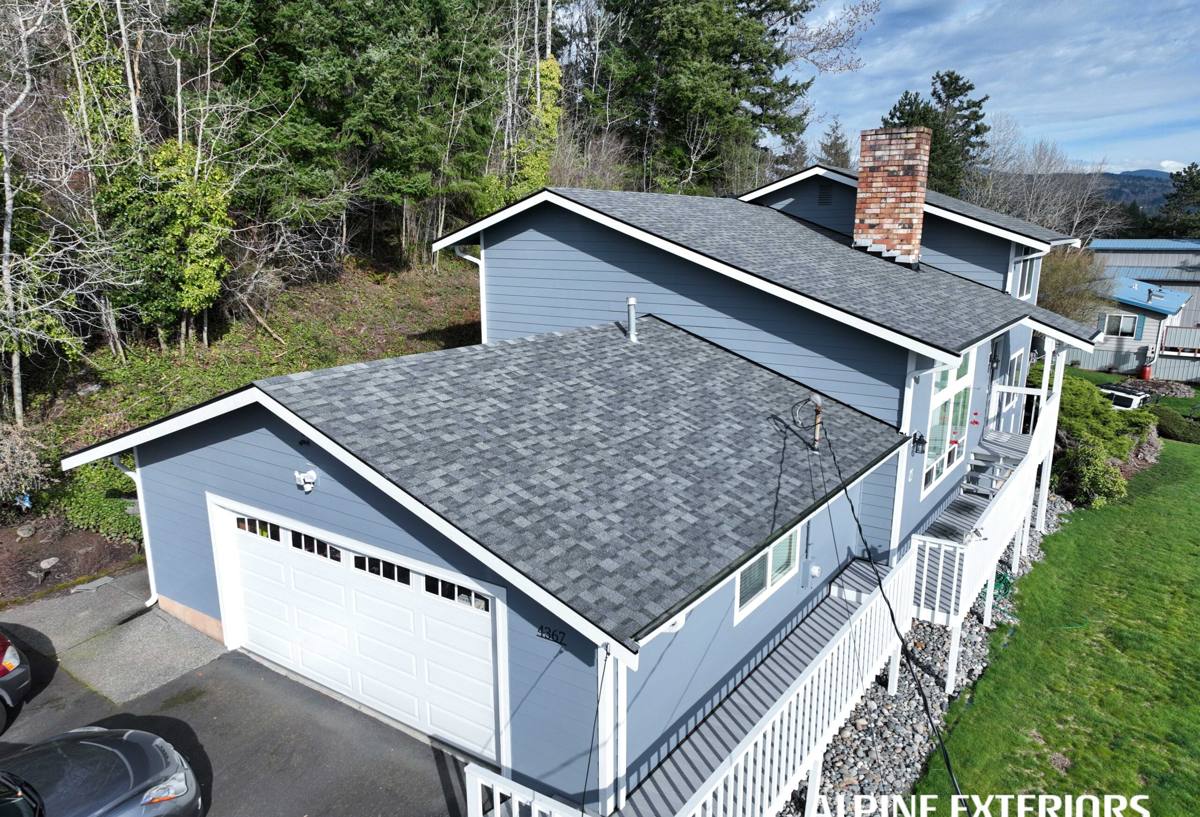
Semiahmoo sits right where Whatcom County meets the Salish Sea, and that location shapes everything about how a roof should be built and maintained here. Homes on or near the water deal with a combination most inland roofs never see: salt-laden air, wind-driven rain coming off the water, and a wet season that stretches long enough to grow a healthy crop of moss on anything that isn't sloped and sealed correctly. An asphalt shingle roof can handle all of that well — but only if it's specified and installed with this environment in mind, not treated like a generic roof job.
This page covers what we look at, what we install, and how we work when the job is an asphalt shingle roof for a Semiahmoo property specifically. If you're comparing options or just trying to understand what "correct" looks like out here, this should give you a straight answer.
Why Salt Air and Coastal Wind Take a Toll
Salt air is corrosive to metal, and a shingle roof has more exposed metal than people expect: drip edge, step flashing, valley flashing, nail heads, vent boots, and any exposed fasteners on ridge caps or hip caps. In a standard inland install, mid-grade galvanized fasteners and flashing can last the life of the roof without issue. Near the water, that same hardware corrodes faster, and once flashing starts to pit or a nail head rusts through its coating, water finds a path underneath the shingles long before the shingles themselves look worn.
Wind is the other half of the equation. Wind off open water tends to be steadier and gustier than wind further inland, and it often carries rain sideways rather than straight down. That matters for shingle roofing because most water intrusion problems on a well-built shingle roof don't happen through the shingle field — they happen at edges, valleys, and penetrations where wind-driven rain gets pushed uphill or sideways against a seam that was only designed to shed water moving straight down.
What This Means for Materials
For a Semiahmoo home, we lean toward corrosion-resistant flashing and fastener packages, higher wind-rated shingle lines, and extra attention to how the underlayment and flashing interact at every edge and penetration — not just the field of the roof. None of this is exotic; it's standard high-exposure roofing practice, applied consistently instead of skipped to save time.
Moss, Algae, and the Long Wet Season
Whatcom County's wet season runs long, and shaded or north-facing slopes in a place like Semiahmoo can stay damp for weeks at a stretch. That's exactly the condition moss and algae need to get established. Moss isn't just a cosmetic issue — as it grows, it lifts shingle edges and holds moisture against the roofing material, which accelerates granule loss and can eventually let water track back under the shingle course above it.
Algae staining (the dark streaking you often see on older roofs) is a different organism than moss and mostly a cosmetic issue, but it's a useful early signal — it tells you a roof surface is staying wet longer than it should, which is worth understanding before it becomes a bigger problem.
How We Address It
- Algae-resistant (AR) shingle lines with copper or ceramic-coated granules built into the shingle, rather than a surface treatment that wears off
- Proper attic and roof ventilation, so the underside of the deck isn't adding its own moisture to the problem
- Keeping valleys and low-slope transitions clear and correctly flashed, since these areas hold moisture the longest
- Recommending moss removal on a reasonable schedule rather than pressure-washing, which can strip granules and shorten shingle life
What a Correctly Installed Shingle Roof Includes
A shingle roof is a system, not just a layer of shingles nailed to plywood. Each layer does a specific job, and skipping or shortcutting any one of them is where most premature failures start — especially in a high-exposure location like Semiahmoo.
| Layer / Component | Its Job | Why It Matters Here |
|---|---|---|
| Roof deck | Structural base for everything above it | Checked for soft spots or rot before anything new goes down |
| Underlayment | Secondary water barrier beneath the shingles | Synthetic or ice-and-water shield in vulnerable areas resists the wind-driven rain common near open water |
| Flashing (valleys, walls, chimneys, vents) | Directs water away from seams and penetrations | Highest-failure area on any roof; corrosion-resistant metal matters most here |
| Shingles | Primary weather surface | Wind rating and AR granules chosen for coastal exposure and moss resistance |
| Ventilation (intake and exhaust) | Moves moist air out of the attic | Reduces underside condensation that feeds moss, algae, and premature deck rot |
| Fasteners | Holds the whole system down | Corrosion-resistant coatings prevent early rust in salt air |
Choosing the Right Shingle for This Location
Not every shingle line is worth putting on a waterfront or near-waterfront home. We generally steer clients toward mid- to upper-tier architectural shingles with a solid wind rating and an algae-resistance warranty, rather than the lowest-cost economy lines. The upfront cost difference is real, but so is the difference in how the roof performs over 15-20 years of coastal weather.
| Shingle Type | Typical Wind Rating | Best Fit |
|---|---|---|
| 3-tab (economy) | Lower | Budget projects away from open exposure; not our first recommendation for Semiahmoo |
| Standard architectural | Moderate-high | Solid all-around choice with AR granules for most Semiahmoo homes |
| Premium / high-wind architectural | High | Best fit for homes with direct water exposure or a more open, unshielded roof plane |
We don't install every product on the market, and that's intentional. Some lower-tier lines are more sensitive to installation error, have thinner warranty structures, or hold up poorly against granule loss in high-moisture environments. We'd rather recommend a shingle we can stand behind for this climate than the cheapest option on the shelf.
Our Installation Process
Every roof is different, but the process we follow for a Semiahmoo shingle roof generally looks like this:
- Inspection and scope. We look at the existing roof, deck condition, ventilation setup, and any trouble spots — valleys, chimneys, skylights — before quoting anything.
- Tear-off and deck check. Old roofing comes off down to the deck, and we address any soft or rotted sheathing before moving forward.
- Underlayment and ice/water barrier. Installed with attention to eaves, valleys, and any low-slope transitions where wind-driven rain is most likely to test the roof.
- Flashing. New, corrosion-resistant flashing at all valleys, walls, chimneys, and penetrations — this is where we spend extra care, not where we cut corners.
- Shingle installation. Installed to manufacturer spec for nail placement and pattern, which is what actually earns the wind-rating warranty — not just the shingle product itself.
- Ventilation check. Intake and exhaust confirmed or upgraded so the attic can actually dry out between wet spells.
- Final walkthrough. We go over the finished roof and answer questions before we consider the job done.
Inspections and Maintenance for Semiahmoo Homes
Even a well-built shingle roof benefits from periodic attention in this climate, since moss, salt exposure, and wind stress accumulate gradually rather than all at once. We recommend a roof inspection every year or two for homes in this area, plus a look after any unusually severe windstorm. A short inspection catches lifted flashing, early moss growth, or granule loss while it's still a minor fix — not an emergency.
Simple Maintenance Steps Homeowners Can Take Between Inspections
- Keep gutters and valleys clear of needles and debris, which hold moisture against the roof
- Trim back overhanging branches that shade the roof and slow drying
- Watch for dark streaking or visible moss patches, especially on north-facing slopes
- Avoid walking on the roof more than necessary — granule loss from foot traffic adds up over time
- Have a professional handle moss removal rather than pressure-washing it yourself
What Affects the Cost of a Shingle Roof Here
We won't quote a number without seeing the roof, but these are the main factors that move the price up or down on a Semiahmoo project:
| Factor | Why It Matters |
|---|---|
| Roof size and pitch | More surface area and steeper pitches increase labor and material needs |
| Deck condition | Rotted or soft sheathing found during tear-off adds repair cost |
| Shingle tier chosen | Economy, standard, and premium lines carry different material costs and wind ratings |
| Number of valleys, chimneys, and penetrations | Each one needs custom flashing work, which is labor-intensive |
| Ventilation upgrades needed | Adding or correcting intake/exhaust vents is sometimes necessary and adds scope |
| Access and site conditions | Steep sites, limited access, or extensive tear-off from a prior roof affect labor time |
Repair or Replace? Signs to Watch For
Not every roof problem near Semiahmoo means a full replacement. Here's a general guide to what usually points which direction:
- Likely a repair: a handful of missing or lifted shingles, an isolated flashing leak, minor moss on one slope, or damage limited to a small section after a storm
- Worth a closer look: granule loss showing up broadly across the roof, recurring leaks in different spots, or a roof approaching the end of its expected material lifespan
- Likely time to replace: widespread moss and granule loss, soft or spongy decking discovered during inspection, or a roof that's already been patched multiple times in different areas
Why It Matters That We Already Work in Semiahmoo
A roofing crew that regularly works this stretch of Whatcom County already knows how the wind behaves off the water, which slopes tend to hold moss the longest, and which flashing and fastener choices actually hold up rather than corrode early. That's not something you get from a crew that's only ever roofed inland subdivisions. We treat a Semiahmoo shingle roof as a coastal-exposure job from the first inspection, not a standard install with a longer drive.
If you're weighing a repair, a full replacement, or just want an honest read on where your current roof stands, we're happy to take a look. Fill out the form below for a free, no-pressure estimate — we'll walk the roof, tell you what we actually see, and give you a straight answer either way.