 Ferndale
 Why Cordata Roofs Wear Differently Than a Textbook Roof
Every asphalt shingle roof is rated by the same industry standards, but a roof in Cordata doesn't age the same way a roof in a dry inland climate does. This part of Whatcom County sits close enough to Bellingham Bay and the Salish Sea that salt-laden air reaches the shingles, gutters, and metal flashing on a regular basis. Add in the long stretch of wet months typical of northwest Washington, plus the tree canopy that shades a lot of Cordata's lots, and you get a roof that's fighting three things at once: corrosion, saturation, and moss. A shingle roof built for a generic spec sheet will underperform here. One built with this specific mix of conditions in mind holds up a lot longer.
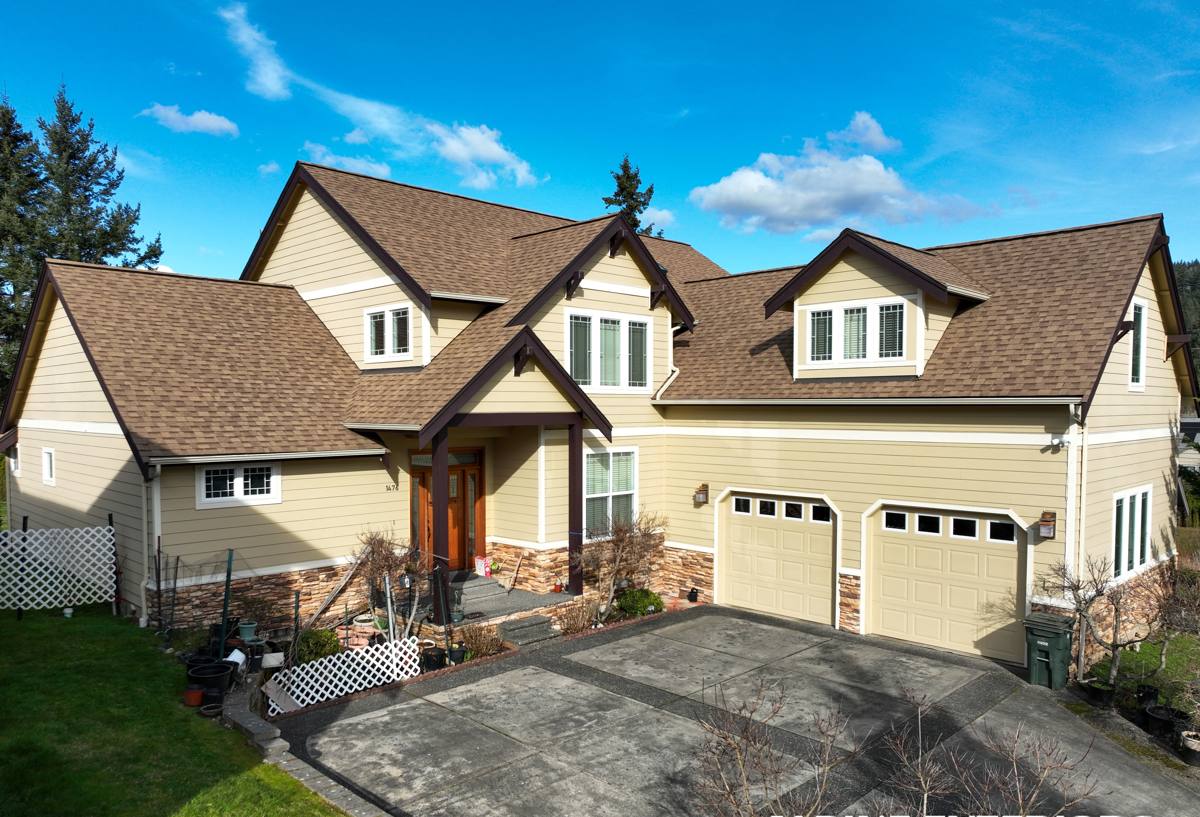
What Local Weather Actually Does to Asphalt Shingles
Salt Air and Metal Fatigue
Salt air doesn't damage the shingles themselves as much as it accelerates corrosion on the exposed metal components of a roofing system — nail heads, drip edge, step flashing, valley metal, and vent stacks. Once corrosion starts eating at a fastener or a flashing seam, water finds its way in long before the shingles above it show any visible wear. This is why the metal spec on a Cordata roof matters as much as the shingle brand.
Driving Rain and Wind-Driven Water
Whatcom County storms rarely come straight down. Wind off the water pushes rain sideways, which means water gets tested against every lap, seam, and penetration on the roof, not just the open field of shingles. A roof that would stay dry in a calm rain can leak at a ridge cap or a chimney flashing when the same rain arrives at a 30-degree angle. Underlayment choice and flashing detail work carry more weight here than in calmer climates.
The Long Moss Season
Mild temperatures and consistent moisture from fall through spring give moss and algae a long runway to establish themselves, especially on north-facing slopes and anywhere tree cover keeps a section of roof shaded and damp. Moss isn't just cosmetic — it holds moisture against the shingle surface, lifts shingle edges as it grows, and can work its way under tabs over a few seasons, shortening the life of an otherwise sound roof.
Choosing the Right Shingle System for This Climate
Not every asphalt shingle product handles this combination of salt, rain, and moss equally well. We steer homeowners toward products and details that hold up under Whatcom County conditions rather than whatever is cheapest to install.
| Shingle Feature | Why It Matters in Cordata |
|---|---|
| Algae-resistant (copper-infused) granules | Slows the growth of algae and moss streaking on shaded, damp slopes common in this area |
| Heavier laminate/architectural profile | Better wind-uplift resistance against wind-driven storms coming off the water |
| High-quality synthetic underlayment | Stays intact and waterproof longer than felt when a roof sits wet for extended stretches |
| Stainless or hot-dip galvanized flashing | Resists the corrosion that salt air causes in standard mill-finish metal |
| Sealed, low-profile ridge vents | Keeps attic moisture moving without becoming a wind-driven rain entry point |
None of these upgrades are exotic or dramatically more expensive on their own — they're standard-practice choices for a coastal, wet-climate roof. The mistake we see most often on older Cordata roofs isn't a bad shingle brand, it's a builder-grade underlayment and flashing package that was never matched to the local weather in the first place.
What a Correct Asphalt Shingle Roofing Job Actually Involves
A roof replacement is more than laying new shingles over what was already there. Done right, it involves several layers working together, each one addressing a specific failure point common to this region.
- Tear-off and deck inspection — old material comes off completely so the plywood or OSB deck underneath can be checked for soft spots, rot, or delamination from years of moisture exposure.
- Deck repair — any compromised sheathing gets replaced before anything new goes down. Skipping this step is the single most common shortcut that leads to early failures.
- Ice-and-water shield at vulnerable points — valleys, eaves, and roof-to-wall transitions get a self-adhering waterproof membrane, since these are the spots wind-driven rain exploits first.
- Synthetic underlayment across the field — a full waterproof layer that outperforms old-style felt in a climate that stays wet for months at a time.
- Corrosion-resistant flashing and drip edge — metal components matched to the salt-air exposure of the specific lot.
- Proper nailing pattern — correct nail count and placement per shingle, since under-nailing is a leading cause of wind blow-off in coastal storms.
- Balanced attic ventilation — intake and exhaust venting sized to the attic, not just a ridge vent added as an afterthought.
- Final walkthrough — a visual check of every valley, penetration, and flashing line before we consider the job finished.
Roof Ventilation and Moss Prevention: Built In, Not Bolted On
Moss treatment and gutter cleaning are maintenance tasks, not fixes for a roof that's fundamentally too damp underneath. Proper attic ventilation controls the temperature and moisture level under the deck, which reduces the condensation that feeds moss and mold from below and helps shingles shed the surface moisture that feeds moss from above. When we install a new roof system in Cordata, we look at the whole attic — soffit intake, baffle placement, and exhaust venting — not just the shingles on top. A well-ventilated roof also runs cooler in summer and dries out faster after the long wet stretches that define a Whatcom County winter, which directly extends shingle life.
Our Process, Start to Finish
We keep the process straightforward because a roof replacement is stressful enough without added confusion.
- On-site inspection — we walk the roof and attic in person, not just a satellite photo estimate, since local roofs often have moisture or ventilation issues that aren't visible from the ground.
- Honest scope and written estimate — you get a clear breakdown of what's being replaced, what materials are specified, and why, before any work is scheduled.
- Material delivery and site protection — landscaping, siding, and gutters get protected before tear-off begins.
- Tear-off, deck inspection, and install — most standard residential roofs are completed in one to a few days depending on size and complexity.
- Daily cleanup — magnetic sweeps for nails and debris removal happen every day the crew is on site, not just at the end of the job.
- Final walkthrough with the homeowner — we go over the finished roof together before we call it done.
Maintenance That Actually Extends a Cordata Roof's Life
A quality install gets a roof most of the way to its expected lifespan. A little seasonal attention gets it the rest of the way, especially in a climate this wet and shaded.
- Clear gutters and downspouts at least twice a year — clogged gutters back water up under the eave line, which is one of the most common leak causes we see locally.
- Trim back tree branches that overhang the roof to cut down on shade, debris buildup, and moss growth.
- Have moss growth treated before it spreads across a slope, rather than waiting until it's visible from the street.
- Check attic ventilation isn't blocked by insulation over the soffits — this is a common issue in older homes that leads to condensation problems.
- Schedule a roof inspection after any major windstorm, since lifted or cracked shingles aren't always visible from ground level.
- Address small leaks immediately — deck rot from a slow, ignored leak is far more expensive to repair than the original leak would have been.
Cost Factors for a Cordata Roof Replacement
Every roof is different, but the same handful of factors drive most of the price difference between jobs in this area. We walk through these with every homeowner during the estimate so there are no surprises.
| Factor | Why It Affects Cost |
|---|---|
| Roof size and number of slopes/valleys | More cuts, seams, and flashing points mean more labor and material |
| Current deck condition | Rotted or soft sheathing found during tear-off requires replacement before new roofing goes down |
| Shingle tier chosen | Standard three-tab, architectural laminate, and premium algae-resistant lines all carry different material costs |
| Existing ventilation setup | Adding or correcting intake/exhaust venting adds labor but reduces long-term moisture problems |
| Access and pitch | Steep roofs or tight lot access require more safety setup and time |
We don't quote a job without seeing the roof and attic in person first, since two houses with the same square footage can have very different scopes once the deck and ventilation are factored in.
Why a Crew That Already Works Cordata Matters
Roofing crews that split time across very different climates tend to default to generic specs — whatever underlayment and flashing package they use everywhere. A crew that works Cordata and the surrounding Ferndale area regularly already knows which slopes hold moss longest, which flashing metals hold up against the salt air off the water, and how local wind patterns drive rain into valleys and roof-to-wall transitions. That local pattern recognition shows up in fewer callbacks and a roof that's actually built for the conditions it has to survive, not just the conditions on a spec sheet written somewhere else.
If you're weighing a roof replacement or just want an honest read on how much life is left in your current shingles, we're glad to come take a look. Reach out for a free, no-pressure estimate using the form below — we'll walk the roof, answer your questions straight, and give you a clear picture of what your home actually needs.