 Ferndale
 Deck Building Built for Sumas, Not Just Any Backyard
Sumas sits in a corner of Whatcom County that gets its own version of our regional weather — low-lying ground near the Nooksack River, damp air that lingers longer than it does on higher ground, and the same driving rain and long moss season that the rest of the county deals with every fall through spring. A deck built here needs to handle standing moisture, shaded ground contact, and months of gray weather without turning into a maintenance headache or a safety problem. That's a different job than building a deck in a dry climate, and it's why we build every deck in Sumas with that reality in mind from the first footing.
This page is about one thing: deck building for homes in and around Sumas. Not a general overview of decks everywhere — what actually holds up here, what fails here, and how we build to avoid the second one.
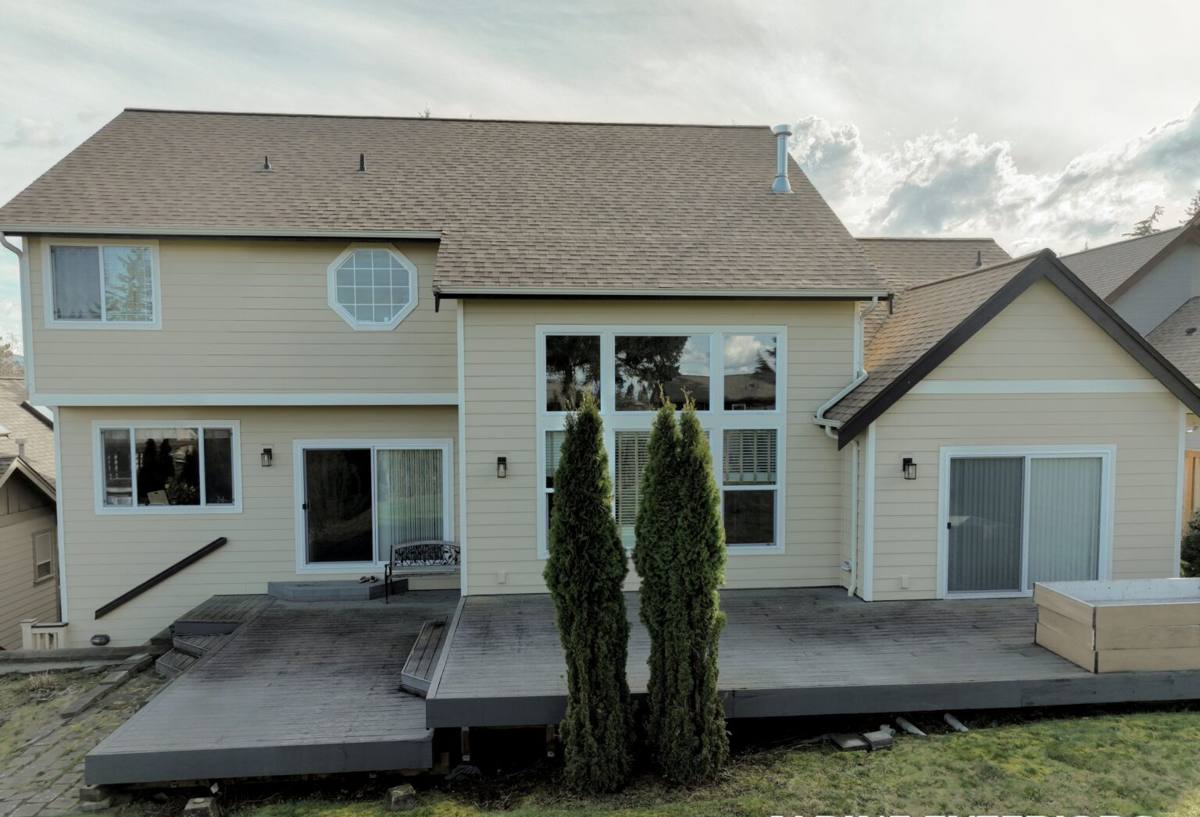
What Sumas-Area Homes Are Up Against
Whatcom County's marine-influenced climate reaches Sumas even though it sits inland from the coast. The same weather systems that push salt-laced, moisture-heavy air off the bay also bring long stretches of steady, driving rain inland toward the border. Combine that with lower elevation, tree cover, and a shorter window of direct sun in many yards, and you get conditions that are hard on any structure sitting outdoors year-round.
The specific stresses we build against
- Driving rain that finds gaps — wind-driven rain doesn't just fall straight down; it gets pushed sideways into ledger connections, stair stringers, and any seam that isn't properly flashed or sealed.
- A long moss and algae season — shaded, north-facing, or tree-covered decks in this area can stay damp for weeks at a time, which is exactly what moss and mildew need to take hold on wood surfaces and composite decking alike.
- Freeze-thaw cycling — Whatcom County doesn't get brutal cold, but it gets enough freeze-thaw swings each winter to work water into any joint or fastener hole that wasn't sealed correctly, slowly loosening connections over a few seasons.
- Ground moisture and poor drainage — low-lying lots near Sumas can hold water longer after a storm, which matters a lot for footings, post bases, and any structural wood close to grade.
None of this means a deck can't last for decades here — it means the details that get skipped in a rushed build are exactly the details that fail first in this climate.
What a Correctly Built Deck Actually Involves
A deck that holds up in Sumas isn't about using thicker boards or more screws — it's about a handful of details that are easy to shortcut and expensive to fix later.
Footings and framing
Footings need to sit below frost depth and bear on solid, well-drained soil — not guesswork poured on top of soft or waterlogged ground. Post bases should keep wood off concrete and off the soil entirely, since end-grain wood sitting in standing water is one of the fastest ways to start rot in this climate.
Ledger board attachment
The ledger board — where the deck ties into the house — is the single most common failure point on decks in wet regions like ours. It needs proper flashing that directs water away from the house rim joist, not just caulk and a hope. We flash every ledger connection so water sheds outward instead of getting trapped between the deck and the siding, which is where hidden rot does its real damage.
Fasteners and hardware
Everything below the decking — joist hangers, structural screws, post connectors — needs to be corrosion-resistant hardware rated for exterior and ground-contact use. Standard interior-grade fasteners corrode faster in our damp climate, and a corroded hanger you can't see is a structural problem waiting to happen.
Board spacing and drainage
Decking boards need consistent gapping so water and debris don't collect and hold moisture against the wood. Poor spacing is one of the quiet reasons decks develop moss and soft spots years before they should.
Choosing the Right Decking Material for This Climate
There's no single "best" decking material — there's the right trade-off for your budget, your yard's sun exposure, and how much upkeep you want to do. Here's how the common options actually perform in Sumas's damp, moss-prone conditions.
| Material | How it handles our climate | Maintenance | Typical lifespan |
|---|---|---|---|
| Pressure-treated wood | Good structural performance if sealed and maintained; can hold moisture and stain in shaded, low-airflow spots | Needs re-sealing every 1-2 years; regular moss/algae cleaning | 15-20 years with upkeep |
| Cedar | Naturally rot-resistant and handles moisture well, but softer surface can scratch and gray without finish upkeep | Needs periodic staining/sealing to keep color and protection | 15-25 years with upkeep |
| Composite decking | Doesn't absorb moisture like wood, resists rot; can still grow surface mildew in constantly shaded areas without cleaning | Occasional washing; no sealing or staining required | 25-30+ years |
For shaded, tree-covered lots that hold moisture longer — common in parts of Sumas — composite often earns its higher upfront cost back in avoided maintenance. For sunnier, more open lots, a well-maintained wood deck is a perfectly reasonable and more affordable choice. We'll walk your specific yard with you and give you an honest read on which direction fits before you commit to a material.
Our Deck Building Process
- On-site assessment — we look at drainage, sun exposure, soil condition, and how the deck will tie into your house before recommending anything.
- Design and material walkthrough — honest pros and cons for wood versus composite based on your yard, not a sales pitch toward the higher-margin option.
- Permitting — we handle the paperwork so the structure is inspected and built to code, which also protects you at resale.
- Footings and framing — proper depth, drainage, and corrosion-resistant hardware from the ground up.
- Ledger flashing and waterproofing — the step that determines whether your deck stays dry-connected to your house for the next 20 years.
- Decking, railing, and stairs — installed with correct spacing and fastening for the material chosen.
- Final walkthrough — we go over basic care so you know what keeps the deck looking and performing well through our wet seasons.
Problems We Commonly Find and Fix
A lot of our deck work in this area isn't new builds — it's repairing or rebuilding decks that were put up without our climate in mind. The patterns repeat:
- Ledger boards with no flashing, leading to hidden rot in the rim joist behind the siding.
- Posts set directly in concrete or wet soil, rotting from the base up.
- Standard fasteners that have corroded and stained the wood around them.
- Decking laid without gaps, trapping moisture and growing moss within a season or two.
- Railings that were never properly through-bolted, becoming loose and unsafe over time.
If any of that sounds familiar from a walk around your own deck, it's worth having someone take a real look before it becomes a safety issue rather than a maintenance one.
Keeping a Sumas Deck in Good Shape Year-Round
Whatever material you choose, a few habits go a long way in our climate:
- Sweep leaves and debris off the deck regularly, especially in fall — trapped organic matter holds moisture and feeds moss.
- Rinse or gently scrub moss and algae off the surface at least once or twice a year, more often in shaded spots.
- Check railings and stair connections annually for looseness — this is often the first sign of a fastener or framing issue.
- Reseal or restain wood decking on the schedule your material calls for; don't wait until it's visibly gray and dry.
- Keep gutters and downspouts near the deck clear so runoff isn't dumping extra water onto or under the structure.
- Look underneath the deck once a year for soft wood, rust streaks, or standing water near posts.
Why It Matters That We Already Work in Sumas
A crew that only shows up in Sumas occasionally doesn't have a feel for which yards drain poorly, which lots stay shaded longest into spring, or how the local moisture patterns actually behave against a house. We work Whatcom County regularly, which means we're not guessing at footing depth or flashing details — we're applying what we already know holds up here and what doesn't. That local familiarity is part of what you're paying for as much as the labor and materials.
If you're planning a new deck or dealing with an aging one that's starting to show its age, we're happy to come take a look and give you a straightforward, no-pressure estimate — just fill out the form below.