 Ferndale
 Roofing in Marietta: A Different Set of Conditions
Marietta sits in one of the wetter, more exposed pockets of the Ferndale area, close enough to the water that homes here deal with a different combination of stresses than roofs a few miles inland. Salt-laden air off the Salish Sea, near-constant driving rain through the fall and winter, and a moss season that can stretch for most of the year all wear on a roof in ways that generic roofing advice doesn't account for. A roof installed the same way everywhere in Whatcom County will not perform the same way in every part of it — Marietta is one of the neighborhoods where the details matter more than usual.
When we talk about a "new roof installation" for a home in this area, we're not just talking about stripping old shingles and nailing down new ones. We're talking about a system — decking, underlayment, flashing, ventilation, and the roofing material itself — built to handle wind-driven rain and near-constant moisture exposure without trapping water or feeding moss growth for the next 20-plus years.
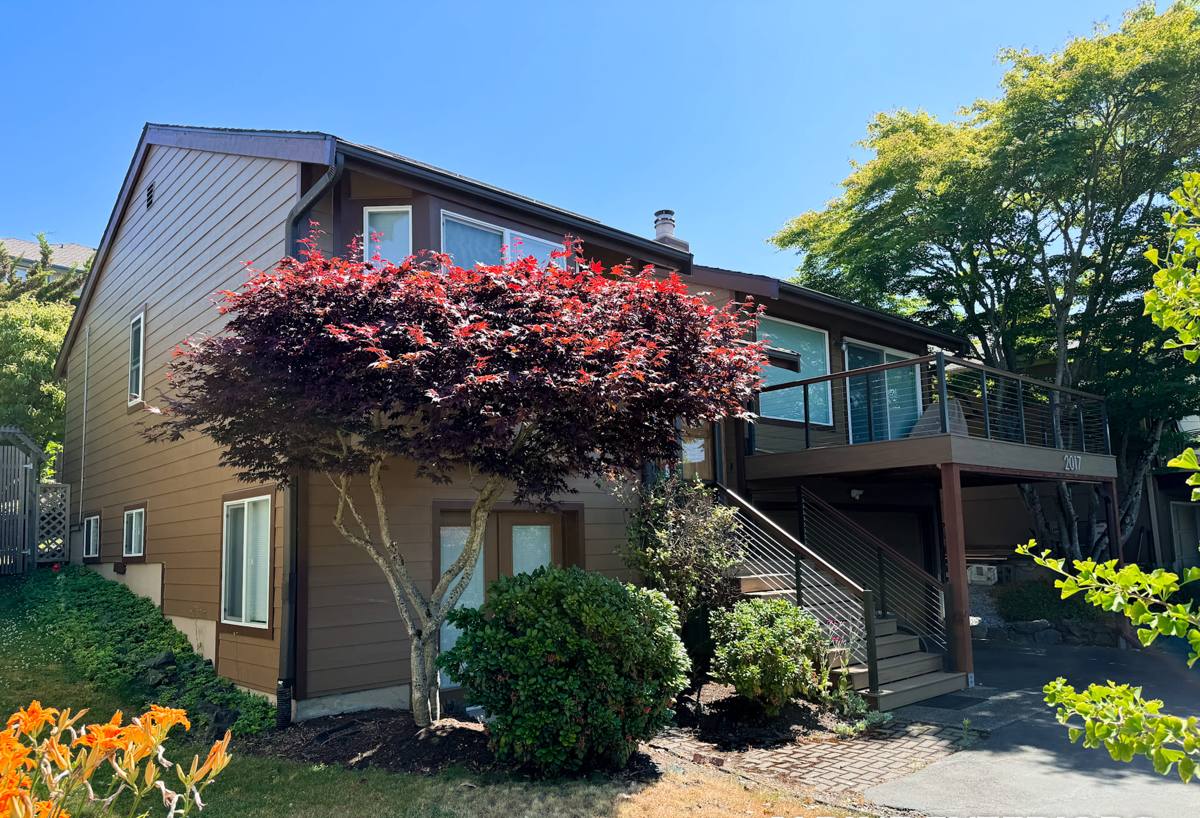
What Salt Air, Rain, and Moss Actually Do to a Roof
Salt Air
Airborne salt from Bellingham Bay and the broader Salish Sea corrodes exposed metal faster than it would inland. Nails, flashing, vents, and fasteners that aren't rated for coastal exposure can start to rust years before a homeowner would expect, which shows up first as streaking and eventually as leaks around penetrations.
Driving Rain
Whatcom County storms rarely come straight down. Wind-driven rain pushes water sideways and upward under shingle edges, around chimneys, and into valleys — spots a roof built for calmer climates often shortcuts. Underlayment quality and flashing detail matter more here than the shingle brand.
Moss
Shade, moisture, and mild temperatures are exactly what moss wants, and Marietta's tree cover and damp climate deliver all three for most of the year. Moss isn't just cosmetic — as it grows, it lifts shingle edges, holds water against the roof deck, and accelerates rot in ways that aren't visible from the ground until the damage is already done.
What a Correct Installation Looks Like
A proper new roof installation in this climate isn't defined by the shingle alone. It's defined by what's underneath and around it. The components below are where most roofing failures in this region actually start.
- Solid decking: Any soft, delaminated, or water-stained plywood or OSB gets replaced, not covered over.
- Ice-and-water shield at vulnerable points: Eaves, valleys, and roof-to-wall transitions get self-adhering waterproof membrane, not just standard felt.
- Synthetic underlayment: A durable, water-resistant layer across the full roof deck, sized for wind-driven rain exposure.
- Corrosion-resistant flashing and fasteners: Metal rated for coastal, high-moisture exposure at chimneys, skylights, and roof penetrations.
- Balanced ventilation: Intake at the eaves and exhaust at the ridge, sized to the attic, so moisture from inside the home isn't trapped against the underside of the new roof.
- Proper valley and edge detail: Where the majority of leaks actually start, regardless of how good the shingles are.
Skip any one of these and the shingles on top — no matter how good — are covering up a roof that will fail early.
Roofing Material Options for Marietta Homes
There's no single "best" roofing material for every home. The right choice depends on budget, roof pitch, how much moss and shade the property deals with, and how long the homeowner plans to stay in the house. Here's an honest comparison for this specific climate.
| Material | Moss & Moisture Resistance | Coastal Wear | Typical Lifespan | Best Fit |
|---|---|---|---|---|
| Architectural Asphalt Shingle | Good with algae-resistant granules; still needs airflow and periodic cleaning | Solid with corrosion-resistant fasteners | 25–30 years | Most homes — balance of cost and performance |
| Standing Seam Metal | Excellent — sheds moss and debris, little for it to grip | Very good with the right coating and fastener spec | 40–50+ years | Heavily shaded lots, steep pitches, long-term owners |
| Synthetic/Composite Shingle | Good, varies by product | Good | 30–40 years | Homeowners wanting metal-like durability with a shingle look |
| Wood Shake | Poor in this climate without diligent, ongoing maintenance | Weathers quickly with salt and constant moisture | Highly variable | Only for owners committed to frequent upkeep |
We're upfront about wood shake in particular: in a damp, shaded, salt-air environment like Marietta, it demands a level of ongoing maintenance most homeowners don't want to keep up with, and moisture retention is a real long-term risk. That's a maintenance and moisture-behavior trade-off, not a knock on the product itself — it just isn't a fit for every site.
Our Installation Process
- On-site inspection: We walk the roof and attic, check decking condition, ventilation, and flashing points, and take photos of anything that affects the estimate.
- Written estimate: A clear scope of work — materials, tear-off, decking allowance, flashing, ventilation — with no vague line items.
- Tear-off and deck inspection: Old roofing comes off down to the deck so we can actually see what's underneath before covering it back up.
- Deck repair as needed: Any soft or rotted sheathing is replaced before anything else goes down.
- Waterproofing and underlayment: Ice-and-water membrane at vulnerable points, synthetic underlayment across the field.
- Flashing and ventilation install: Coastal-rated metal at penetrations, intake and exhaust ventilation balanced to the attic.
- Roofing material installation: Installed to manufacturer specification, not shortcuts to save labor time.
- Final walkthrough: We review the finished roof with the homeowner and go over warranty paperwork.
Ventilation and Moisture Management
This is the part of a roof homeowners think about least and that causes the most repeat failures in Whatcom County. A roof that's watertight from the outside can still fail from the inside if warm, moist air from the living space gets trapped in the attic. That trapped moisture condenses on the underside of the deck, encourages rot, and shortens the life of the roofing material from below — separate from anything moss or rain is doing above.
Correct ventilation pulls cool, dry air in at the eaves and pushes warm, moist air out at the ridge, keeping the attic close to outdoor temperature and humidity year-round. On a home in a shaded, damp spot like Marietta, this isn't optional — it's one of the main things separating a roof that reaches its full lifespan from one that needs early repairs.
Warranty and Long-Term Care
Roofing materials carry manufacturer warranties covering defects in the product itself, and installation work should carry a separate workmanship warranty covering the labor. Both matter — a strong material warranty doesn't help if a flashing detail was installed wrong, and a workmanship warranty doesn't cover a shingle that fails prematurely. We go over both in plain terms before work starts, not buried in fine print afterward.
Even a correctly installed roof benefits from occasional attention in this climate — clearing debris from valleys, keeping gutters flowing, and addressing moss growth before it takes hold. None of that is heavy maintenance, but skipping it entirely shortens the life of even a well-built roof.
Signs a Roof May Need Replacement Rather Than Repair
- Granule loss heavy enough to see bare shingle in patches
- Curling, cracking, or missing shingles in multiple areas, not just one spot
- Daylight visible through the roof deck from inside the attic
- Soft or spongy spots when walking the roof
- Recurring leaks in the same area despite prior patch repairs
- Heavy, established moss growth that keeps returning after cleaning
- A roof at or beyond its expected material lifespan
One or two of these might mean a targeted repair is enough. Several at once usually means the roof as a system is failing, and repairs will keep being a temporary fix rather than a real solution.
Why a Crew That Already Works in Marietta Matters
A roofing crew that regularly works Ferndale and the surrounding Whatcom County neighborhoods already knows how local roofs actually fail — where moss builds up fastest, which flashing details take the most abuse from wind-driven rain, and how much ventilation a typical attic in this area really needs. That's different from general roofing knowledge, and it shows up in fewer callbacks and a roof that holds up the way it's supposed to. It also means someone answering the phone who's actually familiar with the property, the street, and the conditions it deals with — not reading a climate zone off a spreadsheet.
If you're weighing repair versus replacement, or just want a straight answer on what your roof needs, we're glad to take a look and walk you through it. Reach out for a free, no-pressure estimate using the form below.