 Ferndale
 Roofing in Kendall: A Different Set of Problems Than Roofing Anywhere Else
Kendall sits inland from the Salish Sea but still catches the marine air that moves across Whatcom County, mixed with heavy seasonal rain and long stretches of shade under fir and cedar cover. That combination is hard on a roof in ways that don't show up in a glossy shingle brochure. Salt-laden air accelerates corrosion on exposed metal fasteners and flashing. Driving rain, especially in wind-driven storms off the water, finds every gap in flashing and underlayment that a calmer climate would never expose. And moss doesn't just grow here — it thrives, spreading across shaded slopes for most of the year and holding moisture against the shingle mat long after the rain stops.
None of this means asphalt shingles are the wrong choice for Kendall. They're still the most practical, cost-effective roofing option for the vast majority of homes here. It means the installation details matter more than they would in a drier, calmer climate, and skipping a step that "probably would've been fine" somewhere else is how a Kendall roof ends up with a moss-driven leak in year eight instead of year twenty.
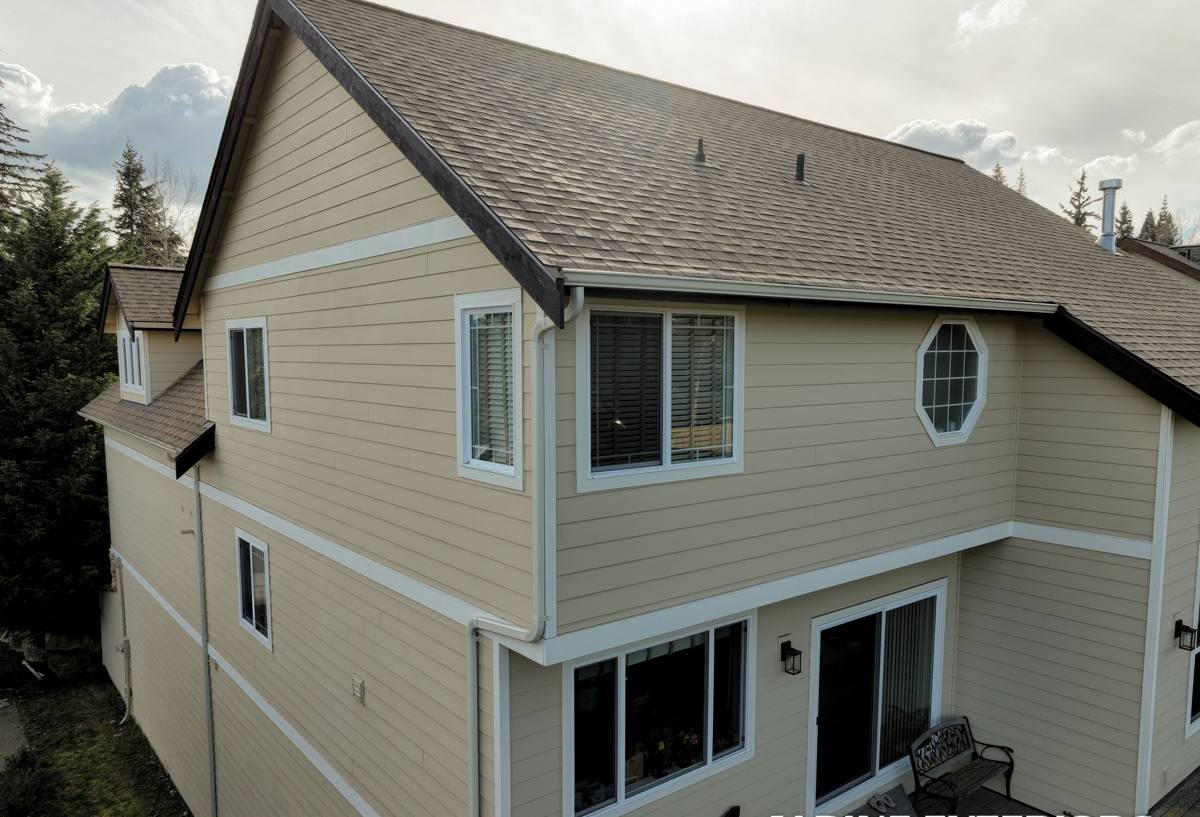
What Salt Air, Driving Rain, and Moss Actually Do to a Roof
Salt Air and Corrosion
Metal components — nails, drip edge, step flashing, vent boots — are the first thing to show wear. Even galvanized fasteners can start rusting at the head years before the shingle itself fails, and once a nail head corrodes and lifts, that's a direct path for water into the roof deck.
Driving Rain and Wind-Driven Water
Straight-down rain is easy for any roof to shed. Rain pushed sideways by wind off open ground or water is a different problem — it gets up under shingle tabs, around chimney and dormer flashing, and along valleys, especially if the roof was cut corners on sealant or underlayment coverage.
Moss and Shade
Moss holds water directly against the shingle surface for extended periods. Over time, this softens and degrades the asphalt mat, lifts granules, and works its way under tab edges. Moss growing in a valley or around a chimney can back water up under shingles even on a well-pitched roof.
What a Correct Asphalt Shingle Install Involves in This Climate
A shingle roof is a system, not a single product. Every layer matters, and in Kendall's climate a few of them matter more than the shingle itself.
- Ice-and-water shield at eaves, valleys, and penetrations — a self-adhering membrane that backs up the underlayment where water is most likely to pool or back up.
- Synthetic underlayment across the full deck — a continuous water-resistant layer beneath the shingles, more durable and consistent than older felt products in extended wet conditions.
- Properly lapped and sealed flashing — step flashing at walls and dormers, continuous flashing at chimneys, and drip edge at eaves and rakes, all installed to shed water outward rather than relying on caulk to make up for a bad lap.
- Correct nailing pattern and fastener count — nails placed in the manufacturer's specified nailing zone, at the specified count per shingle, driven flush (not overdriven, which cuts into the mat, or underdriven, which leaves the shingle able to lift in wind).
- Balanced intake and exhaust ventilation — soffit vents pulling air in, ridge or roof vents letting it out, so the attic doesn't trap moisture that condenses and rots the deck from underneath.
Skip or shortcut any one of these and the shingle itself becomes almost irrelevant — water will find the weak point regardless of what's printed on the shingle wrapper.
Choosing a Shingle That's Actually Suited to Kendall
Not every asphalt shingle line handles this climate the same way. A few things worth knowing before picking a product:
Algae-Resistant Granules
Most quality shingle lines now offer a granule treatment that resists the dark algae staining common in the Pacific Northwest. This isn't a moss cure, but it slows the surface staining that makes a roof look prematurely aged.
Wind Rating
Given the driving rain and wind exposure in this area, we favor shingle lines with a wind warranty that matches the exposure of the specific roof — a wide-open roof facing prevailing weather deserves a higher wind rating than a tightly sheltered one.
Architectural vs. Three-Tab
Architectural (dimensional) shingles are heavier, thicker, and generally shed wind-driven water better than older three-tab styles, which is a meaningful advantage here rather than just a cosmetic upgrade.
| Factor | Why It Matters in Kendall |
|---|---|
| Algae-resistant granules | Slows staining from prolonged damp, shaded conditions |
| Wind rating | Handles wind-driven rain without tab lift |
| Shingle weight/thickness | Better resistance to moss lift and granule loss over time |
| Warranty structure | Confirms what's covered if premature wear shows up early |
| Color/reflectivity | Darker colors show moss and staining faster; lighter tones show it less but aren't a fix |
Our Process for a Kendall Roof Replacement
- On-site inspection. We look at the existing roof from the deck up — sheathing condition, ventilation setup, flashing details, moss coverage, and any signs of past leaks — before quoting anything.
- Straight-talk estimate. You get a clear breakdown of what's being replaced, what underlayment and flashing package is included, and why, not just a single bottom-line number.
- Tear-off and deck check. Old roofing comes off down to the deck, and we check the sheathing for soft spots or rot before anything new goes down — this is where climate damage that was hidden under the old shingles usually shows up.
- Underlayment, flashing, and shingle install. Done in the order and to the fastening specs described above, not shortcut for speed.
- Ventilation check. We confirm intake and exhaust venting is balanced for the attic space, adding or correcting vents where the existing setup falls short.
- Cleanup and walk-through. Site cleared of debris and nails, and a walk-through so you know exactly what was done and what to expect going forward.
Living With an Asphalt Shingle Roof Through Moss Season
A correctly installed roof still needs basic upkeep in this climate — the goal is catching small issues before moss season and wind-driven rain turn them into deck damage.
- Keep overhanging branches trimmed back so shaded, damp areas of the roof get more light and air movement.
- Have moss growth removed by a professional rather than pressure-washed, which can strip granules and shorten shingle life.
- Check and clear gutters heading into fall so water isn't backing up under the lower courses of shingle.
- After major wind events, do a visual check (from the ground, not the roof) for lifted or missing shingles.
- Schedule a roof check every couple of years, especially once a roof passes the ten-year mark, to catch flashing wear or granule loss early.
Cost Factors for a Kendall Roof Replacement
Every roof is different, but the honest range depends on a handful of factors rather than square footage alone.
| Factor | How It Affects Cost |
|---|---|
| Roof pitch and complexity | Steeper roofs, multiple valleys, and dormers take more labor and material |
| Deck condition | Rotted sheathing found during tear-off adds repair cost not visible in advance |
| Shingle tier chosen | Architectural shingles cost more upfront than three-tab but hold up better here |
| Ventilation upgrades | Adding or correcting intake/exhaust venting is a smaller add-on during a full tear-off |
| Access and site conditions | Tree cover, steep lots, or tight access can add setup and disposal cost |
We'd rather walk a roof and give you real numbers than throw out a broad estimate that doesn't match the actual condition of the deck and flashing.
Why It Matters That We Already Work in Kendall
A crew that regularly works roofs in and around Kendall and greater Ferndale already knows the local weather patterns, which slopes tend to hold moss, and which flashing details tend to fail first in this specific mix of salt air and driving rain. That's not a substitute for a careful inspection of your specific roof, but it does mean fewer surprises and a crew that isn't guessing at what this climate does to a roof over ten or fifteen years. We're a phone call away for a follow-up if something comes up after the job is done, not a crew that drove in from out of the area for one project.
If you're dealing with moss buildup, a leak that's shown up after a windy rainstorm, or a roof that's simply due, we're glad to take a look. Reach out for a free, no-pressure estimate — we'll walk the roof, tell you what we actually see, and give you real numbers before anything gets scheduled.