 Ferndale
 Why Cordata Homes Need a Different Window Approach
Cordata sits close enough to the water and far enough into the Whatcom County weather pattern that its homes take a specific kind of beating: salt-laden air drifting in off the Strait, driving rain that comes in sideways more often than straight down, and a moss season that can stretch from October well into May. None of that is unique to Cordata alone, but it's a real, year-round load on window assemblies that homeowners in drier climates never have to think about. Windows here aren't just a comfort upgrade — they're a weather barrier that either does its job or slowly lets the house pay for it in heating bills, condensation, and rot at the sill.
When we talk about "energy-efficient windows" for a Cordata home, we mean something more specific than a sticker on the glass. We mean a window and installation combination that keeps water out under wind-driven rain, resists the corrosion that salt air causes in hardware and frames, and still performs its insulating job through a long, damp, low-light winter. Get any one of those wrong and the energy savings on paper don't show up in the actual utility bill.
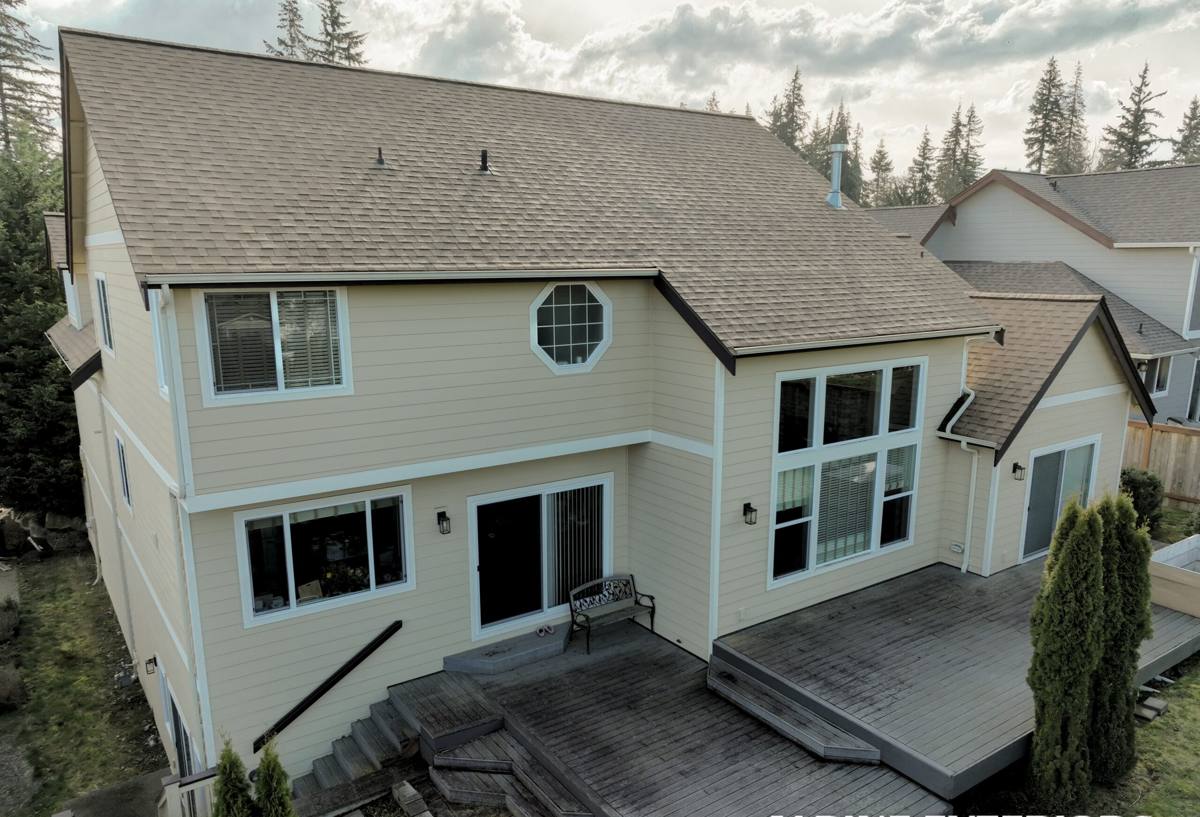
What "Energy-Efficient" Actually Means Here
It's Not Just the Glass
Most homeowners hear "energy-efficient windows" and think about double-pane glass and Low-E coatings. Those matter, but in this climate the frame, the seal, and the installation flashing matter just as much — sometimes more. A window with excellent glass performance but a poorly flashed installation will still let cold, damp air infiltrate around the frame, and that infiltration is often the bigger source of heat loss and discomfort than the glass itself.
The Whole-Assembly Factors That Matter in Whatcom County
- U-factor: how well the window resists heat transfer — lower is better for our heating-dominated climate.
- Solar heat gain coefficient (SHGC): less critical here than in sunnier regions, but still worth getting right so you're not blocking what little winter sun we get.
- Air leakage rating: arguably the most important number for a house that sees frequent wind-driven rain — a low air leakage rating means fewer drafts and less moisture intrusion at the frame.
- Frame material and corrosion resistance: hardware and frame components need to hold up to salt-influenced air without pitting or seizing over the years.
- Water-managed flashing detail: the installation method that determines whether driving rain sheds away from the wall assembly or finds its way behind the siding.
The Local Climate Factors, One at a Time
Salt Air
Proximity to the water means airborne salt settles on and around exterior components over time. On windows, this shows up as accelerated corrosion on hardware, hinges, and fasteners, and it can degrade certain finishes faster than a manufacturer's inland warranty testing accounts for. We factor this into what hardware and finish combinations we recommend for Cordata jobs specifically.
Driving Rain
Rain that comes in at an angle — which is common with the wind patterns through this part of Whatcom County — tests a window's water-management details in ways that vertical rain never will. This is where flashing, sill pans, and proper sealant placement do the real work. A window can have a great energy rating and still fail here if it isn't installed to shed wind-driven water.
Moss Season
A long, wet moss season affects window performance indirectly: moss and organic buildup around sills, tracks, and nearby siding hold moisture against the window assembly for extended periods. That sustained dampness is exactly the condition that finds weak points in caulking, flashing, or frame seals and turns a small gap into a slow, hidden leak.
What a Correct Installation Involves
Replacing a window is not just pulling the old unit and setting a new one in the same hole. In a climate like ours, the installation sequence is where most long-term problems are either prevented or built in. Our process on Cordata homes includes:
- Removing the old window and inspecting the rough opening for existing rot, moisture staining, or compromised framing before anything new goes in.
- Repairing or replacing any damaged sheathing or framing found during that inspection — never installing a new window over a hidden problem.
- Installing a sloped sill pan so any water that does get past the window has somewhere to go besides your wall cavity.
- Applying flashing tape and house wrap integration in the correct shingle-lap order so water sheds outward and downward, not into the wall.
- Setting the window level, plumb, and square, then insulating the gap between frame and rough opening without over-compressing it.
- Sealing the exterior with the appropriate sealant for the siding material, and finishing interior trim once the assembly is confirmed weathertight.
Skip or rush any of those steps and you can end up with a window that has an excellent factory energy rating but performs poorly on the actual house — drafty, prone to condensation, or slowly letting moisture into the wall behind the trim.
Signs Your Current Windows Are Underperforming
- Visible condensation or fogging between the panes (a sign the seal has failed and the insulating gas has escaped).
- Drafts you can feel near the frame on a windy day, even with the window fully latched.
- Soft or discolored trim or sill wood, especially on walls that face prevailing wind and rain.
- Difficulty opening, closing, or latching — often a sign the frame has swollen, warped, or the hardware has corroded.
- Noticeably colder rooms in winter compared to the rest of the house.
- Moss or persistent green growth building up on or around the sill and nearby trim.
Comparing Common Window Options for This Climate
| Factor | Vinyl | Fiberglass | Wood/Clad Wood |
|---|---|---|---|
| Upfront cost | Lowest | Mid-range | Highest |
| Moisture resistance | Good — won't rot | Very good — dimensionally stable | Requires diligent maintenance to prevent rot |
| Salt air / corrosion behavior | Frame unaffected; watch hardware finish | Frame unaffected; watch hardware finish | Clad exterior helps; exposed wood needs upkeep |
| Long-term maintenance | Low | Low | Higher — refinishing, sealing |
| Insulating performance | Good | Very good | Good to very good |
There's no single "right" answer for every home — it depends on your budget, the look you want, and how much ongoing maintenance you're willing to take on. We'll walk through the honest trade-offs for your specific house rather than pushing one product line for every job.
Why We Don't Cut Corners on Certain Products
Some lower-cost window systems on the market rely on sealant alone for weatherproofing rather than a full flashing and drainage detail, or use hardware finishes that aren't rated for coastal-influenced air. We don't install those as our standard for Cordata homes — not because a given brand is inherently bad, but because our professional standard is to match the product and installation method to what this specific climate actually demands over a 20-plus-year service life. A window that saves money today but needs to be pulled and redone in eight years because of frame corrosion or hidden water damage isn't actually the cheaper option.
Our Process, Start to Finish
- Free on-site assessment: we look at your current windows, note any signs of moisture or air infiltration, and measure openings.
- Honest product recommendation: based on your budget, the home's exposure to wind and rain, and your maintenance preferences.
- Written estimate: clear line items, no surprise add-ons once work begins.
- Scheduled installation: timed around weather where possible, since proper flashing work goes best in dry conditions.
- Post-install walkthrough: we check operation, sealing, and trim finish with you before calling the job done.
Why a Crew That Already Works Cordata Matters
A contractor who works this specific area regularly already knows how the local wind and rain patterns tend to hit different sides of a house, what kind of moss and moisture buildup is normal to see on window sills here versus a red flag, and which flashing and hardware choices have held up over time in this exact air quality and rainfall pattern. That local pattern recognition is hard to replicate on a one-off job from a crew that doesn't normally work Whatcom County homes. It also means faster response if something needs a warranty check or adjustment after the install, since we're not driving in from out of the area.
Get a Straight Answer for Your Home
Every house in Cordata sits a little differently relative to wind and rain exposure, and your windows' condition depends on age, orientation, and past maintenance as much as anything else. If you'd like a straightforward look at whether your current windows are doing their job — and what honest options exist if they're not — request a free, no-pressure estimate using the form below.