 Ferndale
 The Climate Cordata Homes Have to Stand Up To
Cordata sits in the corridor between Bellingham and Ferndale, and like the rest of Whatcom County, it gets the full Pacific Northwest weather package: marine air moving in off Bellingham Bay and the Strait of Georgia, months of driving, wind-pushed rain from fall through spring, and long stretches of gray, humid weather that keep exterior surfaces wet far longer than they'd stay wet in a drier climate. That combination is hard on siding — not dramatically, in one storm, but slowly, over years, as moisture finds every weak seam, every under-caulked joint, and every spot where a product wasn't built for this much sustained dampness.
The other piece of it is moss and algae. On north-facing walls, under eaves, and in shaded side yards — the parts of a Cordata home that never get much direct sun — anything that holds moisture becomes a growing surface. On real wood, primed spruce, or engineered wood-based siding, that moisture works its way behind paint and into seams and fastener holes. On siding that isn't installed correctly, that's the start of soft spots, delamination, and paint failure well before the material was supposed to wear out. Correct installation and the right base material matter more here than they do in a lot of the country, because this climate doesn't give a marginal installation any room for error.
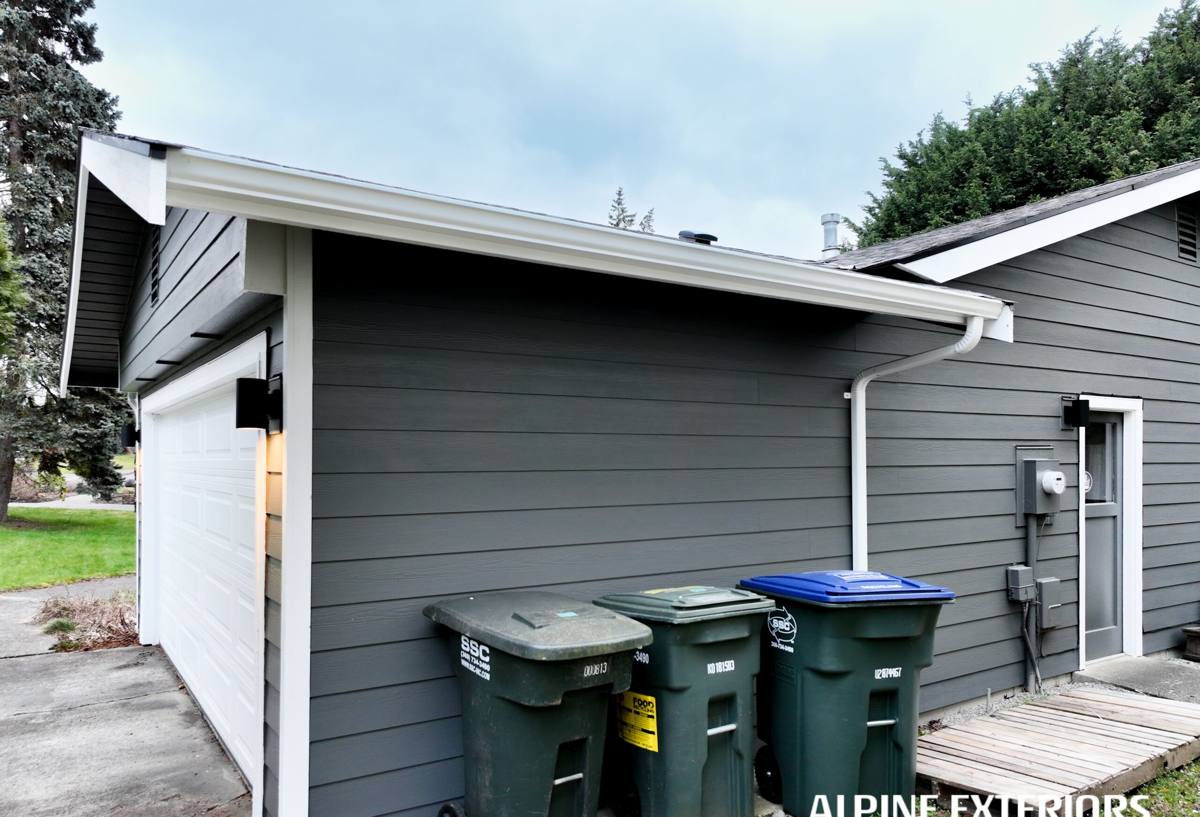
What Correct Siding Installation Actually Involves
Siding installation is often talked about like it's mostly a cosmetic job — pick a color, nail up some boards. In a climate like this one, it's really a water-management job with a finish on top. Getting it right means several things happening in the right order, none of which are visible once the job is done.
Weather-Resistive Barrier and Flashing
Every wall needs a continuous weather-resistive barrier behind the siding, and every penetration — windows, doors, hose bibs, vents, electrical — needs flashing that's integrated into that barrier so water sheds outward and down, never inward. This is the layer that does the real work of keeping a wall dry; the siding itself is the second line of defense, not the first.
Fastening and Clearances
Fiber cement siding has manufacturer-specified nailing patterns, fastener types, and minimum clearances from grade, roofing, decks, and patios. Those clearances exist specifically to stop splashback and standing water from wicking into the bottom edge of the siding — a common failure point on homes where the ground level was built up or landscaping was added after the siding went in.
Joints, Trim, and Caulking
Butt joints, corners, and trim transitions are where most siding problems actually start. Factory-mitered corners, properly lapped joints, and the right sealant applied in the right places keep water from getting behind the siding at its weakest points. Rushed trim work is one of the most common things we find when we're called out to look at a failing installation done by someone else.
Why We Install Only James Hardie Fiber Cement
We standardized on James Hardie fiber cement siding and don't install anything else — no vinyl, no LP SmartSide, no Cemplank or Allura, no primed spruce or cedar. That's a deliberate choice, not a limitation in what we're capable of installing. Fiber cement is non-combustible, dimensionally stable in wet-dry cycling, and holds a factory-applied finish far better than field-painted materials do over the long run in a climate like Whatcom County's.
What We Don't Install, and Why
Vinyl siding is inexpensive and low-maintenance, but it expands and contracts more than fiber cement, can become brittle and crack in a hard cold snap, and relies on overlapping panels rather than a sealed joint system — fine in a lot of climates, less ideal where wind-driven rain is a regular event. LP SmartSide and similar engineered-wood products perform well when installed and maintained exactly to spec, but they're wood-based, and wood-based siding depends on paint and caulking staying intact to keep moisture out; in a climate this wet, that margin for error is thinner than we're willing to build a reputation on. Primed spruce and cedar are real wood, with real wood's maintenance cycle — repainting or restaining every few years — and real wood's vulnerability to the moisture and moss pressure this area puts on an exterior wall. Other fiber cement brands like Cemplank and Allura are reasonable products; we simply chose to build our crews' expertise, our warranty relationships, and our installation specs around one manufacturer rather than splitting that knowledge across several.
Matching the Right Hardie Product to a Cordata Home
ColorPlus Factory Finish
Most of the siding we install carries Hardie's ColorPlus finish — baked on in a controlled factory environment rather than sprayed or brushed on site. That matters in a wet climate because field-applied paint is only as good as the weather conditions on the day it's applied, and a factory finish removes that variable entirely.
HZ5 Climate-Engineered Formulation
James Hardie manufactures different formulations for different climate zones. The HZ5 line is engineered for regions with more moisture and freeze-thaw cycling, which fits Whatcom County's weather pattern better than a formulation built for a drier or more consistently warm climate. Using the product line actually engineered for this region — rather than whatever's cheapest to ship — is part of what "installed correctly" means here.
Siding Options and How They Hold Up in This Climate
| Material | Moisture & Moss Resistance | Maintenance | Typical Lifespan |
|---|---|---|---|
| James Hardie fiber cement | Strong — non-combustible, dimensionally stable, factory finish | Occasional wash, no repainting cycle | 30+ years with correct installation |
| Vinyl | Moderate — panels shed water but rely on overlap, not sealed joints | Low, but panels can crack or fade | 15-25 years |
| LP SmartSide / engineered wood | Good if maintained perfectly; vulnerable if paint or caulk fails | Regular inspection of joints and finish | 20-25 years with diligent upkeep |
| Cedar / primed spruce | Weakest in sustained wet climates without upkeep | Repainting or staining every few years | Varies widely with maintenance |
Our Installation Process, Start to Finish
- On-site evaluation of the existing siding, sheathing, and trouble spots specific to your home's exposure and shading.
- Tear-off of the old siding and inspection of the sheathing underneath for rot or hidden moisture damage.
- Repair of any damaged sheathing or framing before anything new goes up — covering a problem never fixes it.
- Installation of a continuous weather-resistive barrier and properly integrated flashing at every window, door, and penetration.
- Installation of James Hardie siding to manufacturer nailing patterns and clearance specifications.
- Trim, corner, and joint detailing, including sealant appropriate for a marine climate.
- Final walkthrough so you understand what was done and what, if anything, needs periodic attention.
What Affects the Cost of Your Siding Project
| Factor | Why It Matters |
|---|---|
| Home size and wall complexity | More corners, gables, and dormers mean more cutting, trim work, and labor time |
| Tear-off vs. installing over existing siding | Tear-off costs more upfront but lets us inspect and fix sheathing issues you can't see |
| Sheathing or rot repair needed | Can't be priced accurately until the old siding is off and the wall is exposed |
| Trim and accent detailing | Board-and-batten accents, shakes, or custom trim take more time than plain lap siding |
| Access and stories | Two- and three-story sections require more scaffolding and safety setup |
| Color and finish selection | Standard ColorPlus colors are typically less costly than custom-matched finishes |
Signs Your Cordata-Area Home May Need New Siding
- Visible moss, algae, or dark staining that keeps coming back after cleaning
- Paint that's peeling, bubbling, or chalking heavily
- Siding that feels soft or spongy when pressed, especially near the bottom edge
- Warping, buckling, or panels that have visibly pulled away from the wall
- Rising heating bills that aren't explained by anything else
- Gaps opening up at trim, corners, or window and door edges
- Siding that's original to a home built more than 20-25 years ago and has never been replaced
Why Hiring a Crew That Already Works in Cordata Matters
A lot of what determines whether siding lasts here isn't the brand on the box — it's whether the crew installing it understands this specific climate and has done it enough times to get every detail right without cutting corners. A crew that works Cordata and the surrounding Ferndale and Whatcom County area regularly knows how these homes were typically built, what tends to go wrong first in this weather, and how to detail flashing and joints for a place that sees this much sustained moisture. That local repetition is what turns a manufacturer's installation spec into a habit rather than a checklist read for the first time on your roof.
It also means someone who's still local and reachable if a warranty question comes up years down the road, rather than a crew that passed through once and moved on. If your Cordata-area home is due for new siding, we're glad to take a look and give you a straightforward, no-pressure estimate using the free form below.