 Ferndale
 Why Siding Installation in Fairhaven Is Different
Fairhaven sits close enough to the water that homes here take a different kind of weathering than siding a few miles inland gets. Salt-laden air, wind-driven rain that hits walls at an angle instead of falling straight down, and a moss season that can stretch across most of the year all work on exterior walls at the same time. A siding installation done to a generic standard — the kind that would hold up fine in a drier, calmer part of the state — often starts showing problems within a few years out here: streaking, soft trim, moss creeping up from the ground line, paint or finish failing at the seams first. None of that is really about the siding material failing on its own. It's about water finding a way in, staying in, and doing damage nobody sees until the exterior finish already looks tired.
We run crews in Ferndale and the surrounding Whatcom County communities, including Fairhaven, so this isn't abstract for us. It's the reason we standardized on one product line rather than offering whatever's cheapest that week, and it's the reason our installation details — flashing, gaps, fastening, drainage — are built around this specific climate rather than a manufacturer's minimum spec sheet.
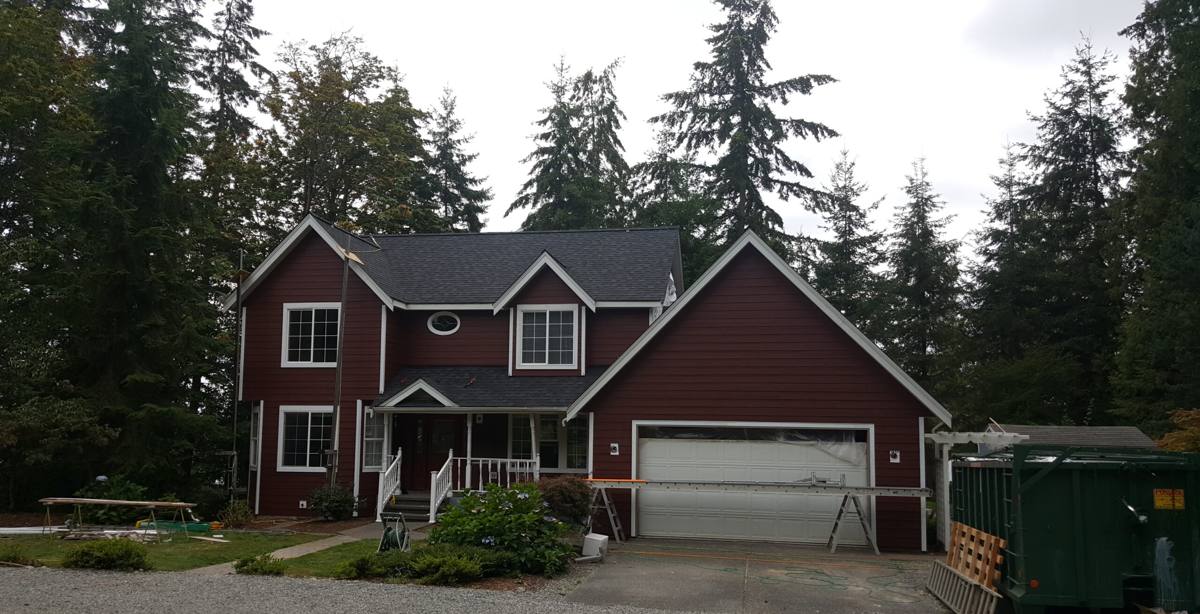
What Salt Air, Driving Rain, and Moss Actually Do to a Wall
Salt Air
Airborne salt is corrosive to metal and slowly abrasive to finishes. Over years, it accelerates the breakdown of paint films, attacks unprotected fasteners and flashing, and speeds up wear on anything not built to resist it. It's not dramatic — nobody's siding falls off because of salt air alone — but it shortens the useful life of materials that weren't engineered with coastal exposure in mind, and it's part of why fastener choice and flashing material matter more here than they would fifty miles inland.
Driving Rain
Rain that comes in sideways doesn't behave like rain falling straight down. It gets pushed up under laps, into seams, and behind trim that would stay dry in a calmer climate. This is a water-management problem more than a "waterproof siding" problem — no siding product is actually waterproof, and any installer who tells you otherwise is skipping the part of the job that keeps water out. What keeps a wall dry in driving rain is the system behind the siding: proper overlaps, correctly lapped flashing, a drainage gap where the assembly calls for one, and sealed penetrations everywhere something passes through the wall.
Moss and Sustained Moisture
Whatcom County's damp season runs long, and shaded, north-facing, or tree-covered walls stay wet for extended stretches. Moss and algae take hold anywhere moisture lingers against a surface, and once established they hold even more water against the wall, which compounds the problem. Siding material that absorbs moisture rather than shedding it gives moss more to grab onto and keeps the wall assembly wetter for longer.
Why We Install James Hardie Fiber Cement Here — and Nothing Else
We install James Hardie fiber cement siding exclusively. We don't offer vinyl, LP SmartSide, Cemplank, Allura, or unfinished wood siding like primed spruce or cedar, and that's a deliberate professional standard, not a lack of options.
Fiber cement is a cement, sand, and cellulose fiber composite. It doesn't absorb water the way wood-based products do, and it's non-combustible, which matters on its own merits and doesn't get compromised by coastal humidity the way some other performance claims can. James Hardie's ColorPlus factory finish is baked on under controlled conditions rather than field-applied, which gives it more consistent adhesion and UV resistance than a job-site paint job — a real advantage in a climate that's hard on finishes. Hardie also engineers climate-specific product lines (its HZ5 and HZ10 systems) for different moisture and temperature zones, which is directly relevant in a region that gets sustained damp weather rather than dry heat.
We're not going to tell you every other product is unusable — vinyl, engineered wood, and other fiber cement brands all have homes where they make sense. What we will say is that after years of installing and repairing siding in this specific climate, we settled on one product system we trust to perform against salt air, driving rain, and long wet seasons, backed by a manufacturer warranty that's meaningful and transferable if you sell the house. That's the whole reason we stopped installing anything else.
What a Correct Installation Involves in This Climate
The siding board itself is only part of the job. Most siding failures we get called to inspect — regardless of brand — trace back to installation details, not the material. In a driving-rain, salt-air environment, these details matter more than usual:
Water Management Behind the Siding
A weather-resistive barrier goes on the sheathing first, lapped correctly from the bottom up so water sheds downward and outward. Where the assembly calls for a drainage gap, that gap has to actually exist and stay open, not get crushed flat by over-driven fasteners.
Flashing at Every Transition
Windows, doors, deck ledgers, roof-to-wall intersections, and any other place something interrupts the wall plane need flashing that's lapped correctly — upper pieces over lower pieces, every time — so water is directed out and away rather than behind the siding.
Gaps, Caulking, and Fastening
James Hardie specifies clearances at trim, corners, and butt joints, and specifies which of those joints should be caulked versus left as a factory-engineered gap. Skipping or guessing at these details is one of the most common ways an otherwise good installation starts leaking. Fasteners need to be corrosion-resistant and set to the manufacturer's depth — overdriven nails crack the board's edge and give water a place to start.
Ground Clearance and Moss Prevention
Siding installed too close to grade, a deck, or a paved surface stays wetter longer and gives moss a head start. Manufacturer-specified clearance at the bottom edge isn't a cosmetic guideline — it's a moisture-control measure that matters more in a climate like this one.
Our Installation Process
- Walk-through and assessment — we look at existing siding, trim, flashing, and any signs of past moisture intrusion before quoting anything, since the condition underneath drives the real scope of work.
- Tear-off and sheathing check — old siding comes off and we inspect the sheathing underneath for rot or damage that needs to be addressed before anything new goes up.
- Weather-resistive barrier and flashing — installed and lapped correctly at every penetration, window, and transition, before a single piece of siding goes on.
- James Hardie siding installation — installed to manufacturer clearances, fastening specs, and joint treatment, with attention to the drainage plane behind the boards.
- Trim, caulking, and finish detailing — the places most installations cut corners, and the places that determine how the wall performs in driving rain five years from now.
- Final walk-through — we go over the finished work with you before calling the job done.
Cost Factors for a Fairhaven Siding Installation
Every home is different, so we won't put a fake number on a page — but these are the factors that actually move the price on a siding installation in this area:
| Factor | Why It Matters Here |
|---|---|
| Existing siding removal | Tear-off complexity and any sheathing repair from prior moisture damage adds labor before new siding can start |
| Home size and wall complexity | More corners, dormers, and trim transitions mean more flashing and detail work, not just more square footage |
| Siding profile and finish | James Hardie offers different plank widths, textures, and ColorPlus finish options at different price points |
| Water damage discovered during tear-off | Rot or compromised sheathing found once old siding comes off has to be repaired before installation, common on older coastal-exposed walls |
| Access and site conditions | Grade, landscaping, and proximity to neighboring structures affect staging and labor time |
Living With the Climate: Maintenance That Actually Matters
Correct installation does most of the work, but a little ongoing attention keeps a Fairhaven-area siding job looking and performing like it should for the long haul:
- Rinse siding annually, especially on shaded or north-facing walls where moss and algae take hold first
- Keep gutters clear so water isn't overflowing and running down the wall face
- Trim back vegetation and tree cover that keeps a wall shaded and damp longer than it needs to be
- Check caulking at trim and window transitions every couple of years and have any cracked or missing sealant redone
- Watch the bottom few feet of siding near grade, decks, and walkways — that's where moisture and moss problems typically start first
- Have a professional look at any soft spots, staining, or visible gaps rather than waiting for them to spread
Why Hiring a Crew That Already Works Fairhaven Matters
Siding installation isn't a one-size-fits-all trade. A crew that mostly works drier, inland areas can do technically fine work and still get the water-management details wrong for a coastal-influenced climate, because they're not used to designing around driving rain and sustained dampness as the default condition rather than the exception. We work in Ferndale and the surrounding Whatcom County area regularly, which means the flashing details, clearances, and drainage decisions on a Fairhaven job aren't guesswork — they're the same details we handle on nearby homes facing the same salt air, the same rain patterns, and the same moss season, year after year.
That local, repeated experience is also what lets us catch problems during tear-off before they turn into a bigger repair — knowing what typically shows up under old siding in this specific area, versus what would be unusual, comes from having done the work here before.
Get a Straightforward Estimate
If you're weighing a siding installation for a home in or near Fairhaven, we're happy to take a look and walk you through what your home actually needs — no pressure, no inflated scope. Use the form below to request a free estimate and we'll go from there.