 Ferndale
 Storm Damage Roof Repair Built for the Semiahmoo Coastline
Homes along the Semiahmoo area near Ferndale sit right where Whatcom County's weather hits hardest: open water exposure, wind funneling off the Strait, and a marine layer that keeps roofs damp for weeks at a stretch. A roof here takes a different kind of beating than one ten miles inland, and after a windstorm or a hard blow off the water, the damage isn't always obvious from the driveway. We repair storm-damaged roofs for homeowners in this stretch of the county, and we look for the specific failure patterns that show up on waterfront and near-waterfront homes — not just the generic checklist.
This page covers what storm damage actually looks like on a Semiahmoo-area roof, what a correct repair involves, and how we handle the job from first call to final inspection.
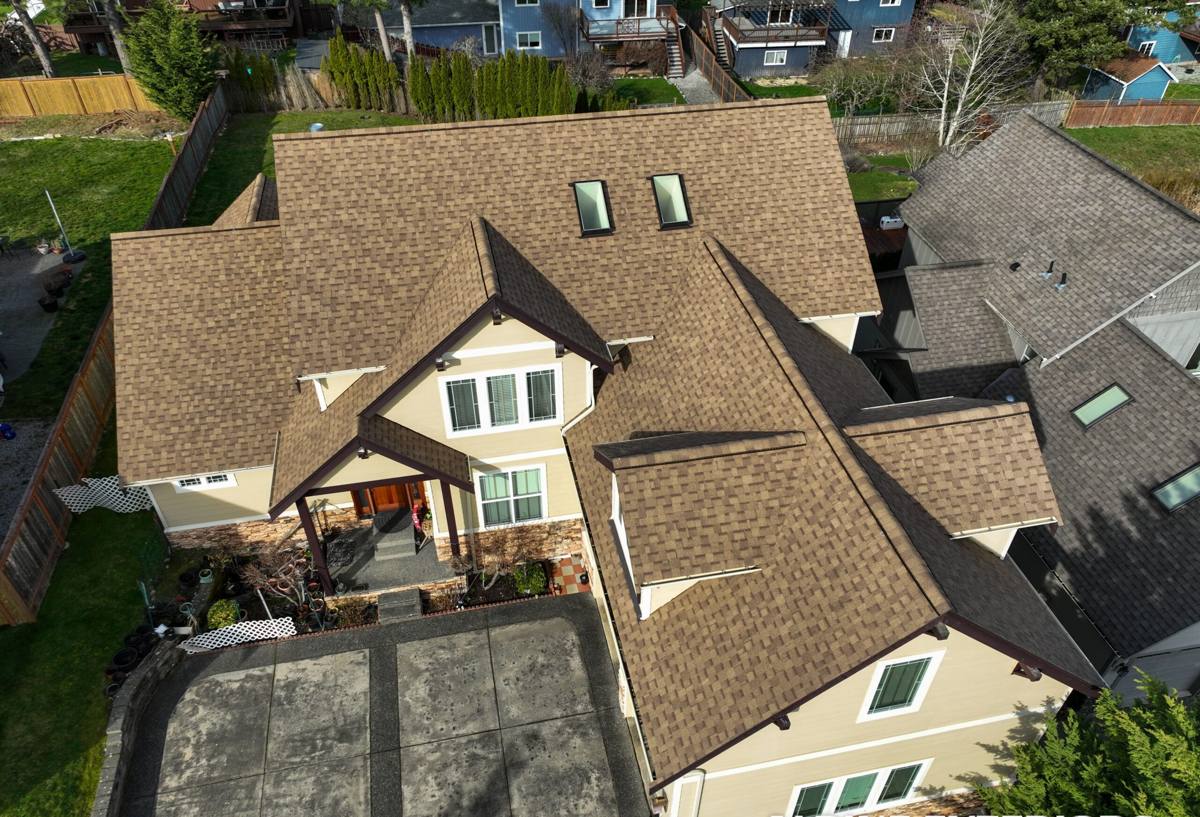
Why This Location Is Hard on Roofs
Salt Air and Metal Fatigue
Salt-laden air off the bay accelerates corrosion on anything metal — nail heads, flashing, drip edge, and the fasteners holding shingles or panels down. A roof that's fine on paper can have flashing that's thinned out or fasteners that have backed out or corroded to the point they no longer hold. Storm winds find those weak points first. When we inspect after a storm, we're not just looking for missing shingles — we're checking whether the metal components underneath are still doing their job.
Driving Rain and Wind-Driven Water
Wind off open water doesn't just push rain sideways for a few minutes — it can drive it under laps, seams, and flashing that would shed water fine in a normal downpour. This is how storm damage turns into a leak weeks later instead of immediately: water gets pushed somewhere it shouldn't be, and it takes time to show up as a stain on the ceiling. A repair that only addresses the visible tear or lifted shingle without checking the underlayment and flashing nearby is leaving that risk in place.
A Long Moss Season
Western Whatcom County stays damp enough, long enough, that moss and moisture-holding debris are a near year-round issue. Moss doesn't cause storm damage directly, but it holds water against the roof surface and works its way under shingle tabs, and a storm-damaged section that already has moss growth nearby is more likely to have compromised decking underneath. Part of a proper storm repair here is checking the surrounding roof condition, not just the damaged spot.
What Storm Damage Actually Looks Like
Homeowners often assume storm damage means a dramatic hole or a tree limb through the roof. Most of what we find after a windstorm is quieter than that:
- Shingles or panels lifted, creased, or torn at the edges and corners — the areas wind grabs first
- Missing granules or bare patches where wind-blown debris scoured the surface
- Flashing pulled loose or bent around chimneys, vents, and roof-to-wall transitions
- Nail heads backed out or popped, sometimes visible as small bumps under the roofing material
- Debris — branches, needles, moss mats — jammed into valleys, blocking water flow
- Gutter and fascia damage from wind or falling debris, which affects how water leaves the roof
- Soft spots or sagging in the decking, usually a sign water has already gotten in
- Interior water stains on ceilings or in the attic, which may show up days after the storm itself
If you notice any of these after a storm, the roof is worth a look even if nothing seems urgent. Small storm damage left alone for a wet season tends to become a much bigger repair.
Our Storm Damage Repair Process
1. Assessment
We inspect the full roof, not just the area you're worried about. Wind damage is often worse on the side of the roof that took the brunt of the storm, and we check flashing, valleys, and penetrations along with the field of the roof itself.
2. Emergency Protection, If Needed
If there's an active leak or exposed decking, we get it covered and protected before anything else. Water intrusion gets worse every day it's left open, especially with more rain in the forecast, which is the normal state of things here for much of the year.
3. Documentation
We document the damage with clear photos and a written scope, which is what most insurance carriers want to see for a storm claim. We're not an insurance adjuster and we don't promise coverage outcomes, but we give you the documentation to make your case accurately.
4. The Repair Itself
We match materials as closely as possible to what's already on the roof, replace and re-flash the affected area properly rather than just patching over it, and check that the decking underneath is sound before closing it back up. If we find damage beyond the immediate storm-affected area — corroded flashing, soft decking, moss-related deterioration — we tell you before we proceed, not after.
5. Final Check
Once the repair is done, we walk the area with you, confirm drainage and water flow are correct, and make sure the repair blends in rather than standing out as an obvious patch.
Repair vs. Replacement: How We Decide
Not every storm-damaged roof needs full replacement, and not every roof can be reasonably patched. The right call depends on a few factors specific to the roof, not a fixed rule.
| Factor | Favors Repair | Favors Replacement |
|---|---|---|
| Extent of damage | Isolated to one section or slope | Spread across multiple areas or the whole roof |
| Roof age | Well within expected service life | Already near the end of its expected life |
| Decking condition | Solid, no rot or soft spots | Soft, delaminated, or water-stained in multiple spots |
| Material availability | Matching material still available | Discontinued or badly weathered mismatch |
| History of prior damage | First storm event affecting this roof | Repeated storm or moss damage over the years |
We'll always give you our honest read on which side of that table your roof falls on, with the reasoning explained — not just a recommendation.
Insurance Claims: What to Know Before You Call
Most homeowner policies cover sudden storm damage, but the process moves faster and goes smoother when the documentation is solid from the start. A few things worth doing before you file:
- Take your own photos of visible damage and any interior water intrusion as soon as it's safe to do so
- Avoid climbing on the roof yourself — storm-damaged roofing can be more unstable than it looks
- Get a written inspection and scope from a contractor before the adjuster visit, so you have your own record to compare against theirs
- Keep receipts for any emergency tarping or protective work — that's usually reimbursable
- Ask questions if the adjuster's scope seems to miss damage you can see — a second opinion from your contractor is reasonable
We're glad to walk a claim adjuster through what we found on the roof and explain our scope in plain terms. We don't handle the claim for you, but we make sure the roof side of it is accurate.
Preventing the Next Storm From Doing More Damage
Once a storm-damaged roof is repaired, a few maintenance habits go a long way toward keeping the next windstorm or wet season from causing a repeat problem: clearing moss and debris from valleys and gutters before the wet season sets in, checking flashing around chimneys and vents annually given how quickly salt air can degrade metal here, and keeping an eye on the attic after any major storm even if nothing looks wrong from outside. A roof that's already been maintained is far less likely to sustain serious storm damage in the first place.
Why Local Storm Experience Matters
A crew that mostly works inland doesn't see the same failure patterns we see on Semiahmoo-area roofs — the salt-accelerated corrosion, the wind-driven water intrusion, the moss buildup that never fully dries out. That local pattern recognition is what separates a repair that actually holds up through the next storm season from one that looks fine until the next hard blow off the water. We work this part of Whatcom County regularly, and we bring that context to every storm damage call we take here.
If your roof took damage in a recent storm, or you're not sure whether what you're seeing needs attention, we're happy to take a look. Reach out for a free, no-pressure estimate using the form below — no obligation, just a straight answer on what your roof needs.