 Ferndale
 Why Semiahmoo Roofs Wear Differently Than Roofs Inland
Semiahmoo sits close enough to the water that salt-laden air, wind-driven rain, and a moss season that can run eight months or longer all act on a roof at the same time. That combination is harder on roofing materials than most inland Whatcom County locations ever see. Salt air accelerates corrosion on exposed metal fasteners and flashing. Driving rain off the water finds gaps that a calmer inland storm never would, pushing moisture sideways under shingle edges instead of straight down. And the shaded, damp conditions common near the shoreline and under tree cover keep roof surfaces wet long after a storm passes, which is exactly what moss and moisture-loving organisms need to take hold.
None of that means Semiahmoo homes need exotic materials or gimmicks. It means the installation details that get skipped on a lot of roofs — proper flashing, correct fastener choice, real ventilation, clean moss-resistant edges — cannot be skipped here. A roof that's "good enough" in a drier, more sheltered part of Ferndale can fail early on a home exposed to salt air and wind off the water.
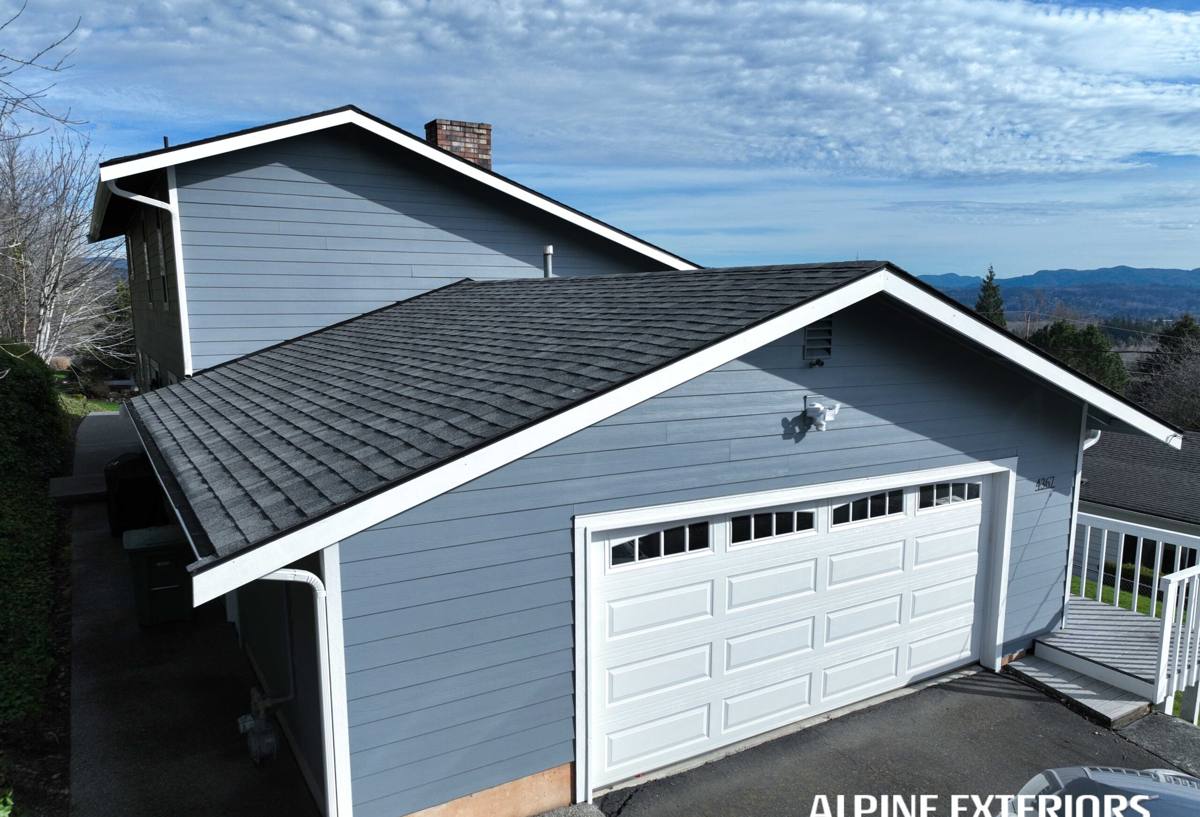
Signs a Semiahmoo Roof Needs Replacement, Not Another Repair
Repairs make sense when a roof is otherwise sound and the problem is isolated. Replacement makes sense once the roof as a system is compromised. In this area, we look for:
- Granule loss and shingle curling on south- and west-facing slopes, where sun and salt exposure are heaviest
- Rusted or corroded flashing and fasteners, especially around chimneys, vents, and valleys
- Persistent moss and dark streaking that returns within a season or two of cleaning
- Soft spots or sagging in the decking, which usually means water has been getting past the surface for a while
- Multiple active leaks, or leaks in different locations rather than one repeatable spot
- A roof at or past the manufacturer's expected service life for this climate, which is typically shorter here than the rating on the package suggests
If a roof is showing two or more of these at once, patch repairs usually end up costing more over a few years than a single, correctly installed replacement.
What a Correct New Roof Installation Actually Involves
Full Tear-Off, Not Overlay
We remove the existing roofing down to the deck on every new roof installation. Overlaying a new layer on top of old, worn shingles traps moisture, hides deck damage, and voids most manufacturer warranties. It also adds weight the structure wasn't designed to carry long-term. A tear-off is the only way to actually inspect and fix what's underneath.
Deck Inspection and Repair
Once the old roofing is off, we check the decking for soft spots, delamination, and water staining. Any damaged sheathing gets replaced before anything new goes down — installing new roofing over a compromised deck just resets the clock on the same failure.
Underlayment Built for Wind-Driven Rain
Given how much wind-driven rain this area sees off the water, underlayment choice matters more here than in sheltered inland neighborhoods. We use synthetic underlayment with self-adhered ice-and-water barrier at eaves, valleys, and around every penetration — the spots where wind-driven rain most commonly finds a way in.
Flashing That Won't Corrode
Flashing failure is one of the most common causes of roof leaks near the coast, and it's almost always a materials or installation shortcut, not the roofing material itself. We use corrosion-resistant flashing and fastener systems suited to salt-air exposure, with special attention at chimneys, skylights, and roof-to-wall transitions.
Ventilation Sized to the Home
A roof needs balanced intake and exhaust ventilation to manage moisture from inside the attic, not just rain hitting the outside. Undersized or unbalanced ventilation traps humid air, which condenses on the underside of the deck and shortens the life of the new roof from the inside out. We calculate ventilation based on attic square footage and existing intake, not a one-size-fits-all vent count.
Material Options for a Coastal Whatcom County Home
| Material | Typical Lifespan Here | Salt Air / Moss Notes |
|---|---|---|
| Architectural asphalt shingle | 20–30 years | Good value; choose algae-resistant (AR) shingles to slow moss and streaking near the coast |
| Standing seam metal | 40–50+ years | Excellent moss resistance due to steep shed profile; requires marine-grade fasteners and coatings to manage salt exposure |
| Composite/synthetic shake | 30–50 years | Sheds moisture well, holds up to wind-driven rain; higher upfront cost than asphalt |
| Cedar shake | 20–30 years with upkeep | Classic look but needs regular treatment to resist moss and moisture in this climate; higher long-term maintenance |
We don't push one material on every home. The right choice depends on the roof's pitch, sun and shade exposure, budget, and how much long-term maintenance the homeowner wants to take on. What we will say plainly: on a coastal, moss-prone roof, algae-resistant shingles or a steeper-shed material earn their cost back in fewer callbacks for moss and staining.
Our Installation Process, Step by Step
- On-site assessment — we walk the roof, check the attic, and look at drainage, shading, and wind exposure specific to the property's spot in the Semiahmoo area
- Written estimate — materials, scope, and timeline in plain language, no vague allowances
- Tear-off and deck inspection — old roofing removed, decking checked and repaired as needed
- Underlayment and ice-and-water barrier installation — full coverage at vulnerable points, not just code minimums
- Flashing and ventilation installation — corrosion-resistant materials, ventilation balanced to the attic
- Roofing material installation — installed to manufacturer spec, which is what keeps the warranty valid
- Final walkthrough and cleanup — magnetic sweep for debris, gutters checked, and a review of the finished roof with the homeowner
Moss and Moisture Management Doesn't End at Installation
A correctly installed roof resists moss far better than one with skipped flashing or poor ventilation, but no roof near the water is entirely maintenance-free. We build in details that reduce the workload going forward:
- Zinc or copper strips near ridges on shingle roofs, which discourage moss regrowth as rain washes trace metal down the slope
- Clean, properly flashed valleys that don't collect standing debris where moss gets a foothold
- Gutter and downspout checks as part of the final walkthrough, since clogged gutters back water up under the roof edge
- Straightforward guidance on when a light annual rinse makes sense, without recommending pressure washing that can strip granules
What Drives the Cost of a New Roof in This Area
| Factor | Why It Matters Here |
|---|---|
| Roof size and pitch | Steeper pitches take longer to work and shed moss better, but cost more in labor and safety setup |
| Number of penetrations | Chimneys, skylights, and vents each need corrosion-resistant flashing, adding material and labor |
| Deck condition | Rot or soft decking found during tear-off adds repair cost, but skipping it costs far more later |
| Material choice | Asphalt is the most economical; metal and composite cost more upfront but resist salt air and moss longer |
| Ventilation upgrades | Homes with undersized existing ventilation may need added intake or exhaust vents |
We don't quote a roof over the phone or from a satellite photo. Pricing depends on what's actually found once we're on the roof and in the attic, which is why every estimate starts with an in-person look.
Why a Crew That Already Works Semiahmoo Roofs Matters
Roofing crews who mostly work drier, more sheltered inland jobs sometimes treat coastal details — flashing grade, fastener corrosion resistance, ventilation balance — as optional upgrades. On a Semiahmoo roof, they aren't optional; they're the difference between a roof that reaches its full service life and one that starts leaking or streaking within a few years. We work throughout Ferndale and the surrounding Whatcom County coastline regularly enough to know which details matter on homes exposed to salt air and wind off the water, and we build every new roof installation around them from the start.
A Practical Checklist Before You Hire
- Ask whether the crew does a full tear-off on every job, or offers overlay as an option
- Ask what flashing and fastener grade they use, and why — coastal exposure should change the answer
- Ask how they calculate ventilation, not just how many vents they install
- Get the estimate in writing, with materials and scope spelled out
- Ask what the manufacturer warranty requires, and confirm the installer is certified to honor it
- Ask for a straightforward answer on maintenance going forward — moss and moisture don't stop after installation day
If your roof is showing its age, or you just want an honest opinion on whether repair or replacement makes more sense for a Semiahmoo home, we're happy to take a look. Fill out the form below for a free, no-pressure estimate — no hard sell, just a straight answer about what your roof actually needs.