 Ferndale
 Why Point Roberts Is Tougher on Windows Than Most of Whatcom County
Point Roberts sits out on its own peninsula, exposed to open water on three sides with none of the tree cover or terrain that breaks up wind and weather for homes further inland. That exposure means more direct salt-laden air, more wind-driven rain hitting the glass and frames at an angle instead of straight down, and a longer stretch of damp, low-light months where moss and algae get a foothold on anything that stays wet. Windows here don't fail because the product was bad on day one. They fail slowly, at the seams and the seals, because the install didn't account for what this specific location throws at a house.
We work throughout the Ferndale area, but Point Roberts gets treated as its own case. A window package that performs fine in a sheltered Ferndale neighborhood can underperform on a peninsula home taking wind straight off the water, and the reverse is also true — some upgrades that make sense out there would be overkill anywhere else.
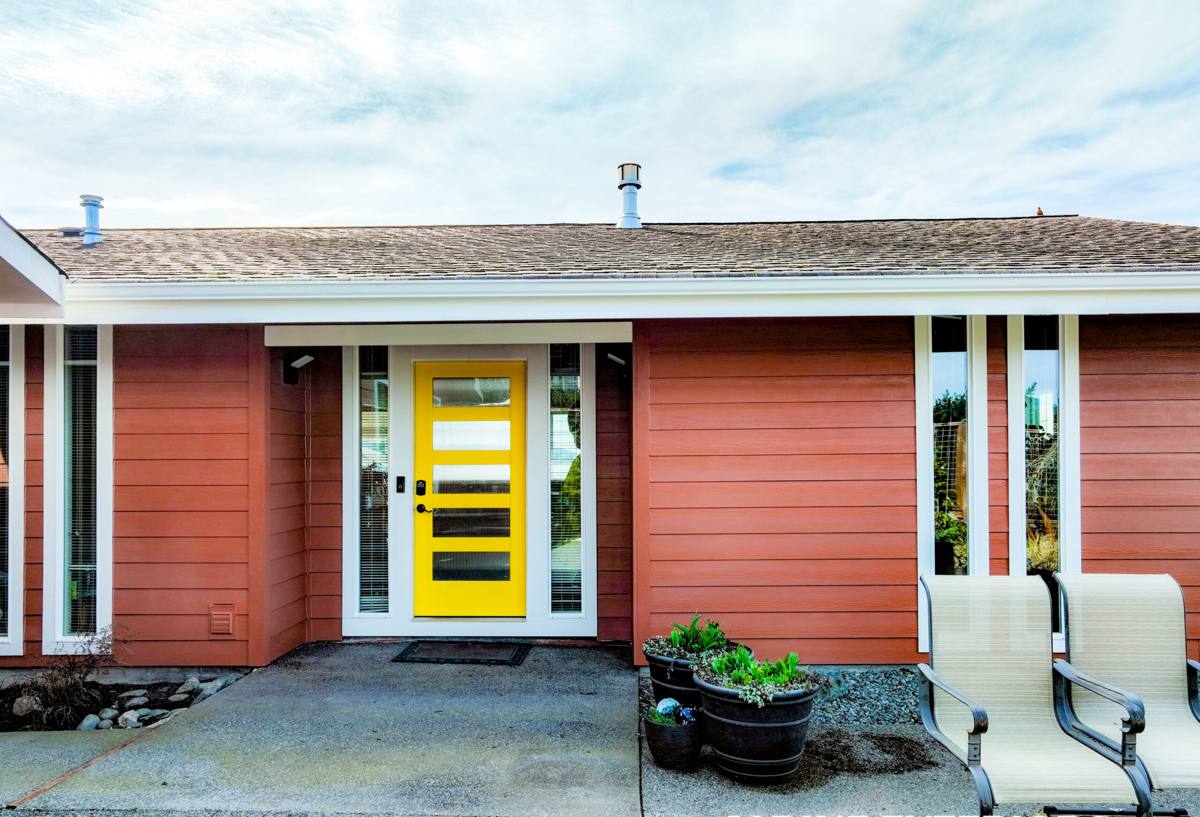
What "Energy-Efficient" Actually Means for a Point Roberts Home
Energy efficiency in a window comes down to three numbers, not marketing language. Homeowners get sold on brand names when what actually determines performance is the U-factor, the solar heat gain coefficient (SHGC), and the air infiltration rating printed on the National Fenestration Rating Council (NFRC) label.
- U-factor — how much heat escapes through the window. Lower is better for our climate, since the priority here is keeping heat in through a long wet winter, not blocking it out.
- SHGC — how much solar heat passes through the glass. Point Roberts gets its share of grey, low-light days, so a moderate SHGC that lets some free solar warmth in is usually the right call rather than a coating built for a hot, sunny climate.
- Air infiltration — how much air leaks around the sash and frame under wind pressure. This one matters more on an exposed peninsula lot than almost anywhere else in the county, because sustained wind off the water finds every gap a mediocre install leaves behind.
A window with a great U-factor rating on paper still underperforms if the air infiltration number is weak or the installation doesn't seal it properly. The label tells you what the product can do in a lab. The install determines whether it actually does that in your wall.
Glazing and Gas Fill
Double-pane windows with a low-E coating and argon gas fill are the baseline we recommend for this area — they're the standard that balances upfront cost against real-world performance in a marine climate. Triple-pane is available and does add a meaningful step up in insulation and sound dampening, which some homeowners want given how consistently windy it can get on the water side of the property. It costs more and the added weight matters for larger openings, so we walk through where it earns its keep versus where double-pane with a good low-E coating already does the job.
Frame Materials: What Holds Up to Salt Air and What Doesn't
| Frame Material | How It Handles Salt Air & Moisture | Maintenance Burden |
|---|---|---|
| Vinyl | Doesn't corrode or absorb moisture; performs consistently near the water | Low — occasional cleaning, no repainting or sealing |
| Fiberglass | Very stable in temperature swings, resists warping, holds up well to coastal exposure | Low — durable finish, minimal upkeep |
| Aluminum | Can be prone to corrosion and pitting in salt-heavy air over time unless it's a marine-grade finish | Moderate — finish needs monitoring near the coast |
| Wood / Wood-clad | Attractive but needs consistent maintenance to keep moisture out of exposed wood; cladding helps but joints and end grain are still vulnerable | Higher — periodic inspection and sealing needed |
We install vinyl and fiberglass most often on Point Roberts jobs for exactly this reason — they're the frame materials that don't ask the homeowner to fight the marine environment every year to keep them looking and performing right. If a homeowner wants the look of wood, we'll talk through what that maintenance commitment actually looks like on an exposed lot before they commit, rather than promising it's maintenance-free when it isn't.
Where Window Failures Actually Start
Almost every "bad window" we get called out to replace early wasn't a bad product — it was a flashing or sealant failure that let water behind the frame. On a peninsula home taking driving rain at an angle, this is the single biggest factor in whether a window lasts fifteen years or thirty.
- Correct flashing integration with the house wrap or weather-resistive barrier, lapped so water sheds outward and down, never trapped behind the frame
- A continuous, compatible sealant bead at the frame perimeter — not just caulk smeared over a gap
- Proper shimming so the frame isn't racked or bowed, which stresses the seal over time and lets it fail early
- Sill pan flashing under the rough opening so any water that does get past the frame has somewhere to drain instead of sitting against wood framing
- Insulation packed correctly around the frame — not overpacked, which can bow the frame, and not skipped, which leaves a cold, drafty gap
This is the part of the job that's invisible once the trim goes back on, which is exactly why it's where corners get cut. It's also why a window replacement is not a project to hand to whoever's available and cheapest.
Why Local Experience on Point Roberts Specifically Matters
Point Roberts is unincorporated Whatcom County, but it's geographically separate from the rest of the county — the only road access runs through Canada, which means scheduling, material delivery, and permitting all move a little differently out there than they do on a job in central Ferndale. A crew that's done work on the peninsula before knows to plan logistics around that instead of getting surprised by it mid-project, and knows the permitting still runs through Whatcom County even though the drive to get there doesn't.
Beyond logistics, a crew that's actually worked Point Roberts homes has seen firsthand which details make a window package hold up in that specific exposure and which don't. That's not something you can fully substitute with a general track record somewhere more sheltered — the wind loading, the salt exposure, and the seasonal moisture pattern are genuinely different out there.
Our Process on a Point Roberts Window Project
- On-site assessment. We look at current window condition, frame material, orientation to prevailing wind and rain, and any existing moisture or moss staining around openings before recommending anything.
- Straightforward proposal. We lay out frame material, glazing package, and installation scope in plain terms, with the trade-offs explained rather than glossed over.
- Logistics planned up front. Materials and crew scheduling get planned around the peninsula's access, so the job isn't held up mid-week by something that could've been anticipated.
- Removal and prep. Old units come out carefully to protect existing siding and trim, and the rough opening gets inspected for hidden water damage before anything new goes in.
- Flashing and sealing done right. This is the step that determines whether the job lasts — sill pan flashing, correct lapping, and a proper sealant bead, every time, not just on the jobs where it's convenient.
- Final check and cleanup. Operation, seal, and trim are checked before we consider the job done, and the site is left clean.
What Windows Cost — and What Actually Drives the Price
| Cost Factor | Why It Moves the Price |
|---|---|
| Frame material | Vinyl is the most budget-friendly; fiberglass and wood-clad cost more upfront |
| Glazing package | Double-pane low-E/argon vs. triple-pane changes both material cost and labor |
| Window size and count | Larger openings and full-house replacements carry more material and labor than a handful of units |
| Existing condition | Hidden water damage found at the rough opening adds repair scope before new windows can go in correctly |
| Access and logistics | Peninsula scheduling and material delivery are planned into the timeline, not typically a major cost driver, but worth factoring into project timing |
We don't quote a number without seeing the house — anyone who does is guessing. What we can say honestly is that the biggest cost swings come from frame material and glazing choice, not from who's doing the installing, which is why it's worth spending the conversation on what package actually fits your exposure instead of just picking the cheapest listed option.
Signs It's Time to Replace, Not Repair
- Fogging or moisture trapped between panes — the seal has failed and it can't be fixed, only replaced
- Visible gaps, drafts, or cold spots at the frame even when the window is fully latched
- Soft or discolored wood/trim around the frame, a sign water has been getting behind it
- Moss or persistent green staining building up on the sill or frame that keeps returning after cleaning
- Difficulty opening, closing, or latching that's gotten worse over a season or two
A window with one or two of these signs might still be a repair. Several at once, especially combined with visible trim damage, usually means the frame and seal have already let water in long enough that replacement is the more honest recommendation.
Get a Straight Answer on Your Windows
If you're weighing a full replacement or just want an honest read on whether your current windows are actually failing or just showing cosmetic wear, we're glad to come take a look. The estimate is free, there's no pressure, and we'll tell you plainly what we'd recommend and why — use the form below to get started.