 Ferndale
 Building Decks for Point Roberts' Unusual Exposure
Point Roberts sits in a strange spot — a small peninsula cut off from the rest of Whatcom County by water and an international border, surrounded on three sides by the Strait of Georgia. That geography means homes here take a different kind of weather beating than a deck ten miles inland. Salt-laden air moves through constantly, driving rain comes in sideways off the water during fall and winter storms, and the shoulder seasons bring long stretches of damp, low-light weather that keeps every horizontal surface wet for days at a time. A deck built the way you'd build one in a drier part of the state won't hold up the same way out here.
We've worked on homes across Ferndale and the surrounding Whatcom County waterfront, and Point Roberts calls for its own set of decisions — fastener choice, board spacing, ledger flashing, and framing details that matter more here than almost anywhere else we work. This page covers what a deck actually needs to survive that environment, not just what looks good the day it's finished.
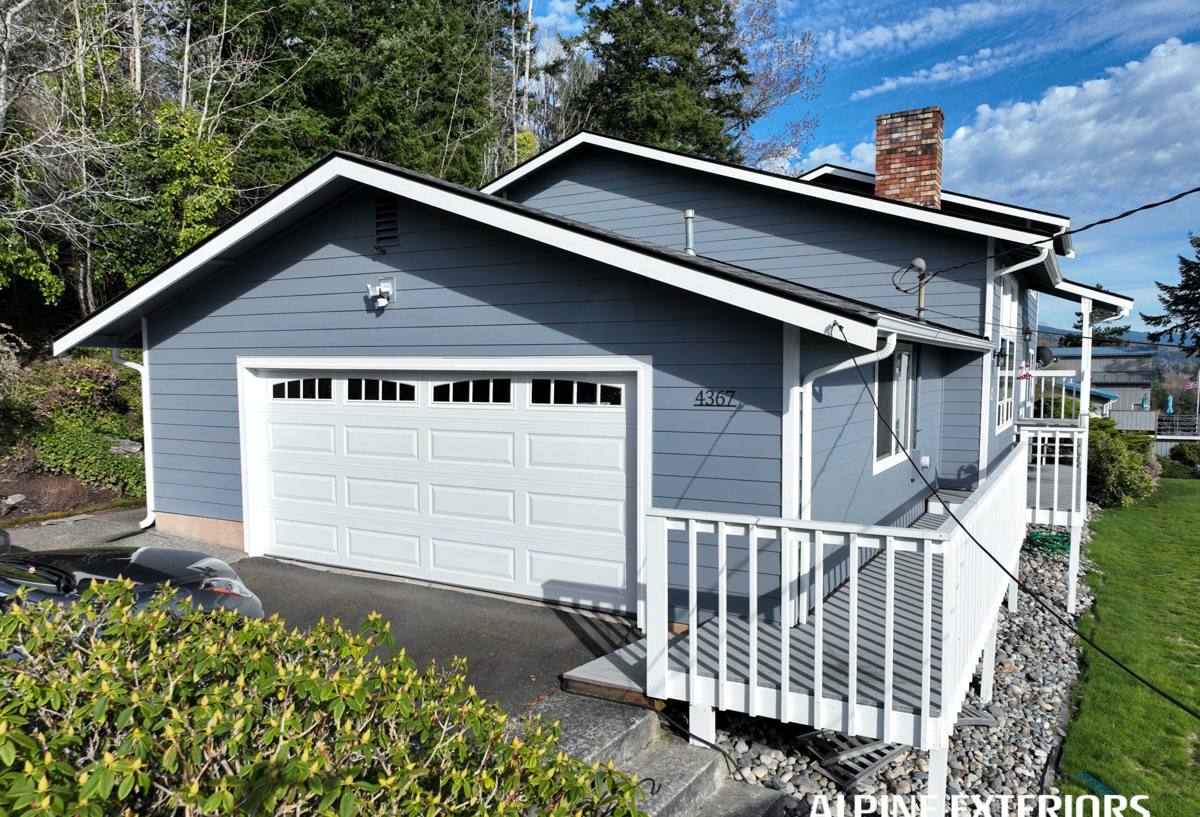
What Salt Air and Moss Season Actually Do to a Deck
It helps to understand the failure modes before talking about the fix, because most deck problems we see on the peninsula trace back to one of these:
Salt Air Corrosion
Airborne salt accelerates corrosion on any exposed metal — fasteners, joist hangers, post bases, railing hardware. Standard galvanized coatings that are fine 20 miles inland can start showing rust streaks and pitting within a few years right on the water. Once a fastener starts to corrode, it loses holding strength long before it looks obviously bad, which is the part that worries us most on older decks we're asked to inspect.
Driving Rain and Trapped Moisture
Wind-driven rain off the Strait doesn't just fall on a deck — it gets pushed sideways into ledger connections, under railing posts, and into any gap where two pieces of wood or composite meet. If water gets in and can't dry out quickly, you get rot in framing, staining and cupping in decking boards, and eventually structural softness at the ledger board — the single most common serious deck failure point in this region.
Moss and Algae Growth
Point Roberts gets a long stretch of the year where surfaces stay damp and shaded — ideal conditions for moss and algae. Beyond looking bad, a mossy deck surface is a real slip hazard, and moss holds moisture directly against the board or membrane below it, which speeds up rot and finish breakdown. Deck design that ignores drainage and airflow guarantees a moss problem within a couple of seasons.
What a Correctly Built Deck for This Climate Includes
| Component | What we do differently here | Why it matters on the peninsula |
|---|---|---|
| Fasteners & hardware | Stainless steel or heavy-duty coated fasteners rated for coastal/marine exposure, not standard exterior-grade | Salt air corrodes standard hardware faster than most homeowners expect |
| Ledger flashing | Full metal flashing with a drip edge and self-adhering membrane behind it, sealed at every penetration | Driving rain finds any gap in ledger protection; this is the #1 rot point on coastal decks |
| Joist protection | Joist tape over the top of every framing member before decking goes down | Keeps standing water out of fastener holes and end grain, which is where rot starts |
| Decking material | Composite, capped composite, or naturally rot-resistant wood species, matched to your budget and maintenance appetite | Standard pressure-treated boards need more upkeep to keep pace with this moisture load |
| Board spacing & airflow | Slightly wider gapping and attention to substructure ventilation | Airflow under and between boards is what keeps moss from taking hold |
| Post bases | Elevated, corrosion-resistant post bases that keep wood off standing water | Ground-contact moisture plus salt air is a fast track to base rot |
Decking Material Options: Honest Trade-offs
There's no single "right" decking material for Point Roberts — it depends on budget, how much upkeep you want to do, and how the deck will be used. Here's how we talk homeowners through it:
Pressure-Treated Wood
Lowest upfront cost and still a solid choice if you're willing to reseal it every year or two. In this climate, that maintenance schedule is not optional — skip a season or two of sealing and you'll see graying, splintering, and eventually soft spots where water sits. It's a good option if you enjoy the upkeep or plan to sell before it becomes a burden.
Cedar and Other Naturally Resistant Woods
Cedar has natural oils that resist rot and insects better than standard lumber, and it looks the part on a coastal property. It still needs regular finish maintenance to keep that resistance working for you, and it's a softer wood, so it dents and wears faster in high-traffic areas.
Composite and Capped Composite
Higher upfront cost, but the lowest maintenance burden by a wide margin — no annual sealing, strong resistance to moisture and staining, and consistent performance year after year. For a Point Roberts property that isn't visited every week, this is often the practical answer: no maintenance schedule to fall behind on. The trade-off is cost and a different look and feel underfoot than real wood.
Whichever material you choose, the substructure work — flashing, joist protection, fasteners, drainage — matters more than the decking surface itself. A composite deck built on a poorly flashed, poorly ventilated frame will still fail early; a well-built frame under pressure-treated boards will outlast a sloppy composite install.
Our Process for a Point Roberts Deck Project
- Site visit and assessment. We look at sun and shade exposure, prevailing wind and rain direction relative to the house, existing structure condition if it's a rebuild, and how the space will actually be used.
- Design and material selection. We walk through decking, railing, and hardware options with honest cost and maintenance trade-offs — no upselling material you don't need.
- Permitting. Deck permitting for Point Roberts runs through Whatcom County. We handle the application and inspection scheduling so you're not chasing paperwork.
- Framing and flashing. This is where most of the long-term durability gets decided — ledger flashing, joist protection, and hardware selection all happen at this stage, before a single deck board goes down.
- Decking and railing installation. Precise fastening and spacing for drainage and airflow, finished with railing hardware rated for the exposure.
- Final walkthrough. We go over basic care for whatever material you chose, and what to watch for as the seasons change.
Repair, Rebuild, or Start Over?
Not every deck problem on the peninsula means a full teardown. We evaluate three things before recommending a path:
- Framing condition: if joists and ledger connection are solid, a deck surface replacement can extend the life of a structurally sound frame significantly.
- Ledger and flashing integrity: if water has been getting behind the ledger board, that's usually a sign the whole connection needs to be rebuilt, regardless of how the decking looks.
- Age and code changes: older decks were often built to lighter structural standards than current code requires; a rebuild is sometimes the more honest recommendation even if repair is technically possible.
We'll tell you straight which category your deck falls into rather than defaulting to the most expensive option.
Maintenance That Actually Fits This Climate
A deck built right for Point Roberts still needs some seasonal attention — the climate doesn't let anything coast entirely maintenance-free. A short, honest checklist:
- Sweep off standing debris and leaves regularly, especially in fall, so moisture doesn't sit trapped against the boards.
- Rinse the surface periodically to keep salt residue and early moss growth from building up.
- Check railing and post hardware once a year for early rust or looseness — catching it early is far cheaper than replacing a corroded post base later.
- Reseal wood decking on schedule if you chose wood — don't stretch the interval to save time, it costs more later.
- Keep an eye on the ledger board area after major storms; if you see staining or soft wood near the house connection, get it looked at promptly.
Why Hire a Crew That Already Works Point Roberts
Point Roberts is logistically its own animal — it's a border crossing to reach, material deliveries take planning, and the exposure conditions genuinely differ from a typical Whatcom County lot even a few miles inland in Ferndale or Blaine. A crew that hasn't priced and scheduled projects out there before tends to underestimate both the timeline and the hardware spec needed to make a deck last. We've built that logistics knowledge and the material judgment into how we quote and schedule every project on the peninsula, so there are no surprises mid-build.
If you're planning a new deck or need an honest look at an existing one, we're happy to come out and give you a straightforward, no-pressure estimate — just fill out the form below.