 Ferndale
 Windows on an Exclave: Why Point Roberts Is a Different Job
Point Roberts sits on its own piece of ground, cut off from the rest of Whatcom County by an international border. That geography shapes everything about how a window project gets done out there — and it shapes what the windows themselves have to survive. Homes here face open water on multiple sides, catch wind and salt spray that inland Ferndale properties rarely see, and sit through long, damp stretches of the year with little sun to dry things out. A window package that works fine in a sheltered subdivision closer to town can fail early on a Point Roberts lot facing the water.
We treat Point Roberts as its own kind of project, not a smaller version of a Ferndale job. That means different material recommendations in some cases, different attention to flashing and sealant detail, and a work schedule that accounts for the fact that getting a crew and materials to the peninsula takes real planning.
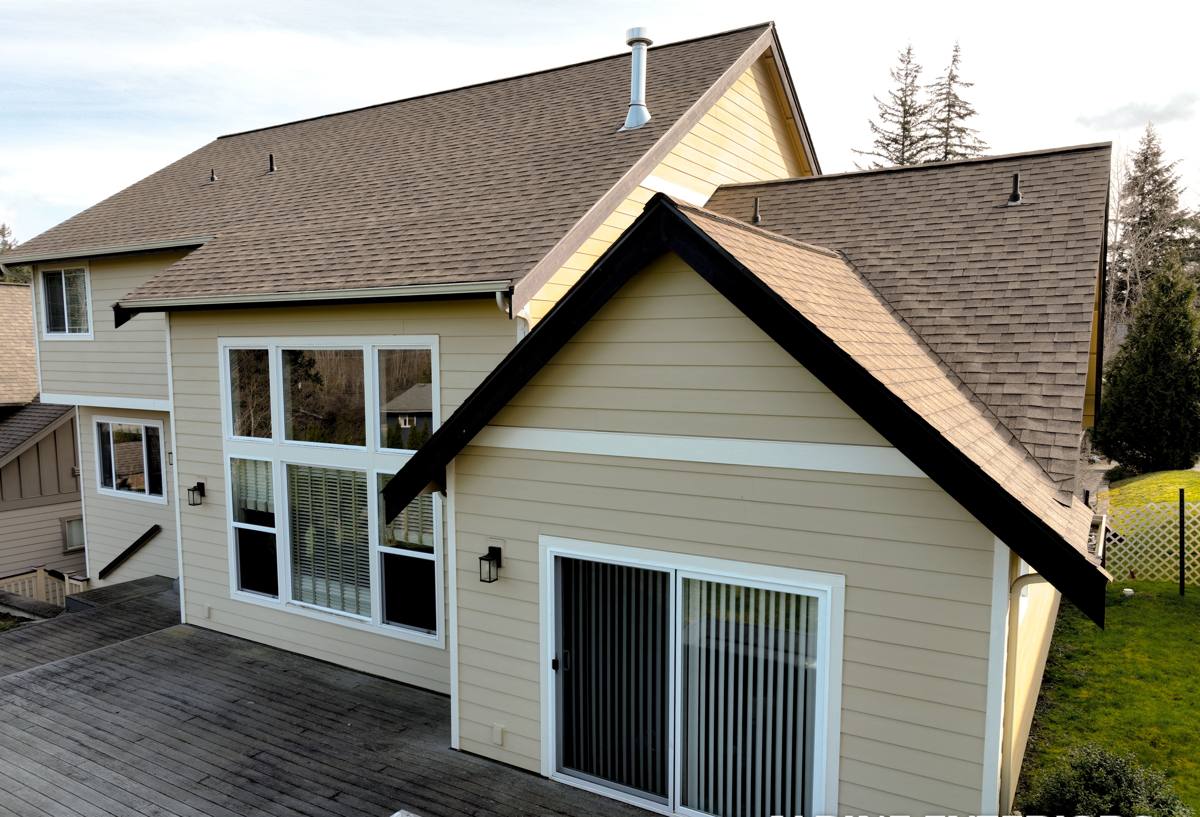
What the Local Climate Actually Does to Windows
Salt Air
Homes close to the water take in airborne salt that settles on every exterior surface, including window frames and hardware. Over years, salt exposure accelerates corrosion on unprotected metal components — hinges, cranks, screws, and some aluminum framing — and it breaks down certain finishes faster than a manufacturer's inland warranty testing accounts for. It also tends to hold moisture against surfaces longer, which compounds any rot risk in wood-framed units.
Driving Rain
Storms coming off the Strait of Georgia don't just fall straight down — wind-driven rain gets pushed sideways into wall assemblies and window openings. A window that's watertight in a calm downpour can still leak under driving rain if the flashing, sill pan, and sealant details around it weren't built for lateral water pressure. This is one of the most common sources of hidden water damage we find behind older window trim in coastal Whatcom County homes.
Moss Season
The long wet season here keeps moss and algae growth going for months at a time, and it doesn't stop at the roofline. Window sills, trim, and the tops of frames that don't shed water well collect organic growth, which holds moisture against wood and paint and shortens the life of both. Good detailing — proper slope on sills, drip caps, and clearance from siding — matters more here than it does in a drier climate.
What "Custom" Means on a Point Roberts Home
Custom windows aren't just about style. On this peninsula, "custom" usually means solving one of these real, common problems:
- Older homes with openings that don't match any current stock size, requiring exact measurement and either special-order units or site-built framing adjustments
- Water-facing walls where sightlines and view preservation matter, calling for larger units or configurations that still meet structural and energy code
- Additions or renovated sections where new windows need to match sightlines and sash proportions of original construction
- Replacing failing single-pane or early dual-pane units from older builds with modern, code-compliant glass packages
- Corner or multi-window configurations that need coordinated framing and flashing rather than a single stand-alone install
In every case, custom work starts with an honest measurement and assessment — not a catalog size that's "close enough."
Frame Materials: What Holds Up Near Salt Water
Material choice matters more here than in a typical inland install. Below is how the common options generally perform in a salt-air, high-moisture setting like Point Roberts.
| Frame Material | Salt Air Performance | Maintenance | Notes |
|---|---|---|---|
| Vinyl | Good — won't corrode or rot | Low | Budget-friendly; quality varies widely between manufacturers, especially in UV and impact resistance |
| Fiberglass | Very good — dimensionally stable, resists corrosion | Low | Higher upfront cost; holds paint and finishes well over time |
| Wood-clad | Fair — exterior clad is protected, but any breach exposes wood core to rot | Moderate to high | Best appearance for some styles; requires diligent sealant maintenance in this climate |
| Aluminum | Poor to fair without upgraded coatings | Moderate | Conducts cold and is prone to corrosion near salt water unless marine-grade finishes are specified |
We don't push one material for every job. What we do is walk the property with the client, look at sun and wind exposure, and give a straight recommendation based on how that specific wall will be treated by the weather — not what's cheapest to stock.
Glass Packages and Weatherproofing Details
The glass matters as much as the frame in this climate:
- Dual-pane, argon-filled, Low-E glass is the practical standard for Whatcom County's cool, wet climate — it cuts heat loss and reduces condensation risk on interior glass surfaces.
- Sill pans and flashing need to direct water out and away from the wall assembly, not just around the window frame. This is the single biggest factor in whether a window leaks under driving rain.
- Sealant selection and application matter more here than in drier regions — the wrong sealant, or a rushed bead, fails faster under constant damp cycling.
- Drainage and weep paths in the frame need to stay clear; salt residue and algae can clog them over time if the design or installation doesn't account for it.
Our Installation Process
1. On-Site Assessment
We look at existing window condition, framing, sightlines, and how exposed each wall is to wind and water. This is where we flag anything that needs custom sizing or extra flashing detail.
2. Measurement and Ordering
Exact measurements go to the manufacturer for custom or special-order units. We confirm lead times up front — custom orders take longer than stock sizes, and we build that into the schedule honestly rather than guessing.
3. Removal and Prep
Old units come out carefully to protect surrounding siding and trim. We inspect the framing for hidden rot or water damage before anything new goes in — a problem we find here doesn't get covered up, it gets addressed.
4. Installation and Flashing
New windows go in plumb, level, and square, with flashing and sealant detail built for driving rain, not just a calm-day install. This step is where most long-term leak problems are either prevented or created.
5. Finish and Cleanup
Interior and exterior trim is finished to match the home, and the site is cleaned up before we leave.
Why a Crew That Already Works Point Roberts Matters
Point Roberts isn't accessible by road from the rest of Washington — getting here by land means crossing the international border, which affects how crews schedule, move tools and materials, and time a job. A contractor who doesn't already build that into their routine will either underquote the logistics or show up unprepared for border wait times, customs considerations for materials, and the general rhythm of working on the peninsula.
Many homes on Point Roberts are used seasonally, which also changes the job — coordinating access with an owner who isn't on-site full time, or timing work around when the home will actually be used, takes communication that a one-off out-of-town crew often doesn't plan for. Permitting also runs through Whatcom County, and knowing that process ahead of time keeps a project from stalling.
Working here regularly means we're not learning these logistics on the client's dime.
Maintenance Checklist for Salt-Air Window Longevity
Even a well-installed window needs some basic upkeep in this climate to reach its full lifespan:
- Rinse frames and glass periodically to remove salt residue, especially on water-facing walls
- Clear moss and algae buildup from sills and trim before it holds moisture against the surface
- Check and re-apply exterior caulking where it's cracked or pulled away, before the next wet season
- Lubricate hardware — hinges, locks, cranks — to prevent salt-related corrosion from seizing moving parts
- Inspect weep holes and drainage paths to make sure they're not clogged
- Look for soft or discolored trim around window openings, which can signal a flashing or sealant failure starting underneath
What Affects the Cost of a Custom Window Project
| Factor | Why It Matters |
|---|---|
| Frame material | Fiberglass and quality wood-clad units cost more upfront than vinyl but often cost less over the life of the window in a salt-air setting |
| Custom vs. stock sizing | Non-standard openings require special-order units, which carry longer lead times and higher cost than stock sizes |
| Number and complexity of openings | Corner windows, large view units, and multi-window walls take more labor and coordination than a single standard replacement |
| Existing framing condition | Hidden rot or water damage found during removal adds repair scope before the new window goes in |
| Glass package | Upgraded Low-E coatings and gas fills add cost but reduce long-term energy loss and condensation issues |
| Site logistics | Access, staging, and scheduling around Point Roberts' border-crossing logistics factor into project timing |
We give straightforward, itemized quotes so a homeowner can see exactly where the cost is coming from rather than one lump number.
If you're weighing a window project for a Point Roberts home, we're glad to come take a look and give you a free, no-pressure estimate — including an honest read on what your specific walls and exposure actually need. Use the form below to get started.