 Ferndale
 Building Decks for Nooksack's Particular Climate
Nooksack sits close enough to Bellingham Bay and the Strait of Georgia that salt-laden air reaches yards here even without a water view, and it sits far enough inland to catch the heavier rain bands that roll off the foothills through fall and winter. That combination is harder on an outdoor deck than either factor alone. Salt air accelerates corrosion in fasteners and hardware. Driving rain finds every gap in flashing and end-grain that a builder didn't seal. And the long stretch of overcast, damp weather that Whatcom County gets from November through April creates ideal conditions for moss and algae to take hold on any horizontal wood or composite surface that doesn't drain and dry properly.
None of this means a deck can't last decades in Nooksack. It means the details that get skipped on a fast, cheap build are exactly the details that matter most here. This page covers what we build into every deck we put up in this area, and why it's worth hiring a crew that already understands the local conditions rather than a generalist working from a one-size-fits-all spec sheet.
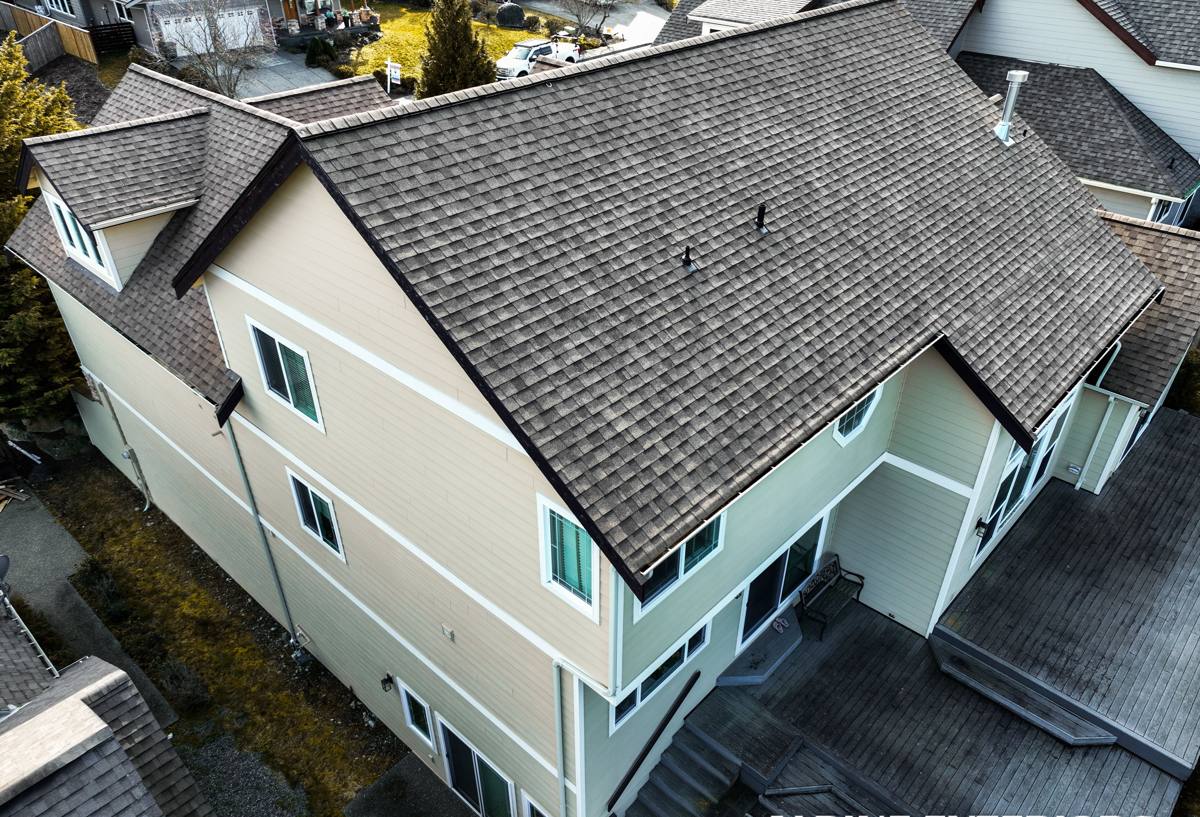
What a Deck Built for This Climate Actually Needs
Ledger Flashing Done Right
The ledger board — where the deck attaches to the house — is the single most common failure point on decks in wet regions. If water gets behind the ledger and into the house's rim joist, it rots quietly for years before anyone notices, usually as sagging or soft framing. We flash the ledger connection with proper step flashing and a drainage gap, not just a bead of caulk, so water sheds away from the house instead of pooling against it.
Footings Sized for Wet, Variable Soil
Soil around Ferndale and Nooksack ranges from well-drained to heavy clay that holds water, sometimes on the same lot. Footings need to be sized and set to local frost depth and soil conditions, not guessed at. Undersized or shallow footings are one of the main reasons older decks in this area develop a noticeable bounce or lean over time.
Airflow Underneath
A deck that sits low to the ground or backs up against a slope traps moisture underneath it, which is exactly what moss, mildew, and rot need to get started. We frame in enough clearance and, where the site allows it, grade or add drainage so air and water can actually move under the structure instead of sitting there all winter.
Choosing Decking Material for a Salt-Air, High-Rain Climate
There's no single "best" decking material — there's a best material for your budget, your maintenance appetite, and how exposed the deck is to weather. Here's how the common options actually perform in Nooksack's conditions:
| Material | How it handles rain & moss | Maintenance | Typical lifespan here |
|---|---|---|---|
| Cedar | Naturally rot- and insect-resistant, but still needs to dry out between rains or it will gray and grow moss | Annual cleaning, periodic sealing/staining | 15–20 years with upkeep |
| Pressure-treated pine/fir | Treatment resists rot but the surface still holds moisture and grows moss if not cleaned | Regular cleaning, sealing every 1–2 years | 15–25 years with upkeep |
| Composite decking | Doesn't rot, but can grow surface algae/moss in shaded, damp spots if never cleaned | Occasional wash, no sealing or staining | 25–30+ years, manufacturer-warrantied |
| PVC decking | Fully synthetic, sheds water and resists moss growth best of the group | Occasional wash | 25–30+ years, manufacturer-warrantied |
Shaded, tree-covered lots — common around Nooksack — push us to recommend composite or PVC more often than we would in a drier, sunnier part of the state, simply because those surfaces don't feed moss the way bare wood does. That said, plenty of homeowners want the look and feel of real wood and are willing to do the annual maintenance. We'll walk through the honest trade-offs for your specific site rather than push one product.
Moss, Algae, and Slip Safety
Moss season here isn't a minor cosmetic issue — a mossy deck surface is a slip hazard, especially on stairs, and left unaddressed it holds moisture against the decking material and shortens its life. A few things we build in or recommend to keep this under control:
- Board spacing set to allow proper drainage between boards rather than tight-butted joints that trap water
- Decking oriented and, where possible, positioned to get some seasonal sun exposure rather than sitting in permanent shade
- Stair treads and any north-facing sections flagged for more frequent cleaning, since these areas hold moisture longest
- A yearly rinse-and-scrub routine (or a soft wash for composite/PVC) before moss gets established, not after
If your lot is heavily shaded by mature trees, we'll tell you that up front — it affects material choice and how often the deck will need attention, and it's better to know that before the build than after.
Framing and Fasteners: The Part You Don't See
Once the decking boards go down, the framing and fasteners underneath are hidden for the life of the deck — which is exactly why they need to be right the first time. In a salt-air environment, standard fasteners corrode faster than the treated lumber around them, leading to rust streaks, loosened boards, and eventually structural weakness at the joints. We use fasteners and structural hardware rated for exterior, corrosive-environment use — hot-dip galvanized or stainless steel, matched to the decking and framing material — rather than the cheaper coated screws that show rust within a couple of seasons this close to the coast.
Joist tops get protected with a flashing tape so rain that gets past the decking boards doesn't sit directly on cut lumber and start rot from the inside out. It's a small material cost that prevents one of the most common hidden failures we find when we're asked to repair or replace an older deck in this area.
Permits and Code in Whatcom County
Most new decks and significant deck rebuilds in Ferndale and unincorporated Whatcom County (which covers Nooksack) require a building permit, with specifics depending on deck height, size, and whether it's attached to the house. Guardrail height, baluster spacing, and stair requirements are all governed by code, and inspectors here pay particular attention to ledger attachment and footing depth given how much damage improper ones cause in this climate. We handle the permit process and design the deck to meet current code from the start, so you're not stuck retrofitting a railing or footing after the fact.
Our Process for a Nooksack Deck Build
A deck project with us runs through the same core steps whether it's a small ground-level platform or a full multi-level attached deck:
- On-site visit to assess the lot, drainage, sun/shade exposure, and existing structure (if replacing a deck)
- Material and layout discussion based on your budget, maintenance preference, and how the space will actually be used
- Written estimate with a clear scope — no vague allowances that turn into change orders later
- Permit drawings and submission to the applicable jurisdiction
- Footings, framing, ledger flashing, and structural inspection points before decking goes down
- Decking, railing, and stair installation to code
- Final walkthrough and care guidance specific to the material we installed
Because we work in this area regularly, we already know which local details tend to come up — soil conditions on a given street, typical setback questions, how a specific lot drains after a heavy rain — which keeps surprises and delays to a minimum.
Maintenance After We Build It
Every deck, regardless of material, benefits from an annual look-over here: clearing debris from between boards before it holds moisture, checking that fasteners haven't started to corrode or back out, and cleaning surfaces before moss gets a foothold rather than after. Wood decks need this plus periodic sealing or staining; composite and PVC decks need it far less but aren't entirely maintenance-free in a climate this wet. We'll give you a maintenance rundown specific to whatever material you choose, not a generic care sheet.
Why Hiring a Crew That Already Works Nooksack Matters
A deck built to a generic spec — the kind used in drier, less coastal parts of the country — tends to show its weaknesses fast around here: mossy surfaces within a year or two, rust streaks at the fasteners, soft spots developing at the ledger. A crew that already builds regularly in Ferndale and the surrounding Whatcom County communities isn't guessing at fastener grade, footing depth, or drainage detailing — it's applying what consistently holds up against this specific combination of salt air, sustained rain, and moss season, and what fails.
If you're planning a new deck or need to replace one that's showing its age, we're glad to come take a look and put together a free, no-pressure estimate — just fill out the form below.