 Ferndale
 Windows in Marietta Take a Different Kind of Beating
Marietta sits close enough to the bay that salt-laden air is part of daily life, not an occasional weather event. Add Whatcom County's driving winter rain and a moss season that can run eight months out of the year, and you've got conditions that are tougher on window assemblies than most manufacturers' warranty language accounts for. Frame corners corrode faster. Sealant joints break down sooner. Sills that don't shed water properly start collecting the kind of green growth that traps moisture against wood and vinyl alike.
None of that means Marietta homes need exotic products. It means the installation has to be done with this specific climate in mind — correct flashing sequence, the right sealants, drainage paths that actually work, and materials chosen for salt exposure rather than a showroom photo. That's the difference between a window that looks fine for two years and one that performs for twenty.
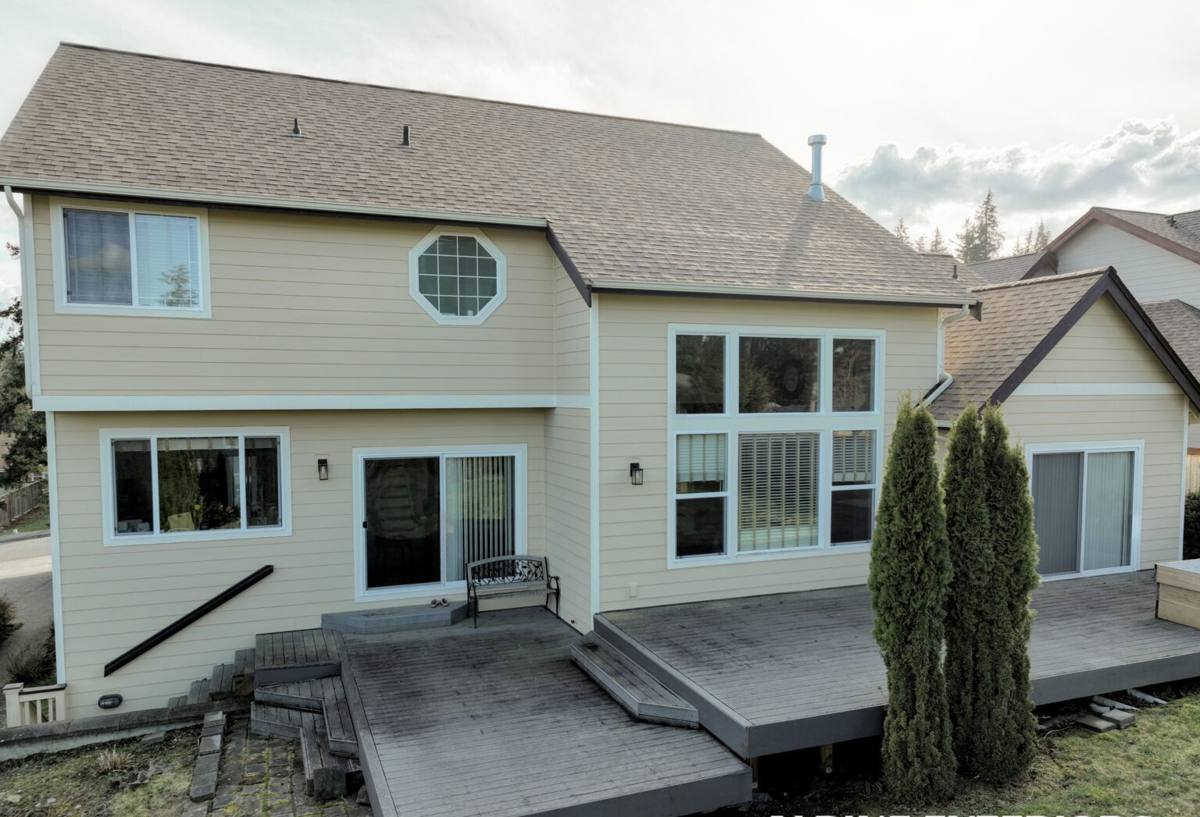
How Coastal Exposure Shows Up in a Window's Lifespan
Salt air is corrosive to exposed metal — hardware, cranks, weep hole covers, and especially aluminum components that weren't specified for marine-adjacent environments. Combined with wind-driven rain, water gets pushed sideways into gaps that would stay dry in a more sheltered inland location. And because Whatcom County stays cool and damp for long stretches, any moisture that does get trapped behind trim or in a sill pan doesn't dry out quickly — it just sits there, feeding rot and mold.
Moss adds its own problem. It doesn't just grow on roofs. It takes hold on north-facing trim, in horizontal mullions, and anywhere water lingers on a window's exterior surfaces. Left alone, it holds moisture against the frame year-round and can work its way into joints that were never meant to stay wet.
Common Warning Signs We See on Marietta Homes
- Fogging or moisture between panes — a failed seal, usually meaning the insulated glass unit needs replacing, not just the sash
- Soft or discolored wood trim around the frame, especially at the bottom corners where water collects
- Visible moss or dark streaking on sills and exterior casing
- Drafts or a noticeable temperature difference near the window even when it's latched shut
- Difficulty opening, closing, or locking — often a sign the frame has swollen or shifted
- Peeling paint or bubbling on interior sills, which usually points to moisture getting in from outside
- Visible corrosion on hardware, hinges, or cranks
Any one of these on its own isn't necessarily an emergency. Several together, or a window with any of these issues that's more than 15-20 years old, usually means replacement makes more sense than another repair.
What a Correct Installation Actually Involves
A window is only as good as the opening it's installed into. Most premature failures we're called out to inspect aren't a bad product — they're a flashing or sealing shortcut taken during install. For Marietta's exposure, we treat every opening as if it needs full weather protection, because it does.
The parts that matter most
Sill pan flashing. A properly sloped, sealed sill pan gives any water that does get past the window a way out, instead of a place to pool. This is the single most common thing missing on failed installations we replace.
Flashing sequence. Housewrap, flashing tape, and trim have to be layered so water always sheds downward and outward — never trapped behind a layer above it. On a home taking wind-driven rain off the bay, this sequencing isn't optional.
Sealant selection and placement. Not every gap should be sealed solid. Some need a gap left for drainage; others need a continuous bead. Sealing the wrong spot can trap moisture instead of keeping it out.
Insulation and air sealing around the frame. Gaps packed with the wrong material — or packed too tight — cause drafts, condensation, and in some cases frame distortion over time.
Level, plumb, and square. A window installed slightly out of square will bind, won't seal evenly, and puts uneven stress on the sash over years of opening and closing.
Frame Material Comparison for This Climate
Every material has trade-offs. For Marietta specifically, salt exposure and moisture are the deciding factors more than in a drier inland part of the county.
| Frame Material | Salt Air / Corrosion | Moisture Behavior | Maintenance | Typical Lifespan |
|---|---|---|---|---|
| Vinyl | Doesn't corrode; hardware is the exposed risk | Won't rot; handles wet climates well | Low — occasional cleaning | 20-30 years |
| Fiberglass | Excellent resistance; stable in coastal air | Very low expansion/contraction, sheds water well | Low | 30-40+ years |
| Wood / wood-clad | Cladding protects the frame, but any breach exposes wood to rot | Requires intact finish and flashing to stay dry | Higher — finish upkeep, joint monitoring | Varies widely with maintenance |
| Aluminum | Prone to corrosion in salt air unless marine-rated | Conducts cold and can condense in this climate | Moderate to high | Shorter in coastal exposure without upgraded alloys |
Our default recommendation for Marietta homes is vinyl or fiberglass for most window openings, both of which handle the salt-and-rain combination with minimal upkeep. We'll still install wood-clad windows when that's what a homeowner wants for appearance or a period-correct remodel — but we're upfront that it comes with a real maintenance commitment in this environment, not a one-time install and forget it.
Our Installation Process
- On-site assessment. We check the existing opening, look for hidden water damage around the current frame, and measure for accurate ordering.
- Product selection. We walk through frame material, glass package, and hardware options based on the specific exposure of that wall — south and west-facing openings often get more direct wind-driven rain than north-facing ones.
- Removal and opening inspection. Once the old window is out, we inspect the rough opening for rot or damage that wasn't visible before, and address it before anything new goes in.
- Sill pan and flashing installation. Sloped sill pan, correctly sequenced flashing tape and housewrap integration — done before the window is ever set.
- Setting the window. Leveled, plumbed, squared, and secured per manufacturer spec.
- Sealing and insulating. Appropriate sealant at the right joints, correct insulation in the gap around the frame.
- Interior and exterior trim. Finished to match the home, with attention to any details that affect water shedding.
- Final walkthrough. We test operation, check the seal, and clean up the work area before we call it done.
Why a Crew That Already Works This Area Matters
Marietta isn't a large area, and homes here share a lot of the same exposure patterns — proximity to the water, prevailing wind direction, the same moss-heavy tree cover found across much of Whatcom County. A crew that's worked a number of jobs in this specific pocket already knows which walls tend to take the worst of the weather, which older homes commonly have flashing shortcuts from a prior remodel, and which product lines actually hold up here versus just on paper.
That familiarity shows up in small decisions during the job — where to add extra flashing attention, which sealant to use given the season, how to handle an opening that's slightly out of square because the house has settled. It's the difference between a generic install and one that's actually built for where it sits.
Timing and Permits
Window replacement in Whatcom County typically doesn't require a permit for a straight swap in an existing opening, but any change to the size of the opening, structural framing, or egress requirements (particularly in bedrooms) can trigger permitting. We'll flag this during the assessment so there are no surprises.
As for timing, most single-window replacements can be completed in a day. Full-home window replacement projects take longer depending on the number of openings and whether any structural or rot repair is needed once the old windows come out. We'll give a realistic schedule once we've seen the site, not before.
Living With New Windows in a Wet, Salty Climate
A correctly installed window in Marietta shouldn't demand much from you. A rinse during regular exterior cleaning to keep salt residue and moss spores from building up on sills and tracks, an occasional check of exterior caulk lines for cracking, and keeping nearby vegetation trimmed back so moisture and debris don't collect against the frame — that's realistically the extent of it for vinyl or fiberglass. Wood-clad frames need a bit more attention to the finish over time, which we'll walk through if that's the route you choose.
If you're dealing with drafty, foggy, or hard-to-operate windows in Marietta, or you're planning ahead for a remodel, we're happy to take a look and give you a straightforward, no-pressure estimate — no guesswork, no upsell, just an honest read on what your home actually needs.