 Ferndale
 Why Roofs Near Lummi Nation Wear Out Faster Than the National Average
Homes around Lummi Nation and the surrounding Ferndale area sit close to Bellingham Bay, Hale Passage, and the open water of the Salish Sea. That location is beautiful, but it's hard on a roof. Salt-laden air moves inland with the marine wind, driving rain comes in sideways off the water during fall and winter storms, and the heavy tree cover across Whatcom County keeps roofs shaded and damp for months at a time. A roofing system built for a drier, inland climate simply doesn't last as long out here. We've replaced enough roofs in this area to know which failure patterns show up first, and we build every new roof to push back against all three of those stressors at once, not just one of them.
Signs Your Roof Is Ready for Replacement, Not Another Repair
Repairs make sense when a roof has years of good life left and the damage is isolated. Replacement makes sense when the underlying materials are worn out everywhere, even if only a few spots are actively leaking. Here's what tells us a roof has crossed that line:
- Granule loss heavy enough that you can see bare, shiny patches on the shingles from the ground
- Moss or thick algae staining across large sections of the roof, not just the shaded north side
- Shingles that are curling, cupping, or cracking, especially on south- and west-facing slopes
- Soft or spongy decking felt underfoot during an inspection, a sign water has already gotten past the shingles
- Rusted, pitted, or failing flashing around chimneys, vents, and valleys
- A roof that's 20+ years old (asphalt) or showing its age faster than that because of heavy shade and moisture exposure
- Daylight visible through the roof deck from inside the attic
If you're only seeing one or two of these, a repair may still buy you time. If you're seeing several at once, patch work tends to become a cycle of chasing leaks rather than solving the problem.
What Salt Air, Rain, and Moss Actually Do to a Roof
Salt Air and Corrosion
Airborne salt accelerates corrosion on anything metal: nail heads, flashing, drip edge, and the fasteners holding it all together. Standard galvanized fasteners and bare steel flashing can start showing rust well before the shingles above them are due for replacement, and once a fastener corrodes, it loses its grip and the water seal around it weakens. This is one of the most common causes of small leaks in coastal Whatcom County homes that otherwise look fine from the ground.
Driving Rain and Water Intrusion
Rain that falls straight down mostly runs off the shingle surface the way it's designed to. Rain that's being pushed sideways by wind off the water finds every gap: under shingle tabs, up under flashing laps, and into valleys where two roof planes meet. That's why underlayment quality and flashing detail work matter more here than in a calmer inland climate. A roof that would perform fine in a low-wind region can leak in this one if it's built to a minimum standard instead of a coastal one.
Moss, Shade, and Trapped Moisture
Whatcom County's tree cover keeps a lot of roofs in partial shade for most of the day, especially on north-facing slopes and anywhere near cedar or fir canopy. Shade means roofs stay damp longer after rain and overnight dew, and that moisture is exactly what moss and algae need to take hold. Moss doesn't just look bad; its root structure lifts shingle edges, holds water against the roof surface, and works its way under tabs over a few seasons. Once moss is established, it accelerates every other form of wear happening underneath it.
Choosing a Roofing System for This Climate
There's no single "best" roofing material for every home, but some perform noticeably better than others under salt air, driving rain, and heavy shade. Here's how the common options compare for this specific location:
| Material | Salt Air Performance | Moss Resistance | Typical Lifespan Here |
|---|---|---|---|
| Architectural asphalt shingle | Good, when paired with corrosion-resistant fasteners and flashing | Good with algae-resistant granules and proper ventilation | 20-30 years |
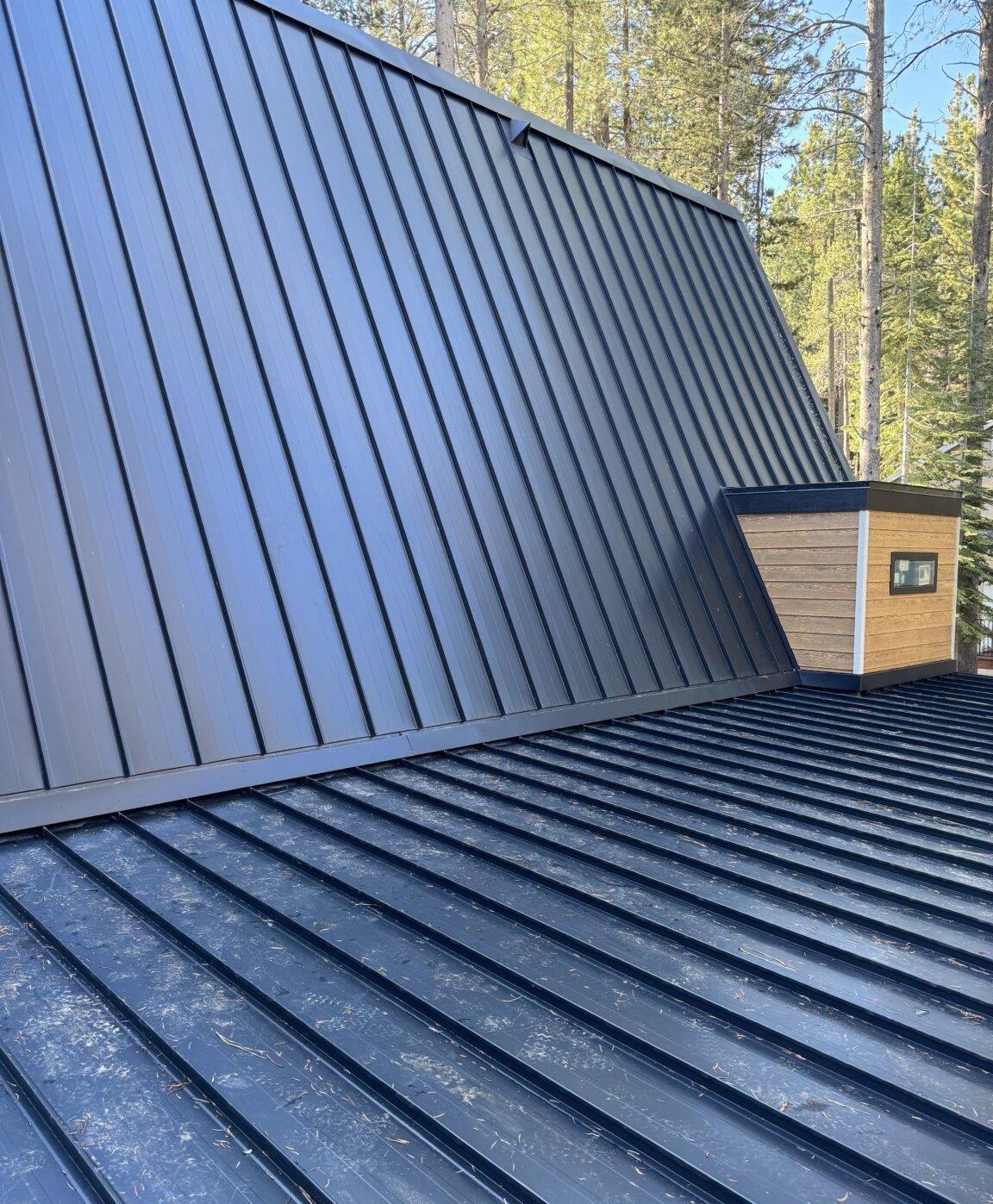
| Standing seam metal | Excellent with coated or aluminum panels; avoid bare galvanized near salt air | Excellent, sheds moss with steep slope and slick surface | 40-50+ years |
| Synthetic/composite shingle | Good, resists corrosion since the material itself isn't metal | Good, similar to architectural asphalt | 30-40 years |
| 3-tab asphalt shingle | Fair, thinner profile wears faster in wind-driven rain | Fair, less mass to resist moss intrusion | 15-20 years |
We don't push one material on every homeowner. What matters more than the brand name on the shingle is whether the flashing, fasteners, underlayment, and ventilation underneath it are built for this climate. A premium shingle installed with bargain-grade flashing and fasteners will fail at the details long before the shingle itself wears out.
What a Correct Roof Replacement Involves
A roof replacement is more than swapping old shingles for new ones. Done right, it addresses everything underneath the surface layer, since that's where most coastal roof failures actually start.
- Full tear-off: we remove the old roofing down to the deck rather than layering over it, so we can actually inspect and fix what's underneath
- Deck inspection and repair: any soft, delaminated, or water-damaged sheathing gets replaced before anything new goes down
- Ice-and-water shield: self-adhering membrane at eaves, valleys, and around penetrations, the areas most exposed to wind-driven rain
- Synthetic underlayment: a full water-resistant layer across the whole deck, not just the high-risk spots
- Corrosion-resistant fasteners and flashing: ring-shank or coated nails and aluminum or coated-steel flashing instead of bare galvanized, given the salt air exposure
- Proper ventilation: balanced intake at the soffits and exhaust at the ridge, which keeps the deck drier and slows moss regrowth from underneath
- Algae-resistant shingles or zinc/copper strips: an added line of defense against moss and algae on shaded slopes
Skipping any one of these steps doesn't always show up right away. It shows up three to seven years later, as a leak that seems to come from nowhere.
Our Process, Start to Finish
- On-site inspection: we walk the roof and attic, not just look from the ground, and check decking, flashing, ventilation, and moss patterns.
- Written estimate: a clear scope and price, with material options explained in plain terms, no pressure to decide on the spot.
- Permitting: for homes within Ferndale or unincorporated Whatcom County, we handle the standard building permit. For homes on Lummi Nation land, permitting and approval can run through tribal authority rather than the county, and we work within whichever process applies to your property.
- Material selection: we help you weigh shingle, metal, or synthetic options against your budget, roof pitch, and how much shade the roof gets.
- Property protection: tarps and plywood over landscaping, siding, and windows before tear-off begins.
- Tear-off and install: old roofing removed, deck inspected and repaired, then underlayment, flashing, ventilation, and new roofing installed in sequence.
- Daily cleanup: magnetic sweeps for nails and debris removal at the end of each work day, not just at the very end of the job.
- Final walkthrough: we go over the finished roof with you and answer any questions before we consider the job done.
- Warranty paperwork: manufacturer material warranty and our workmanship warranty documentation, handed over in writing.
What Roof Replacement Costs Depend On
Every roof is priced individually, but the same handful of factors drive most of the difference between a straightforward job and a more involved one:
| Factor | Why It Affects Cost |
|---|---|
| Roof size and number of planes | More square footage and more valleys/hips mean more material and labor hours |
| Roof pitch and access | Steep or hard-to-access roofs take longer and require more safety setup |
| Deck condition | Rotted or soft sheathing found during tear-off needs replacing before roofing goes on |
| Material choice | Metal and premium synthetic roofing cost more upfront than asphalt but last longer |
| Ventilation upgrades | Adding proper soffit/ridge venting where it's missing adds labor but reduces future moss and moisture problems |
| Layers being removed | Tearing off multiple existing layers takes more time than removing a single layer |
We give a firm, itemized number after the on-site inspection, not a rough phone estimate, because the deck condition and access details genuinely change the price.
Keeping a New Roof Looking Good in This Climate
A well-built roof still needs a little upkeep in an area with this much rain, salt air, and shade. None of it is complicated, but skipping it shortens the life of even a good roof:
- Clean gutters at least twice a year so water isn't backing up under the eaves during heavy rain
- Trim back tree limbs that overhang the roof to cut down on shade, debris, and moss-friendly conditions
- Have moss treated or gently removed as soon as it appears rather than letting it spread across a full slope
- Walk the attic once a year to check for damp insulation, daylight gaps, or musty smells
- Have flashing and fasteners checked after major windstorms, since that's when small movements turn into leaks
- Avoid pressure-washing shingles directly, since it can strip granules and shorten shingle life
Why a Crew That Already Works in Lummi Nation Matters
Roofing crews who mostly work inland don't run into salt-air corrosion or heavy moss on a regular basis, so it's easy for those issues to get treated as an afterthought instead of a planning factor. A crew that already works in and around Lummi Nation and Ferndale sees these conditions on nearly every job, which means fastener choice, flashing material, and ventilation aren't guesses, they're standard practice. It also means we're familiar with how permitting and site access work on tribal land versus county land, so that part of the project doesn't turn into a surprise delay. And because we're local, we're not disappearing after the invoice is paid; if something needs a look under warranty, we're a short drive away, not a company based somewhere across the state.
If your roof is showing its age or you just want an honest opinion on how much life it has left, we'll come take a look and give you a straight answer. Fill out the form below for a free, no-pressure estimate.